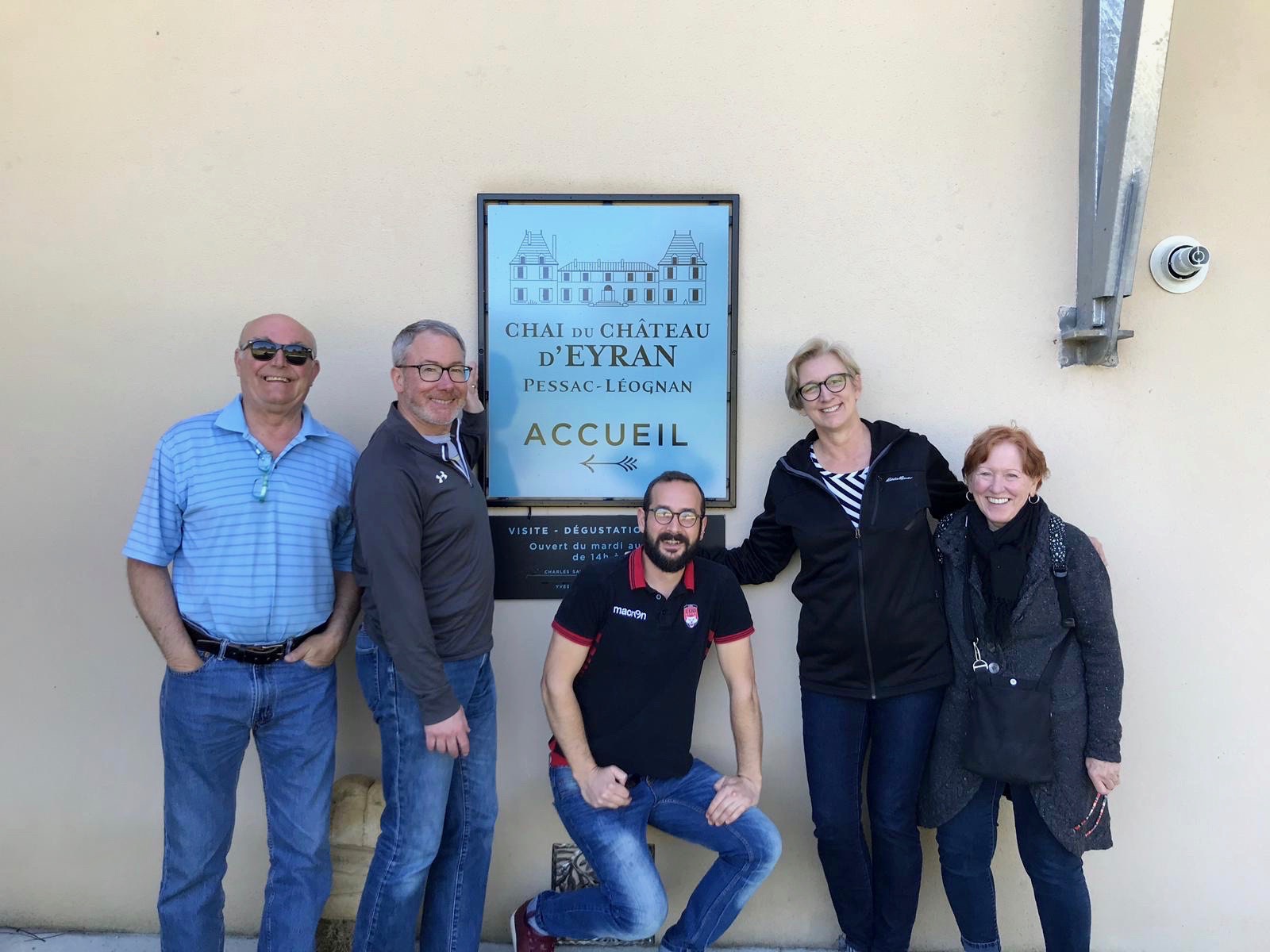
Wednesday, April 24th and we were off for a day of wine tastings. Our first stop was at Vignoble Savigneux. There are three properties at Savigneux: Chateau Haut-Lartigue, Chateau Eyran and Chateau Bastian
Chateau Haut-Lartigue
Chateau Haut-Lartigue dates back to the 15thCentury and was renovated in the 18thCentury. It has been owned by the Savigneux and Seze since the year 2000.
Chateau Eyran
Traces still remain of the original Chateau Eyran built by the Lord of Budos in 1317. The Chateau was rebuilt into the current form on the gravel soils of Mount Eyran around 1629. The Seze family acquired Chateau Eyran as a dowrey in 1798 through the marriage of Paul-Victor de Seze (brother of Raymound de Seze who was the lawyer of Louis XVI before the French National Convention). Doctor, philosopher, professor and elected deputy to the Estates General of 1789, Paul-Victor was also the first rector of the Bordeaux Academy.
The property was passed onto Paul-Victor de Seze’s on Aurelien in the 1830’s, Vice-President of the National Assembly and close friend of George Sand. (George Sand, a pen name for Amantine Lucile Aurore Dupin, was a French novelist, memoirist and socialist. One of the most popular writers in Europe in her lifetime she is recognized as one of the most notable writers of European Romantic era.)
Since this time the property has remained in the Seze family hands, being passed down from generation to generation. At the beginning of the 20thcentury, due to the influence of co-ownership through inheritance, the economic crisis and German occupation, the cellars fell into ruin and the vines were pulled out.
In the 1980s, the vineyards were restored, the grapes made into wine and marketed by Brigitte and Stephane Savigneux, supported by Brigitte’s grandfather Professor Stanislas de Seze. Their son Charles joined the business in September 2015.
Chateau Bastian
Formerly a 14thcentury farmhouse of the Rivet Abbey in Auros, the Chateau Bastian is now a 35 hectare estate on the left bank of the Garonne river, 40km south-east of Bordeaux. The estate includes 10 hectare vineyard located on the slopes of the Beuve Valley.
The Savigneux family have owned and lived in Chateaux Bastian since 1988.
Magalie our vineyard guide met us in the tasting room and took us to see the vines, explain their process and then we tasted the wines. She was so knowledgeable and had a great sense of humor (which she needed with Scott!)
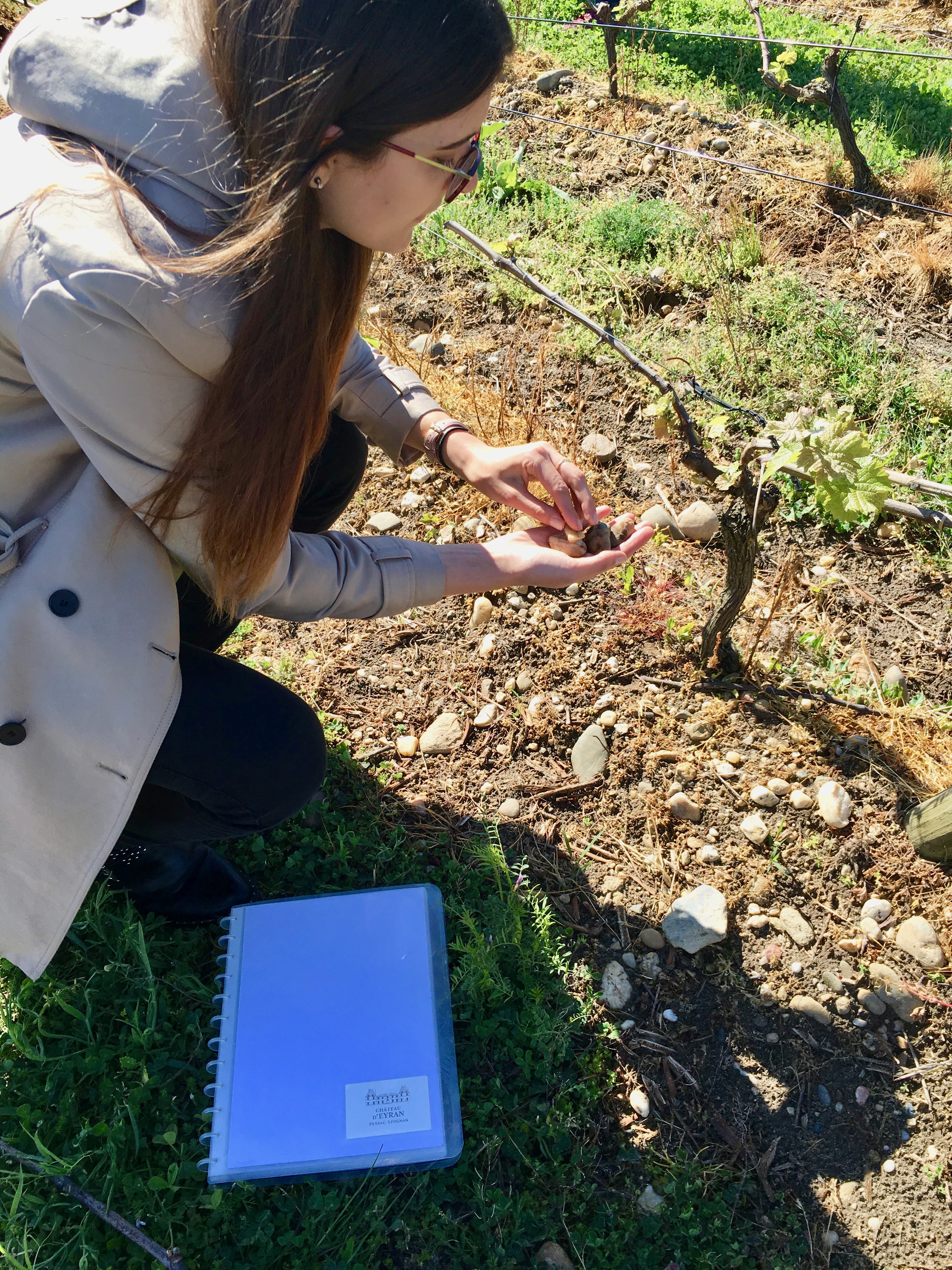
Soil of the Graves 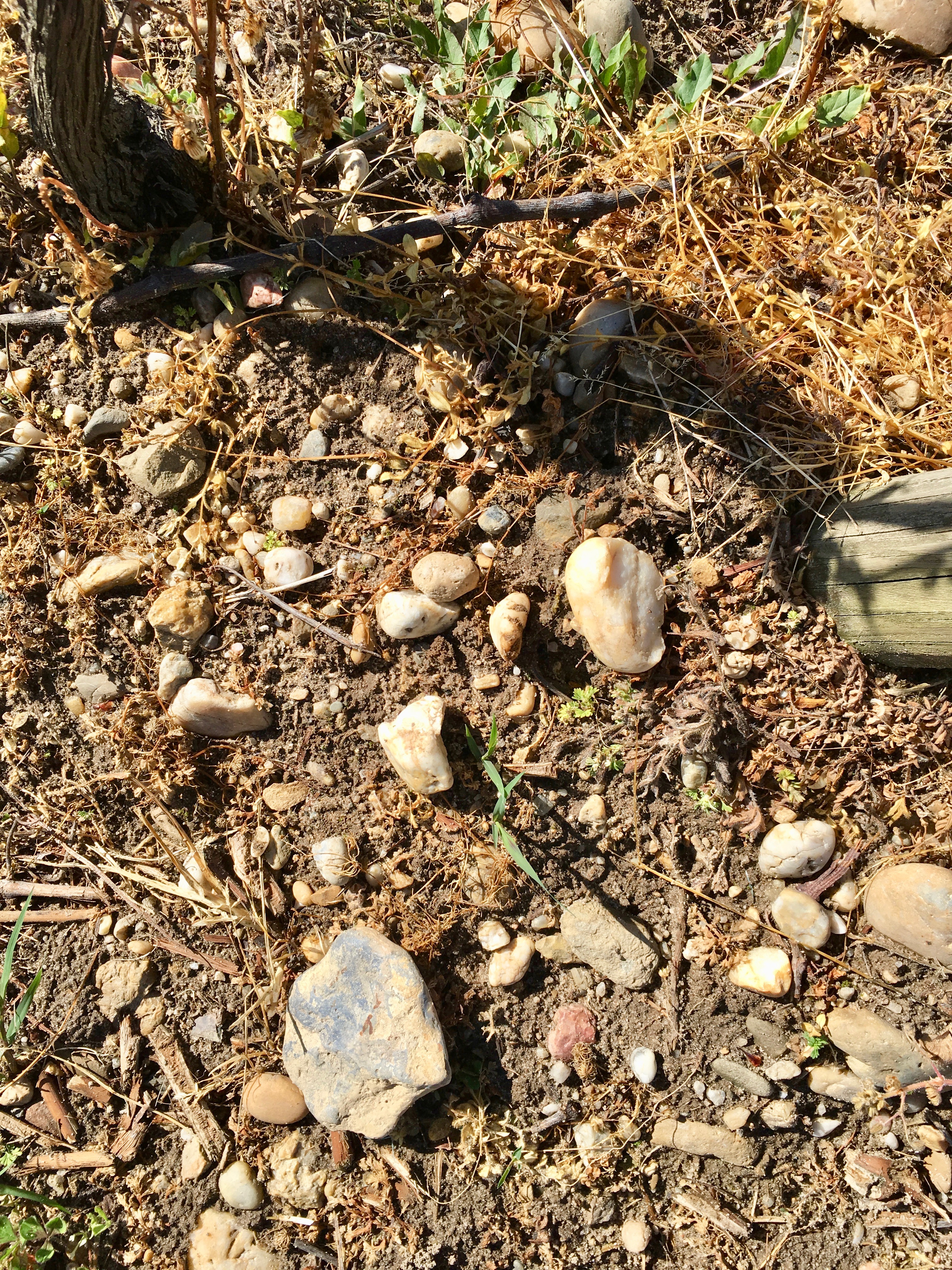
The rocks
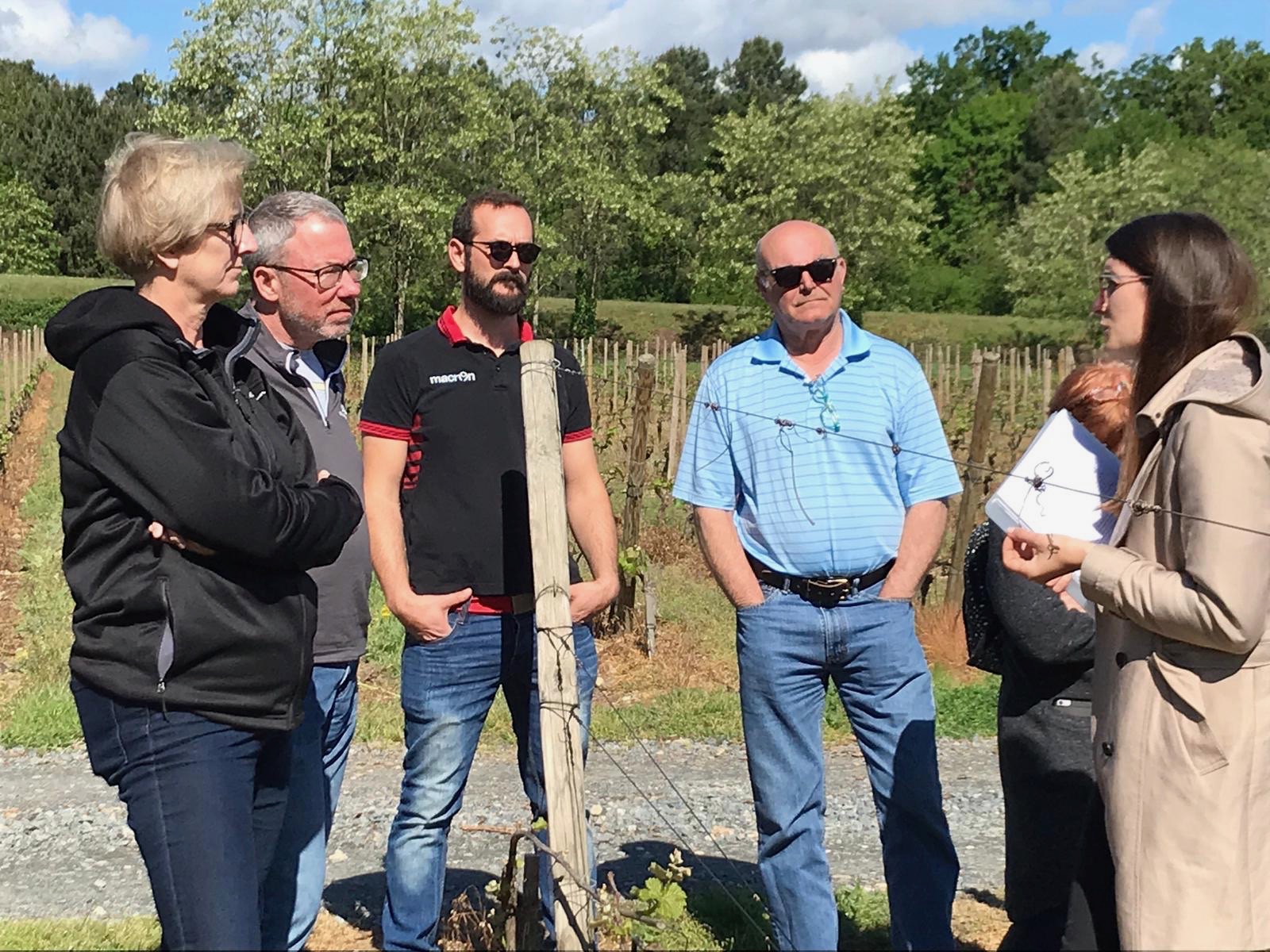
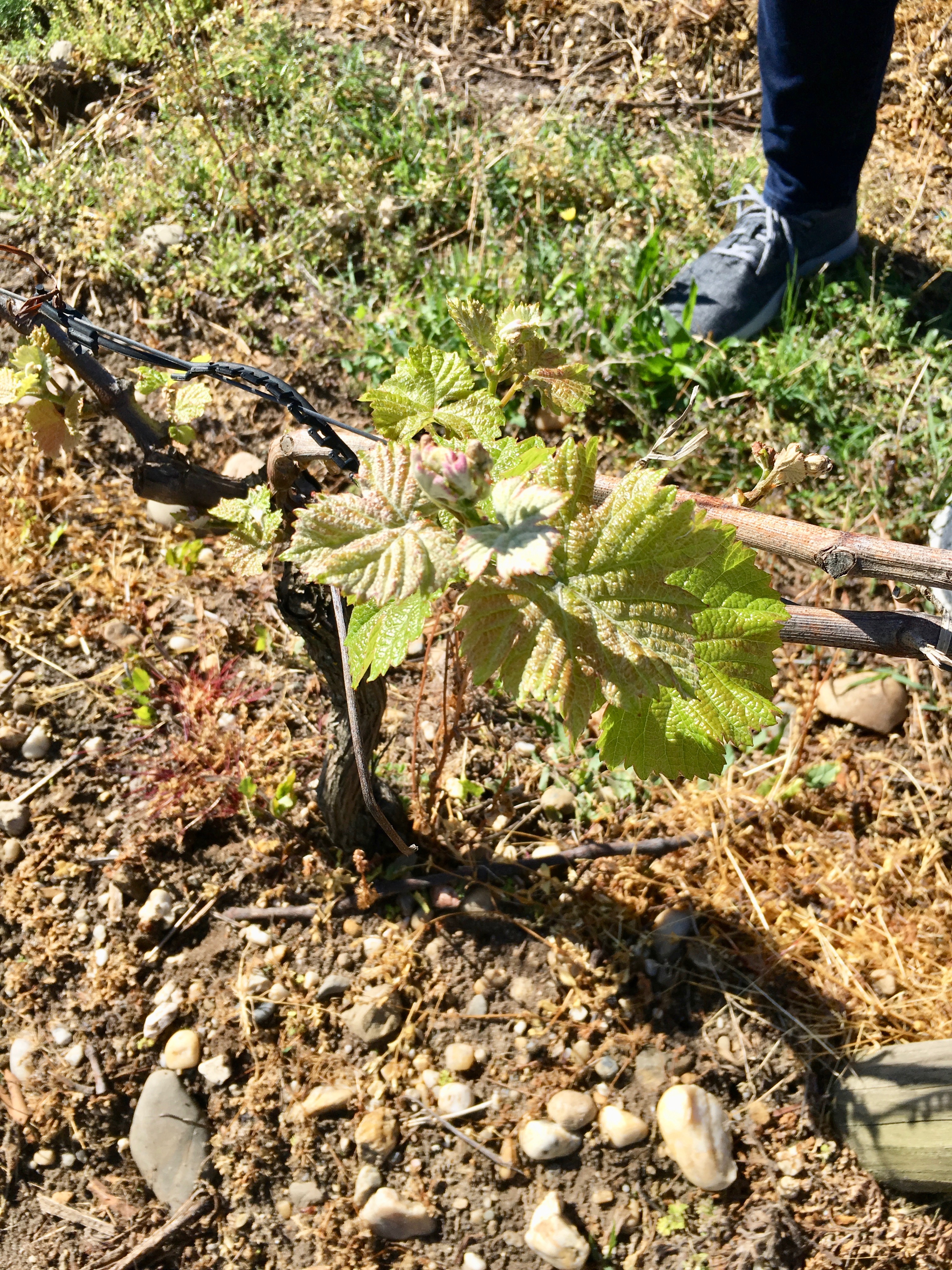
Beautiful buds 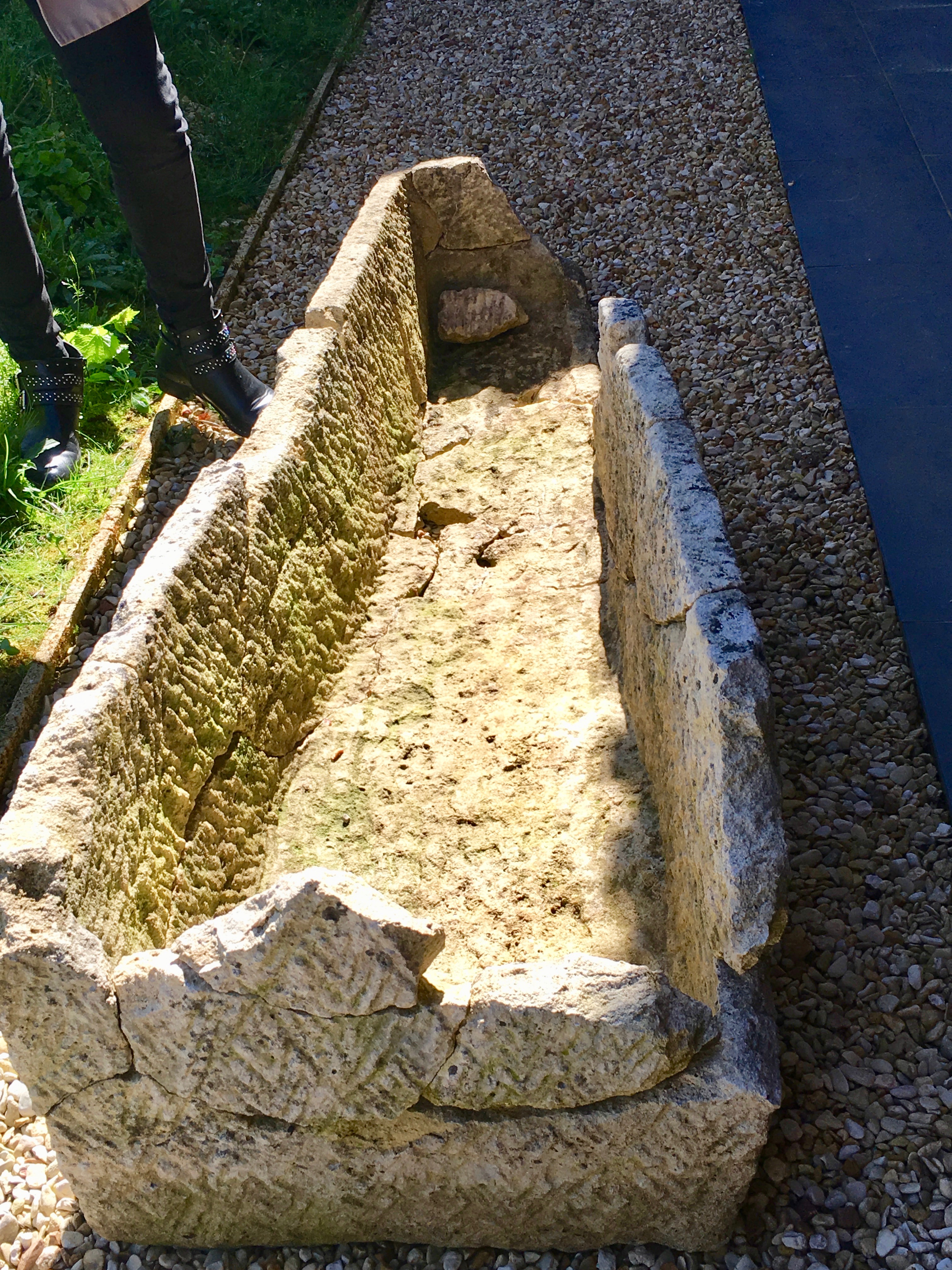
A sarcophagus they found on the property
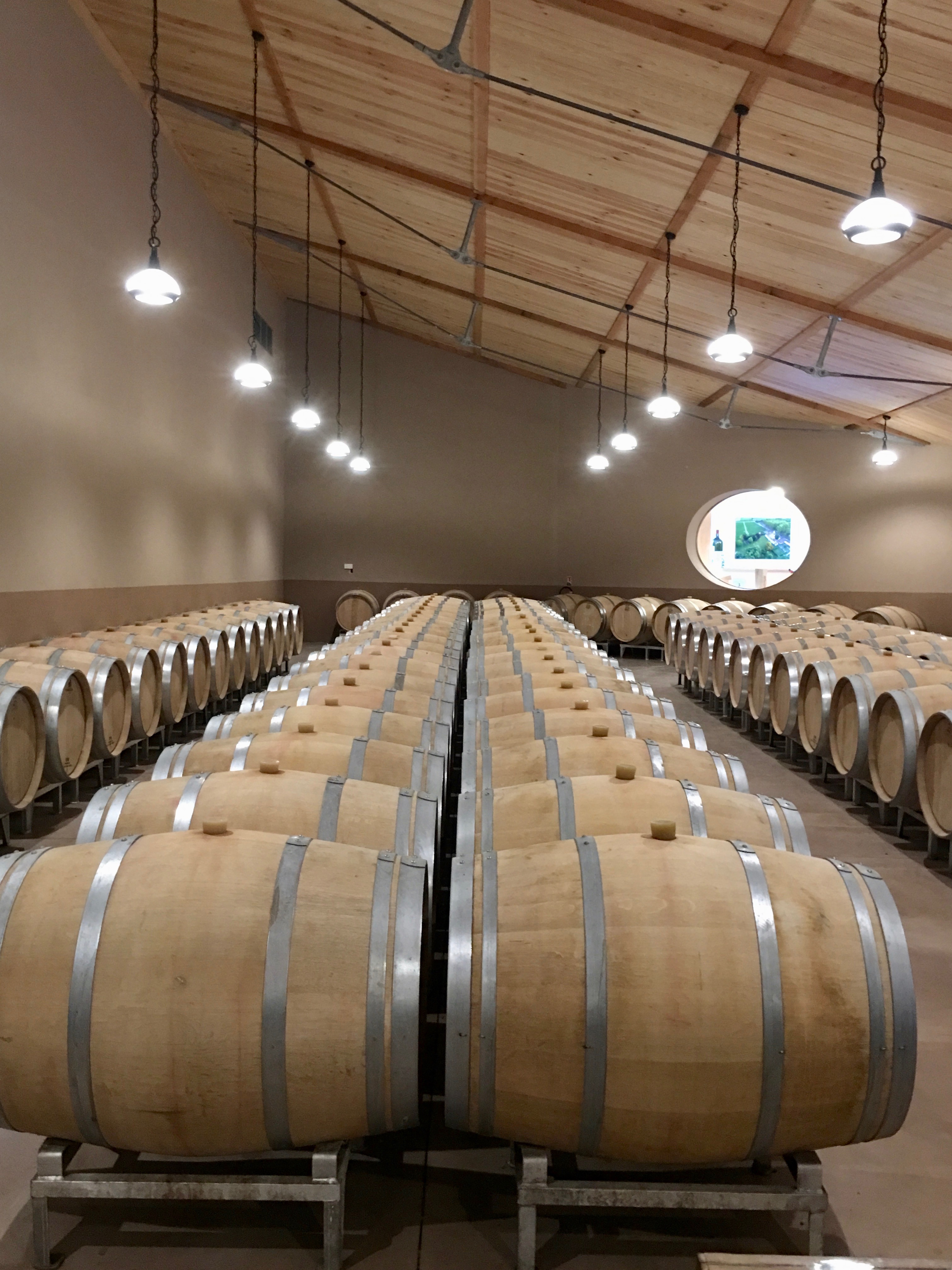
The barrels are full! 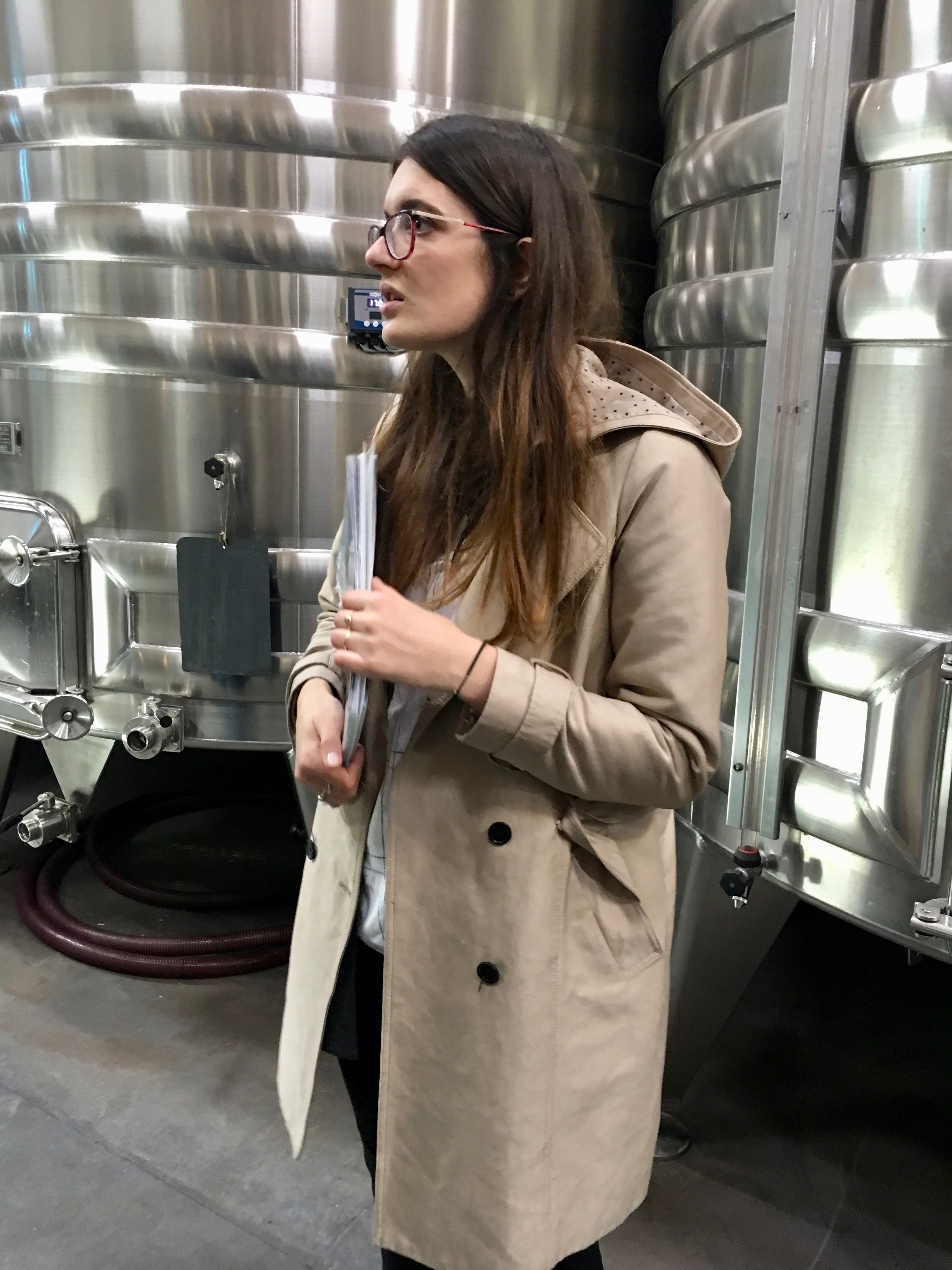
Magalie explaining the winemaking process
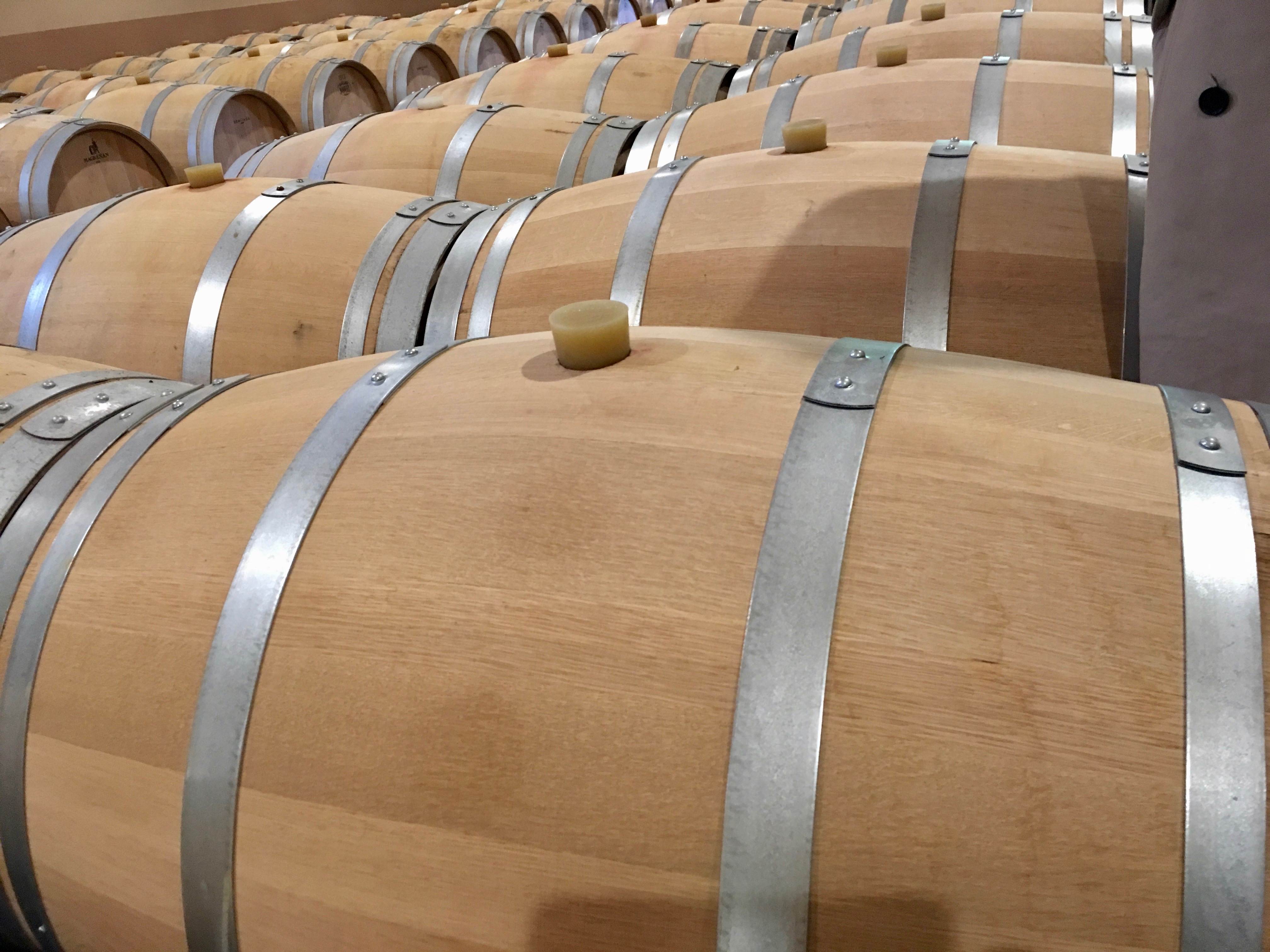
American oak no flaws, about 1/3 of their barrels. 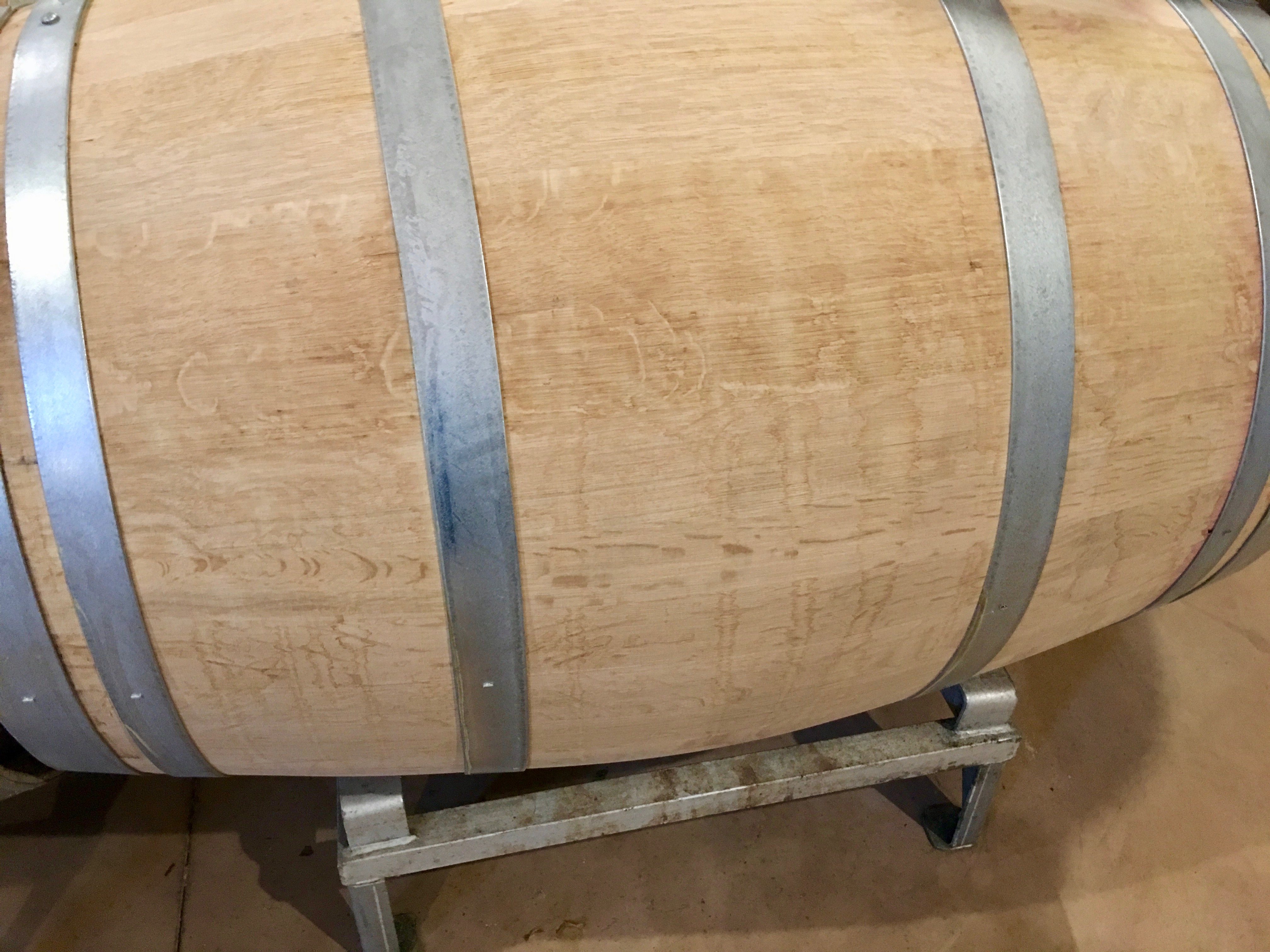
French oak – more impurities in the wood to let the air in. 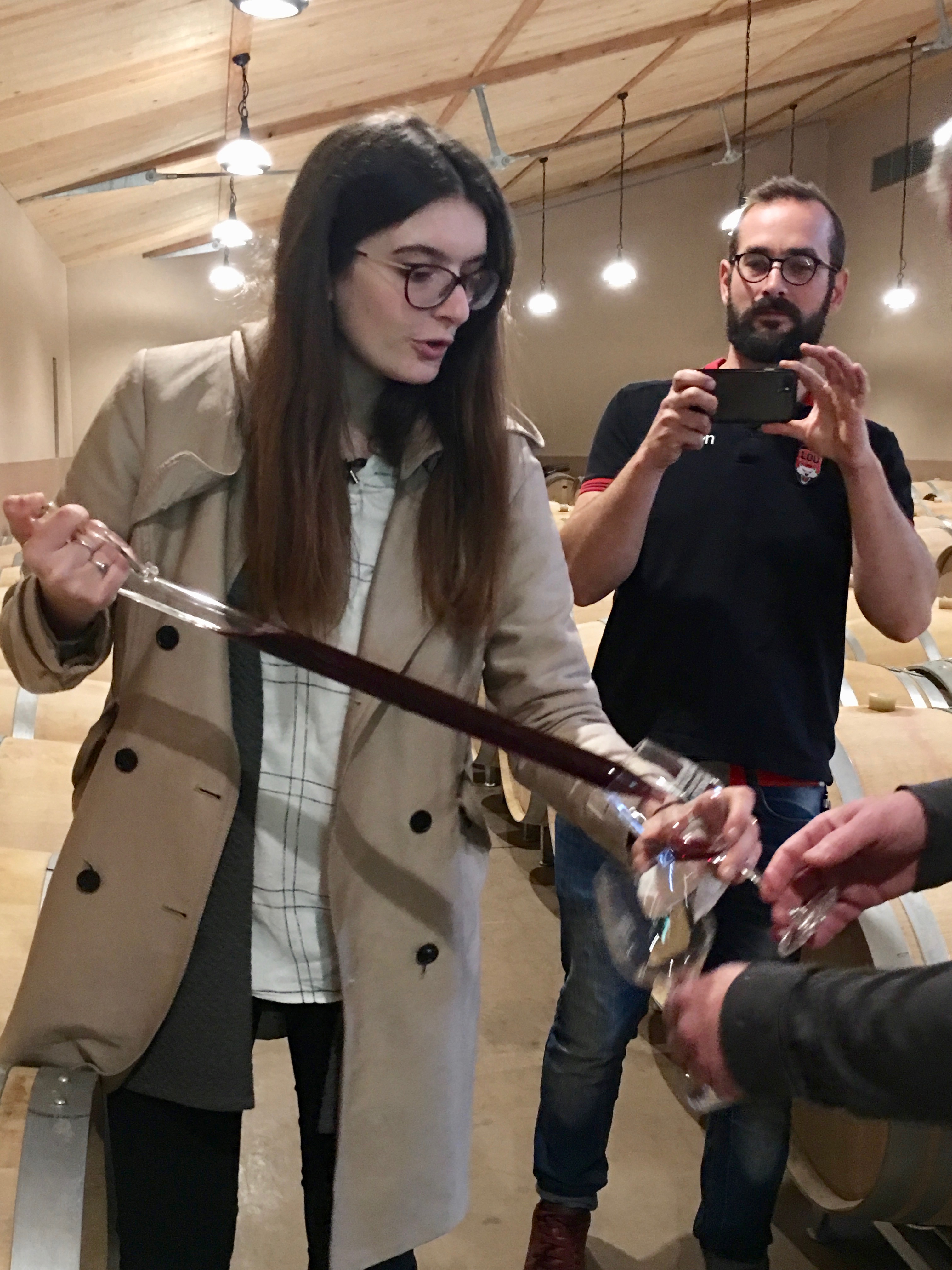
A sip from the barrel 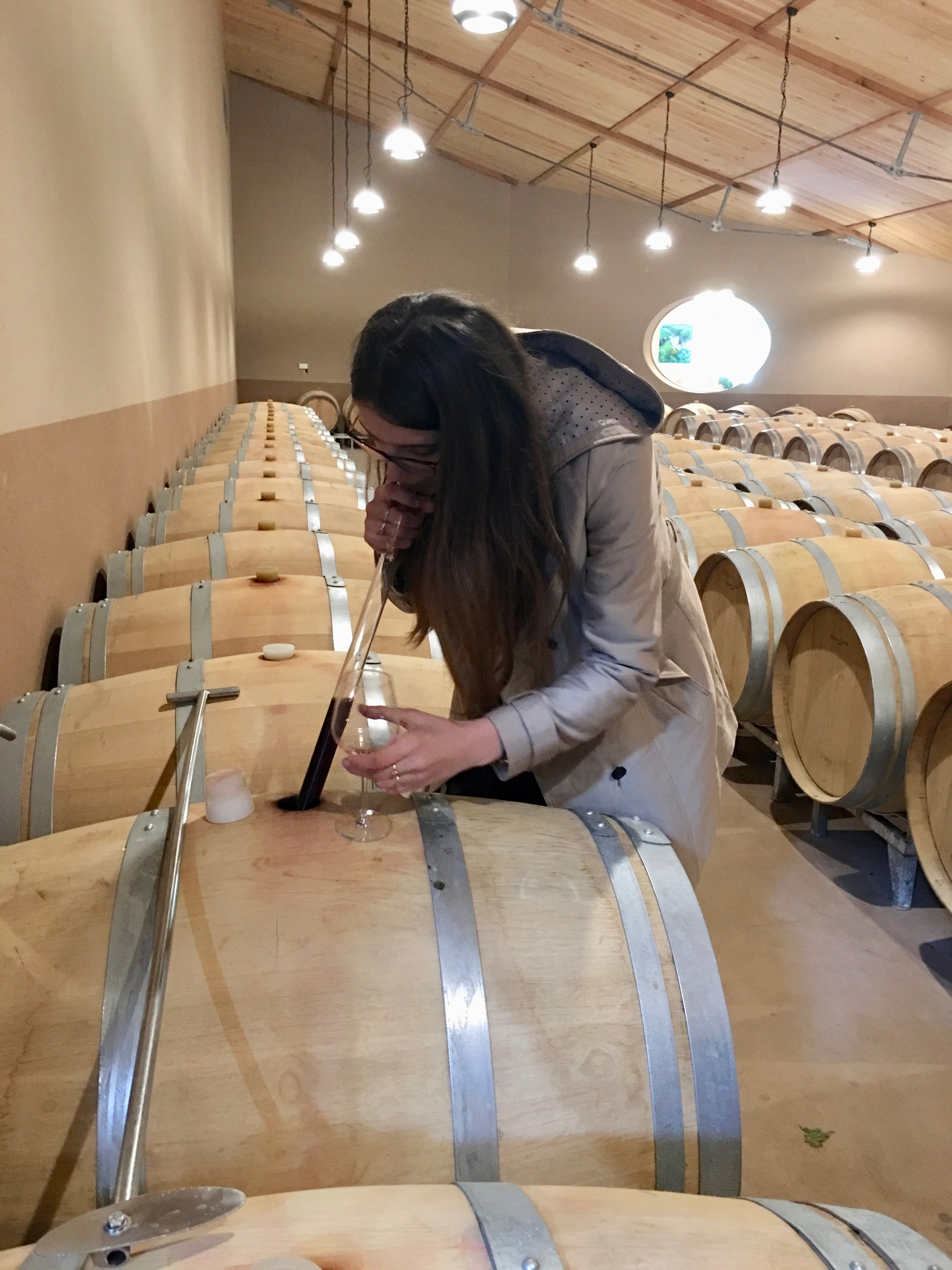
Syphoning the wine 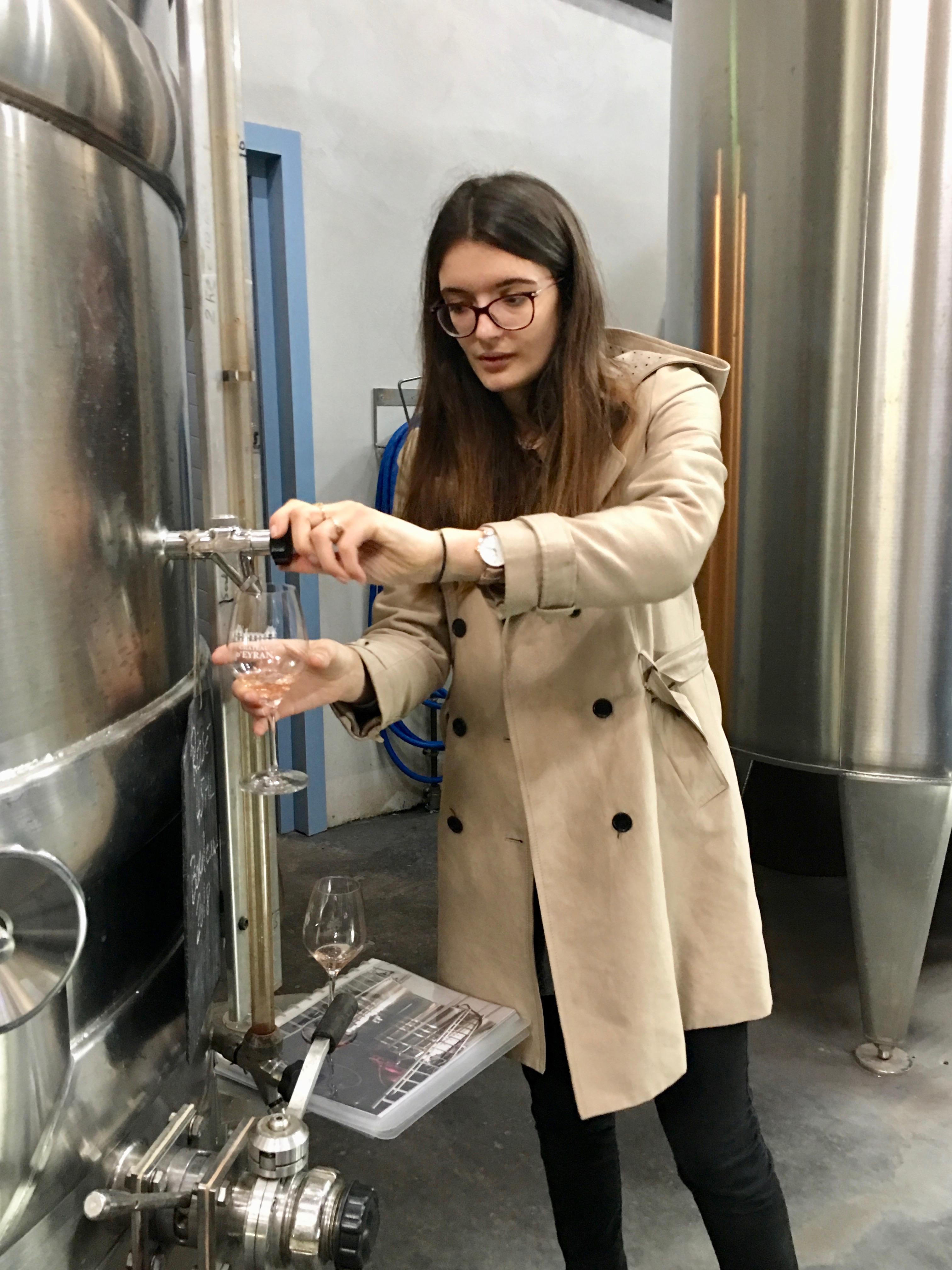
A taste from the tank. Is the wine ready? 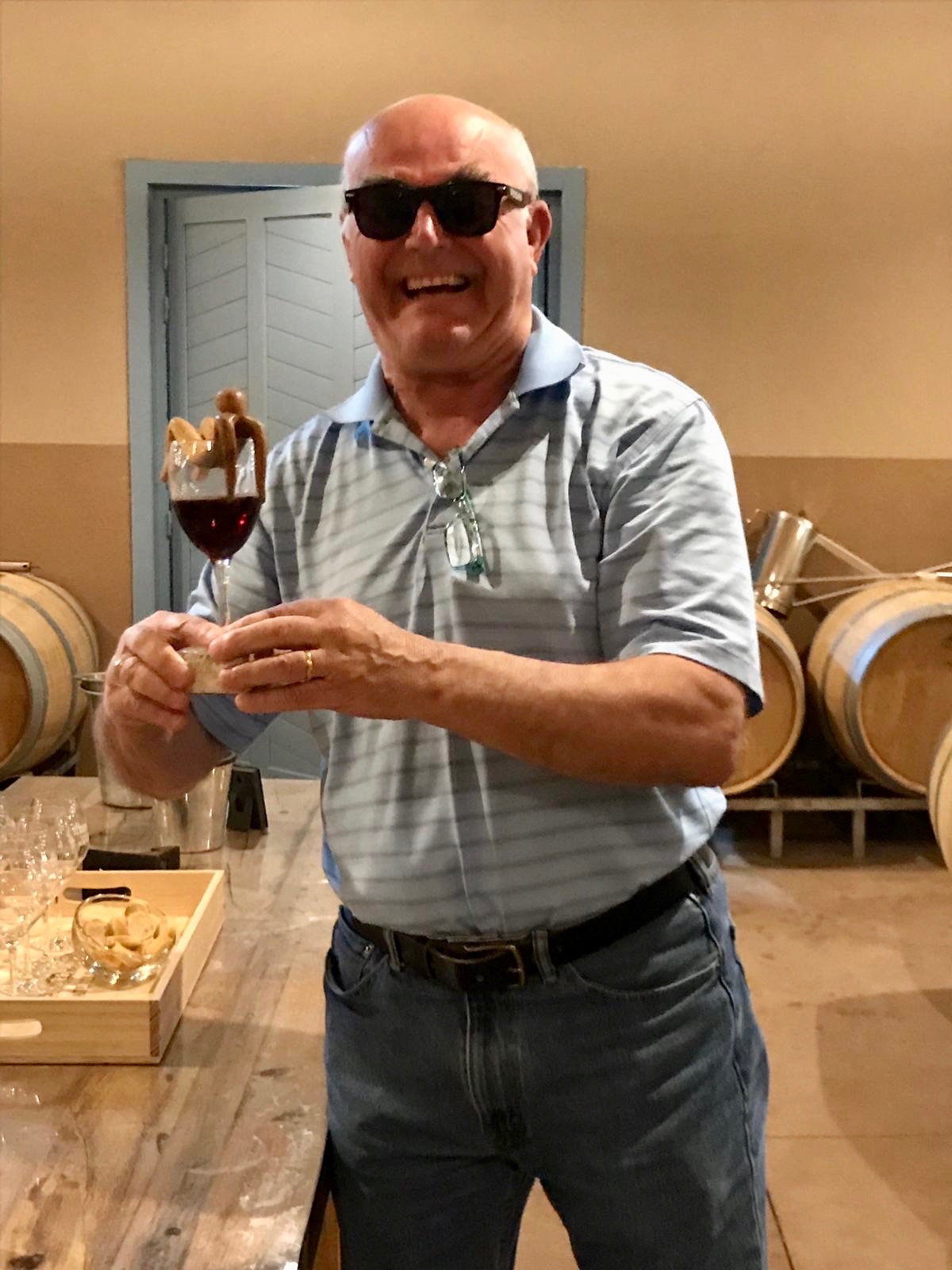
But Scott, AKA Jack, found a special glass for his tasting! 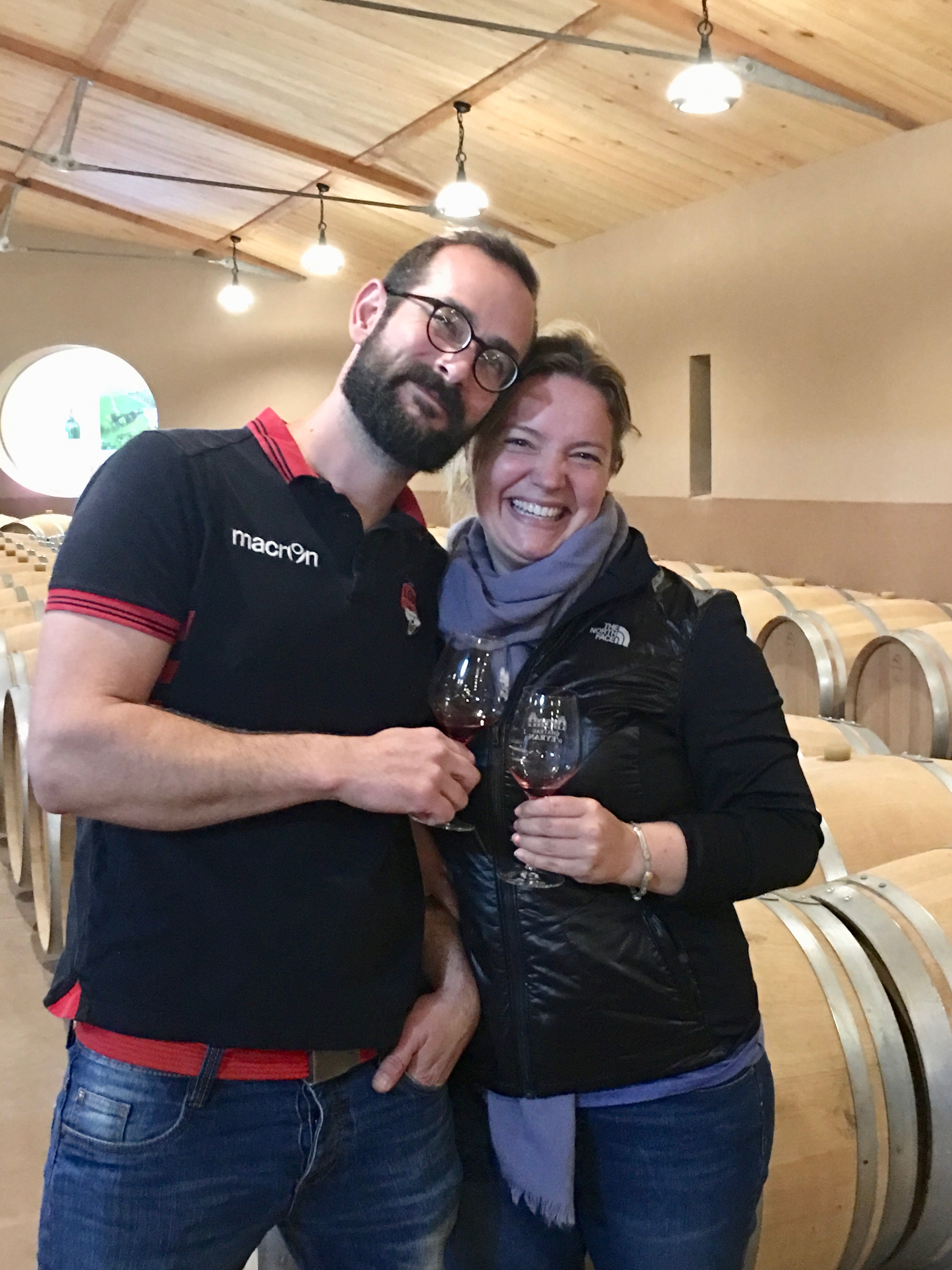
Our happy hosts enjoying the wine
We then went into the tasting room to taste the wine.
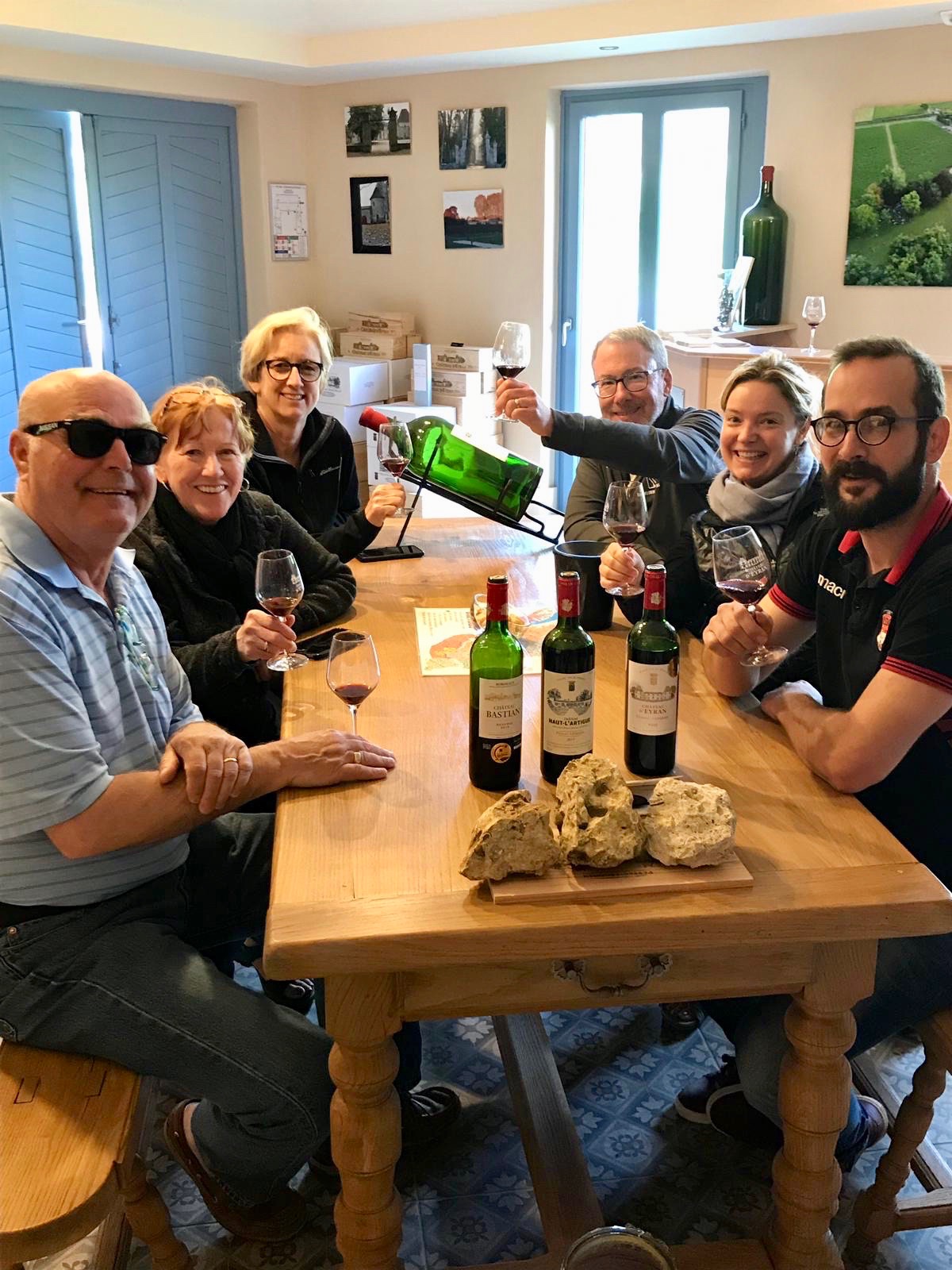
Cheers! 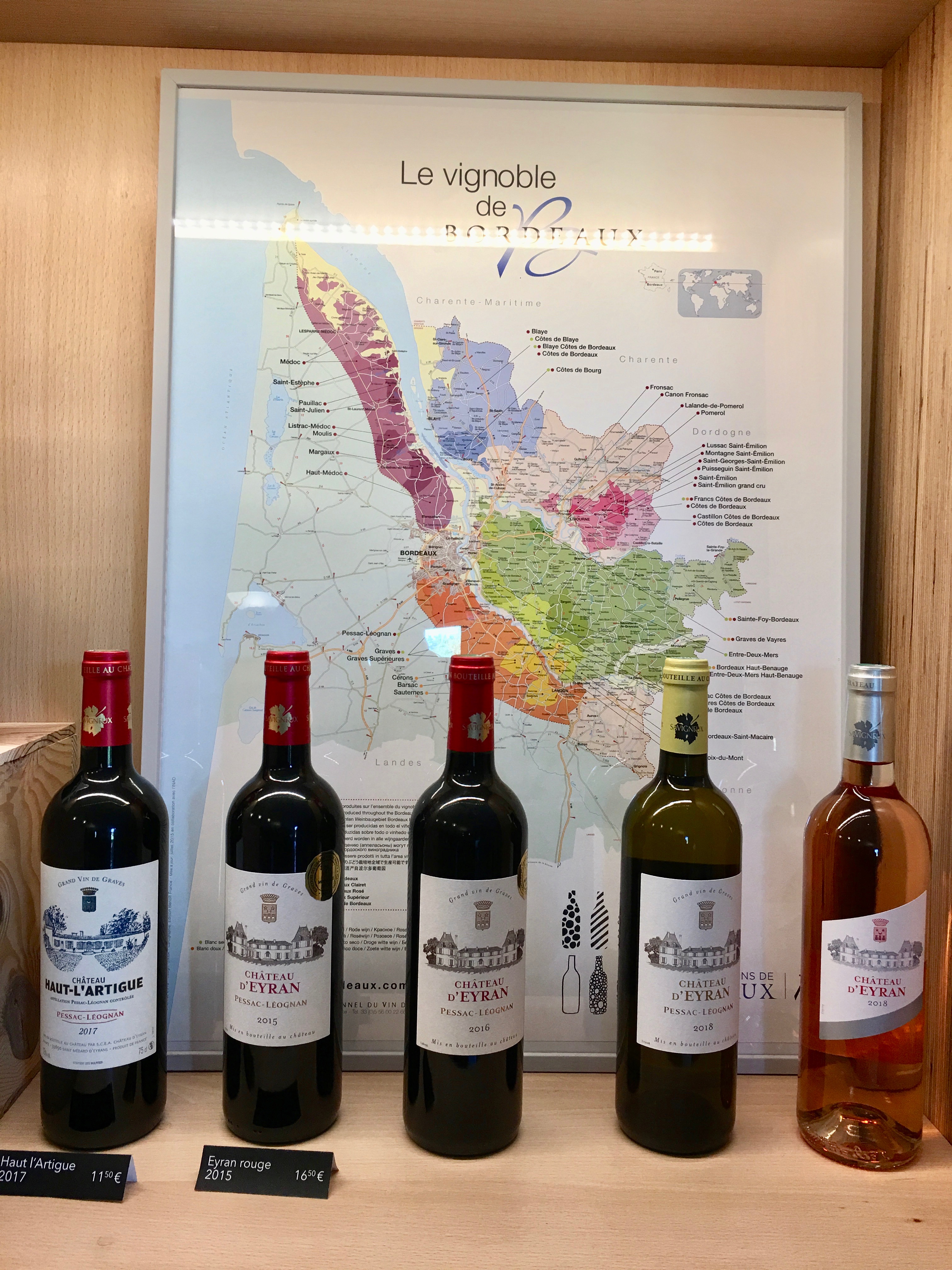
The wines of the Savigneux Family 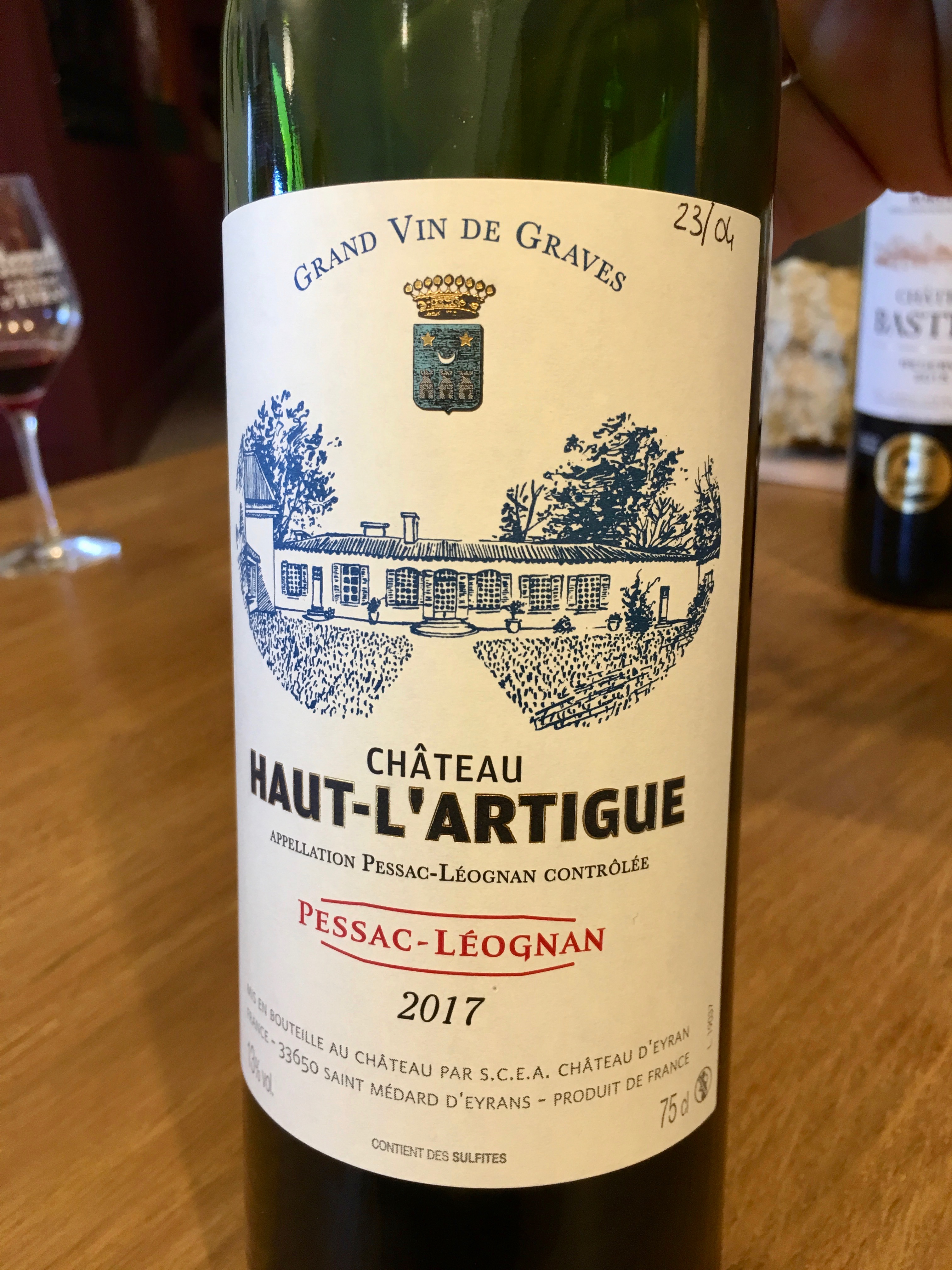
One of the wines we tasted 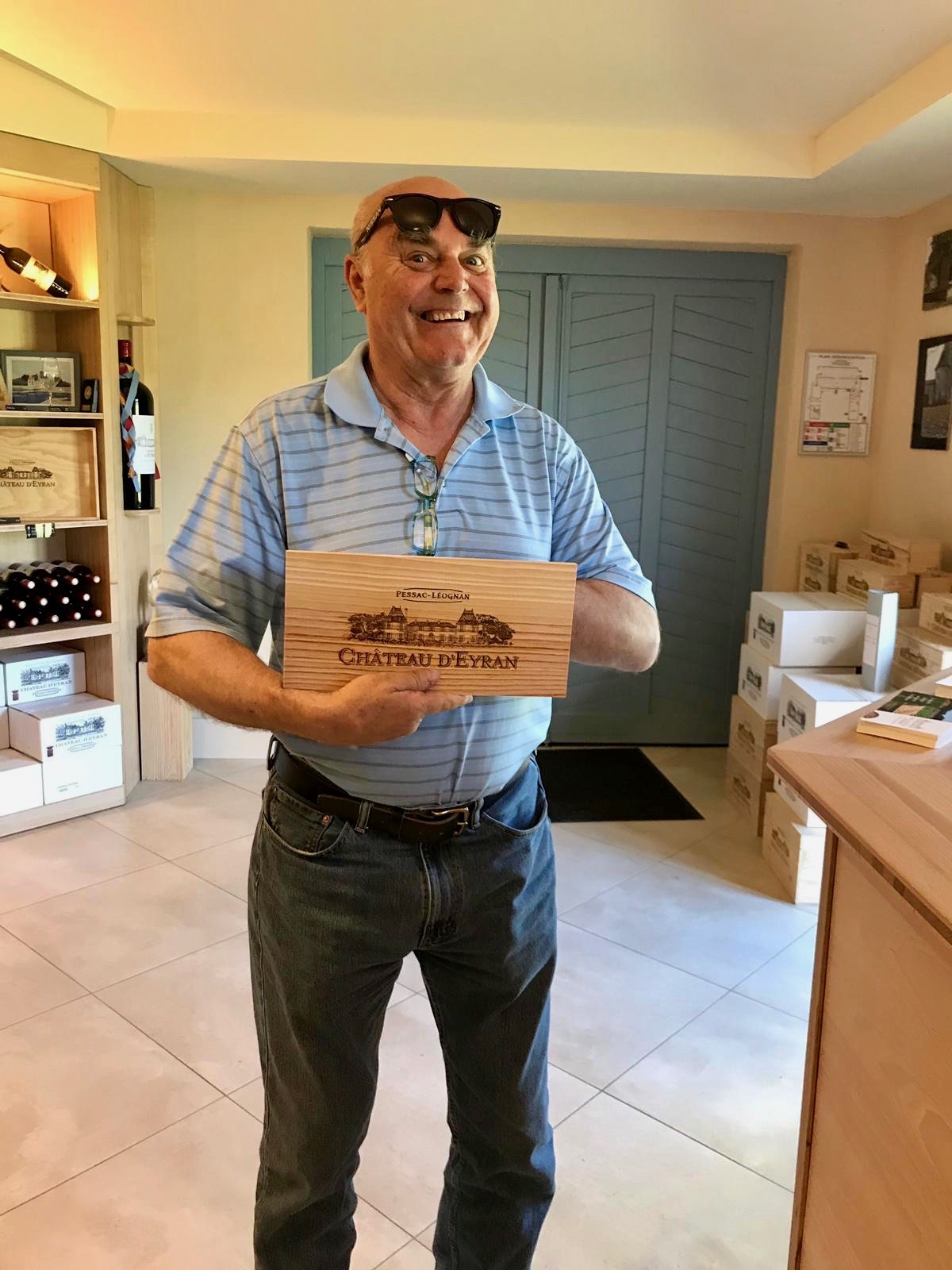
Scott found something to take home
Then we were off to Saint-Emilion for lunch at A l’enders du Decor and a special dessert. Saint-Emilion is very tourist friendly and there were lots of people there.
Saint-Emilion is a charming medieval village located in the heart of the famous Bordeaux wine area. It is a very unique site where world-famous wineries, fine wine, beautiful architecture and great monuments are a perfect match.
The legend tells us about a monk from Brittany who fled from Vannes, his hometown, to seek refuge in one of the natural caves in a place called Ascum bas (former name of the village) in the 8th century.
His name was Emilion. Living the life of a hermit he accomplished a few miracles and rapidly became famous in the region and even far beyond its borders. Soon he had many disciples and with their help he evangelized that place and made it become a great religious center. Even after his death his followers carried on his legacy and even called the town after him: Saint-Emilion.
From the 9th century to the 19th century men had the will to mine the soil in order to standardize the whole architectural looking of not only the city of Saint-Emilion but also a few ones in the region (such as Bordeaux for instance).
Nowadays the extraction is over but there are still 200km of underground galleries under the village and its vineyard standing as a proof of that activity.
Harmonious work of Men and Nature the landscapes of Saint-Emilion are testimonies of its History. In 1999 for the first time in the world a vineyard was written on the World Heritage List by the UNESCO as a Cultural Landscape, that is to say a historical landscape that remained intact but which is still carrying on its activity. Saint-Emilion wines are world famous it’s also thanks to the hard promotion work of the Jurade, a wine brotherhood that was yet created in 1199 by John, King of England. The latter delegated his economic, political and legal powers to the noblemen of the region and the village to let them rule. The authority of the Jurade was contested only in 1789 during the French Revolution, and then in 1948 a few winemakers resurrected the brotherhood. It is now in charge of promoting Saint-Emilion wine around the world and of organizing every year the Spring Feast and the “Ban des Vendanges” (administrative authorization to start the grape harvest).
Sites around Saint-Emilion
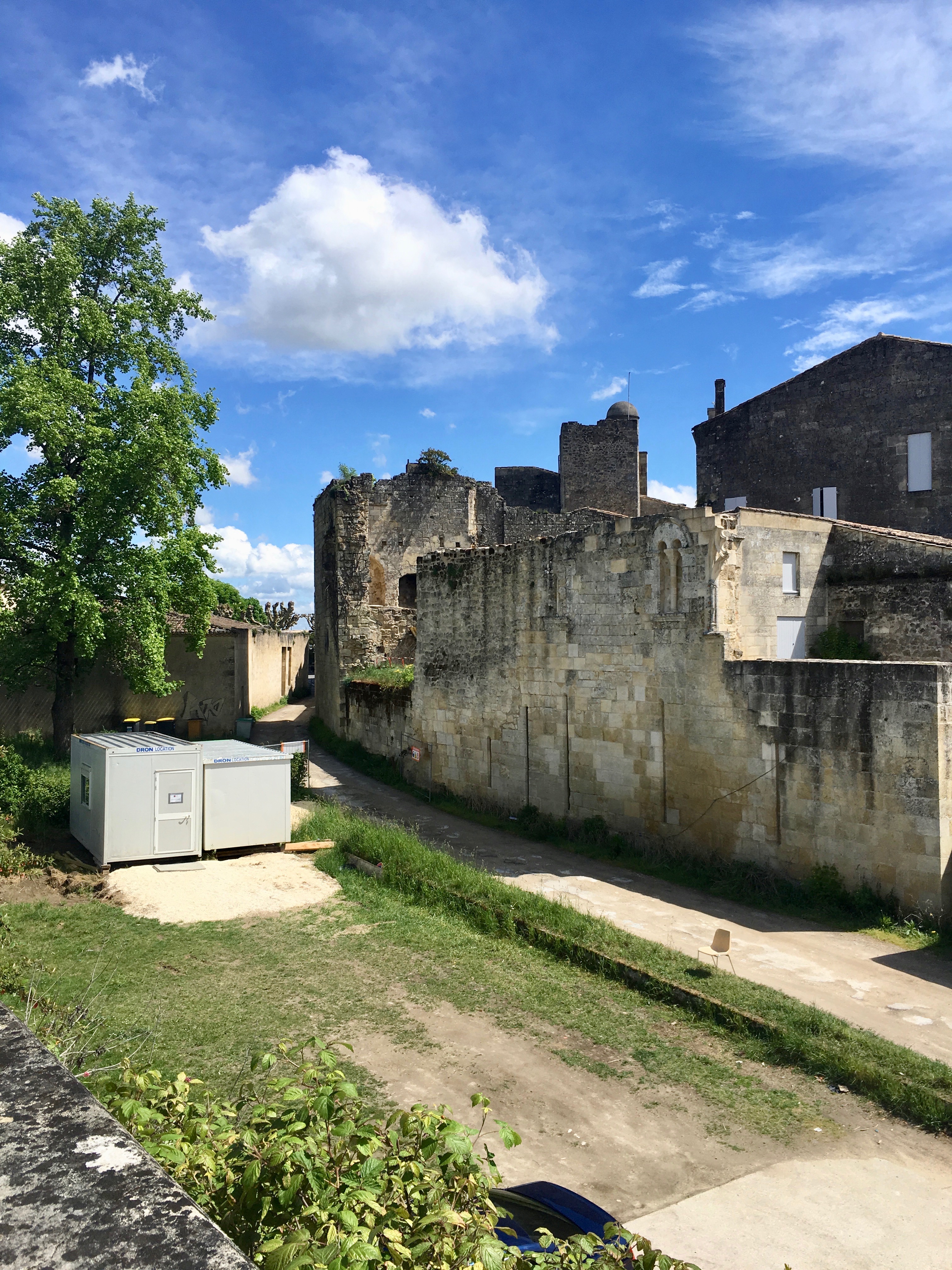
Fortified city of Saint-Emilion 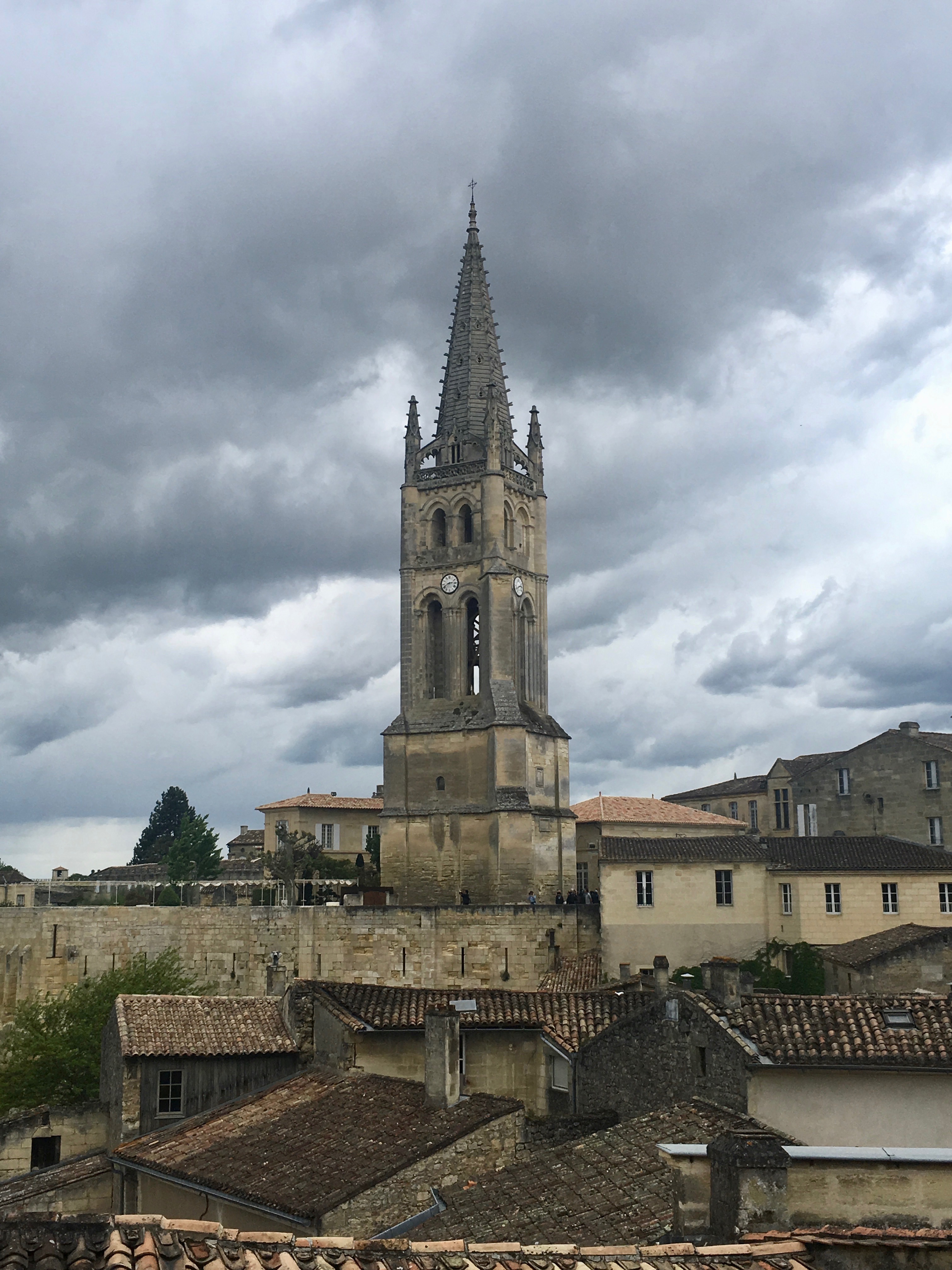
Monolithix Church of Saint-Emilion 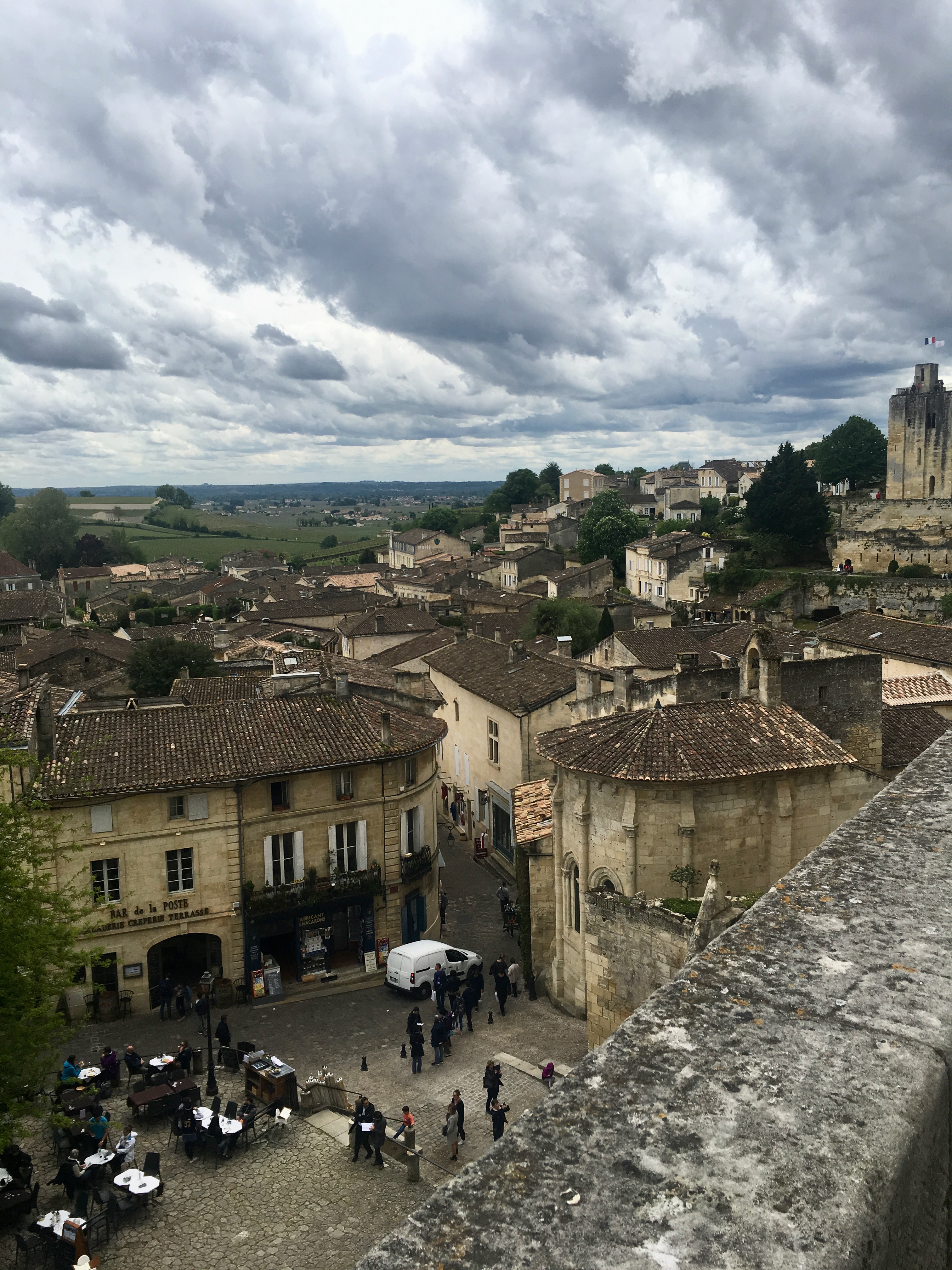
View down on the city from the church yard
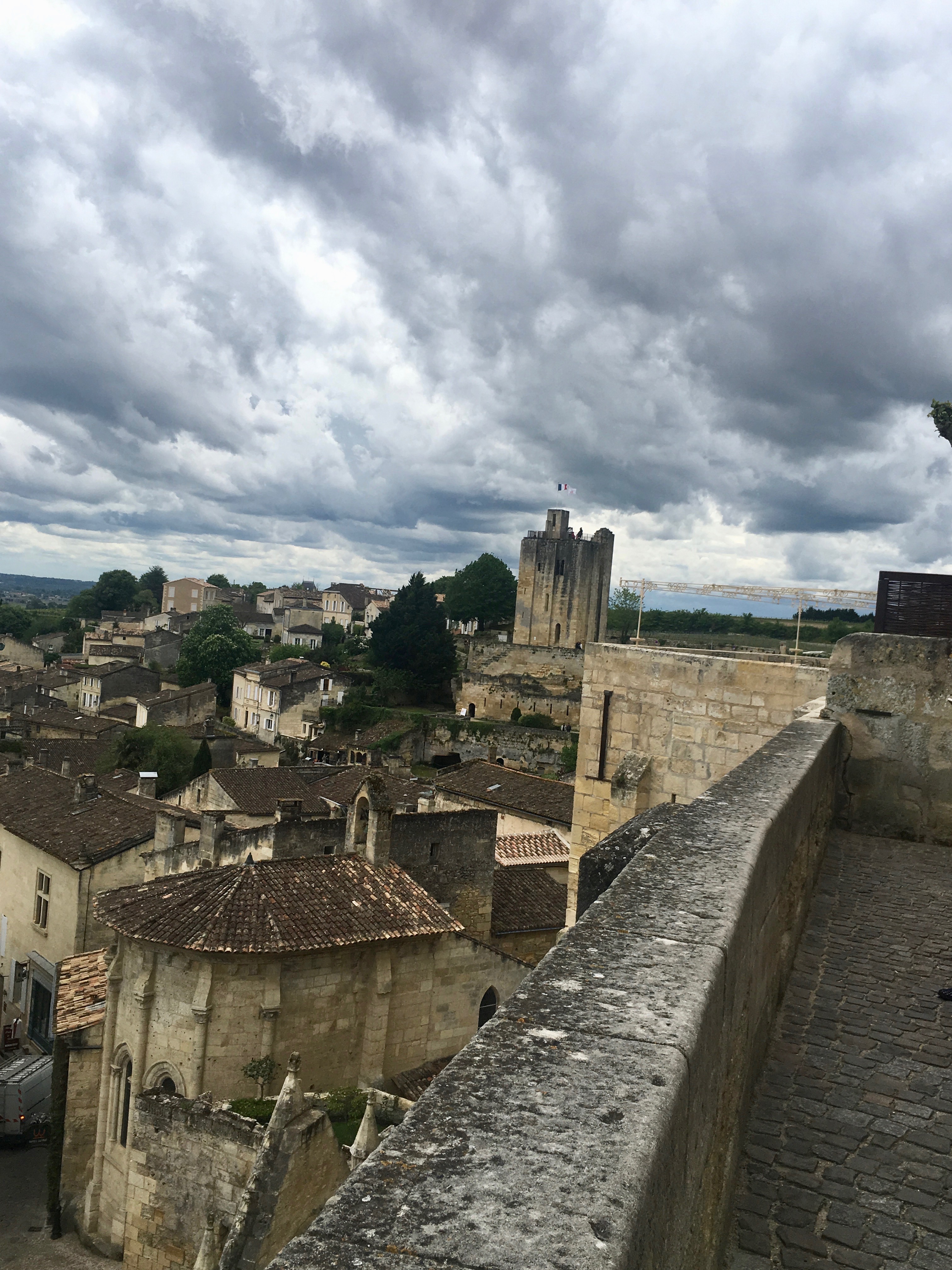
Another view 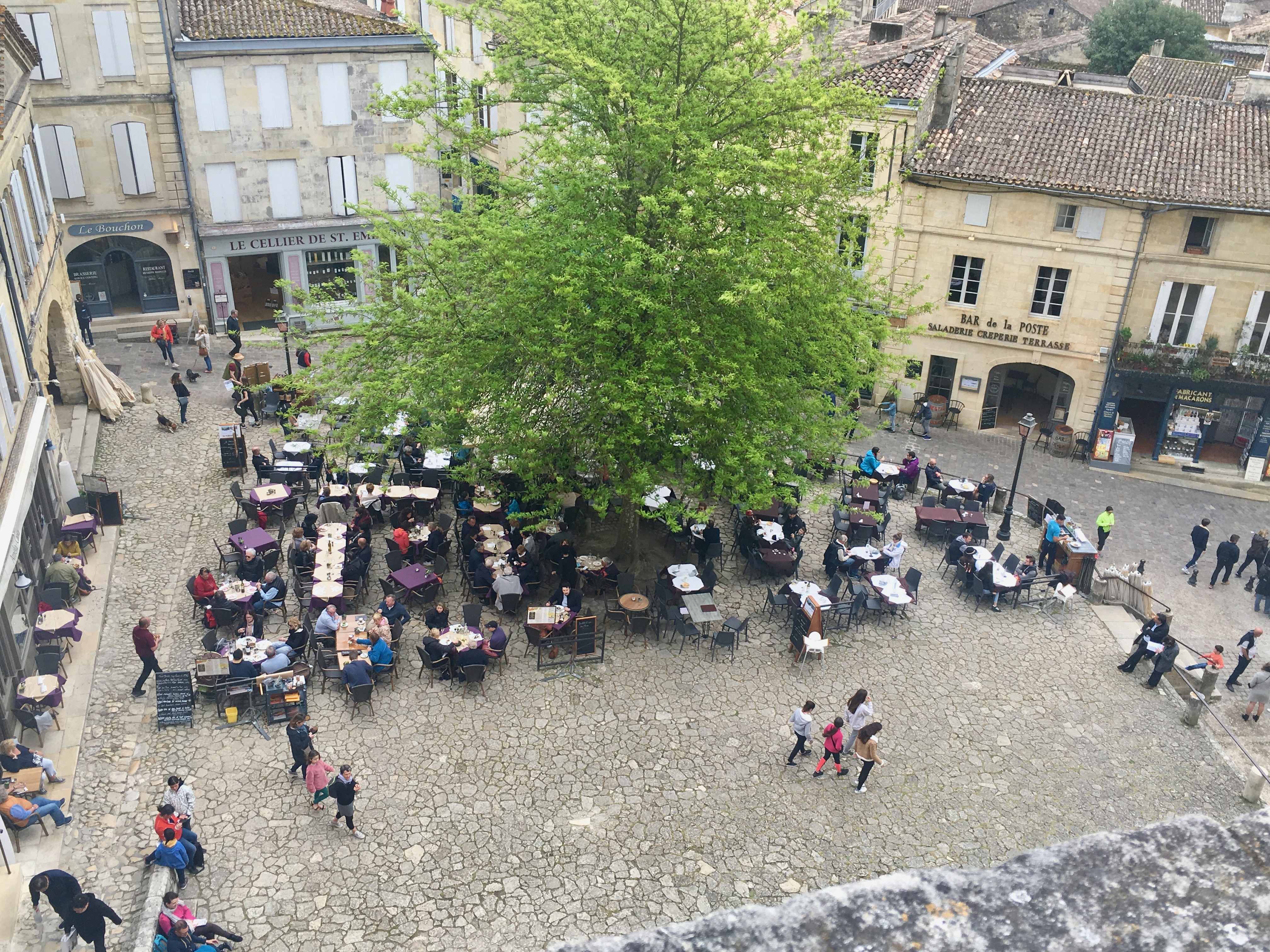
Looking down on the plaza 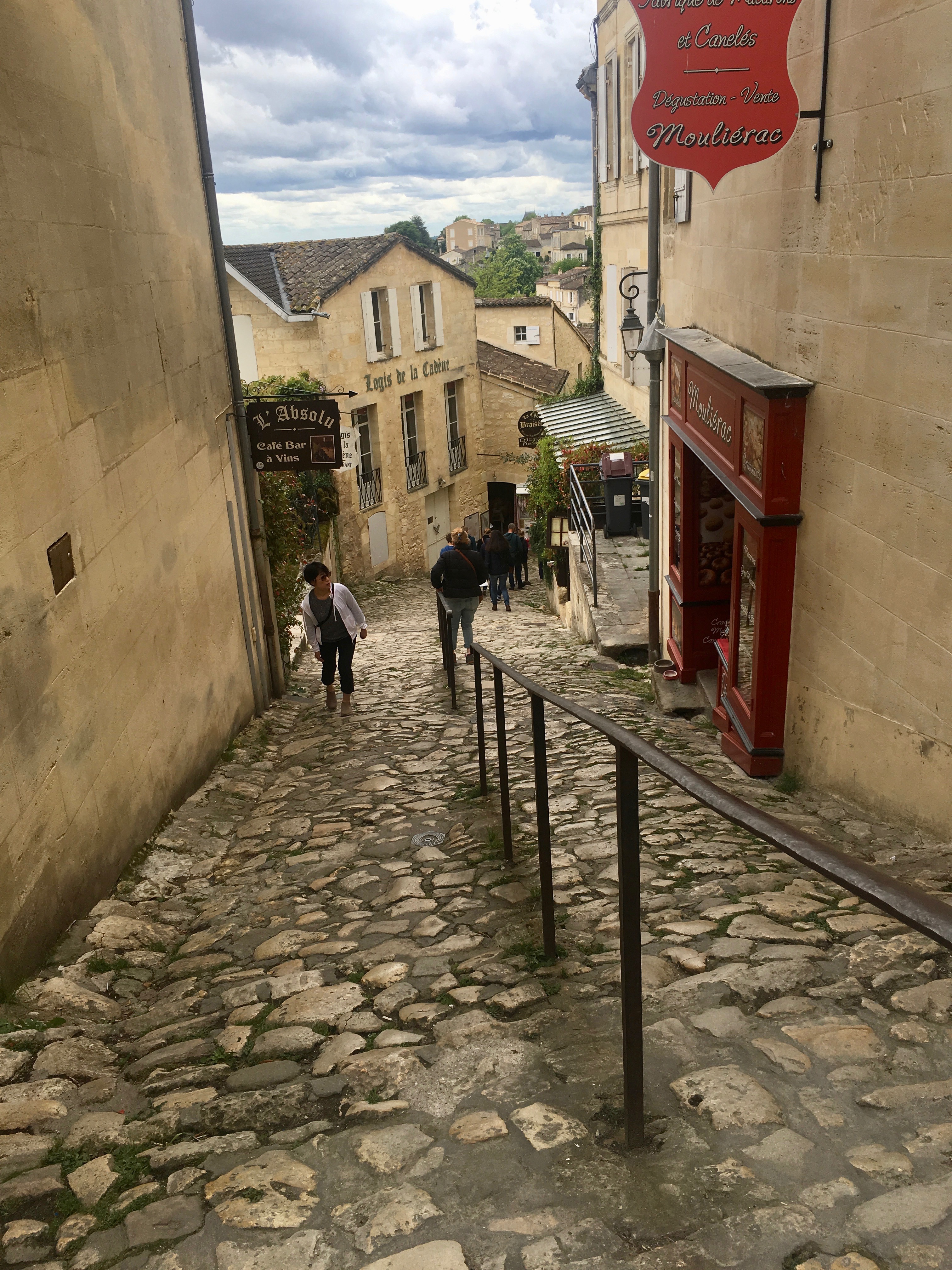
A sweet street 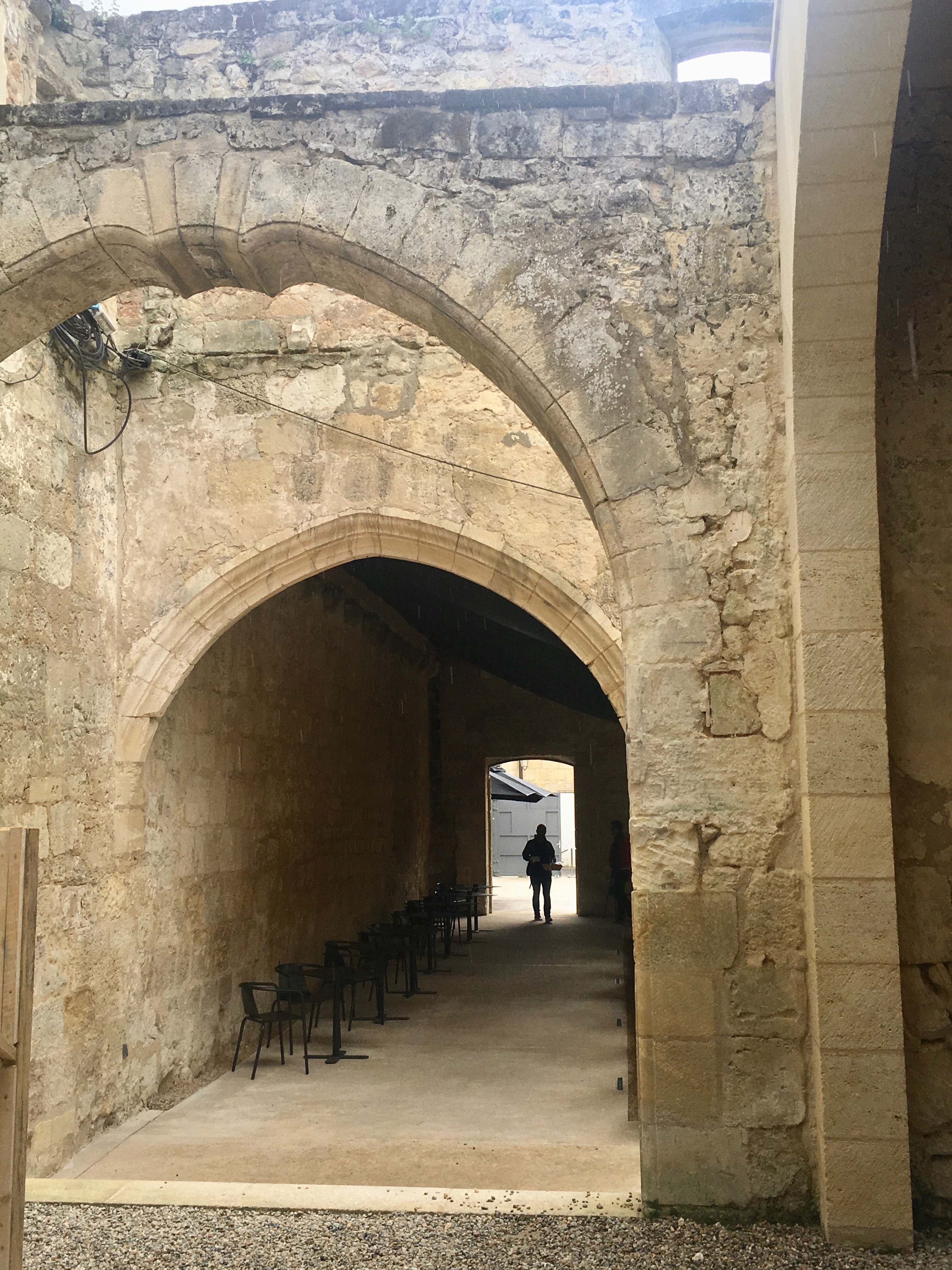
A passageway
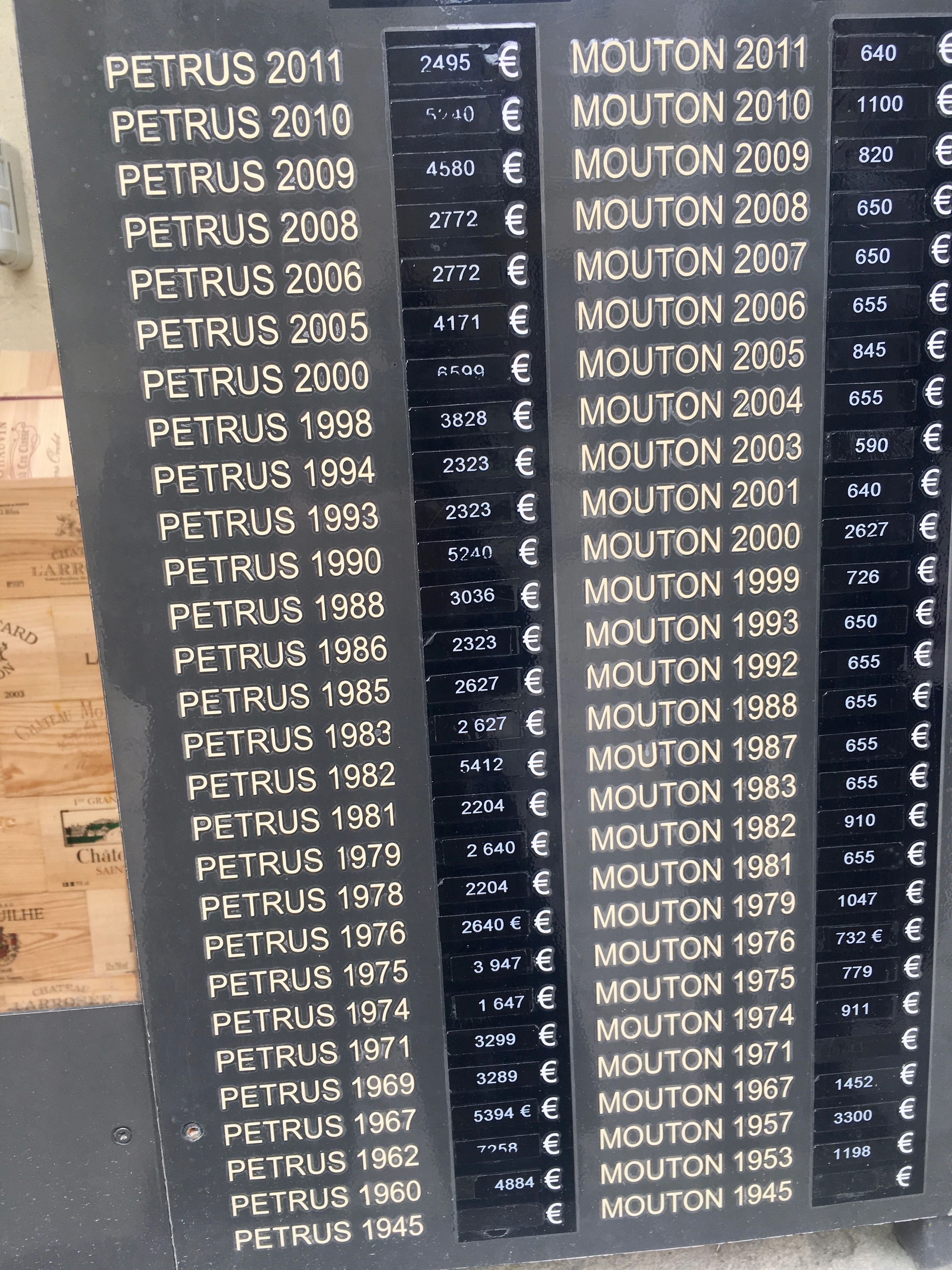
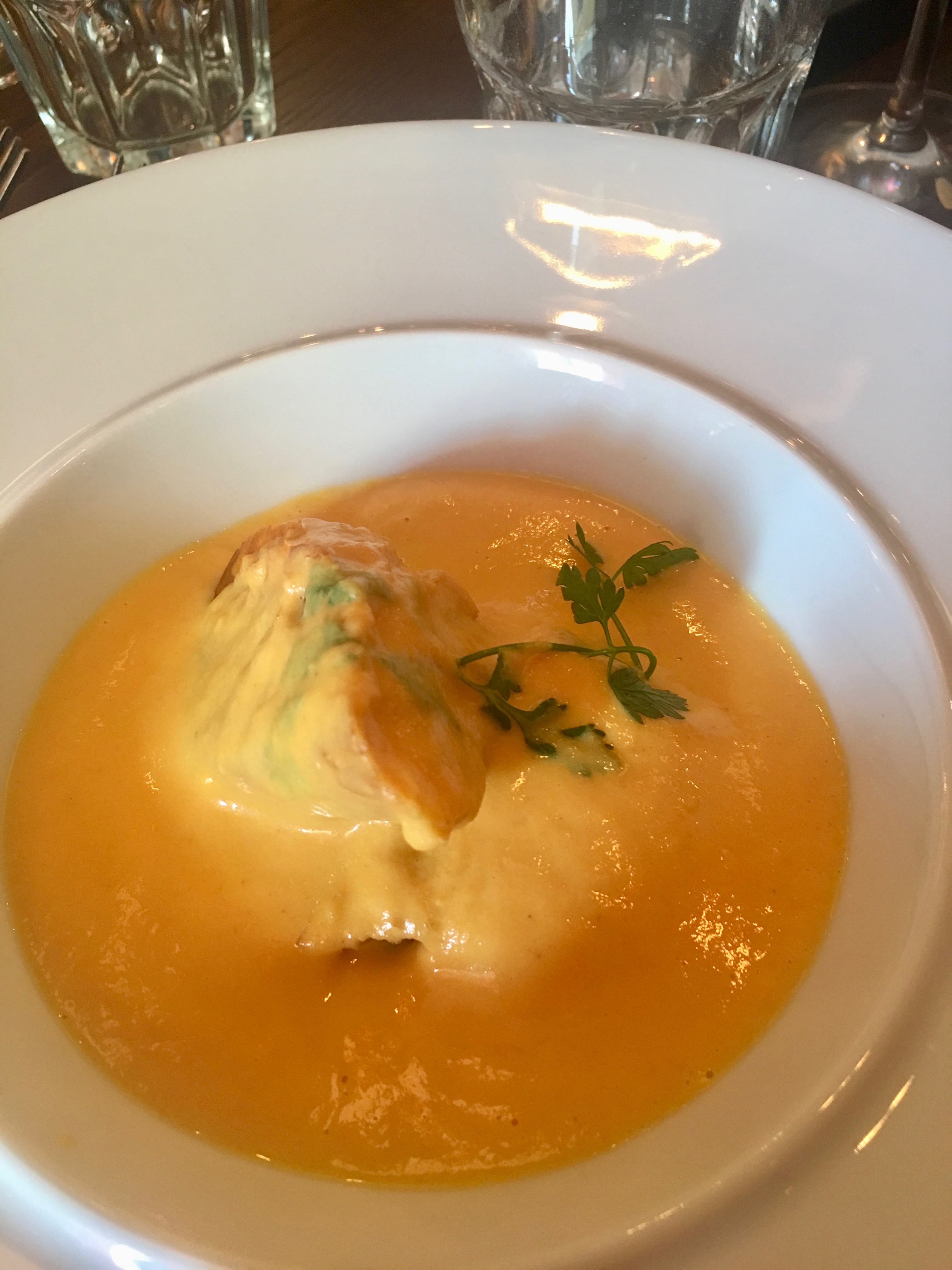
Then we had a special treat. The very special macarons of Saint-Emilion. The macaron is, after the wine known to all, the other specialty of Saint Emilion. It is manufactured there in 1620 by a religious community, the Ursulines. The recipe will then be transmitted to a few families, generation after generation and always kept secret. Today, Nadia Fermigier, who succeeded Madame Blanchez, is the only repository of the real recipe dating back to 1620. The typical macaron has a filling but these are a single layer. The have an almond taste and are wonderful with champagne!
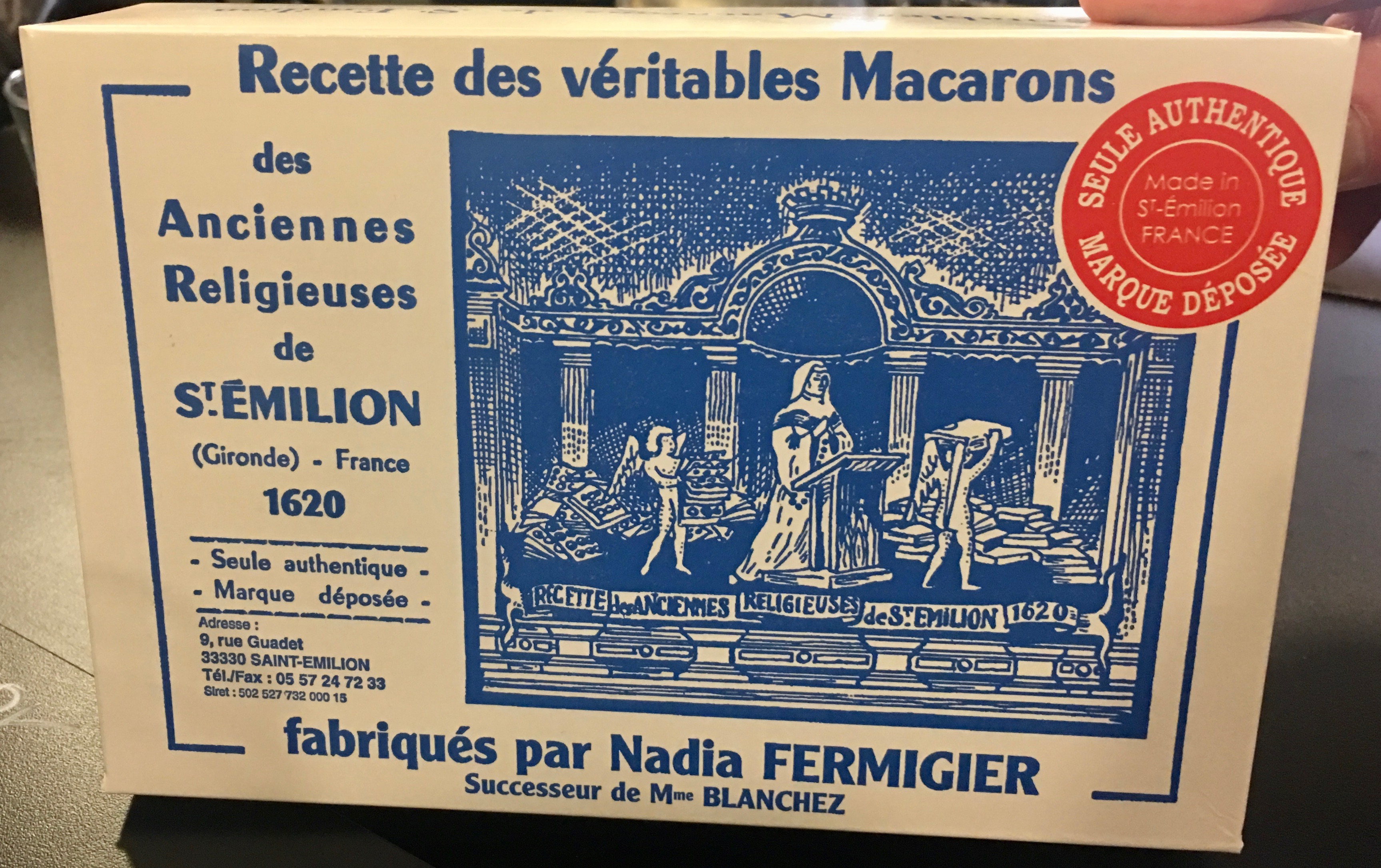
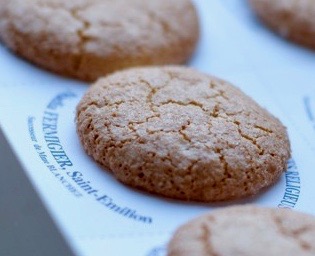
So after a little shopping we headed to Chateau Coutet for another wine tasting. If we must! We met Adrien, the grandson and now co-owner of the Chateau.
Chateau Coutet
The David-Beaulieu family, owner of the chateau Coutet for 14 generations, has always been committed to produce a great Saint Emilion wine with the greatest respect for the terroir and the surrounding nature. At the beginning of the XXth century, Chateau Coutet was present on all the big tables of the world, from Tsar Nicholas II to the great Khedive of Egypt. Nowadays, it is exported to more than 20 countries.
Dating back to the early 1600’s Chateau Coutet St. Emilion was already a small, vineyard. The property has remained in the hands of the Beaulieu family for almost 300 years! In fact, the Beaulieu family have owned the vineyard since 1784! That is close to a record in all of Bordeaux, let alone, St. Emilion for continuous ownership by the same family.
In 2014, Xavier David Beaulieu, the current of Chateau Coutet introduced the Vitirover. The Vitirover is a drone for growers to use in their vineyards. Powered by solar energy. using GPS technology to maneuver in the vineyards, vineyard managers can fly the drone using an app on their smart phones!
The Vitirover will help growers with instant diagnostics allowing for immediate identification of any problems in the vines. The Vitirover also comes equipped with infrared camera lenses that allow growers the ability to also detect levels of ripeness ion a parcel by parcel basis, as well as even on a vine by vine basis!
On average, the production of Chateau Coutet St. Emilion is close to 4,000 cases of wine per year. There is a second wine, Demoiselle de Coutet, which was previously sold under the name of La Chartreuse de Coutet. The property also makes a special cuvee, Cuvee Emeri, that is a made from a selection of their best parcels.
Scott please note: Chateau Coutet is better with 1-3 years of bottle age. Of course that can vary slightly, depending on the vintage. Chateau Coutet is best enjoyed in the first 2-8 years of life. Younger vintages can be decanted for up to 1 hour or so. This allows the wine to soften and open its perfume. Older vintages might need very little decanting, just enough to remove the sediment. We shipped some of this wine home.
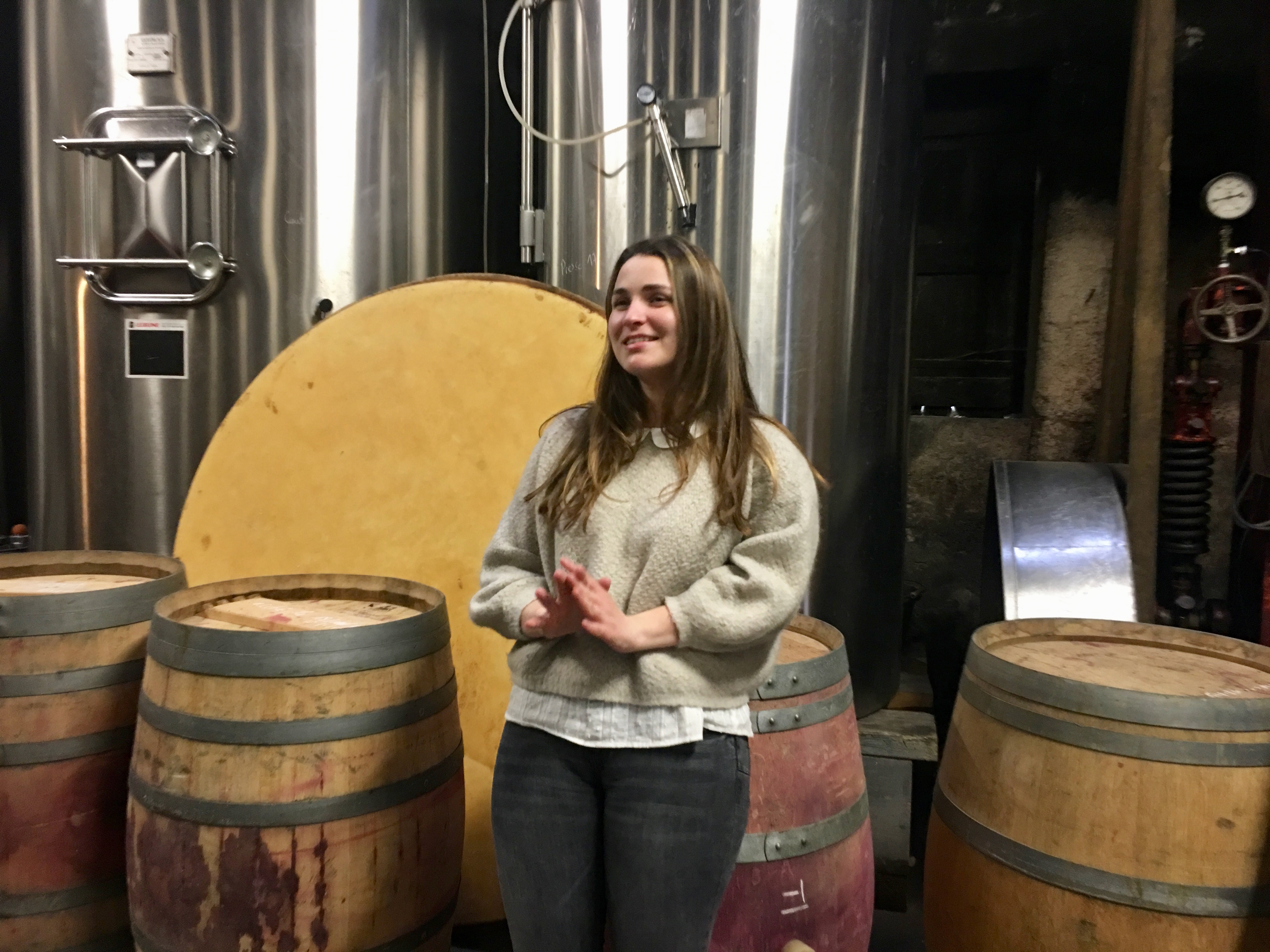
Telling us about the wine making process 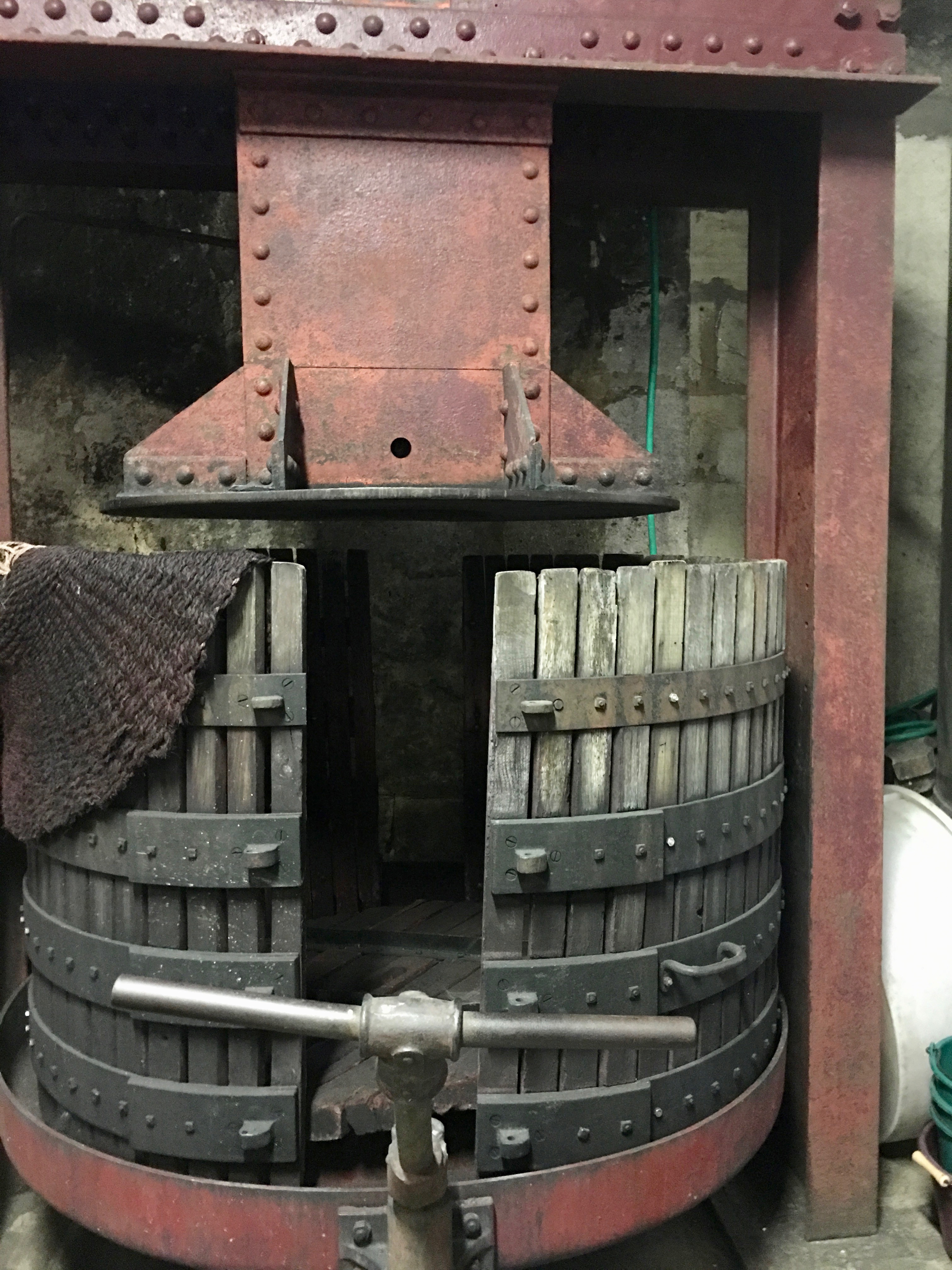
The wine press 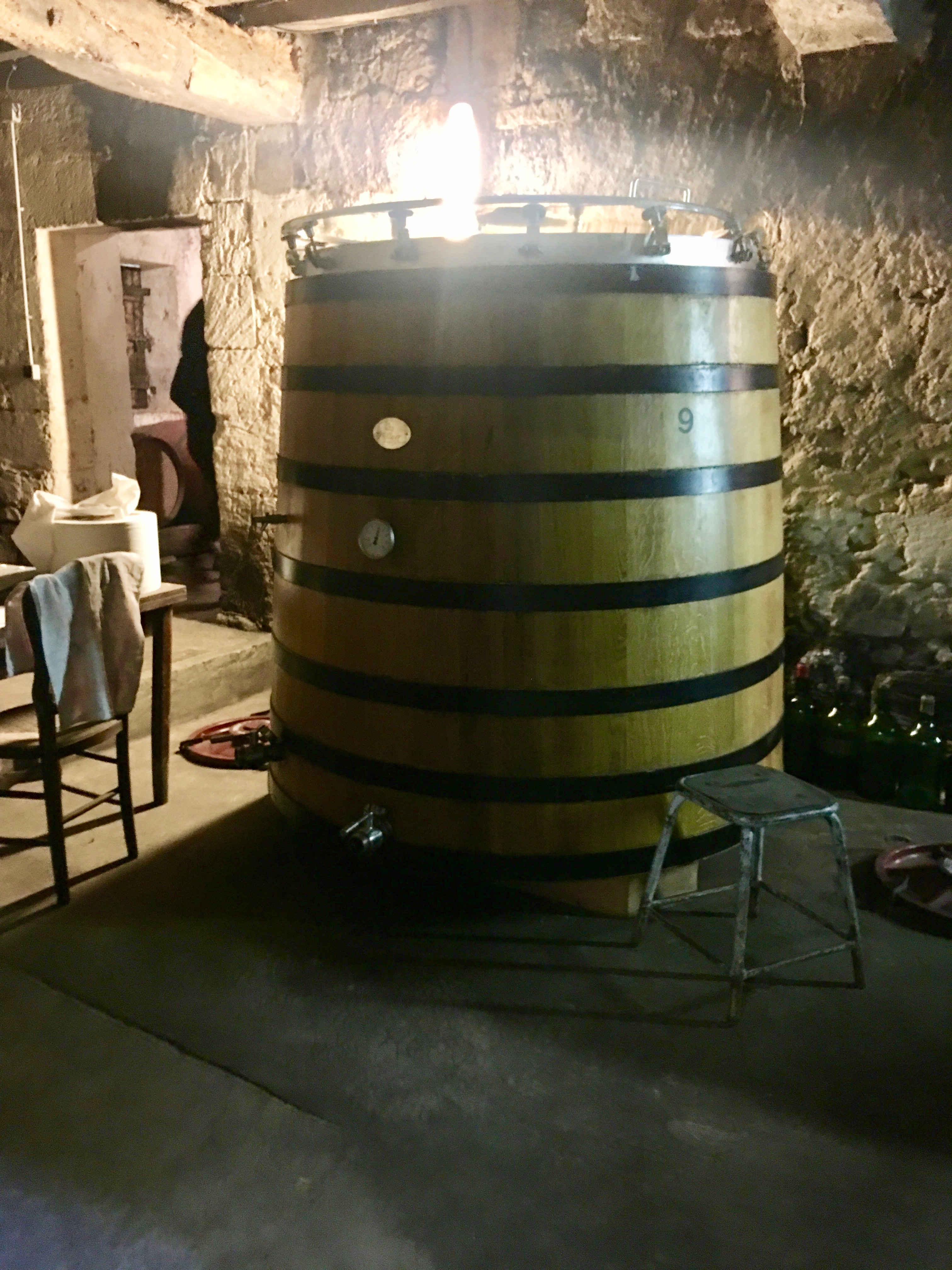
A different type of aging barrel 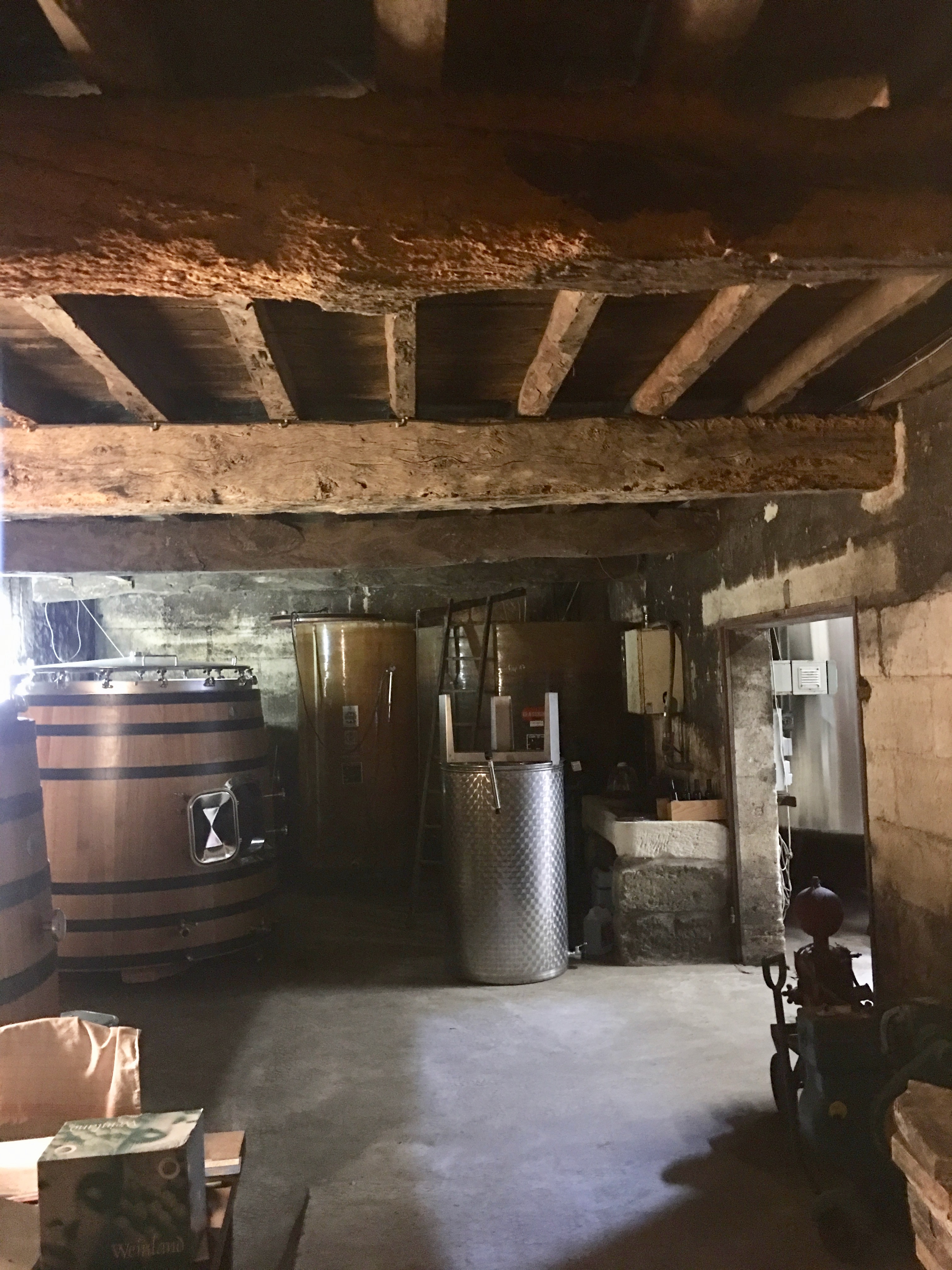
The aging room
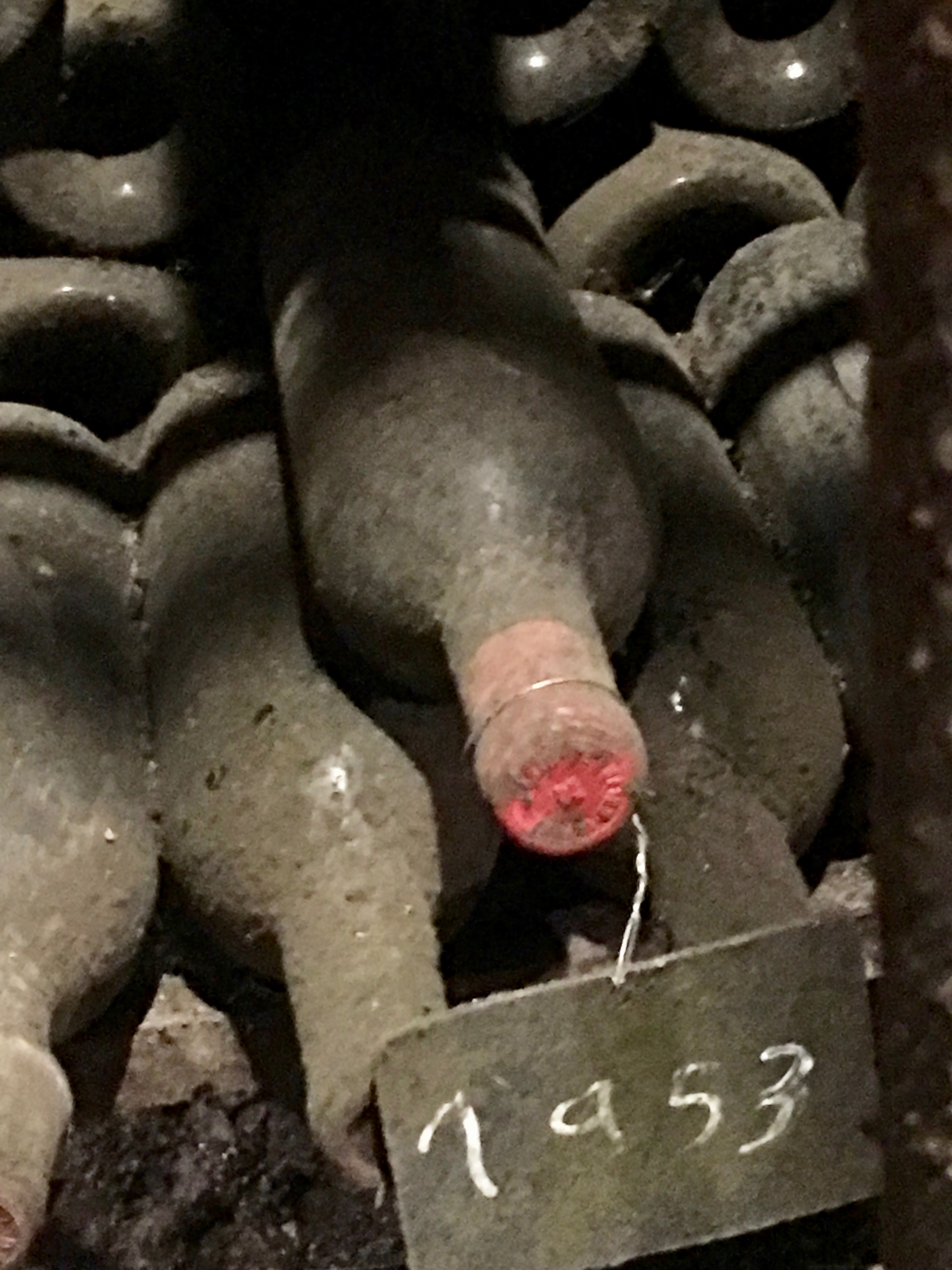
1953 bottles – note the dust 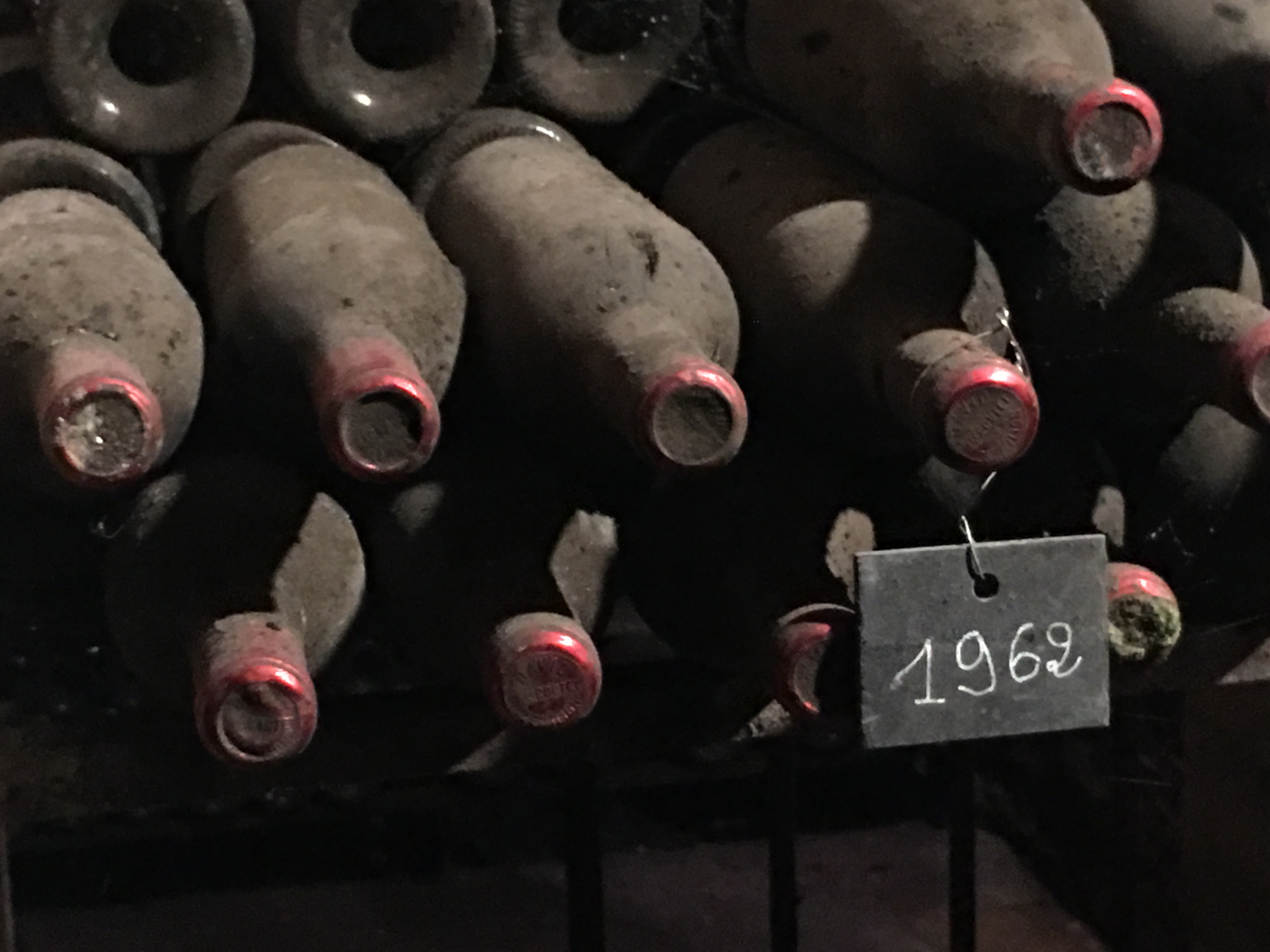
1962 bottles 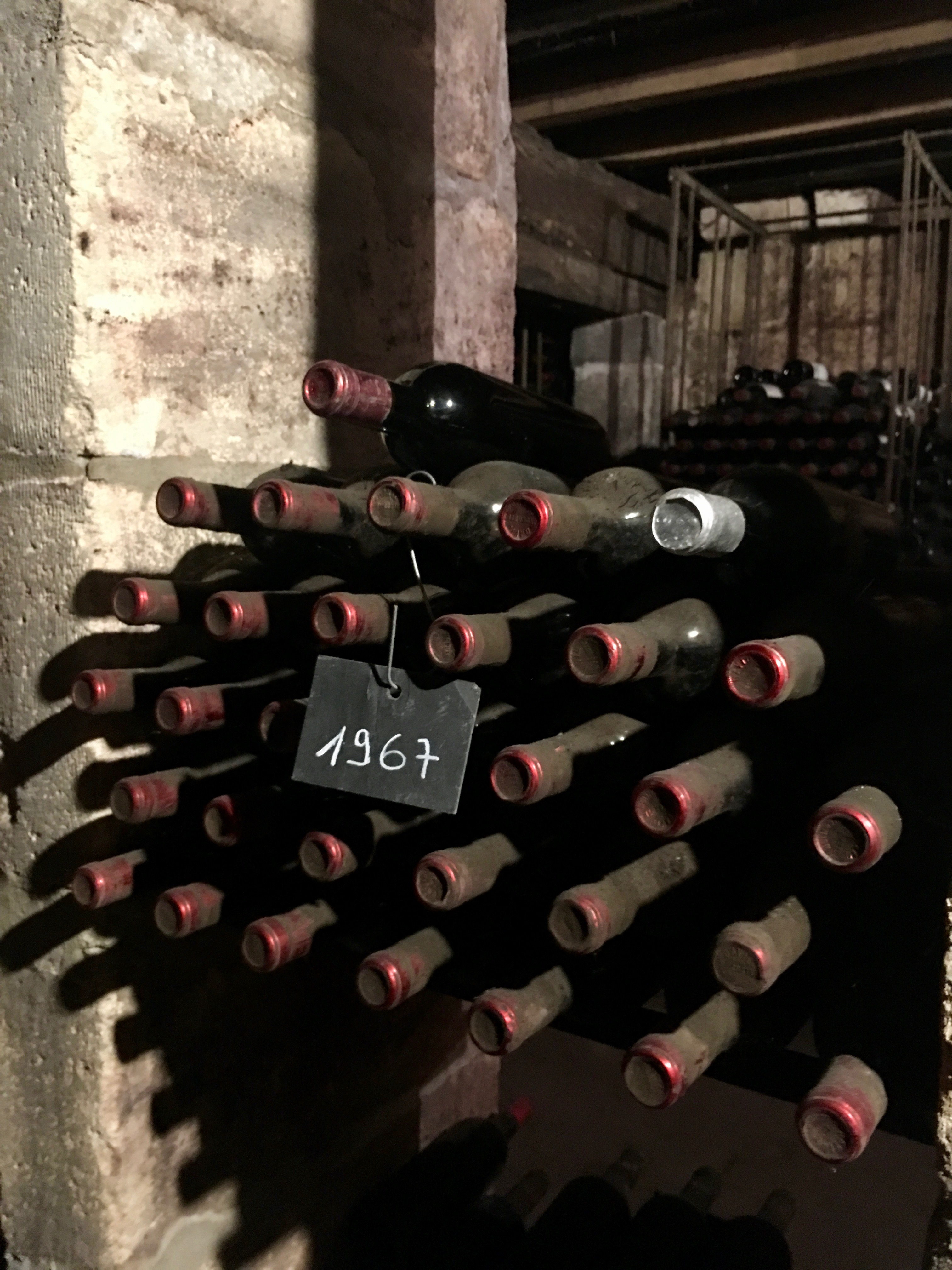
1967 bottles – no we did not get to taste any of these. 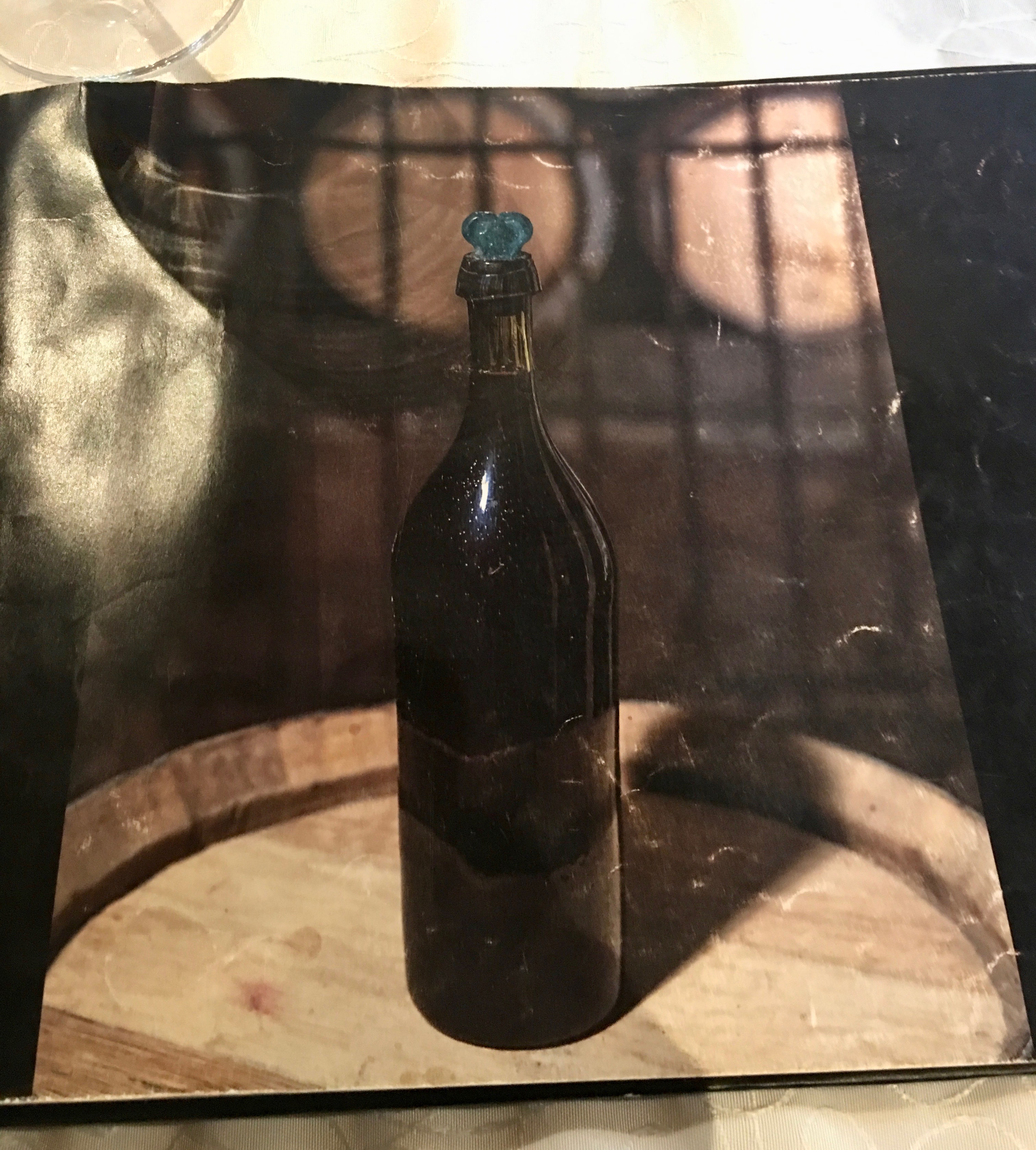
They found this bottle of a 1732 wine on the property. Note the glass stopper which was still intact. No, they have not opened the bottle!
Then we were off for a tarte tatin class and a beautiful dinner of Bazas beef steak, a wonderful salad and vegetables. Once again, Julien outdid himself.
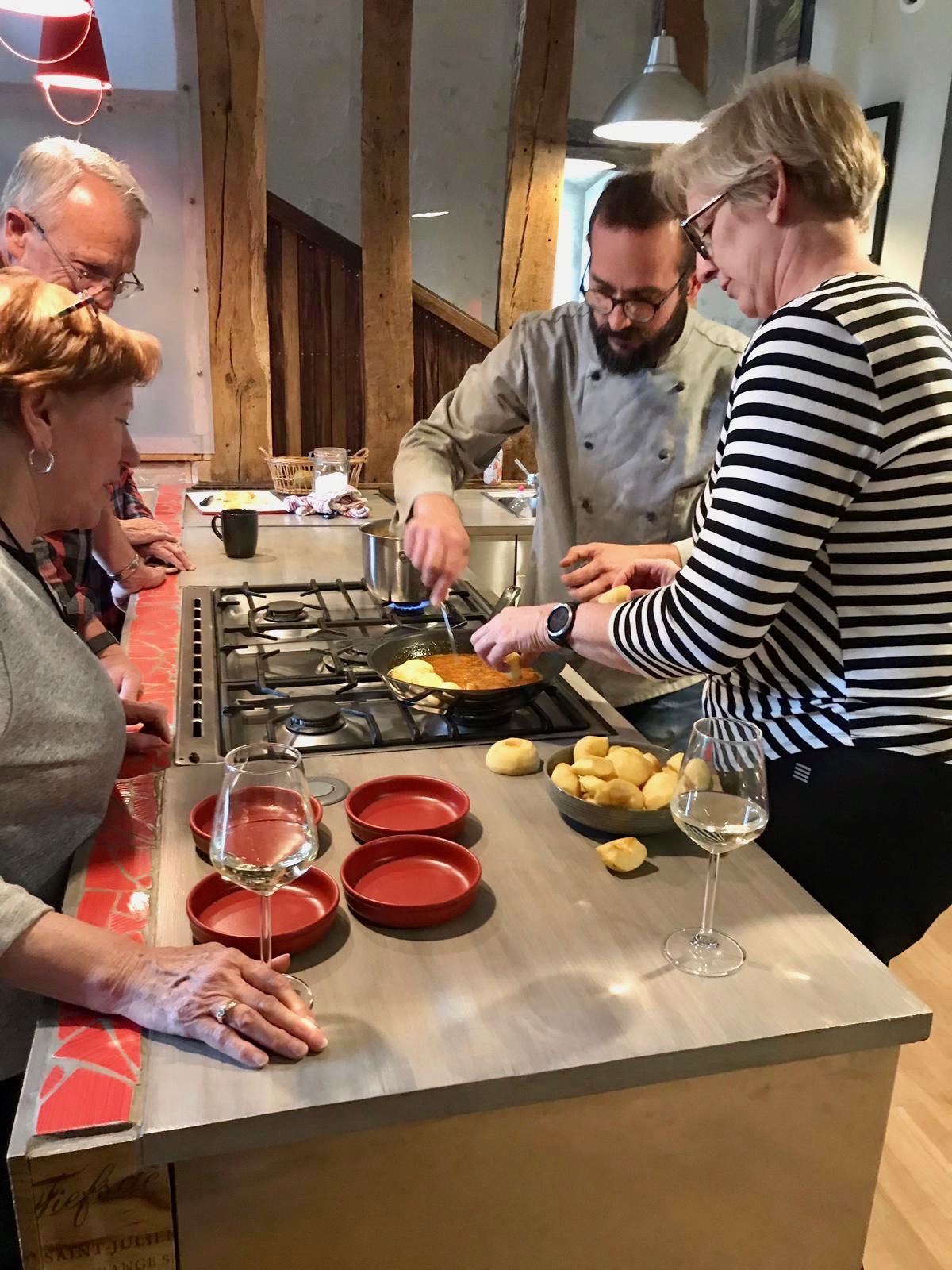
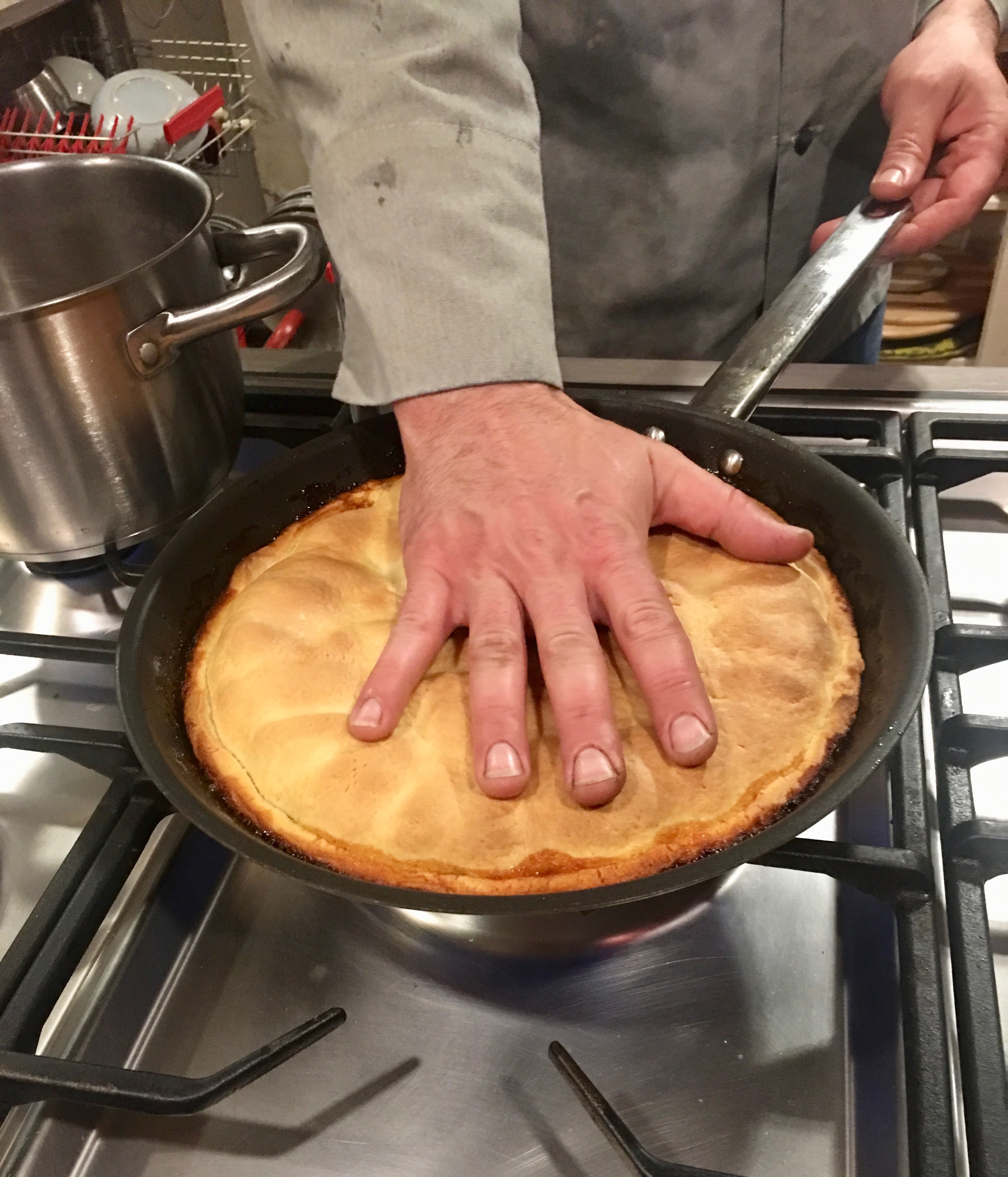
Reheating the tarte. I learned you can make it in the morning and reheat it. 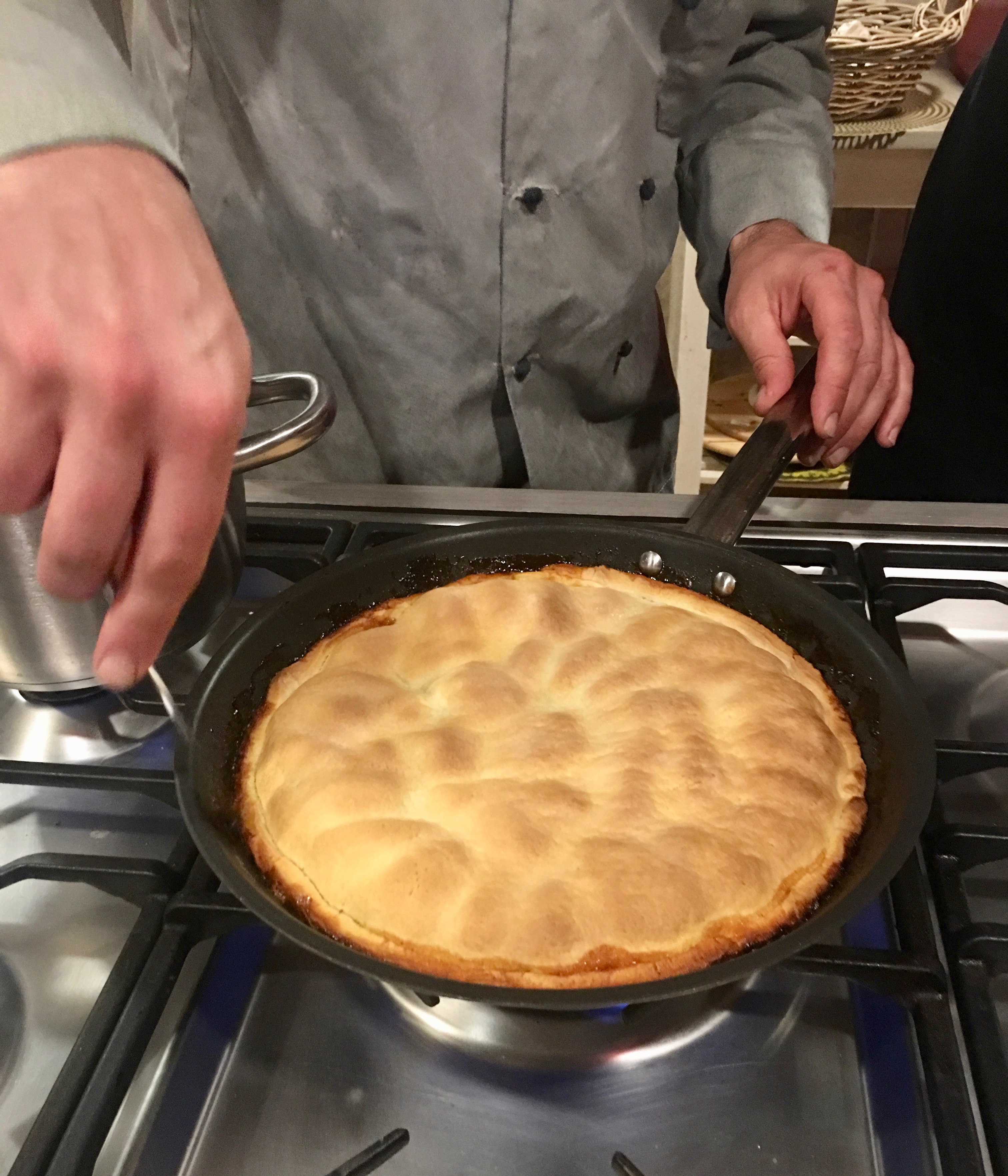
Making sure it will not stick 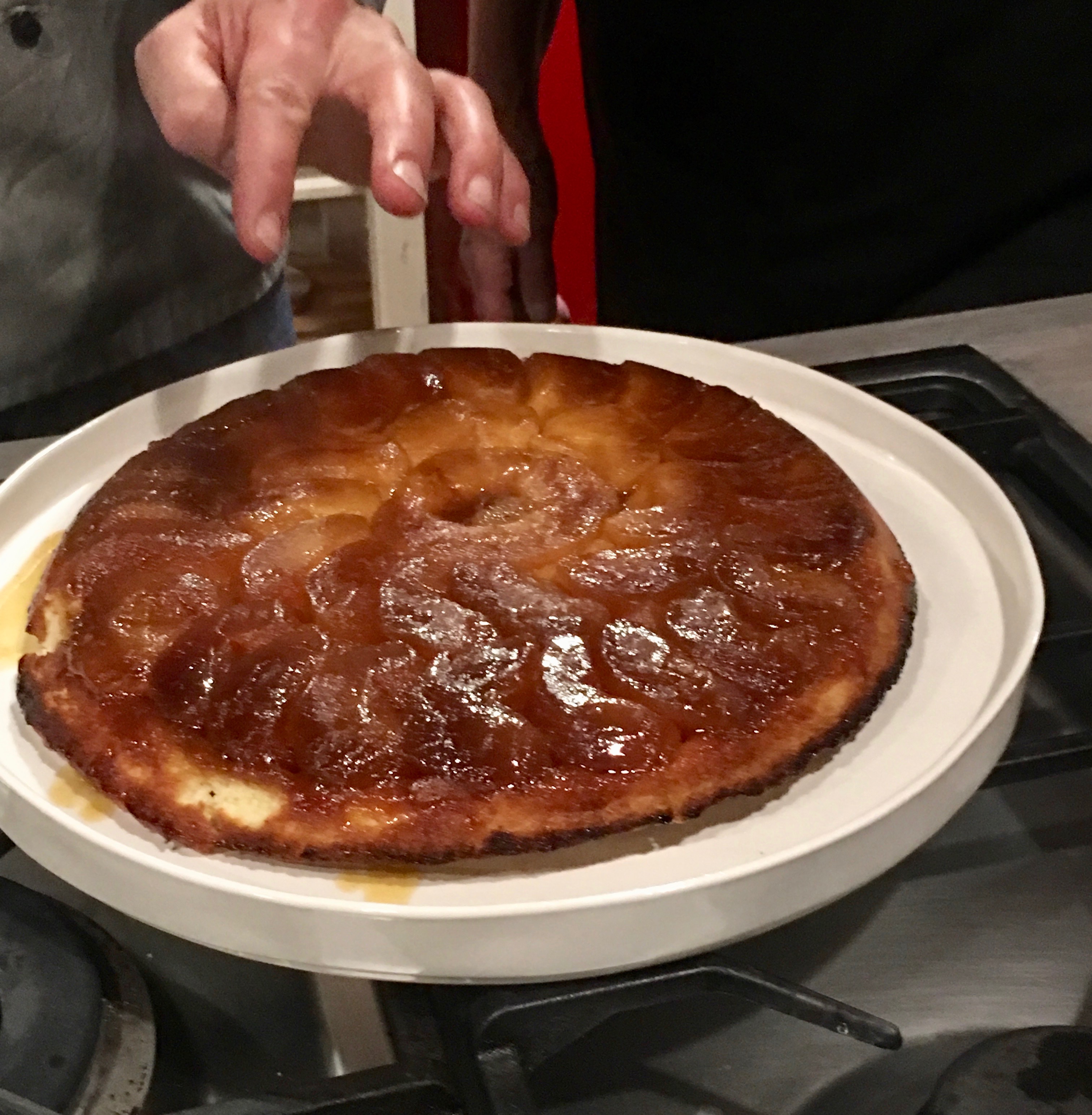
Voila, it is done!
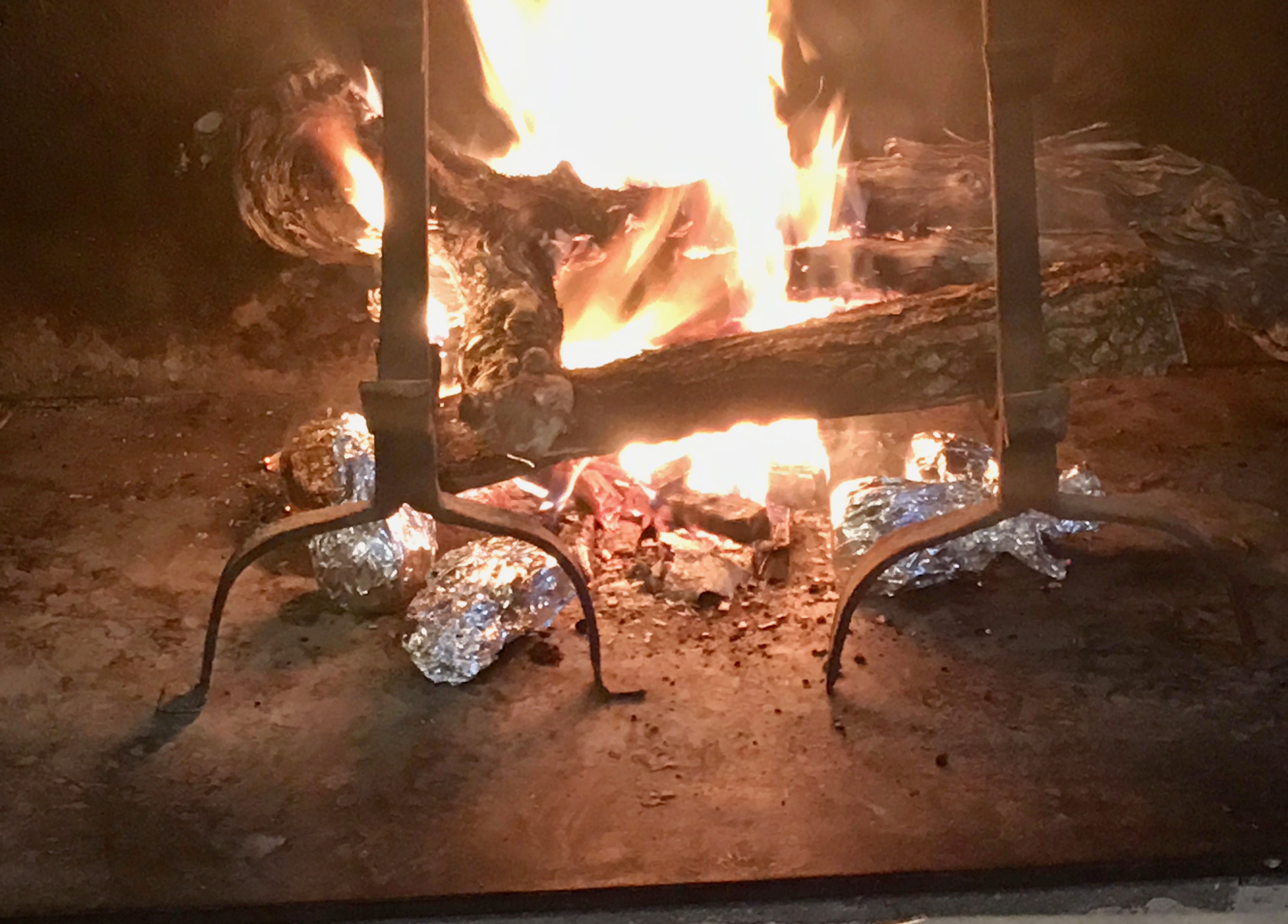
Roasting potatoes in the fireplace in the kitchen! 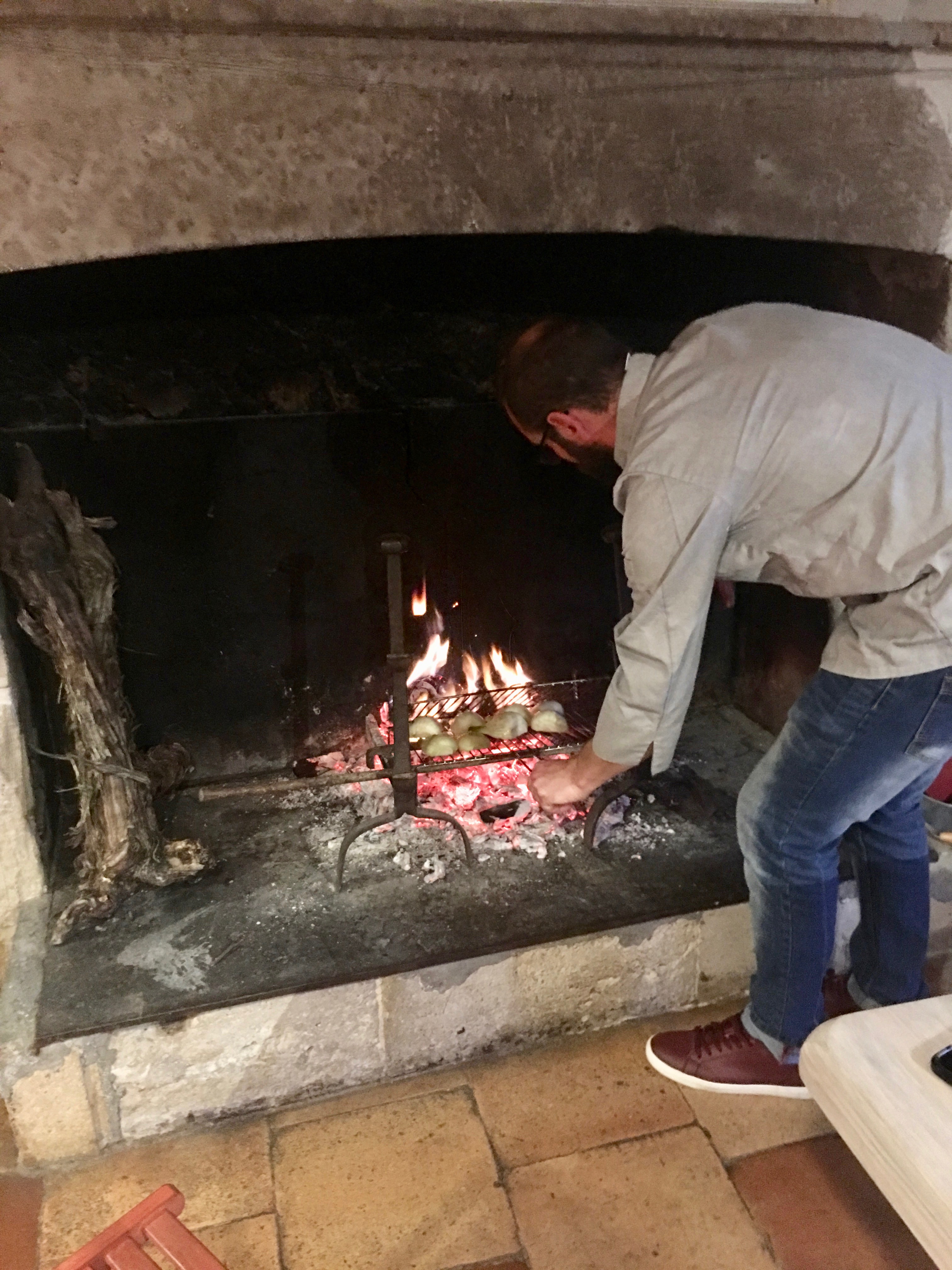
Roasting fennel 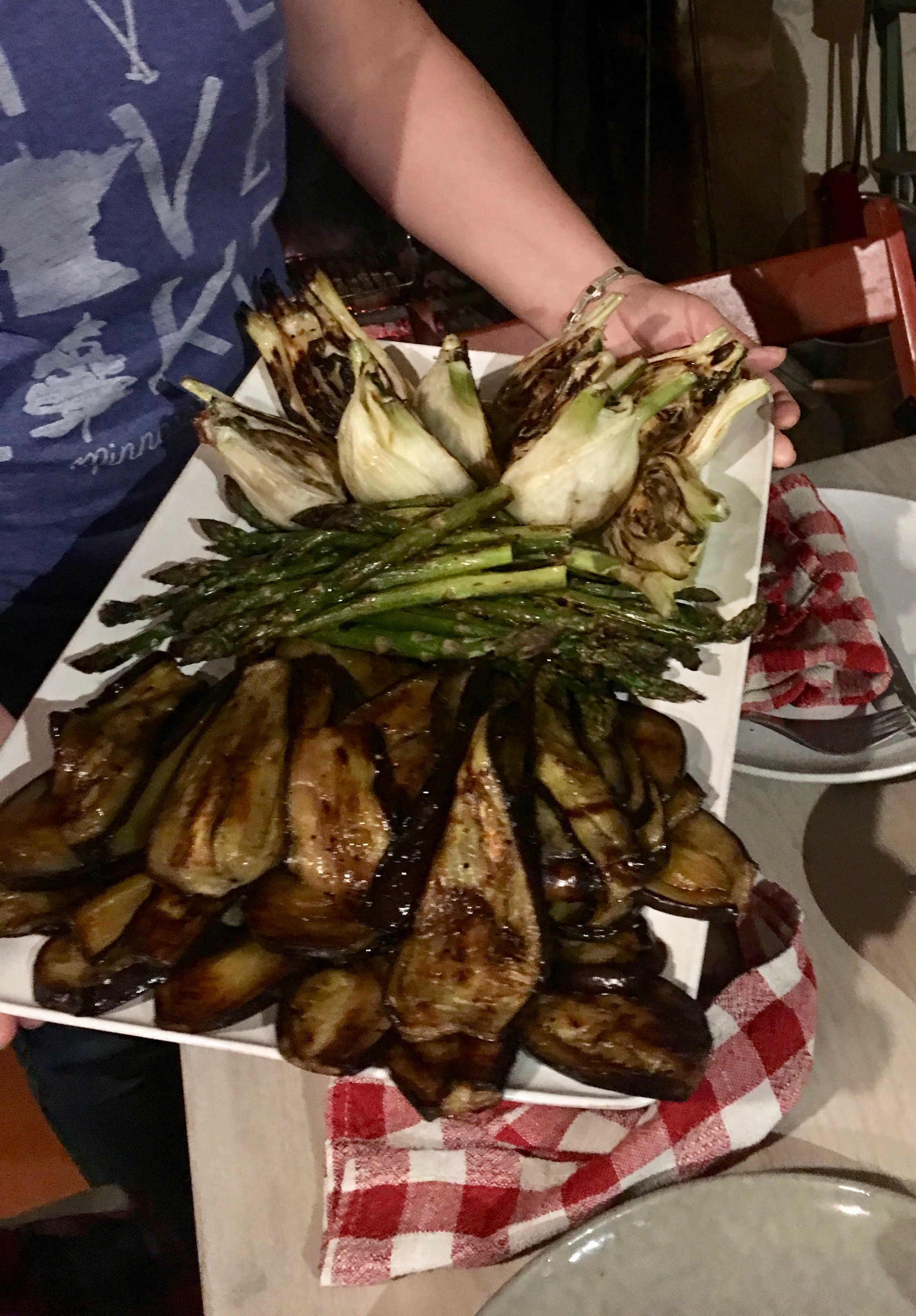
Beautiful roasted fennel, asparagus and egg plant. 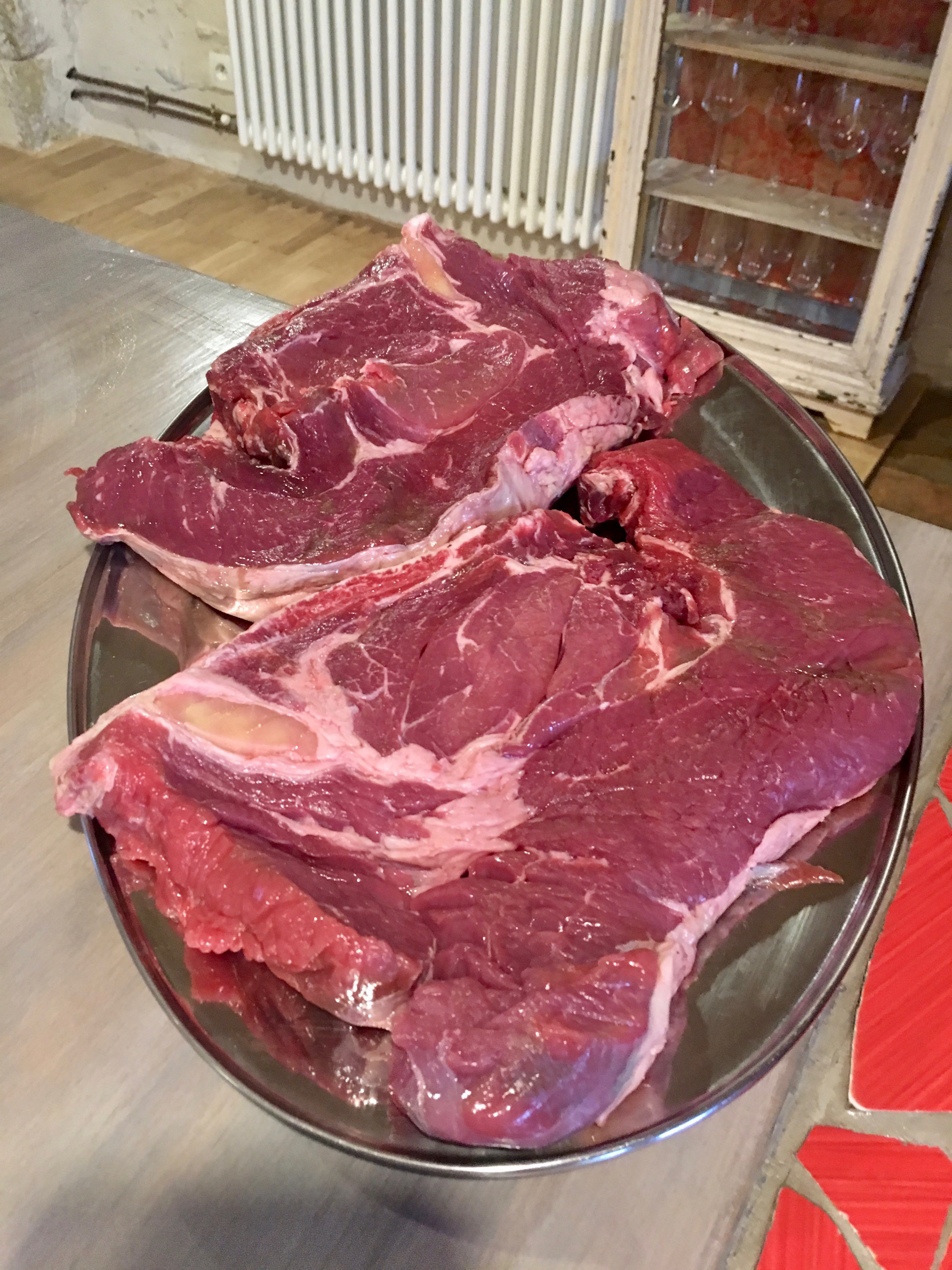
Bazas steak which Julien cooked over the fire right in the kitchen.
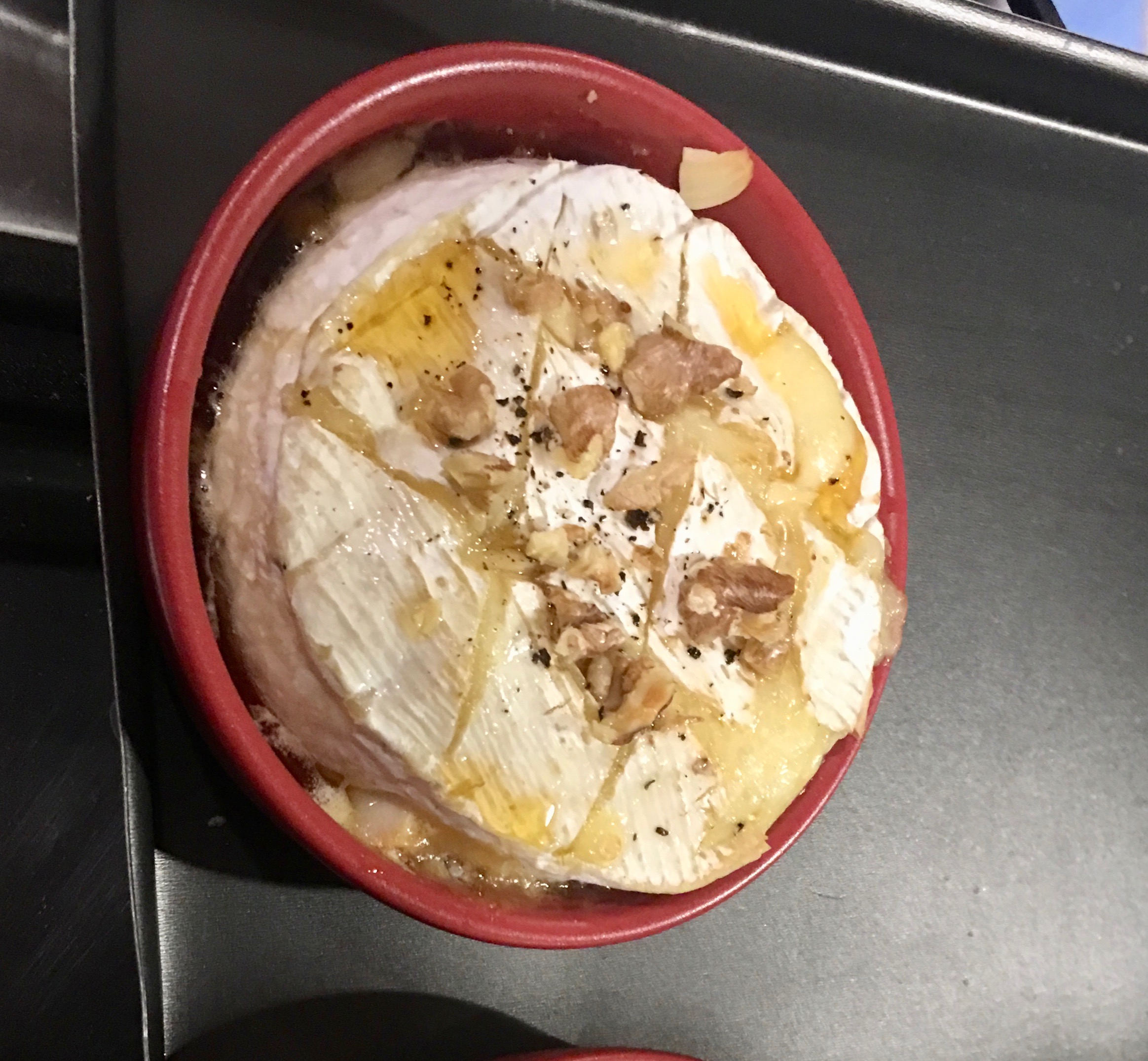
Camembert cheese with honey, drizzle of oil and walnuts for the salad 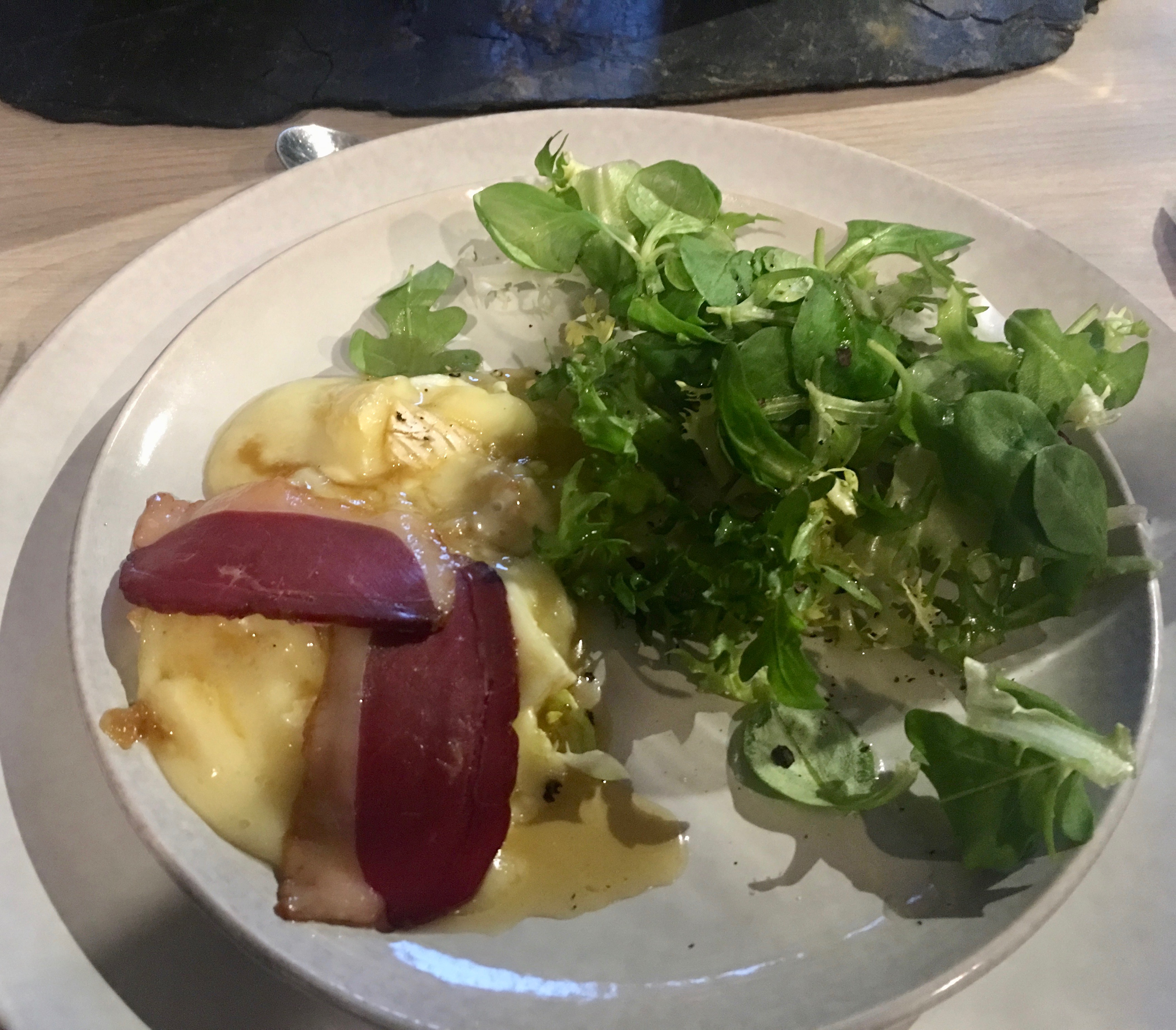
Salad of lettuces, cheese and smoked duck.
This was the last night Kurt and Lisa would be at Rouge Bordeaux. They were headed to Paris to continue their vacation. Bonne journee!

 Meandering With Murphy
Mary & Scott – we received our shipment of wine on Monday!
LikeLike
Love hearing about the history!
LikeLike