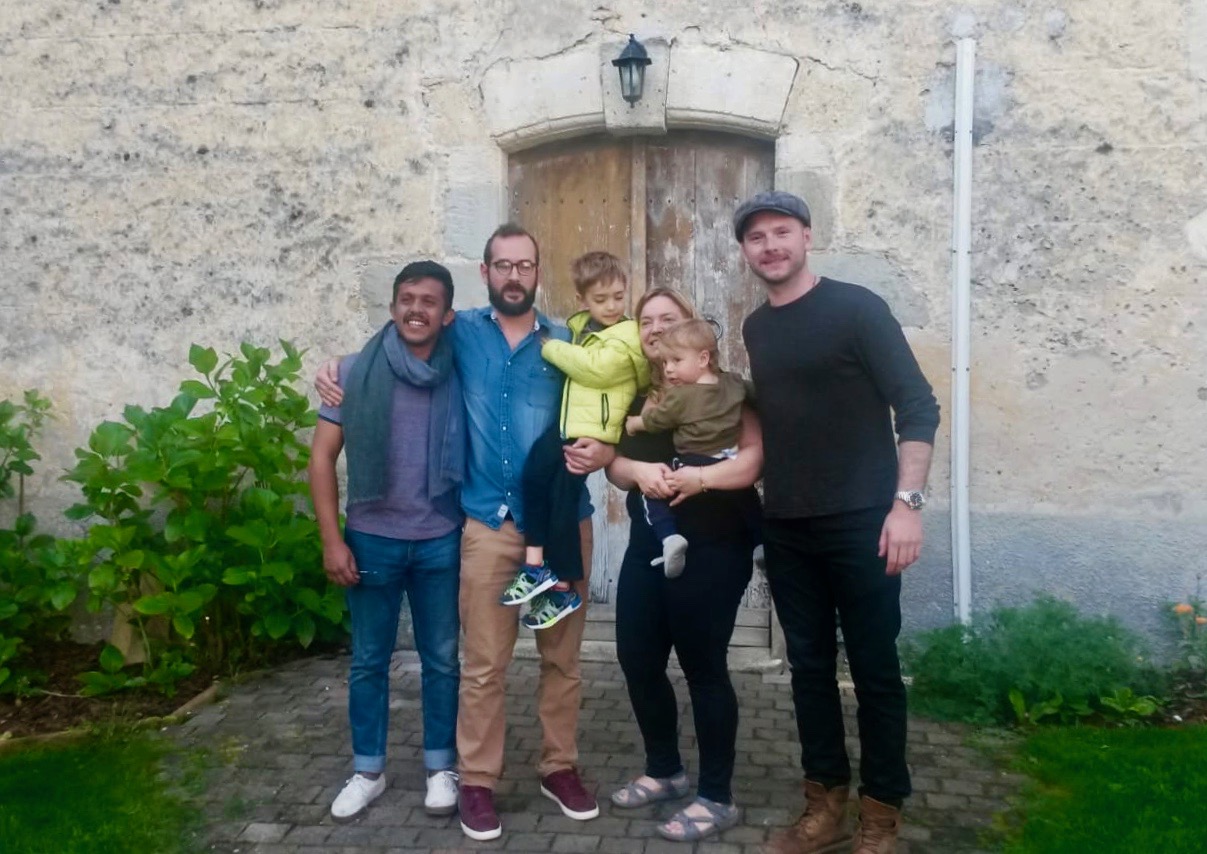
Sunday, April 28 and Scott and I were heading off early to drive to Langon and taking the train from there into Bordeaux. We really did not want to drive in Bordeaux. Ted and Puru were supposed to take off early for their return trip to Geneva but they were out late at Le Coyote Bar and slept in so we were not able to say good-by. We were so happy to have met them. WE had such a good time with them and they are such nice guys. Agnes and Alain were also taking off to head back home to Lyon. We we were so happy to have met them as well and to get to know them better.
We got to the station early and were set to buy tickets but the ticket window did not open until 10. We finally found the ticket machine outside and were struggling to figure out what to do when a very nice Frenchman came up and helped us. We were grateful!!
We were going to Bordeaux to go to the Centre National Jean Moulin, to visit the wine museum, to go to yet another market, to have lunch and to see the sights in Bordeaux. A pretty aggressive schedule. We got to the Bordeaux train station and then had to find the tram. Fortunately the signs were good and we got a pass. They have a wonderful tram system. We first wanted to go to the market but we got off at the wrong place but walking felt good.
I was going to give a “brief” history of Bordeaux but it is very complicated so am giving a very short summary. Built on the curve of the Garonne River, Bordeaux has been a major port since pre-Roman times and for centuries a focus and crossroads of European trade. Skipping through several wars and occupations we get to 1462.
In 1462, Bordeaux obtained a parliament, but regained importance only in the 16th century when it became the centre of the distribution of sugar and slaves from the West Indies along with the traditional wine. The 18th century was the golden age of Bordeaux. Many downtown buildings (about 5,000), including those on the quays, are from this period. Victor Hugo found the town so beautiful he once said: “Take Versailles, add Antwerp, and you have Bordeaux”.
In 1870, at the beginning of the Franco-Prussian war against Prussia, the French government temporarily relocated to Bordeaux from Paris. This happened again during the First World War and again very briefly during the Second World War, when it became clear that Paris would soon fall into German hands. However, on the last of these occasions the French capital was soon moved again to Vichy. In May and June 1940, Bordeaux was the site of the life-saving actions of the Portuguese consul-general, Aristides de Sousa Mendes, who illegally granted thousands of Portuguese visas, which were needed to pass the Spanish border, to refugees fleeing the German Occupation.
From 1940 to 1943, the Italian Royal Navy established a submarine base at Bordeaux. Italian submarines participated in the Battle of the Atlantic from this base, which was also a major base for German U-boats. The massive, reinforced concrete U-boat pens have proved impractical to demolish and are now partly used as a cultural center for exhibitions. It is the fifth largest city in France.
Next to Marseille, Bordeaux is the oldest trading port in France. From Roman times the export of wine was the basis for modest prosperity. Under English rule from 1154-1453, the merchants began making immense fortunes from their monopoly of wine sales to England. After the discovery of “the New World” Bordeaux took advantage of its Atlantic position and to diversify and broaden their wine market. Today Bordeaux produces over 44 million cases of wine a year. It is the fifth largest city in France. Along the waterfront of they wealthy wine metropolis is a long sweep of elegant Classical facades which were first built to mask the medieval slums behind.
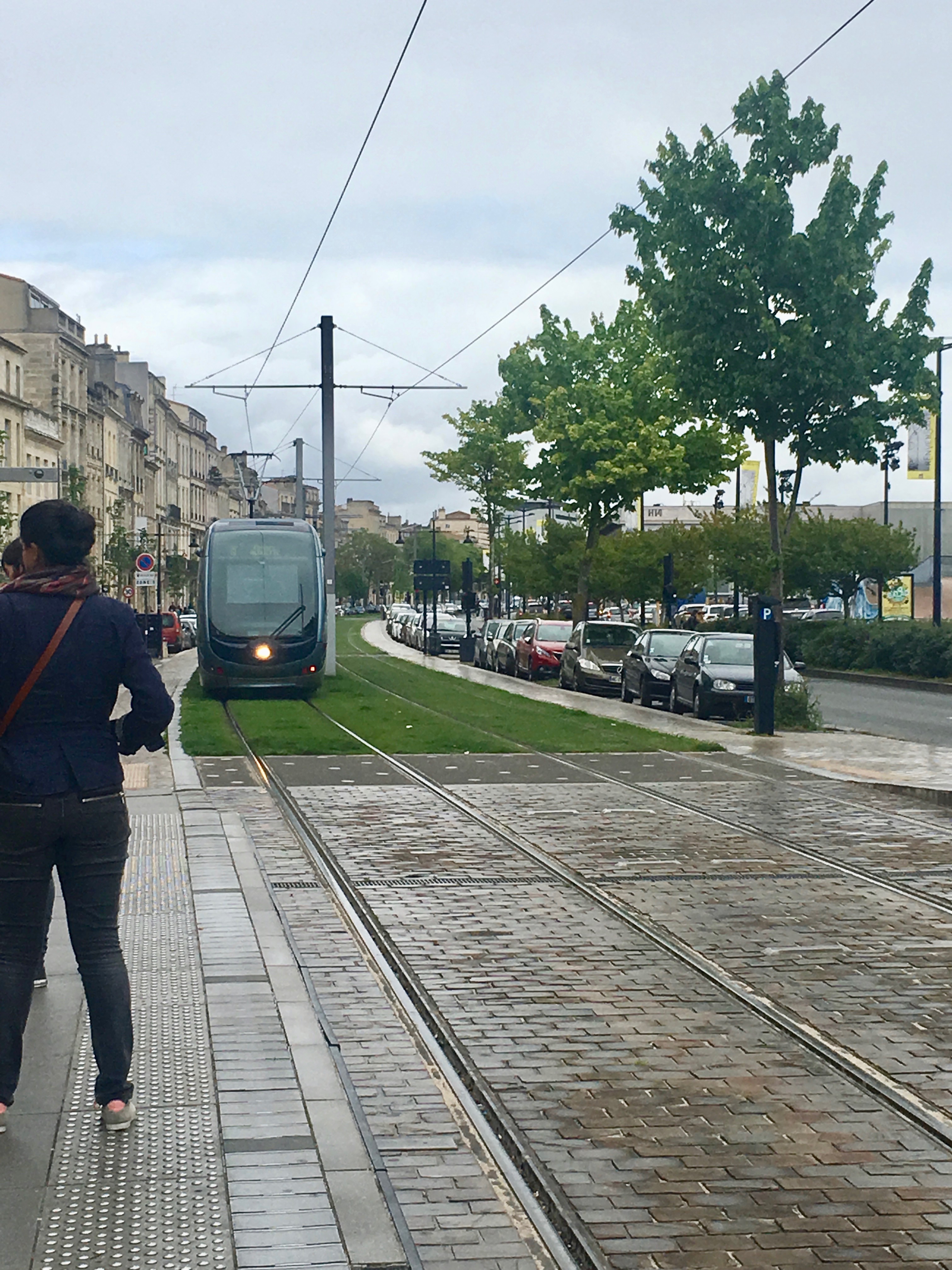
Great tram system 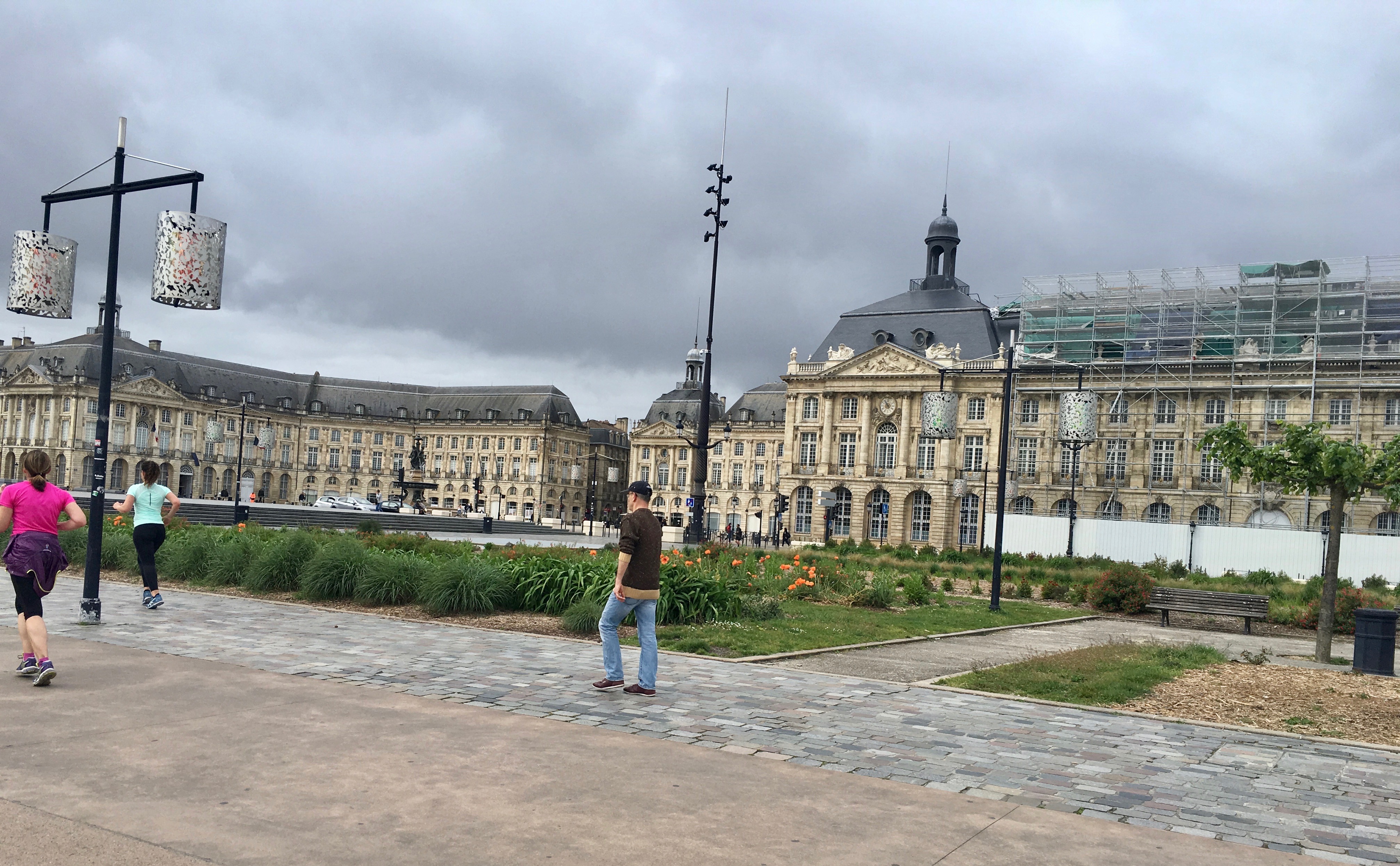
Place de la Bourse
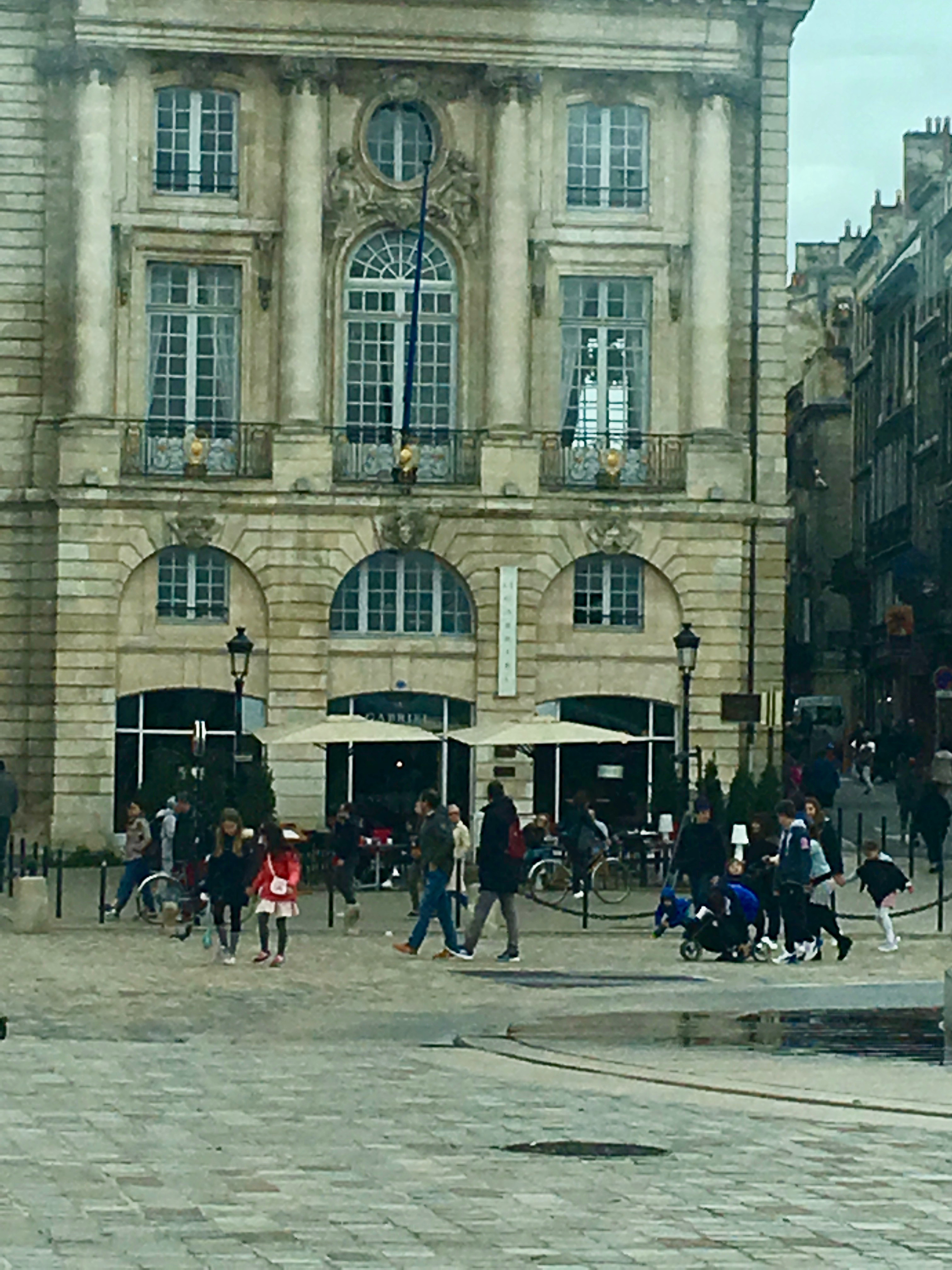
Our first stop was to make a reservation for lunch at the restaurant, Le Bistrot du Gabriel, which Megan had recommended. We had a 1 pm reservation and were off to the market where we found many interesting stalls.
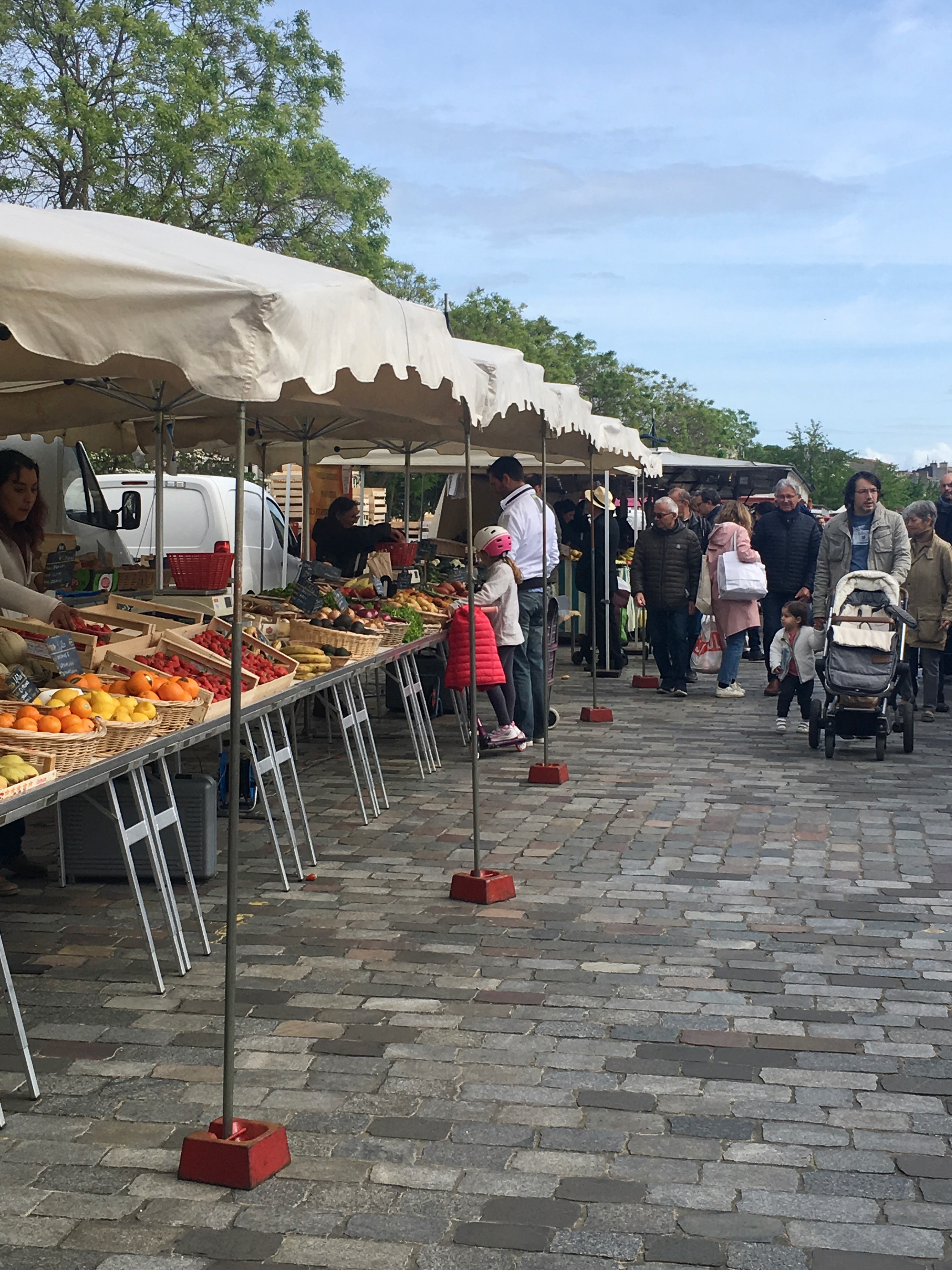
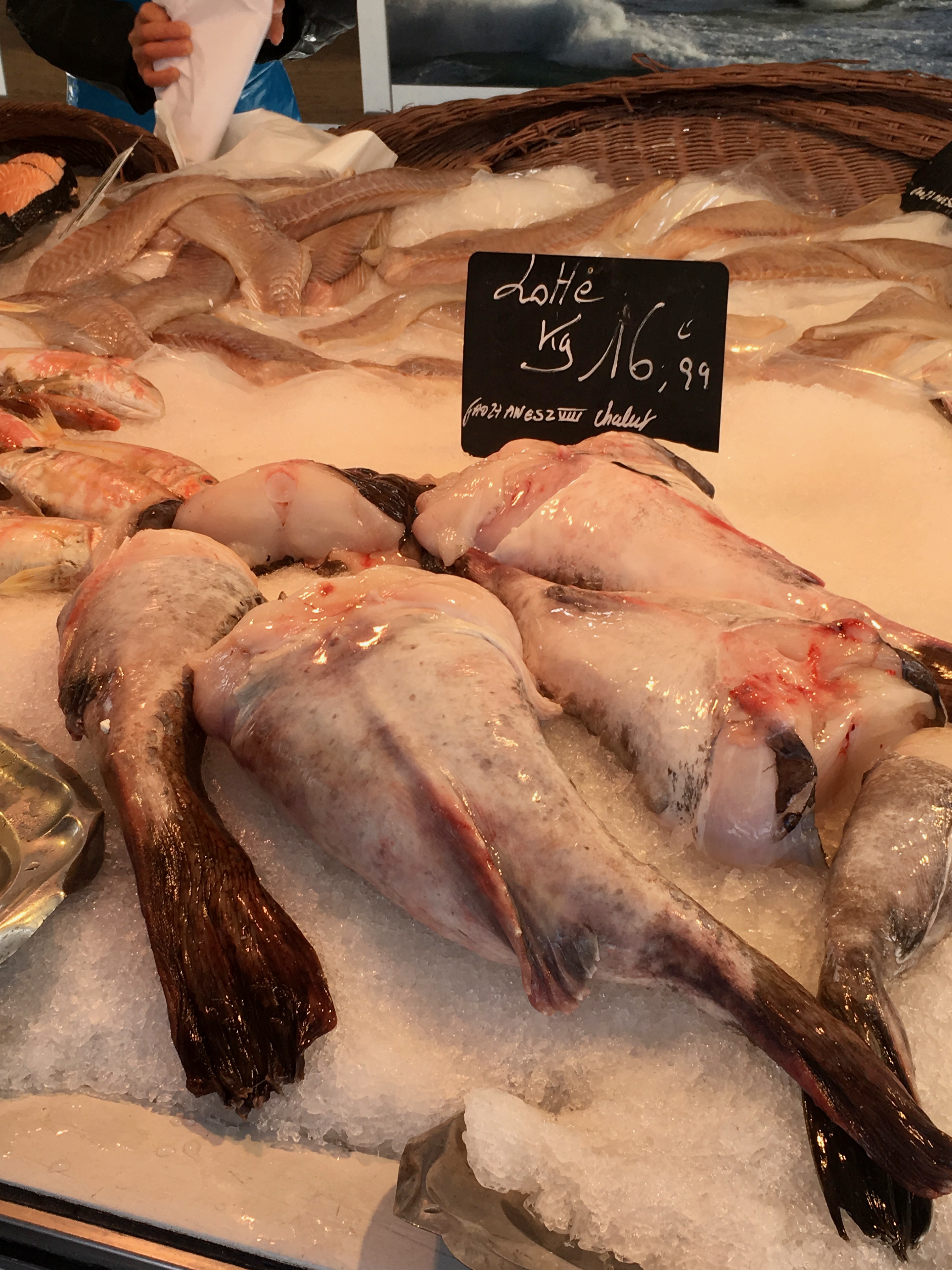
Fish 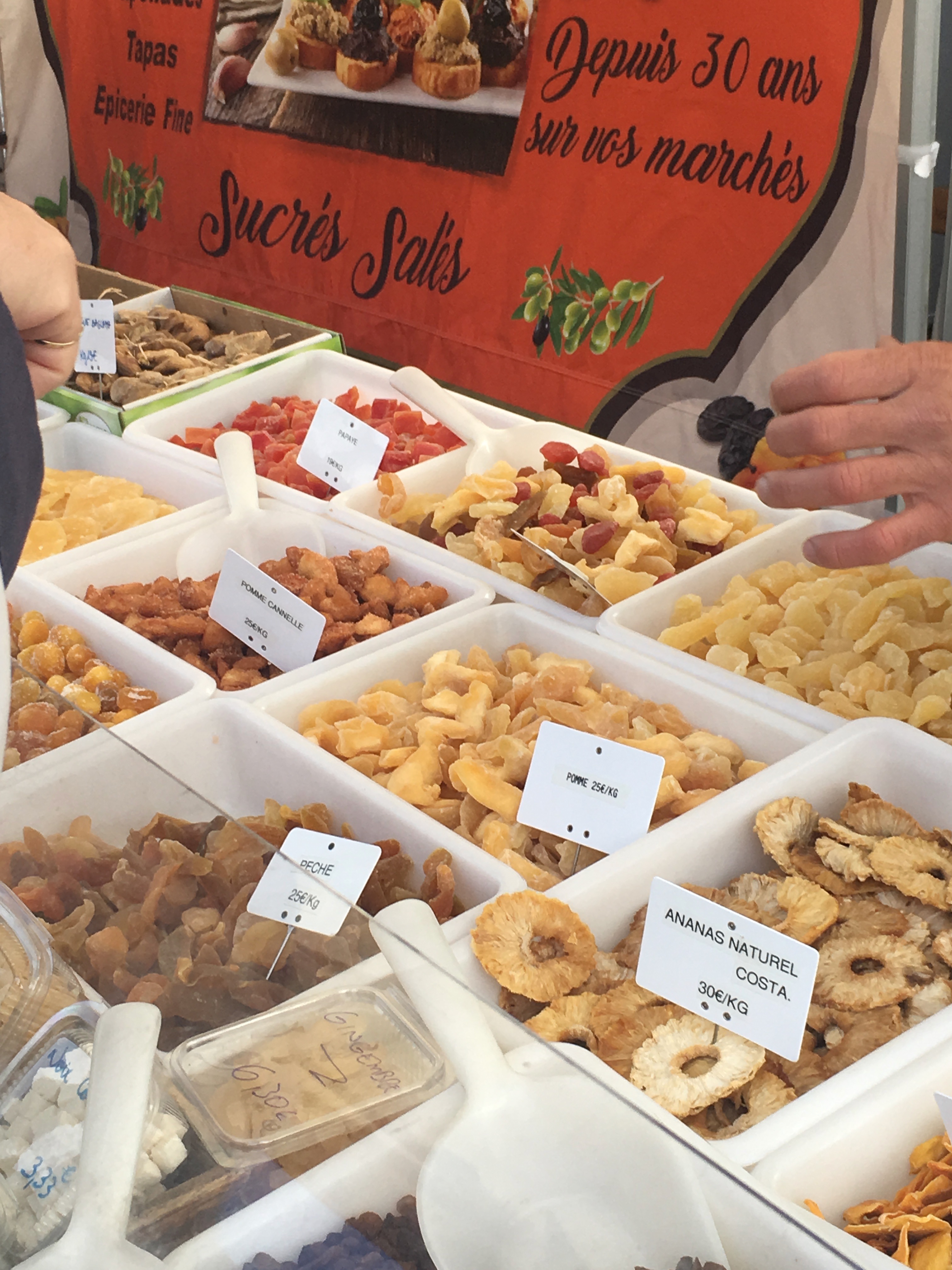
Nuts and dried fruits 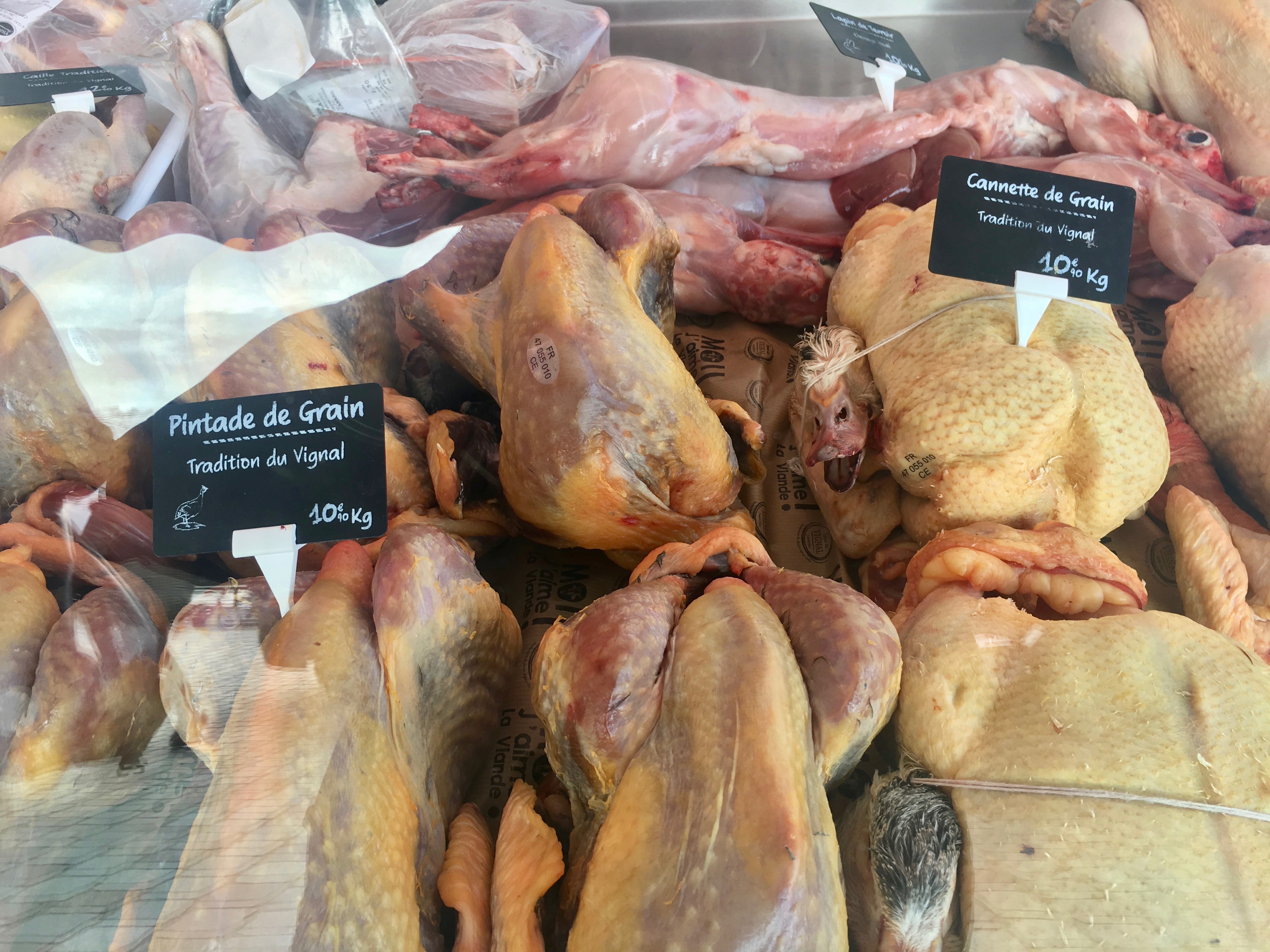
Crazy chickens
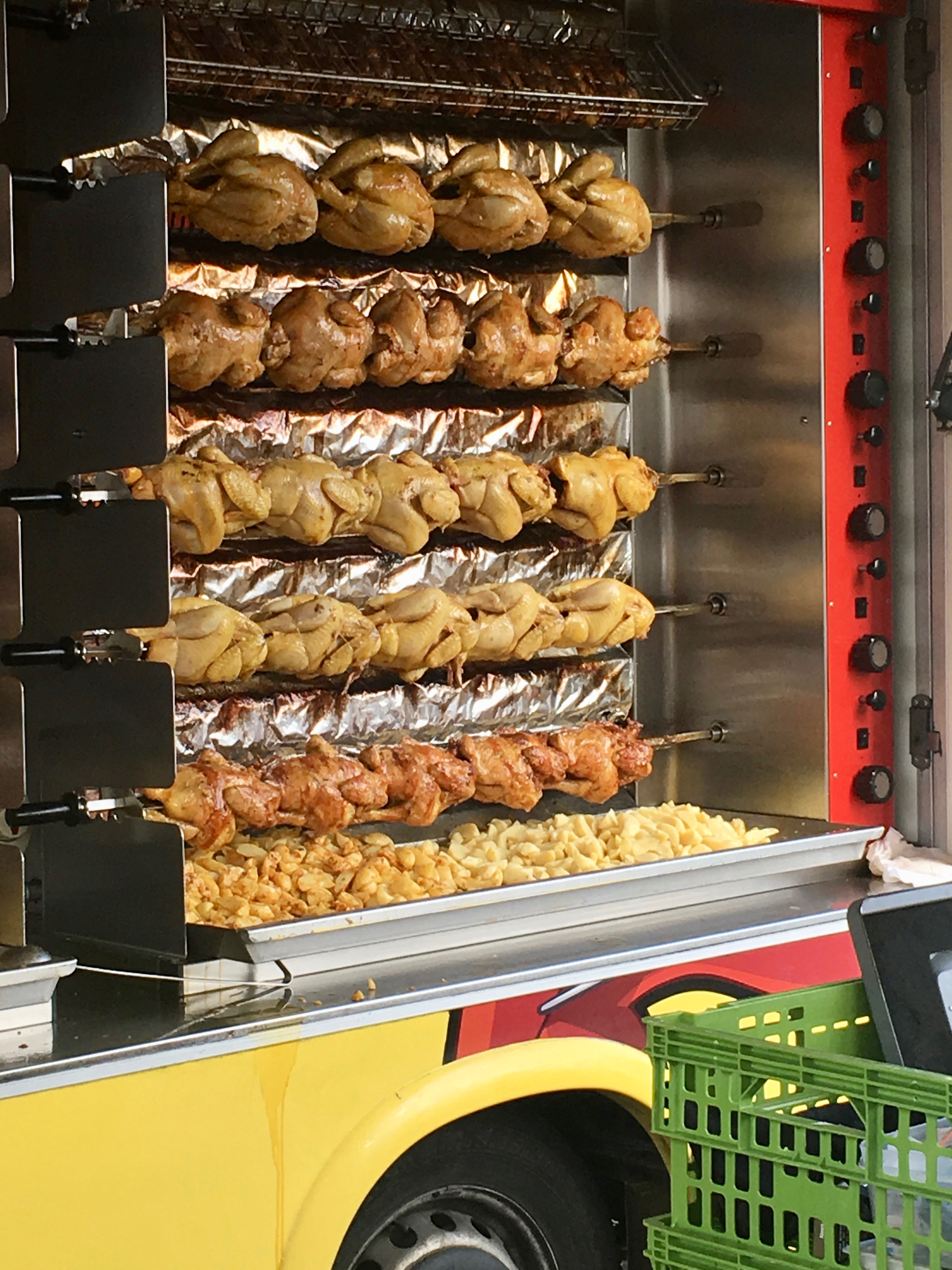
Roasting chickens with the drippings falling on the potatoes 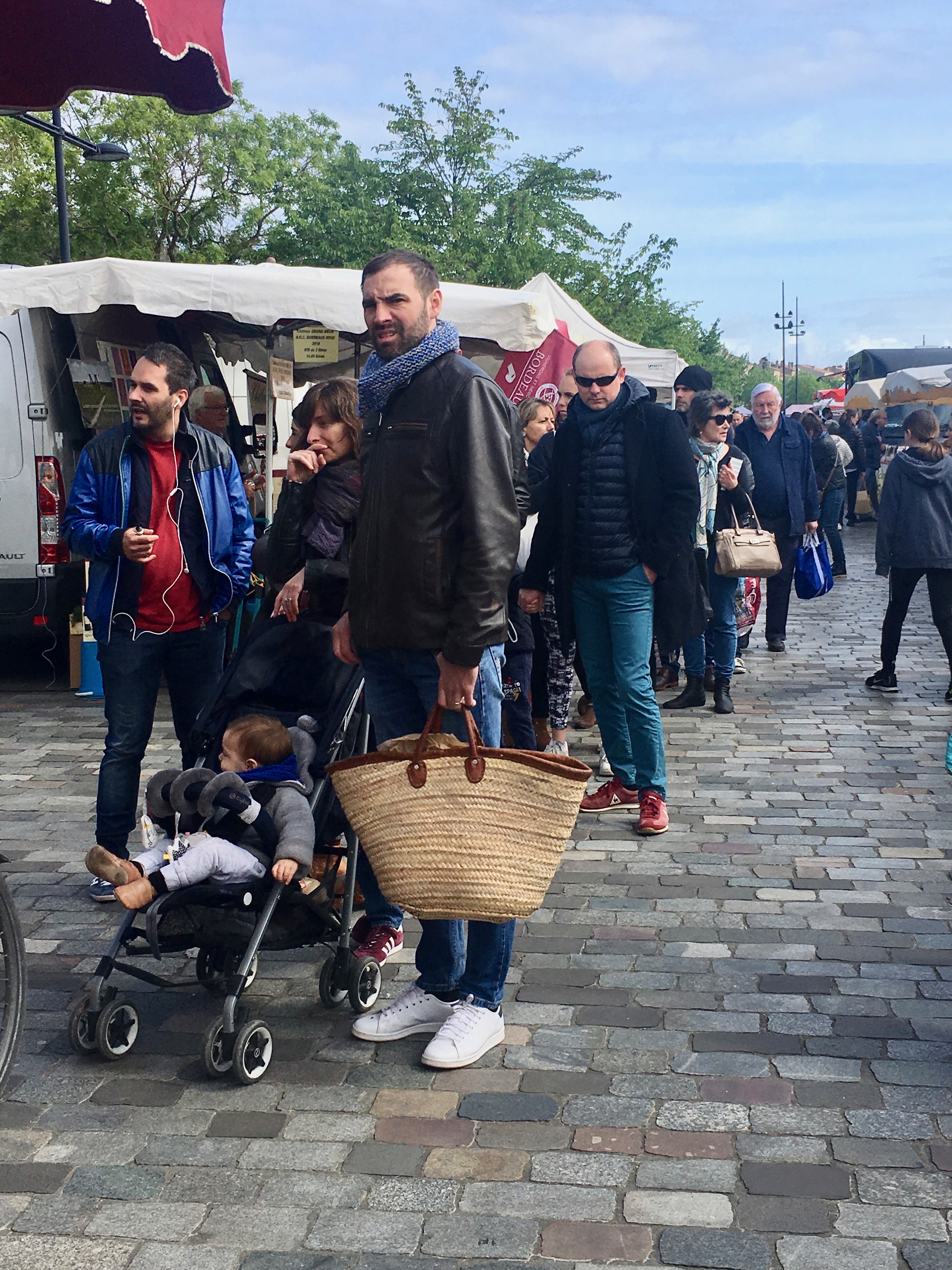
The line to buy the chickens. Very popular! 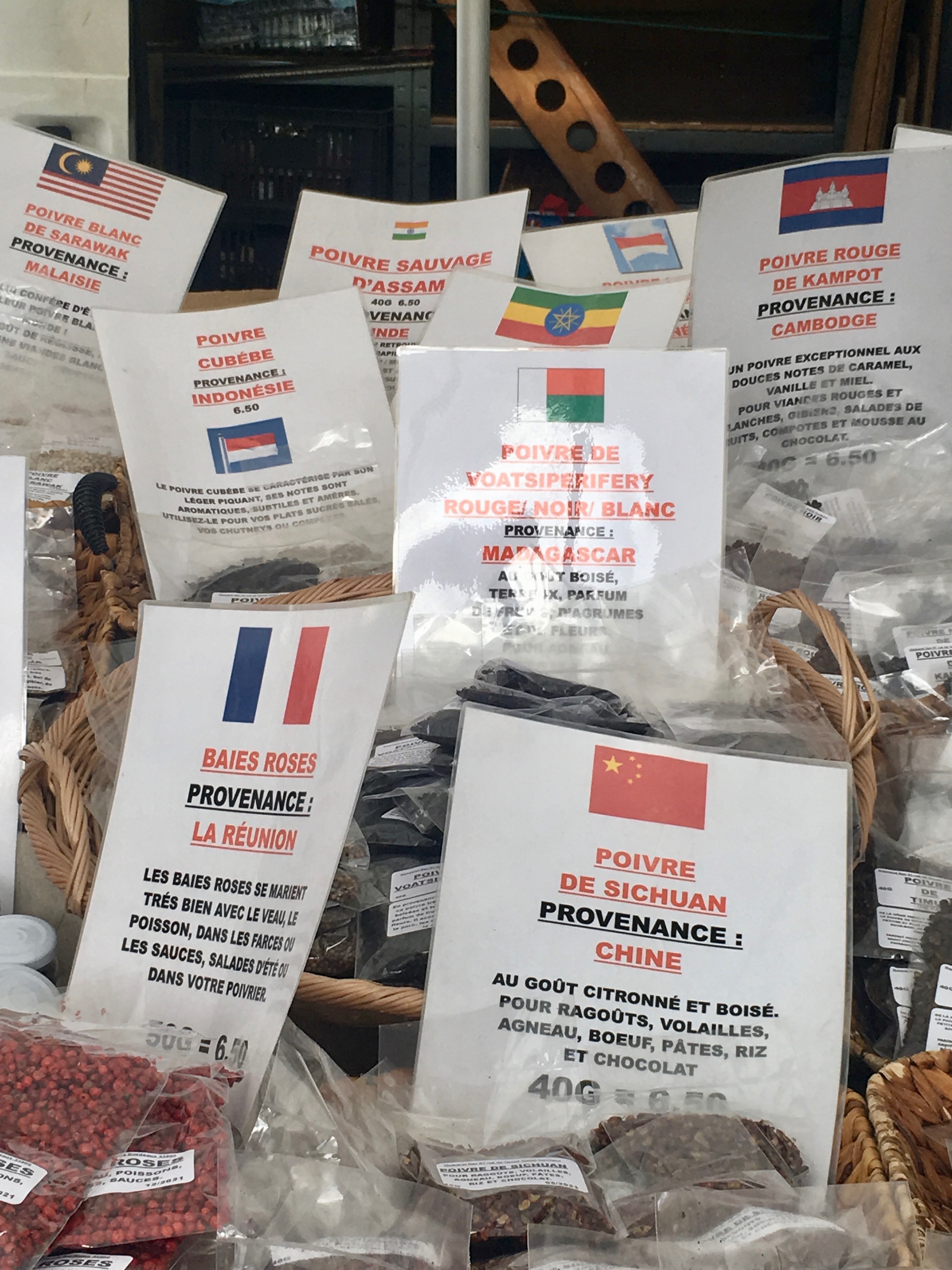
Different peppercorns from all over
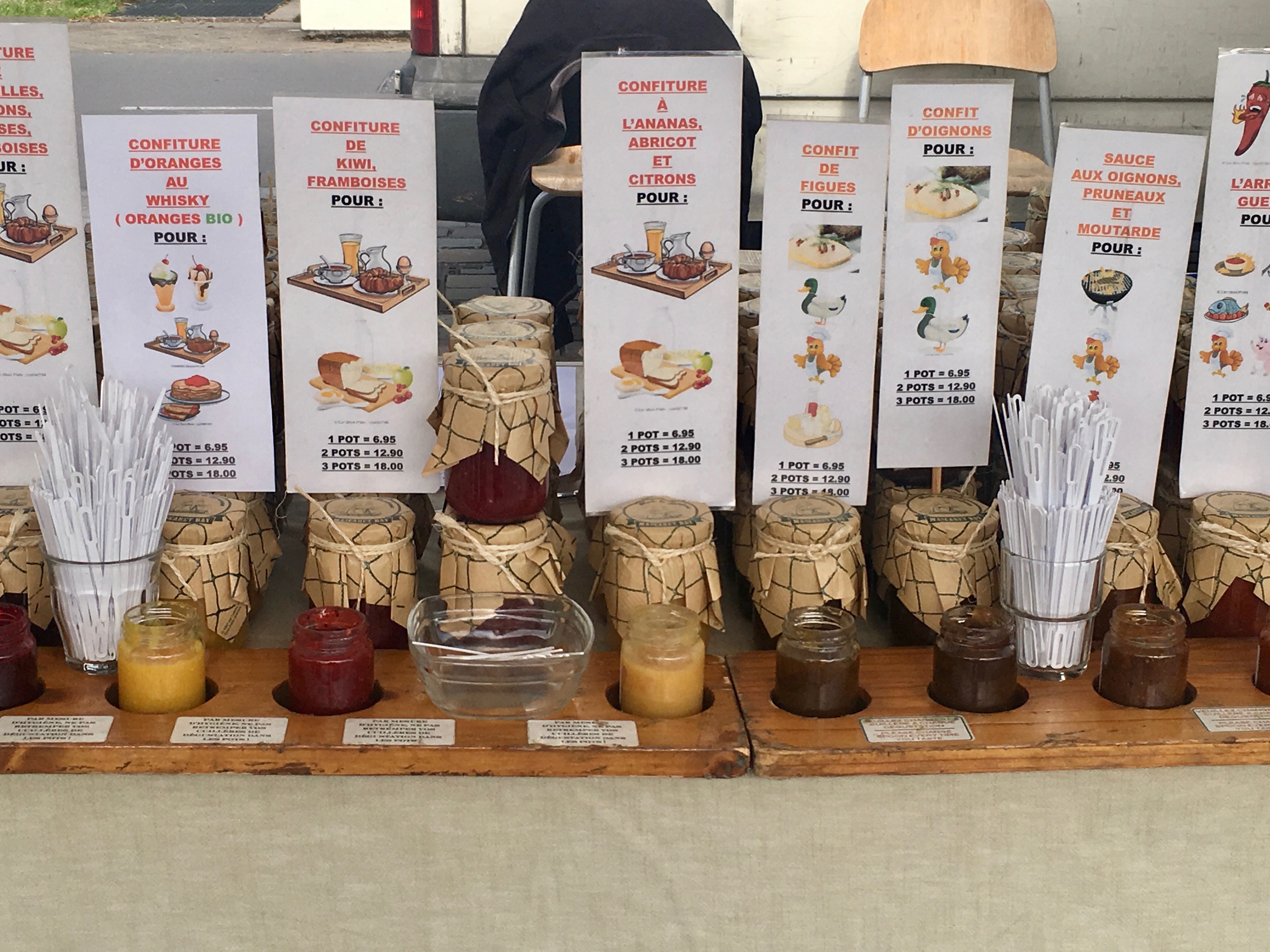
Different jams and spreads 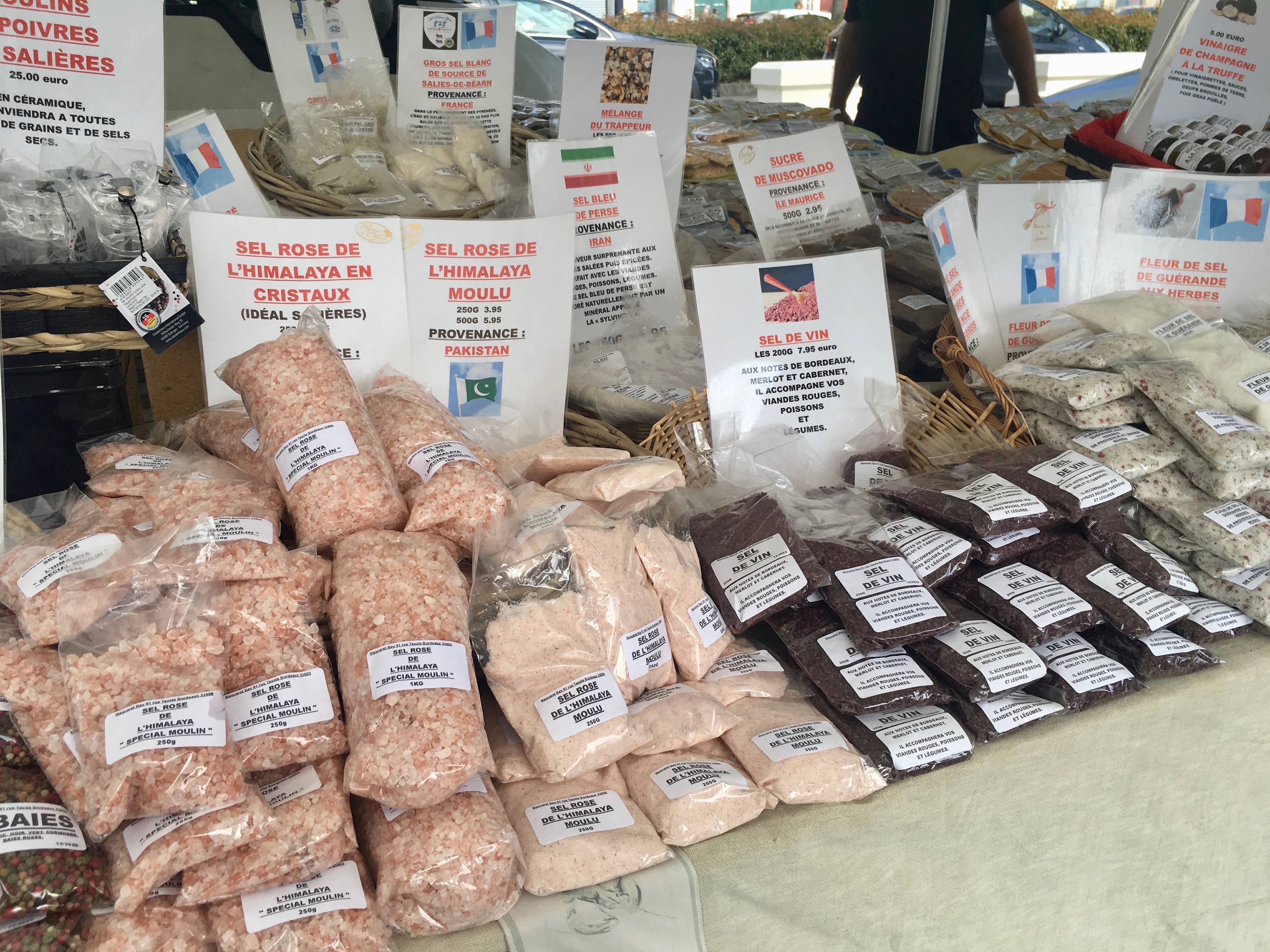
Salts from all over 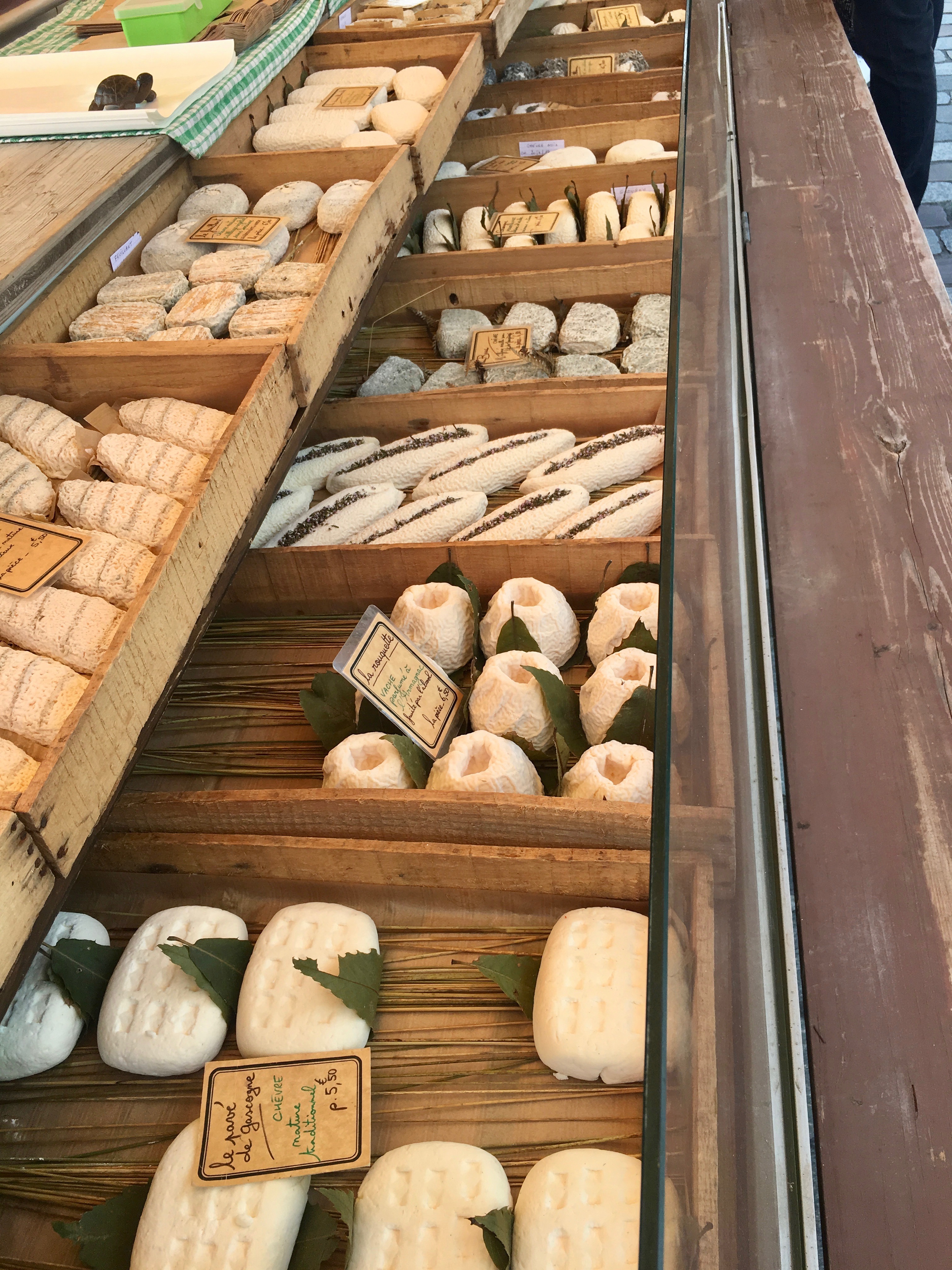
All types and shapes of goat cheese 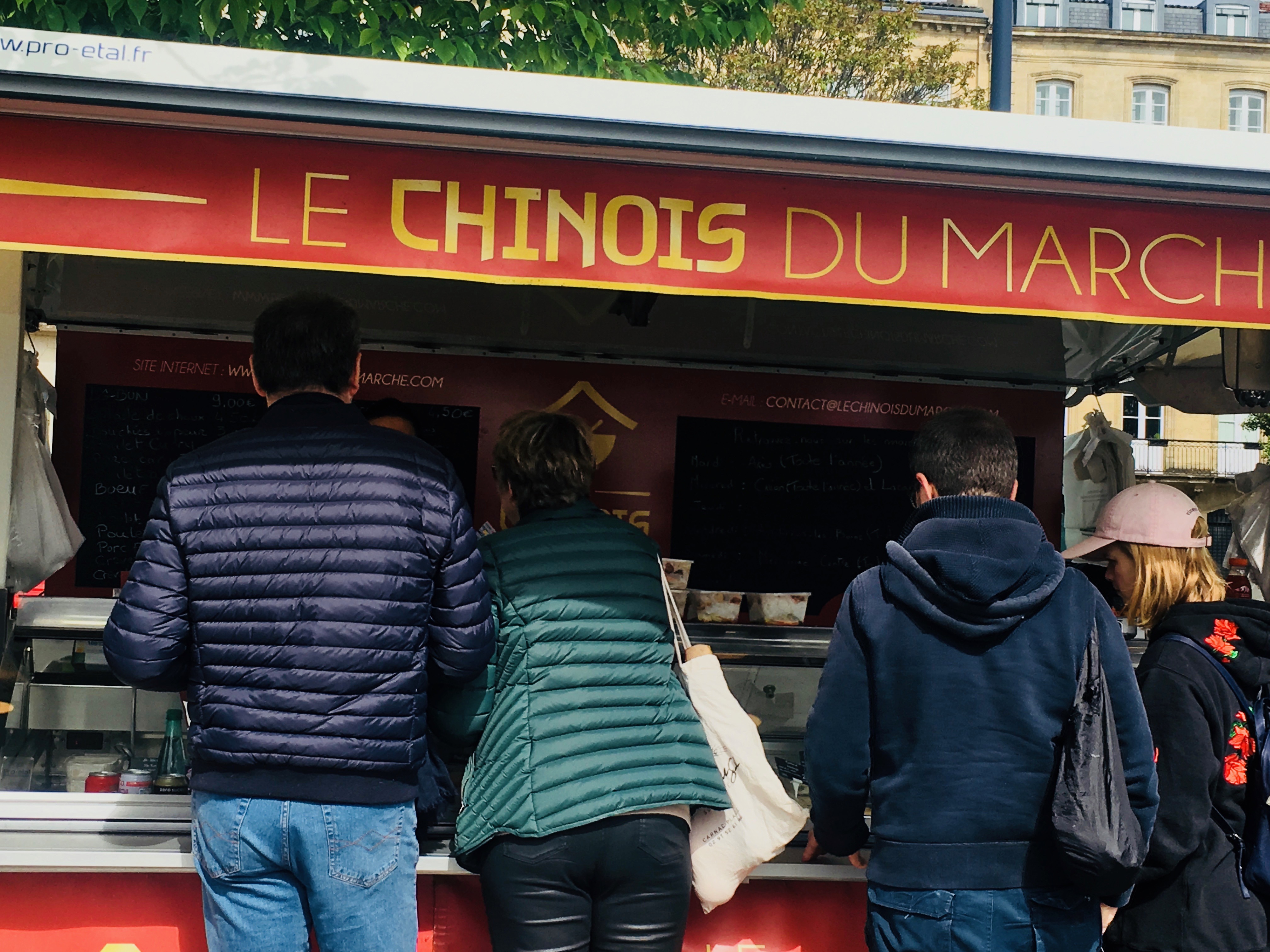
A chines food truck!
We decided our next stop would be the tourist office to get a map (yes we are really old school) and find out where the Centre National Jean Moulin Museum was and how to get to the wine museum. She told us the Jean Moulin Museum was closed but as we were leaving, I looked on my phone and it said it was open. So we decided to leave this until after the wine museum and after lunch.
There are actually two wine museums in Bordeaux, new museum, La Cite du Vin and an older one, Musee du Vin et du Negoce de Bordeaux (Museum of Wine and Burgundy Trade). It has old equipment and tells the history of the wine production plus a wine tasting. It was an excellent choice. It was self guided with the help of a notebook. When we finished we tasted wine with two couples from Sweden! One couple was from Malmo where our friends used to live and the other was from Lund where our friends live now. Small world.
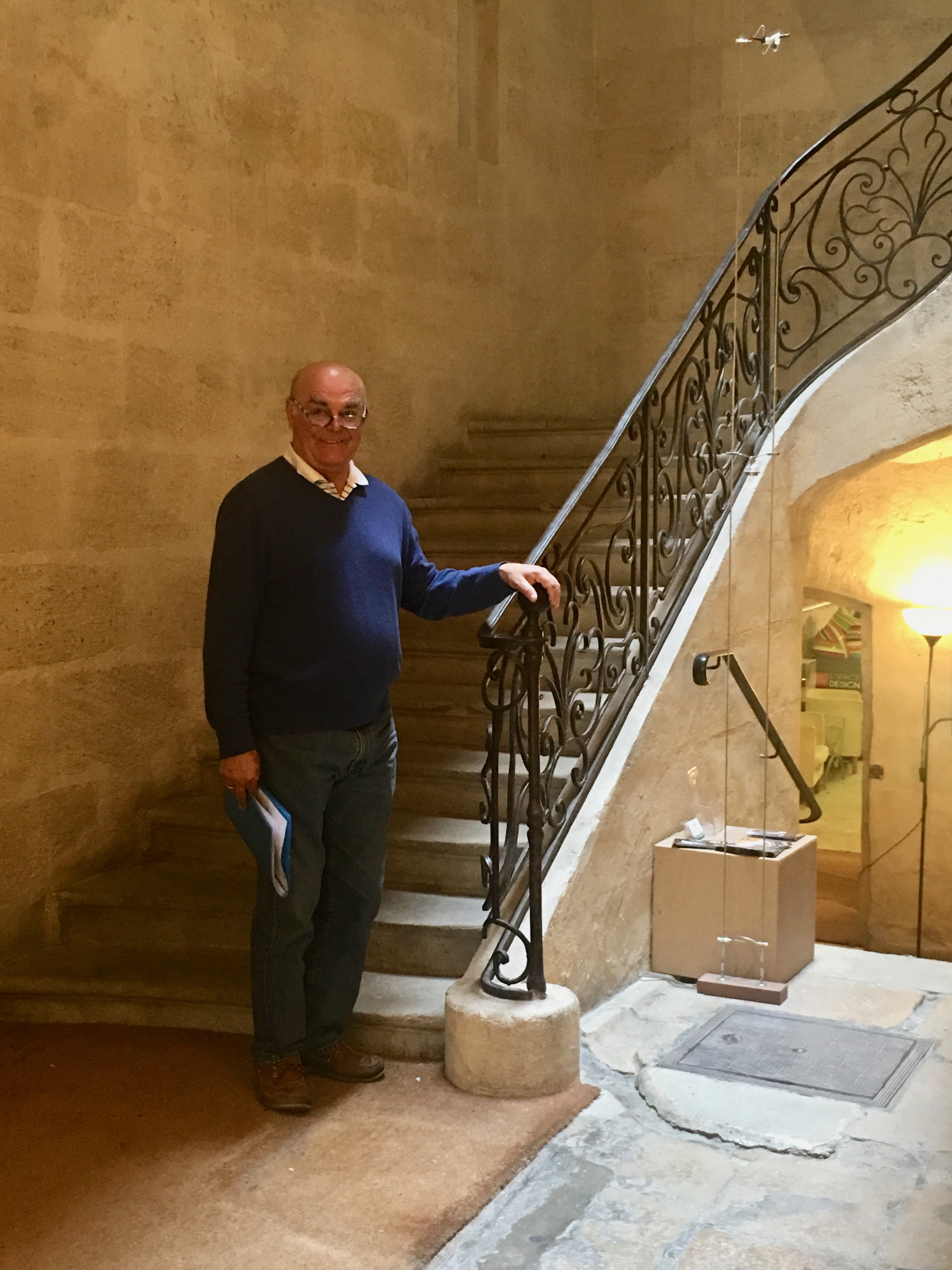
Scott starting the wine tour 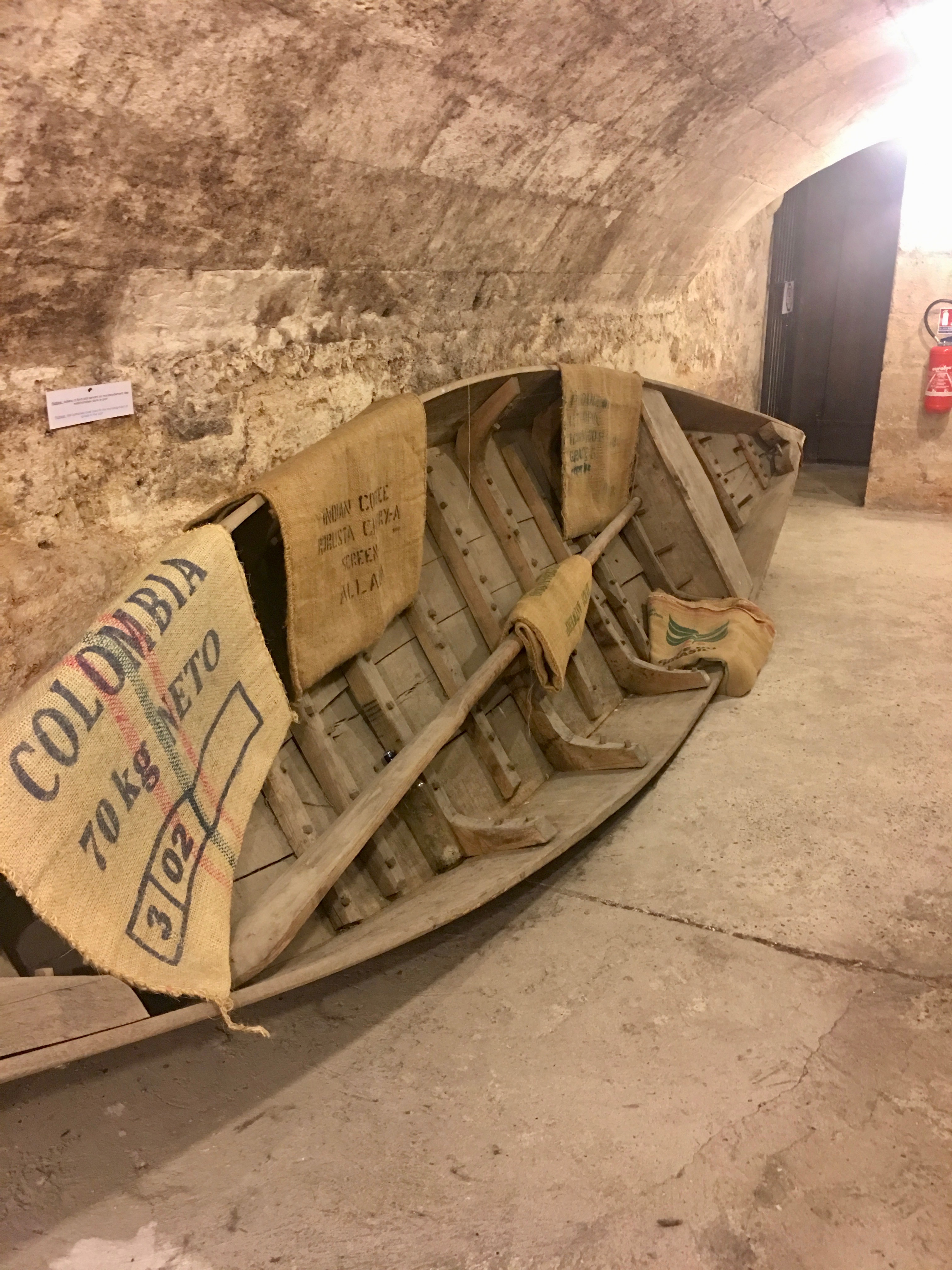
Boat they used to take the wine from the ship to the shore 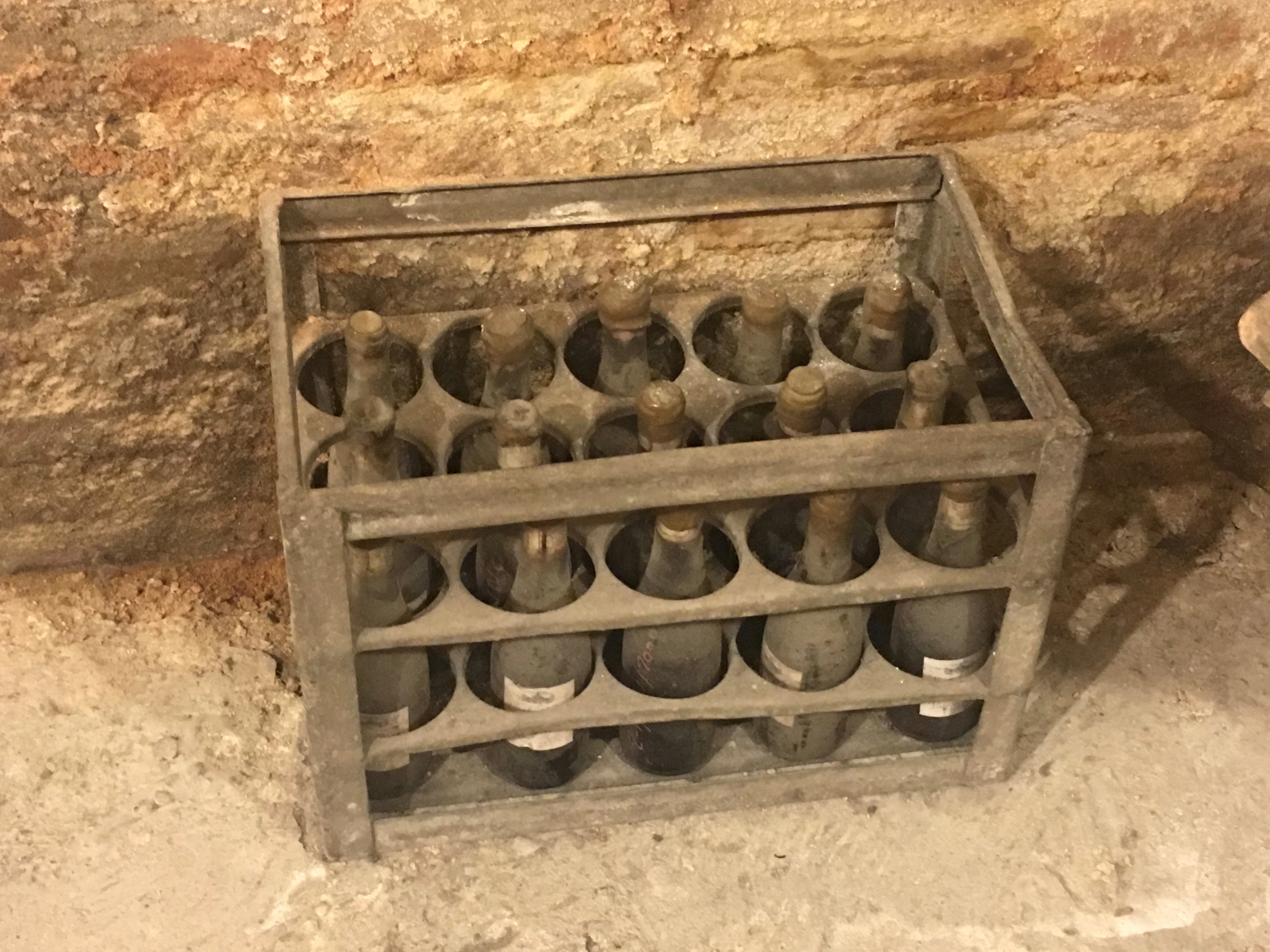
How they transported the wine
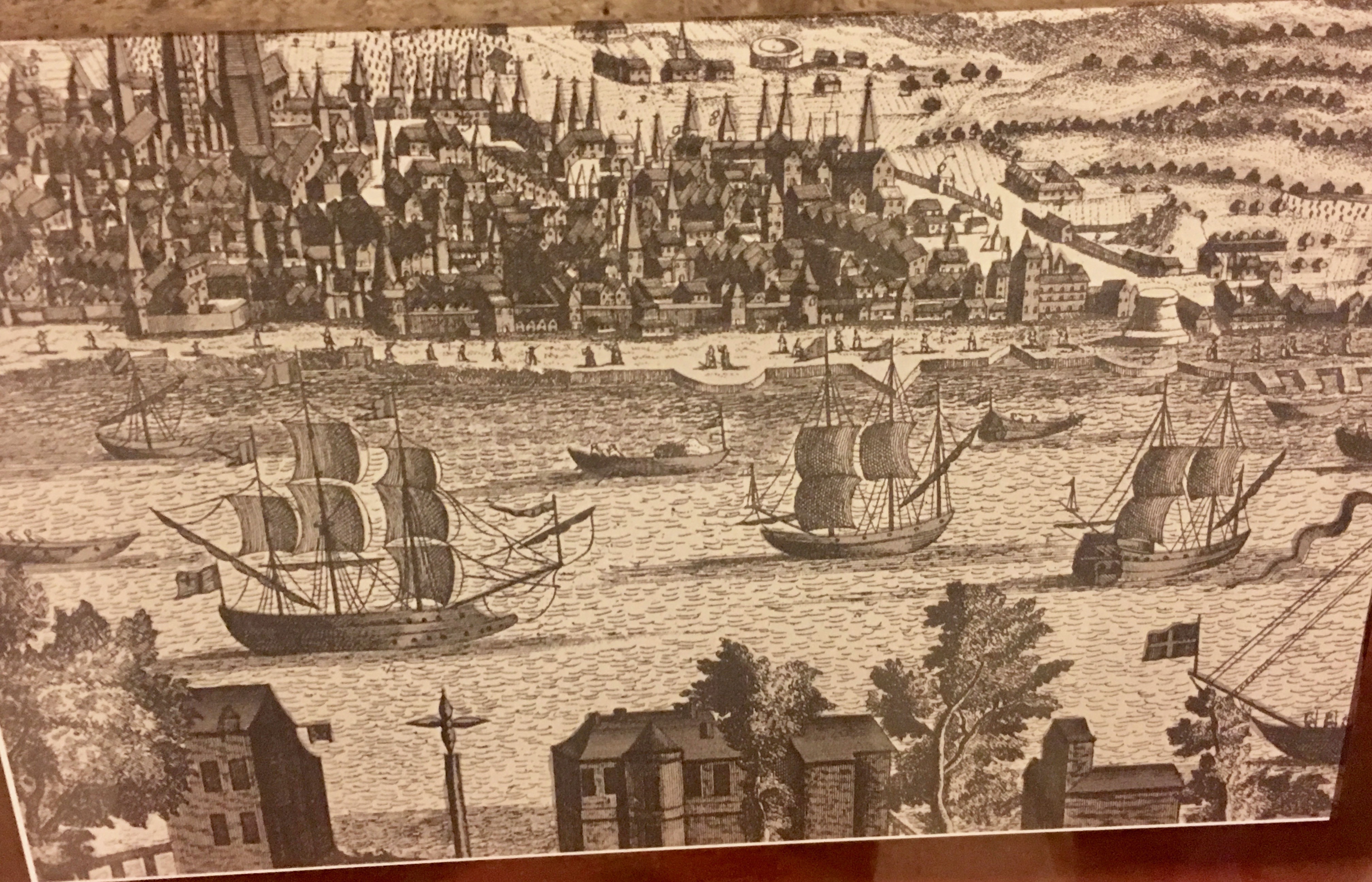
In the 3rd Century the first defenses were built around the city. But it wasn’t until the period called the “English Peace”, in the 12th Century that the port was returned to the bank of the Garonne.
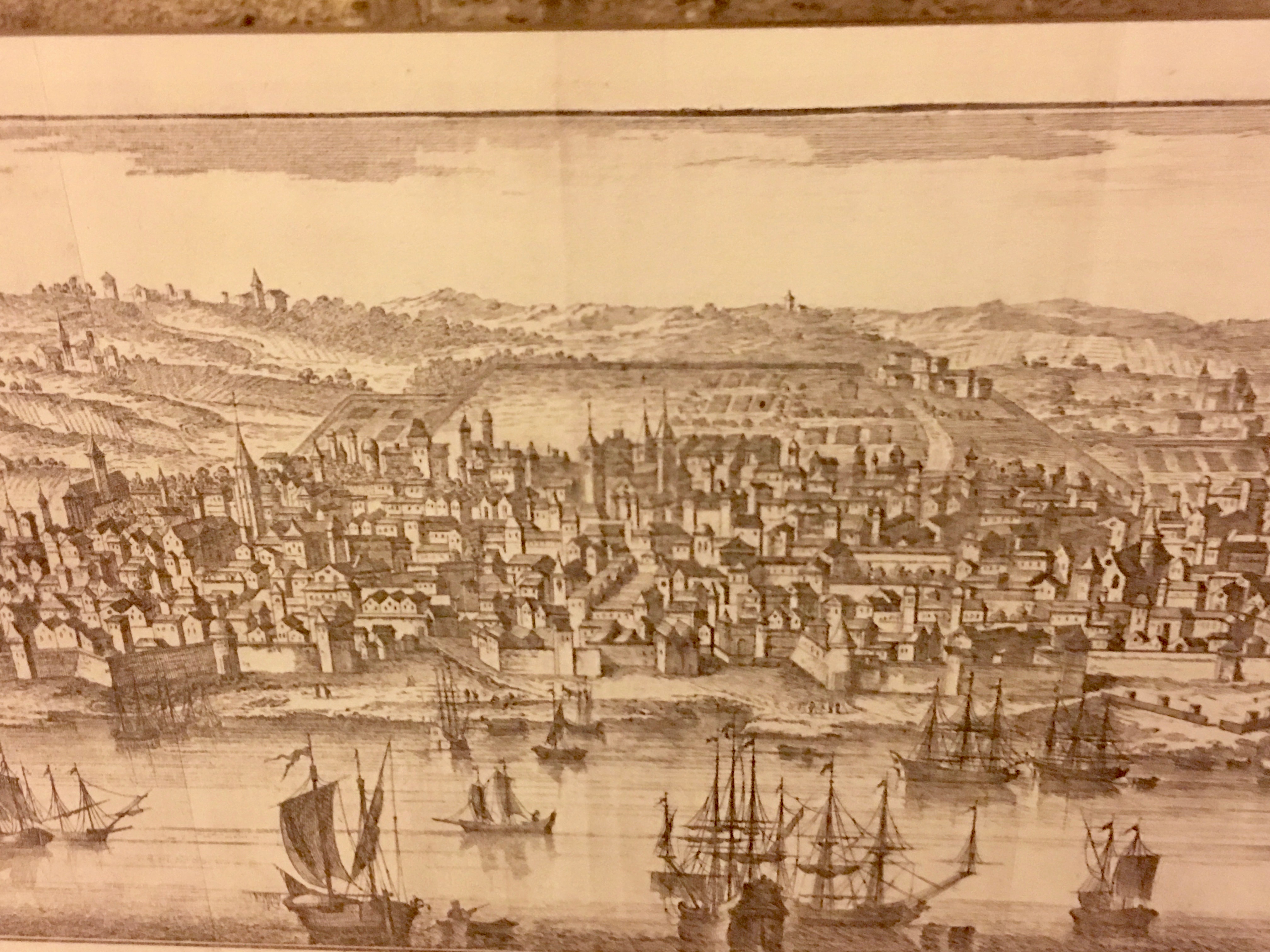
Below is an 18th Century view. The Chateau Trompette is present. This military fortress separates the working class suburb of the Chartrons, the North, from the rest of the city.
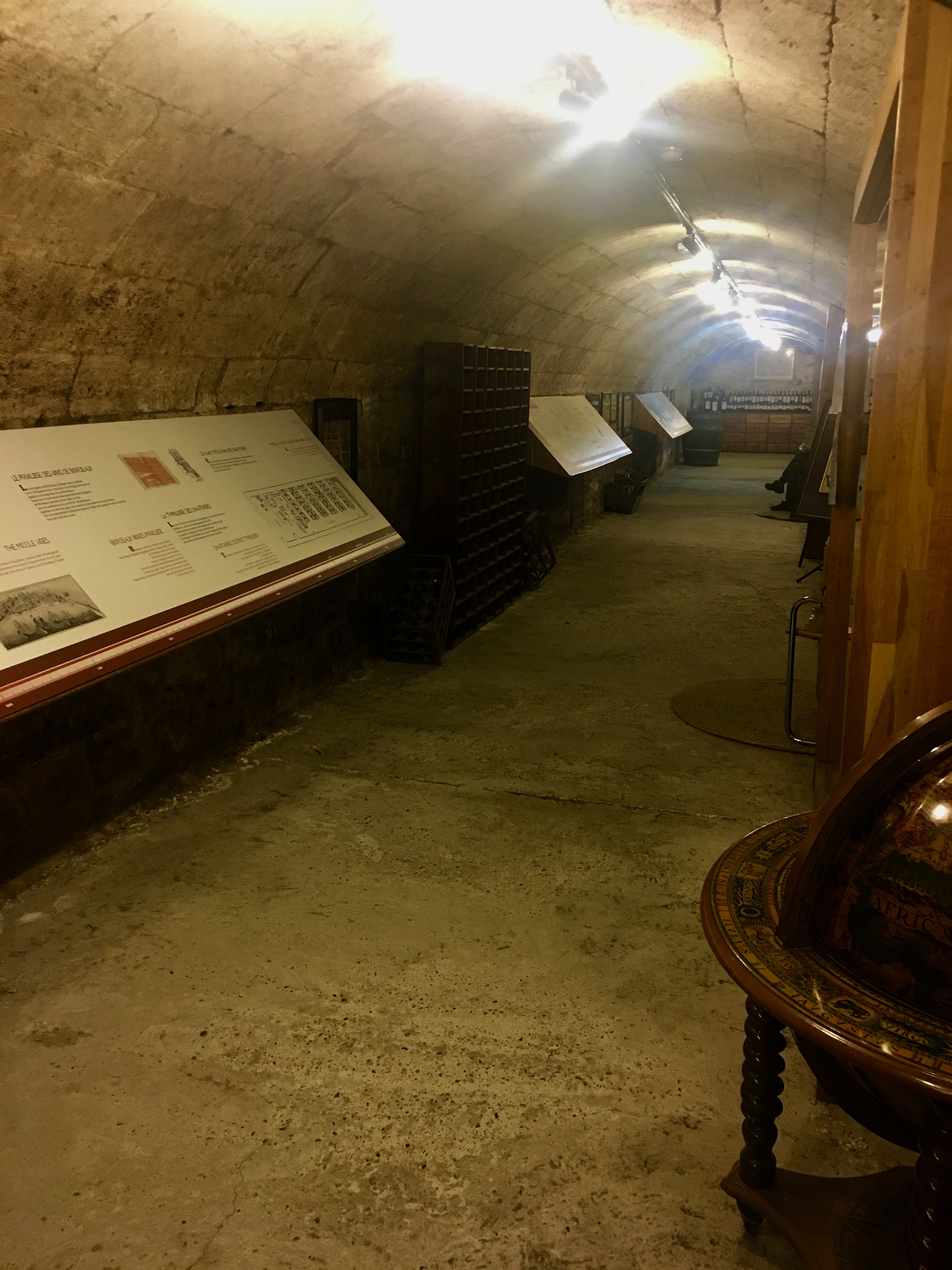
This was an actual wine cave before it became a museum
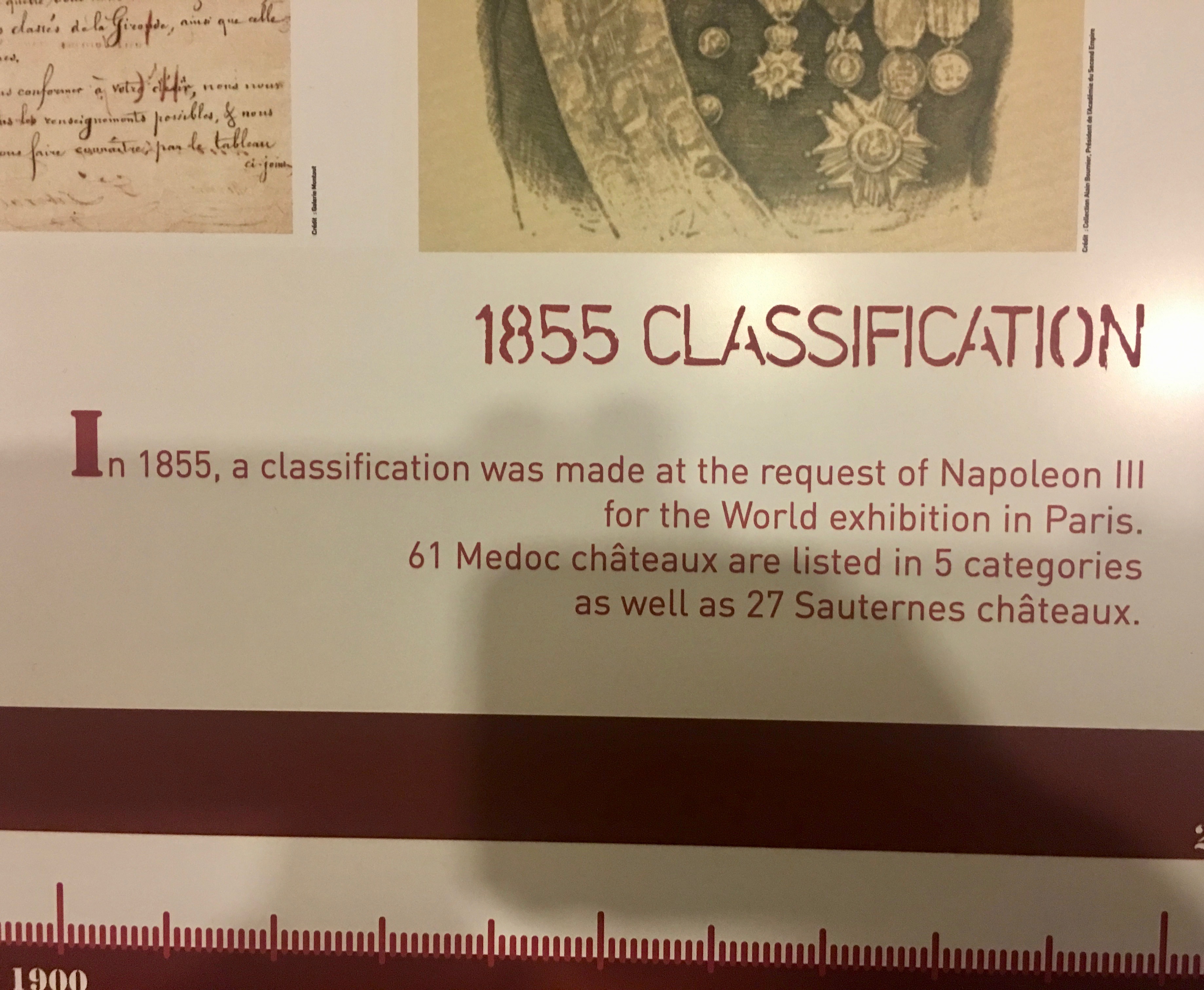
Classification of wines 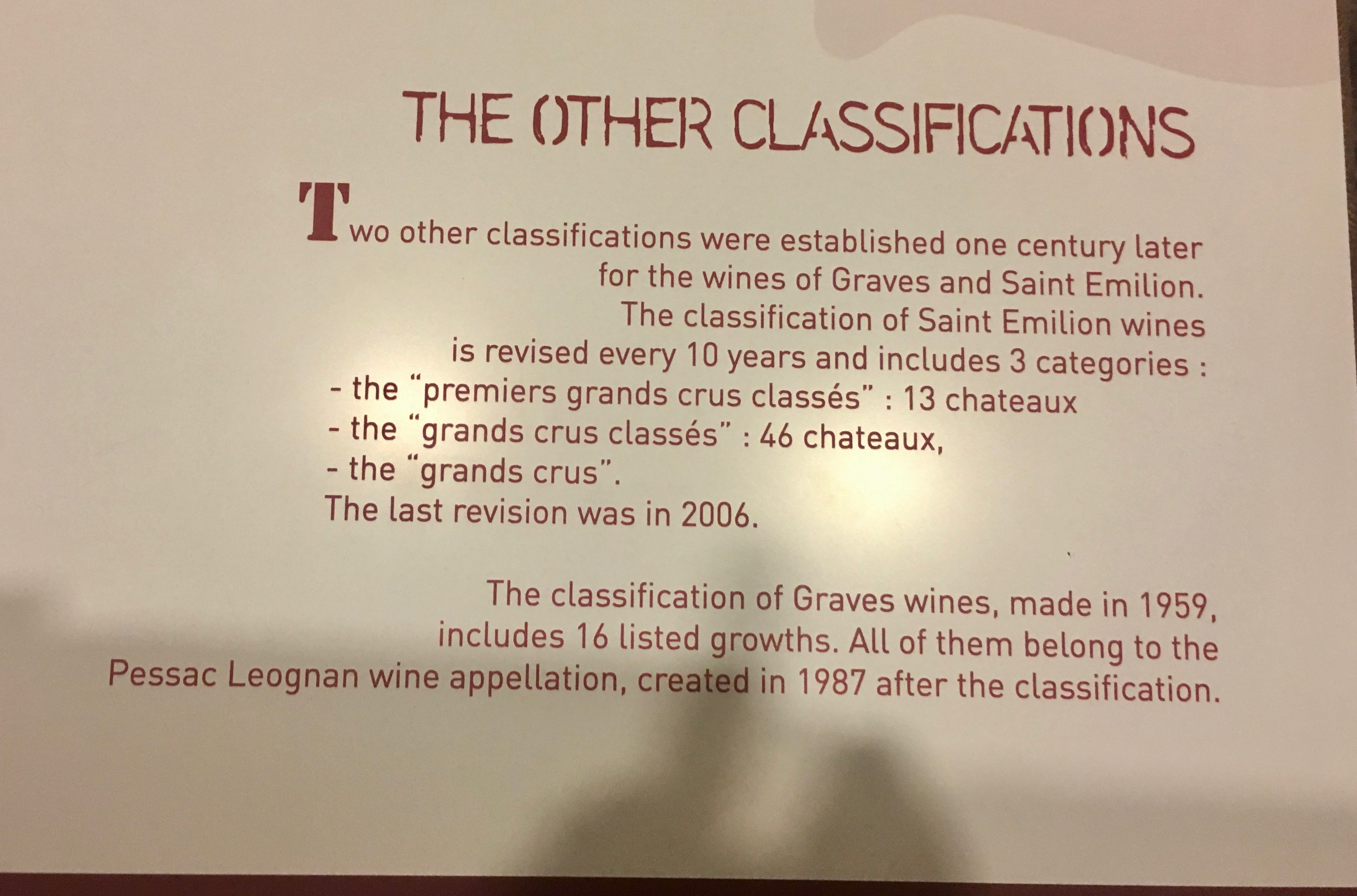
Additional classifications of wine 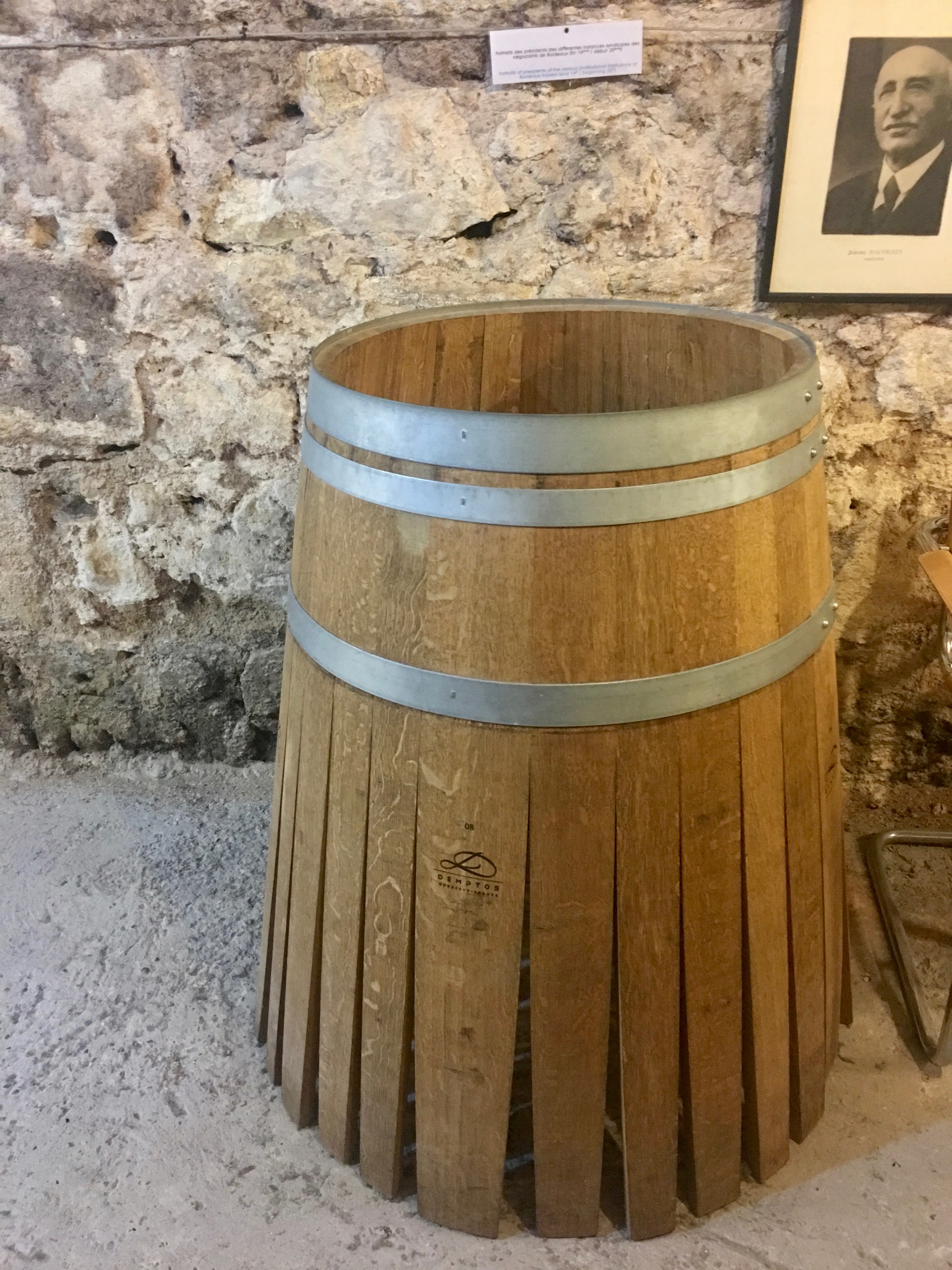
How they make the wine barrels 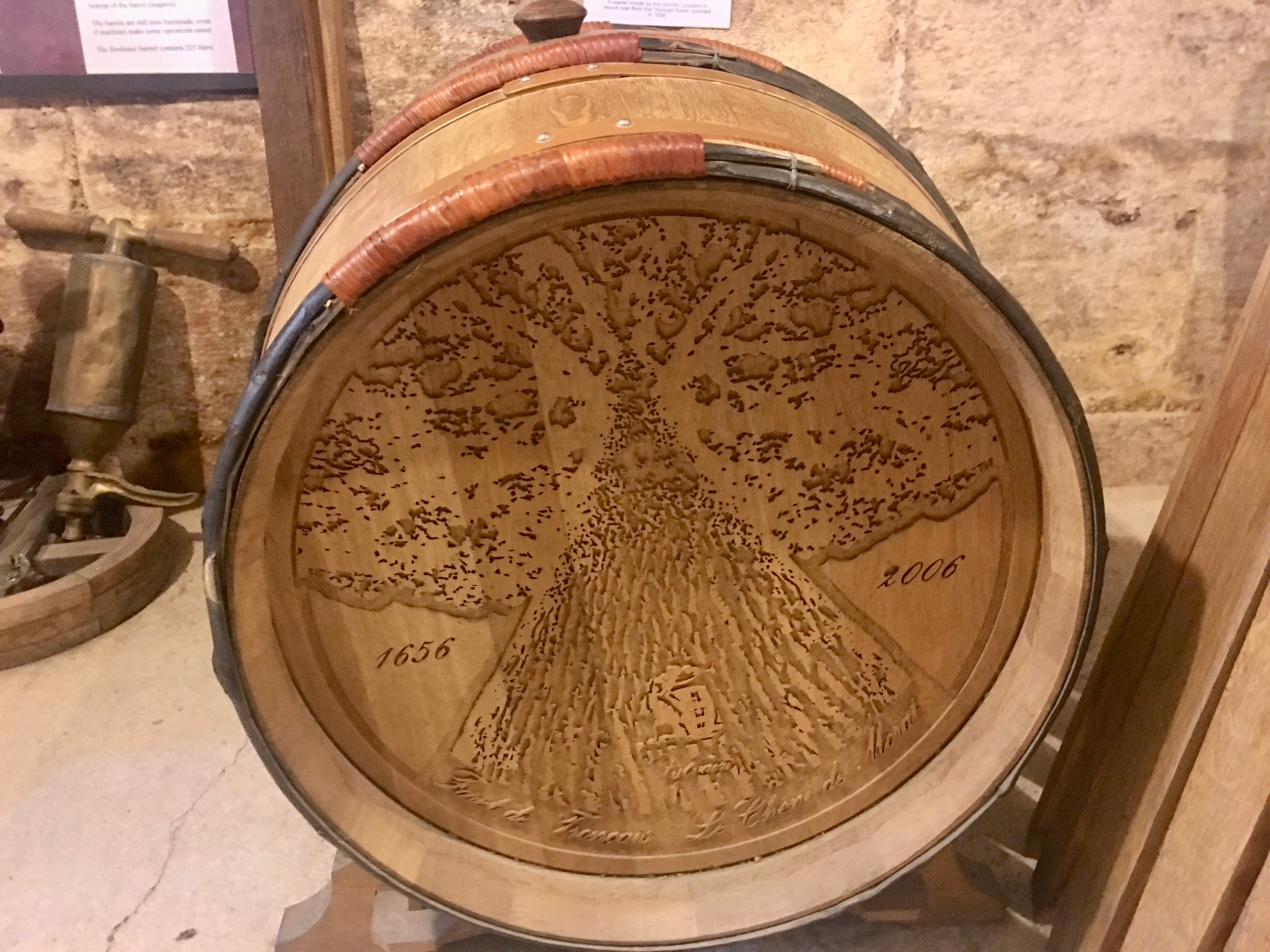
Beautiful commemorative wine barrel 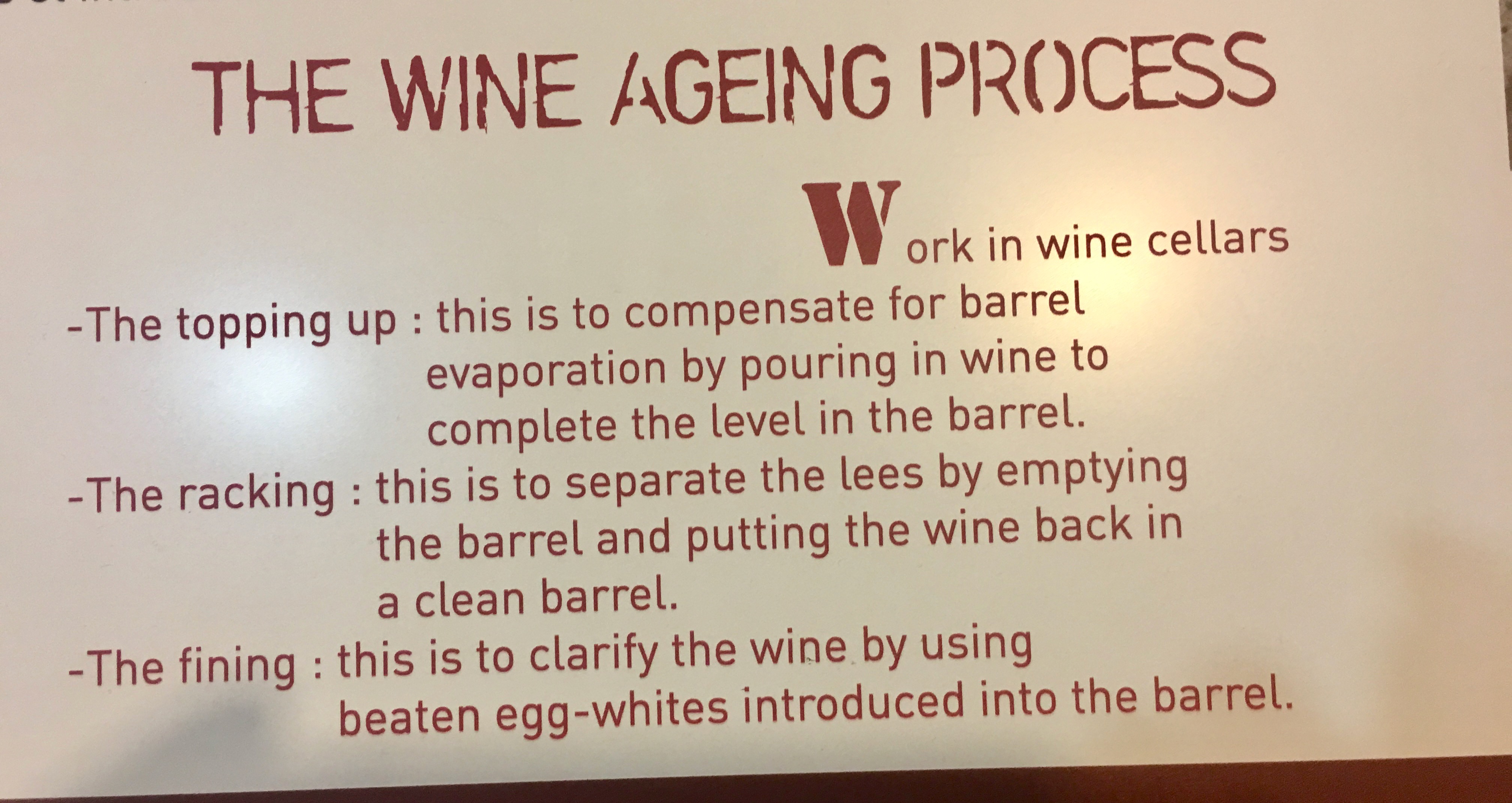
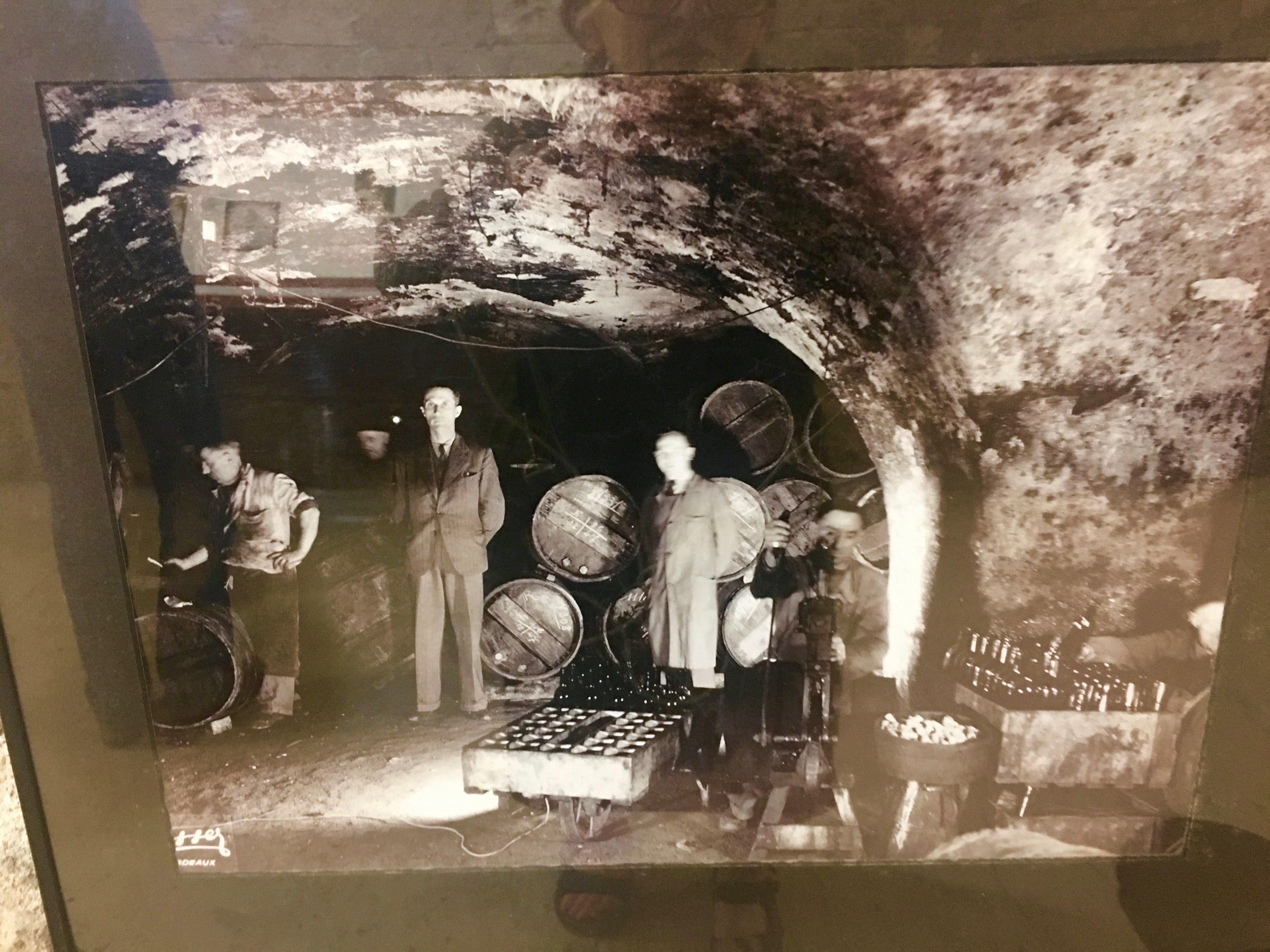
Men in a wine cave storting the wine
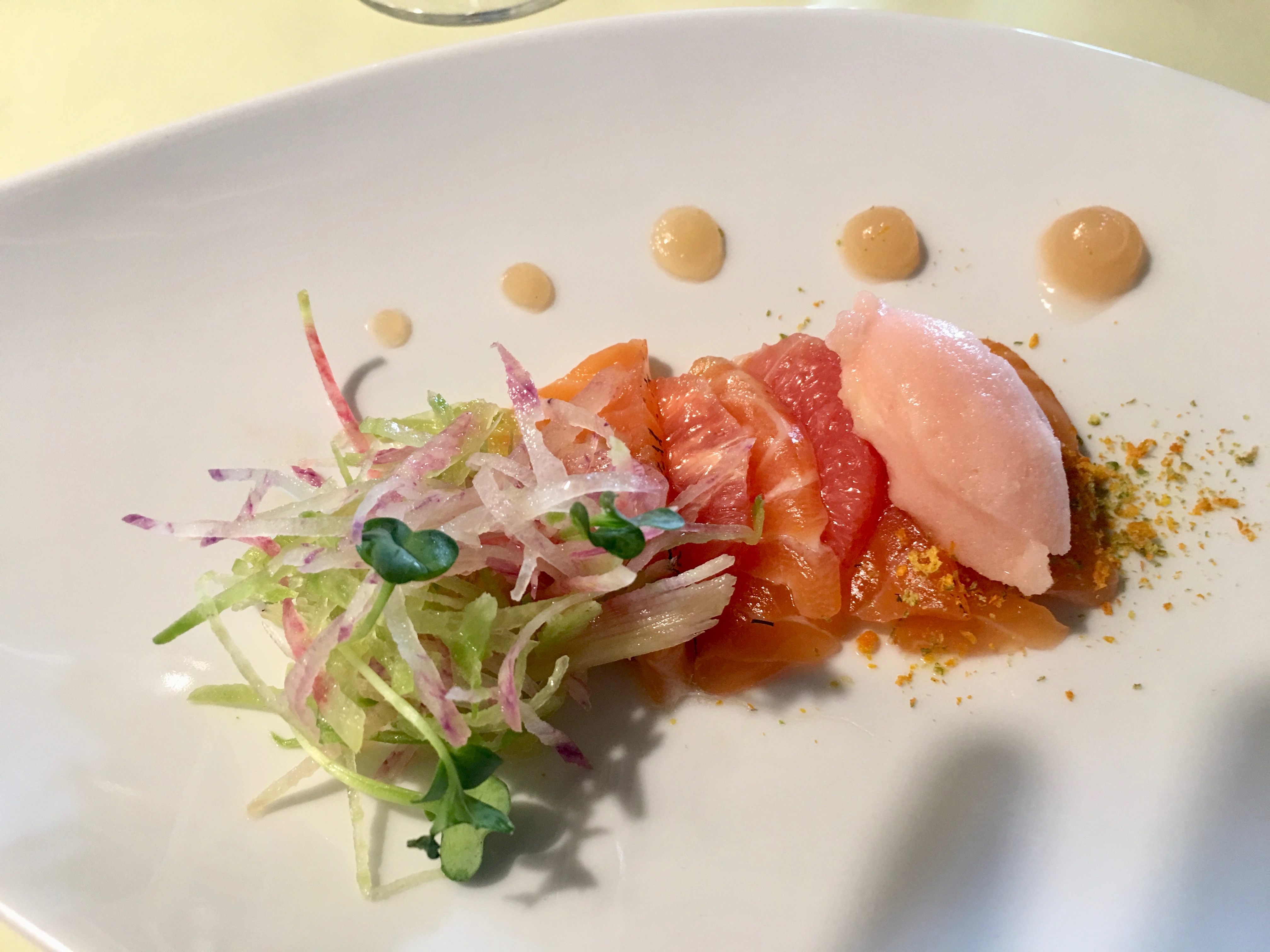
Carpaccio of salmon with grapefruit sorbet 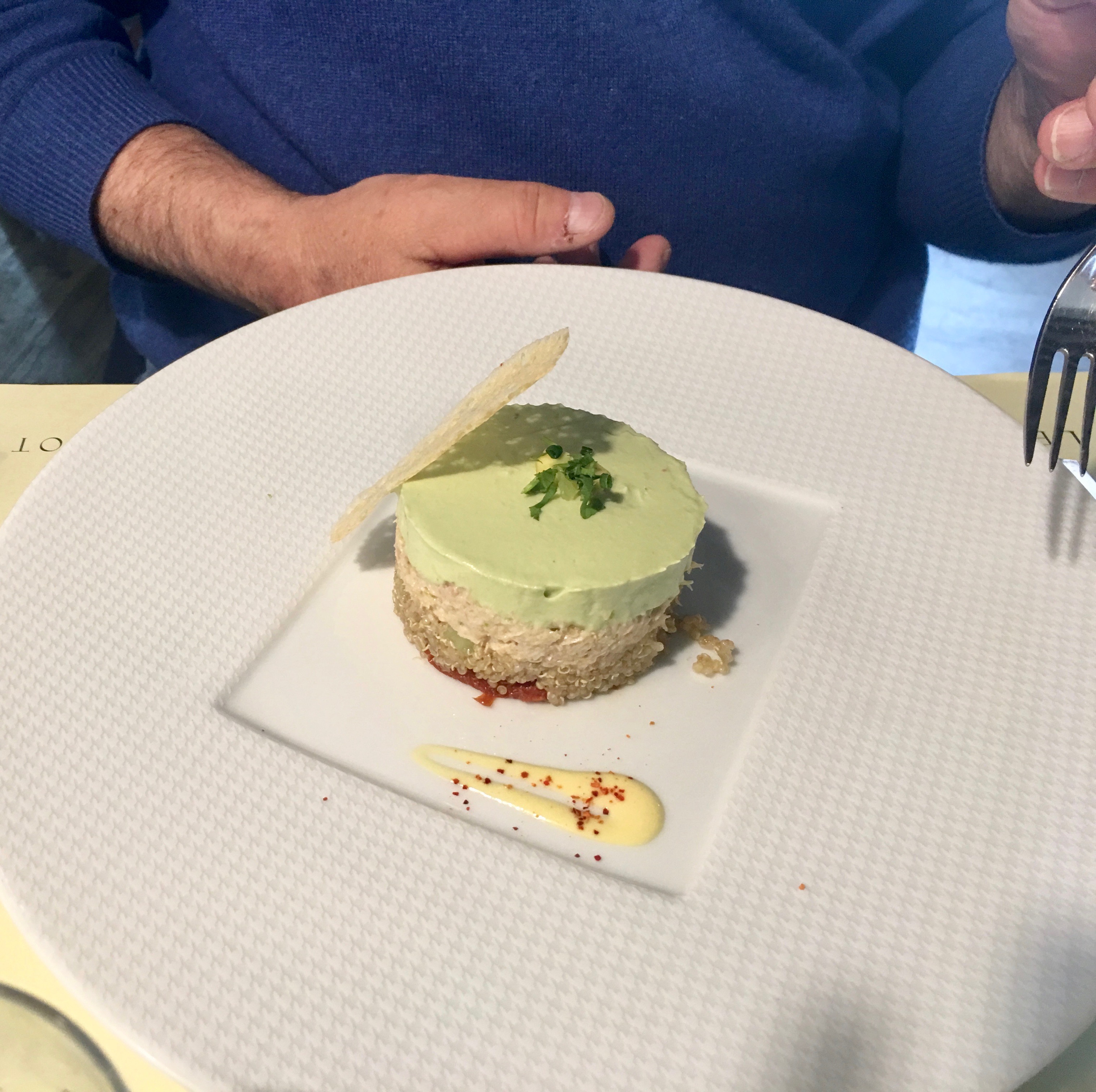
Avacado mouse over crab and tabbouleh 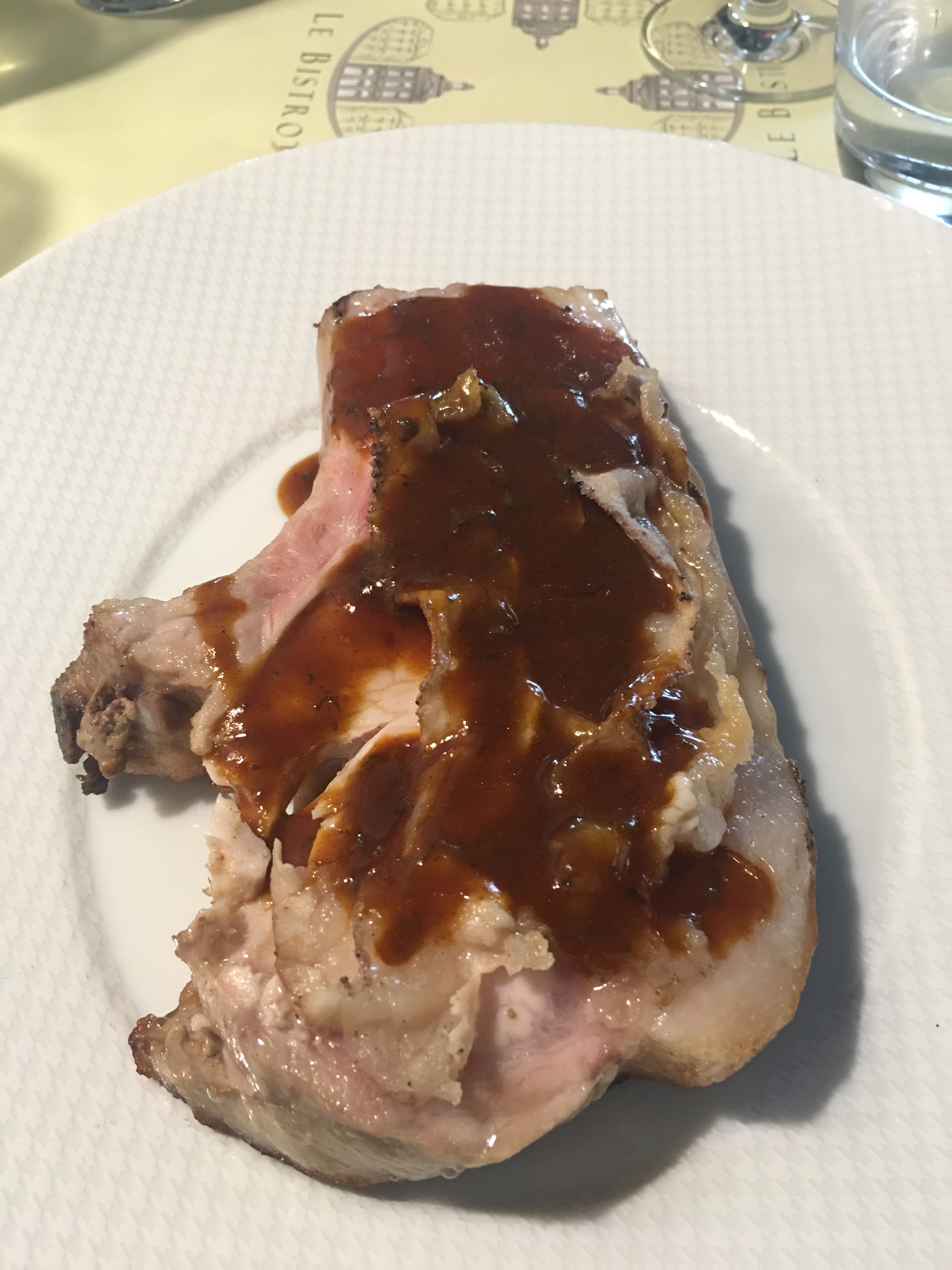
We shared cantal pork roasted then smoked with hay, new potatoes with chopped parsley and garlic, fresh sage infused juice. It was wonderful! 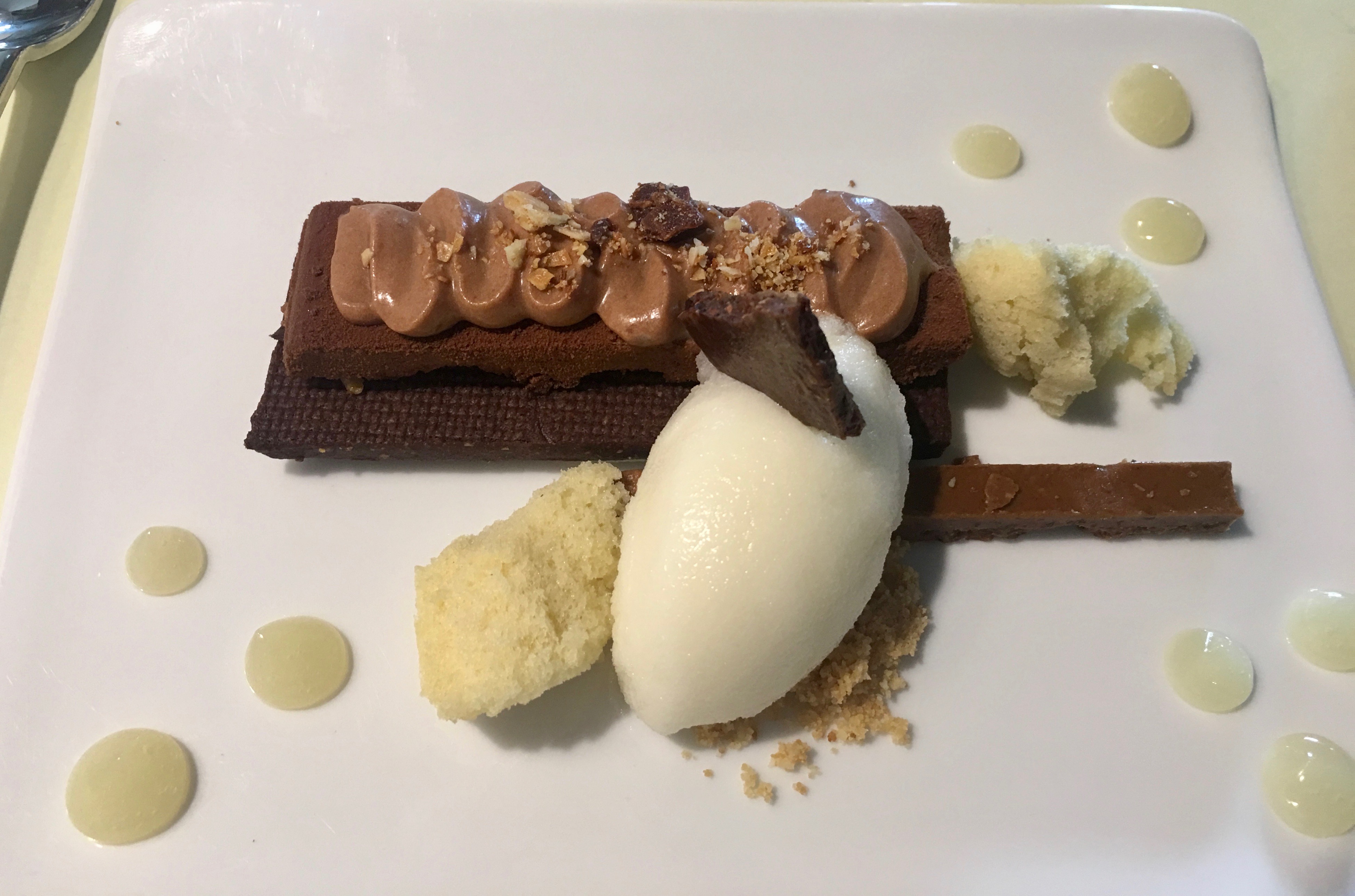
Chocolate mousse on a praline cracker, creamy carmel and lemon sorbet 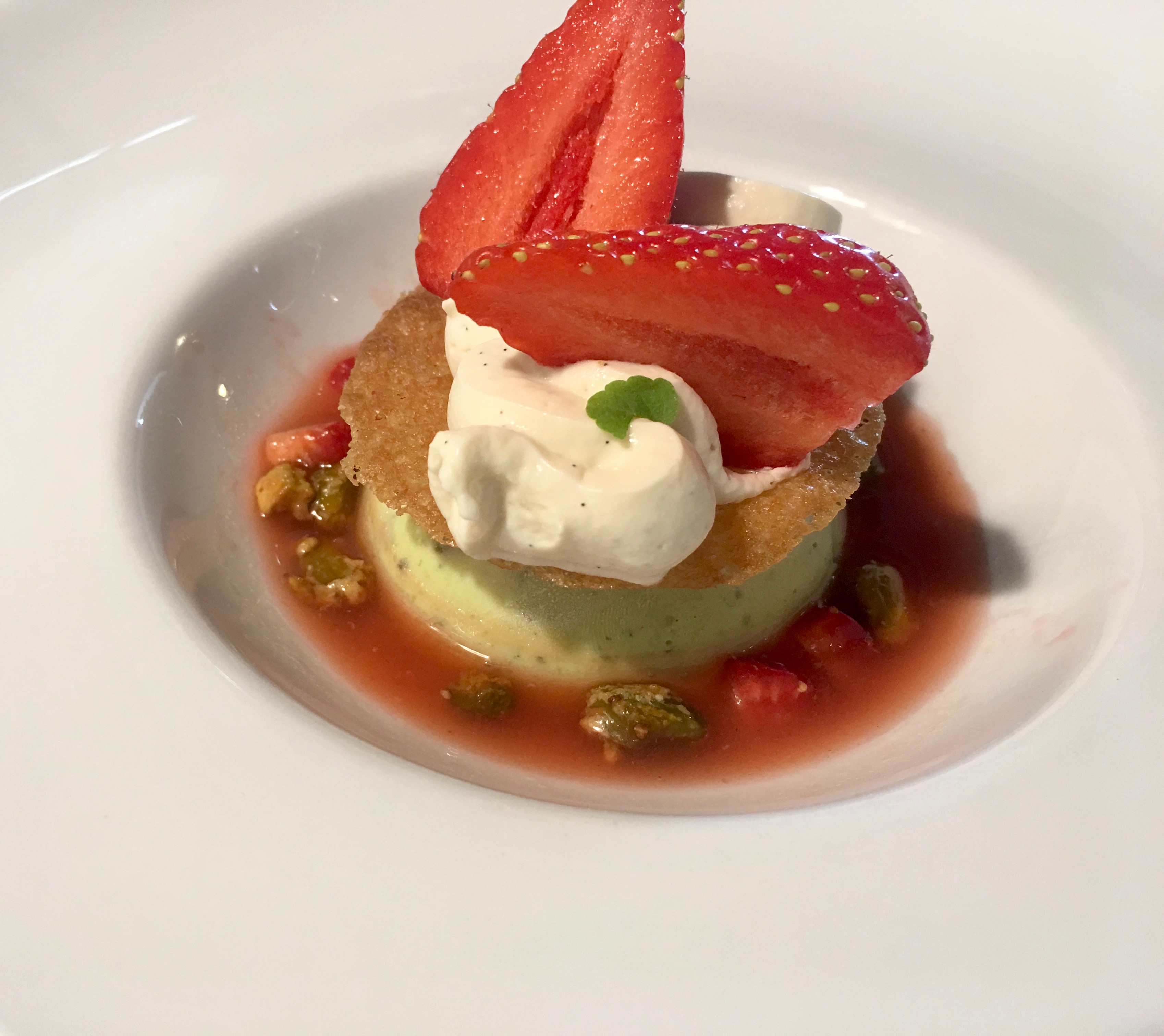
Pistachio, iced parfait, spiced strawberries infusion and creamy mascarpone 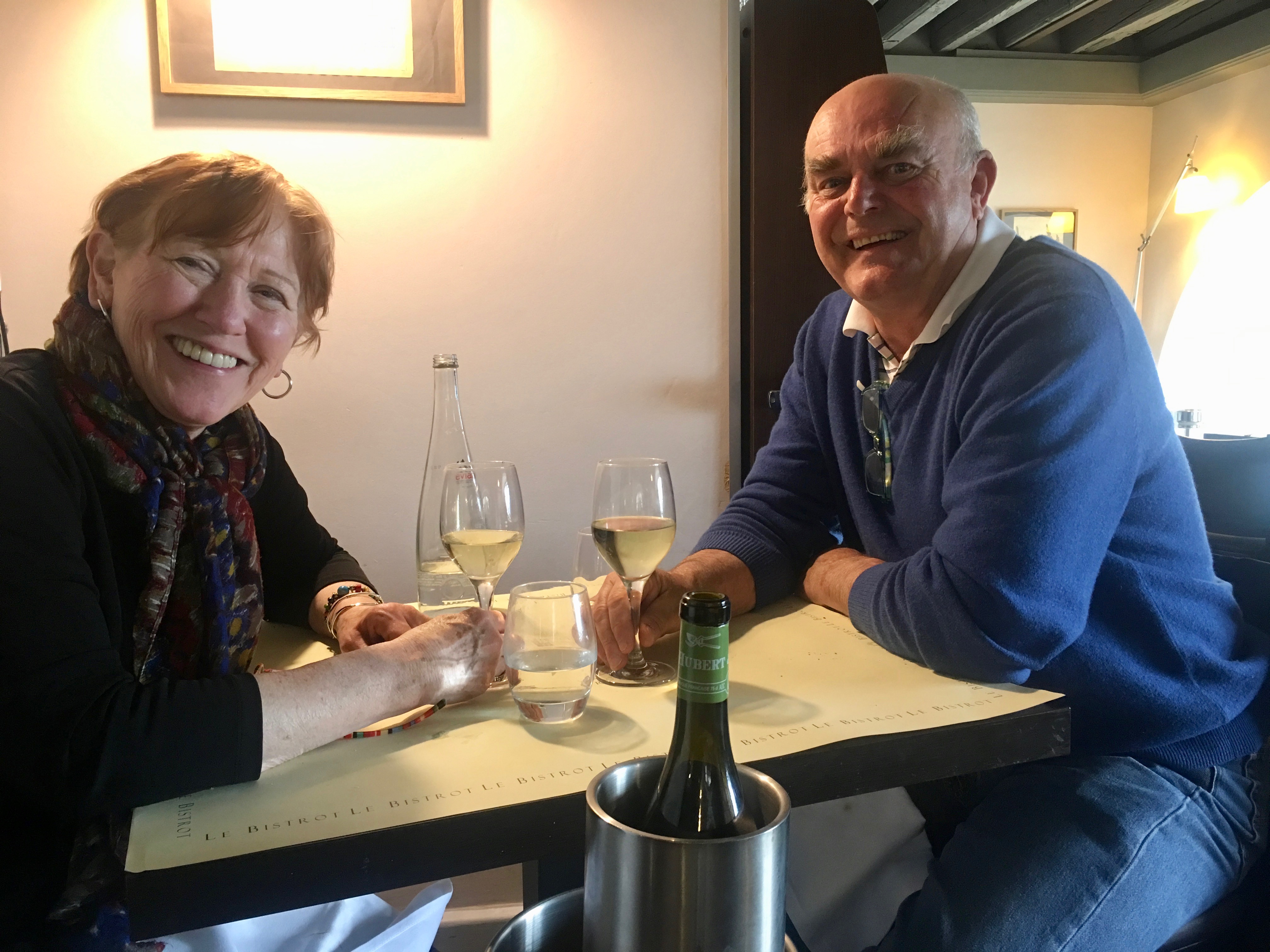
It was a wonderful meal
After lunch we were off to find out whether the woman in the tourist office knew what she was talking about OR if Mary’s phone was correct.
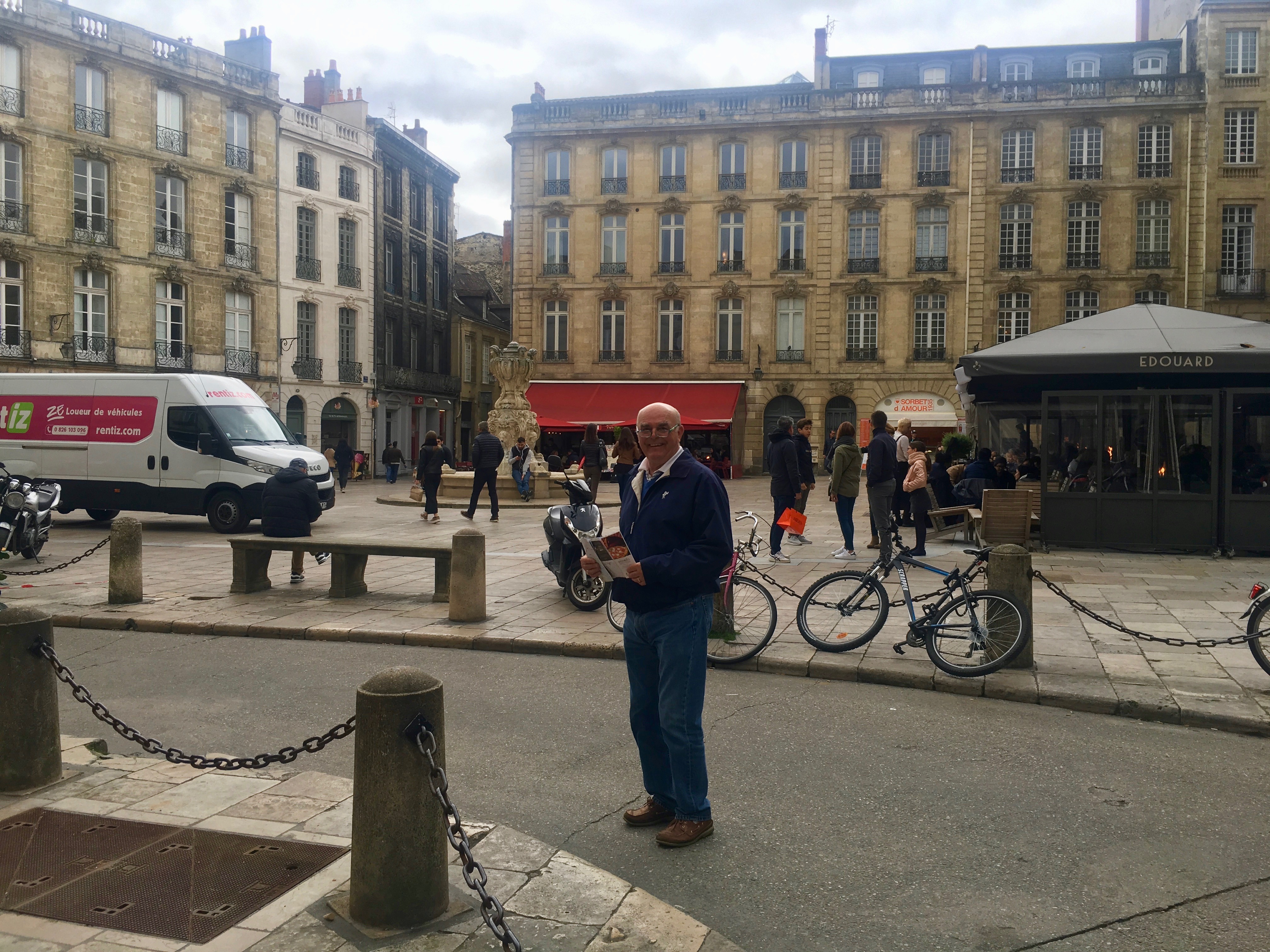
Unfortunately, the woman at the tourist office was correct and the museum was closed for construction. The reason Mary wanted to go there was because it was a museum set up in 1967 to commemorate the role played by the French Resistance during World War Two. As well as giving visitors an insight into the way that the Resistance operated. The museum also celebrated the life of Bordeaux’s most famous Resistance member, Jean Moulin. He was the leader of the National Council of the Resistance he unified the French resistance under Charles de Gaulle. He was tortured in Gestapo custody and died in the train transporting him to Germany. It also houses a vast archive of Resistance documents.
Since the museum was closed we decided to take in some of the sights of Bordeaux.
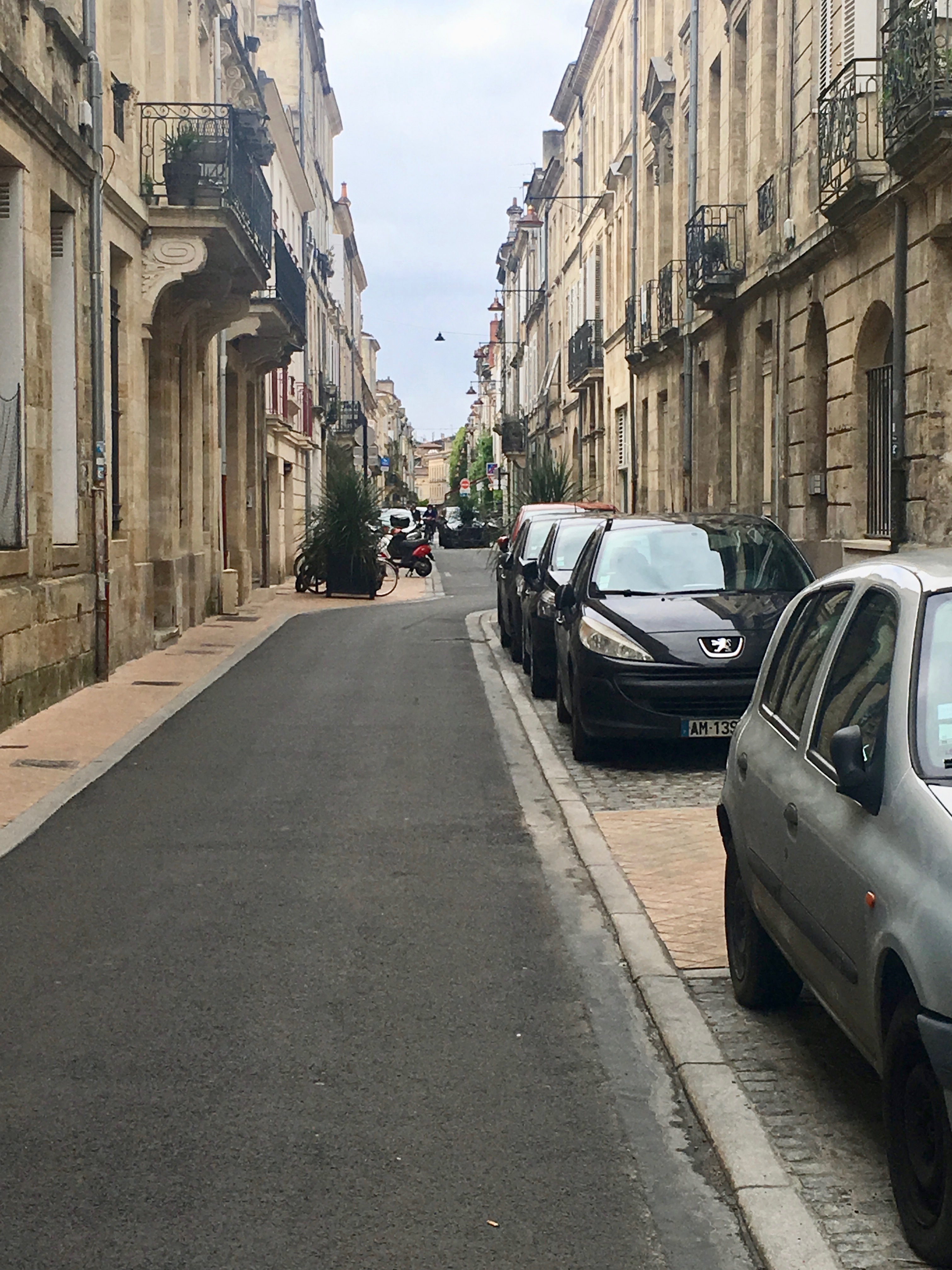
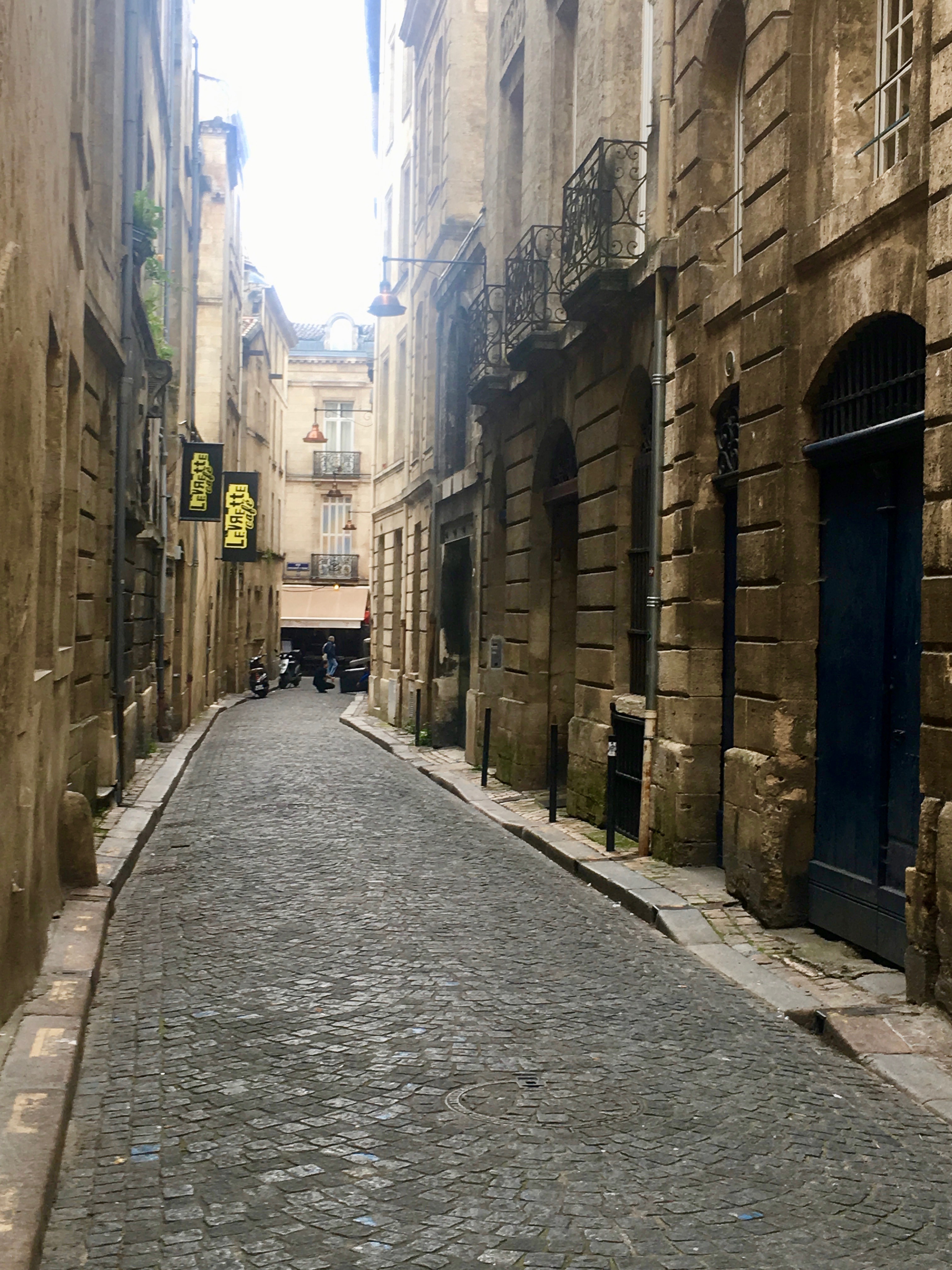
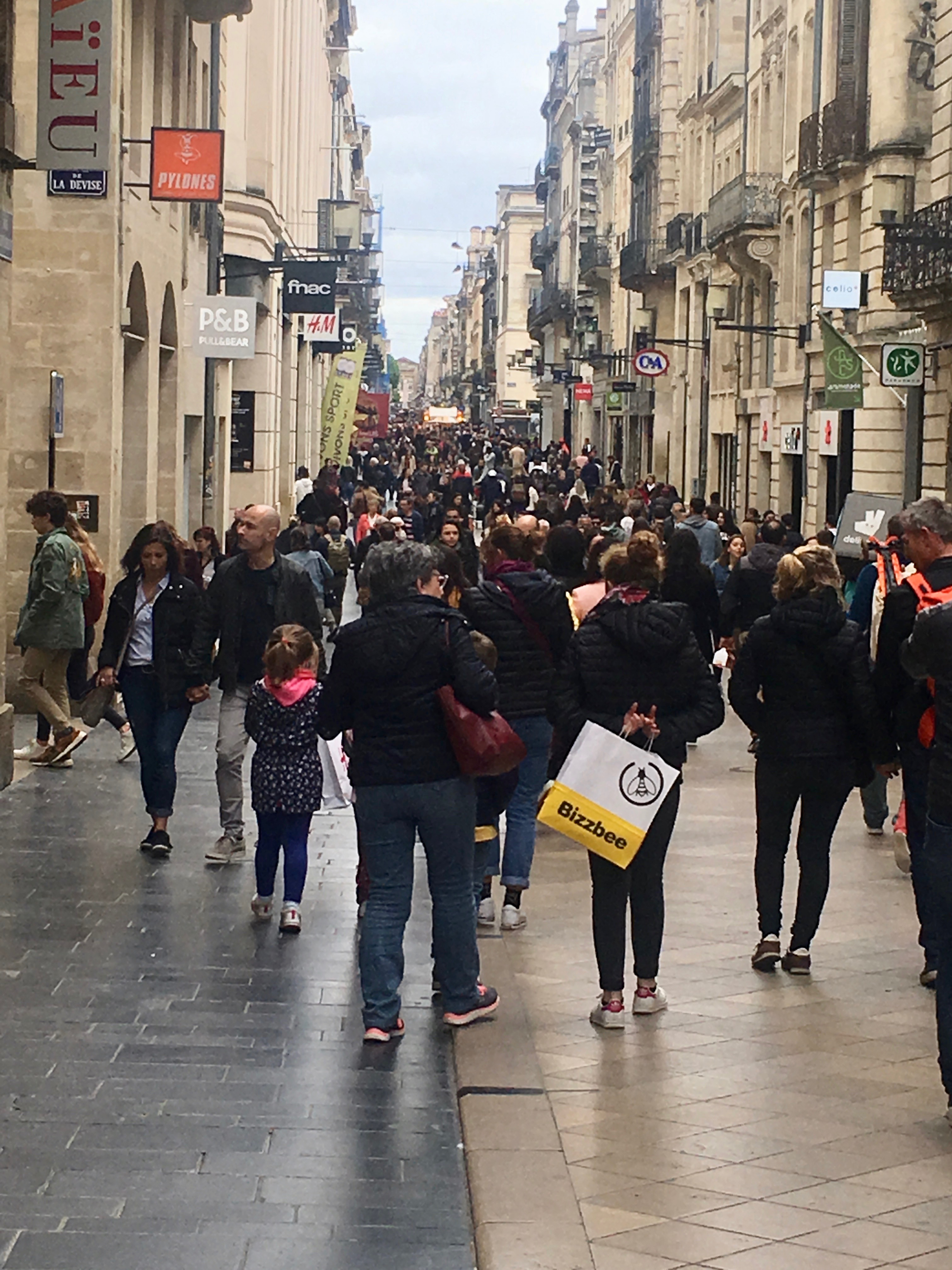
Big shopping street
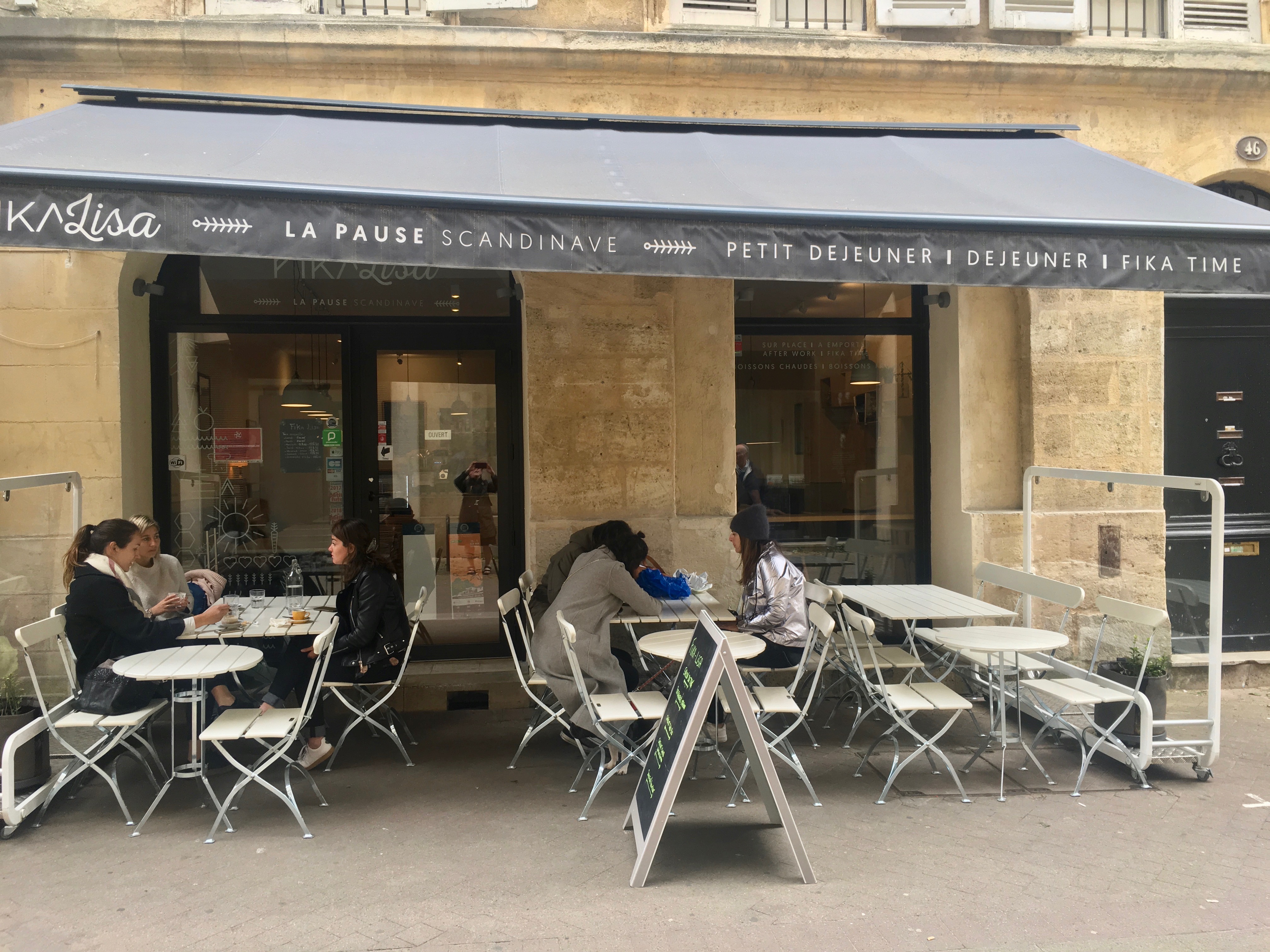
In honor of our Swedish friends we found a Fika restaurant 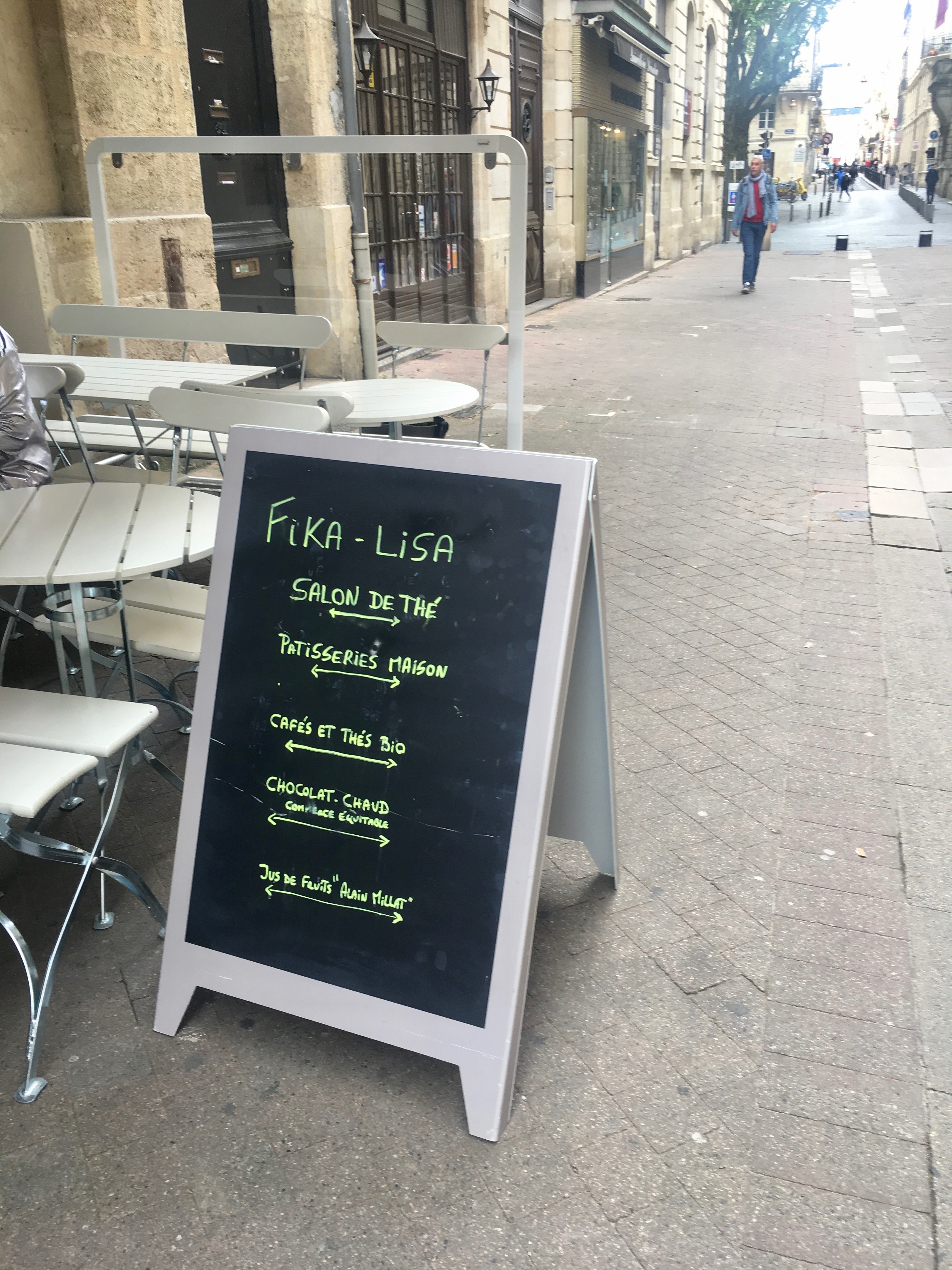
The Fika menu 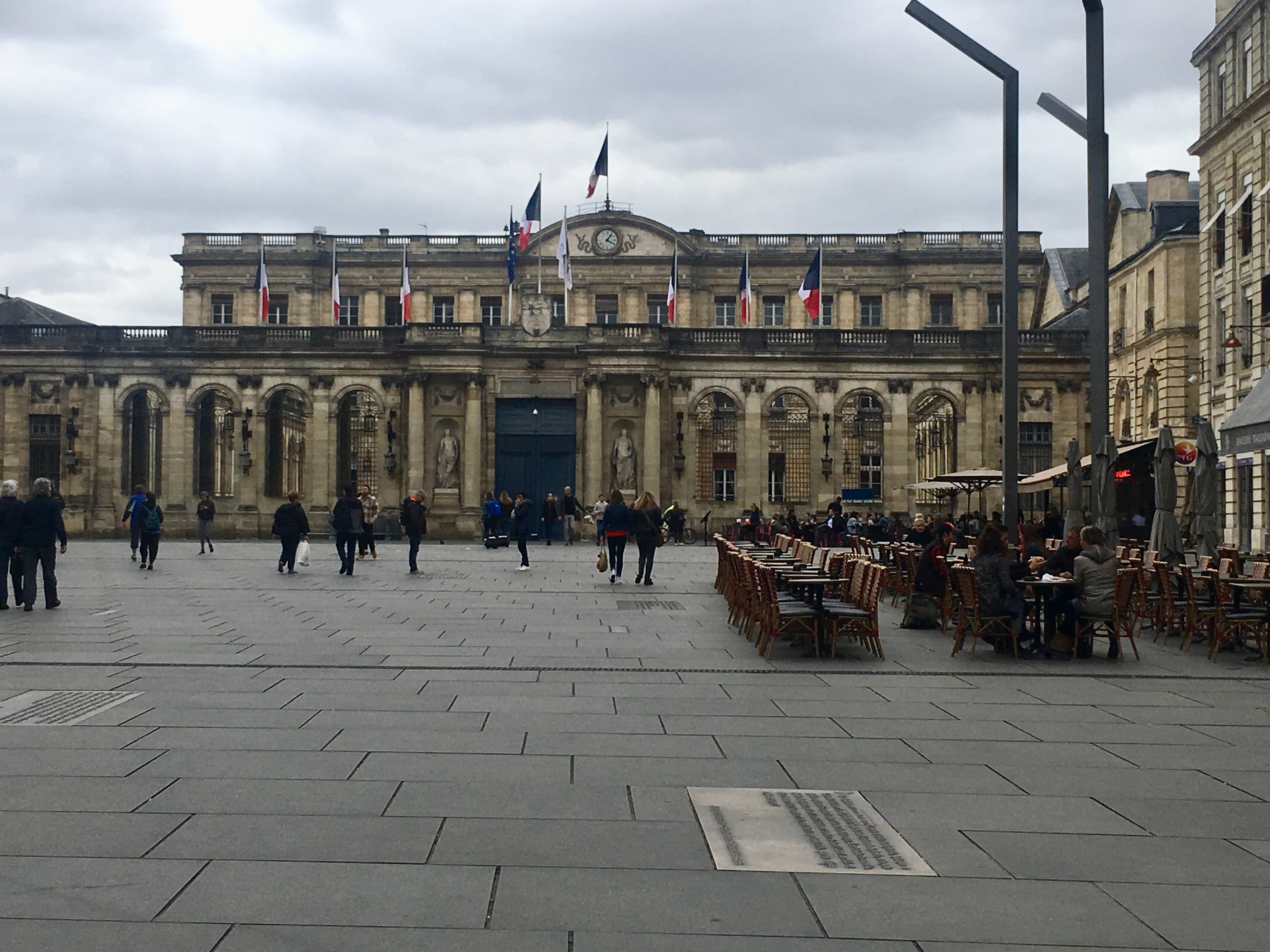
Hotel de Ville
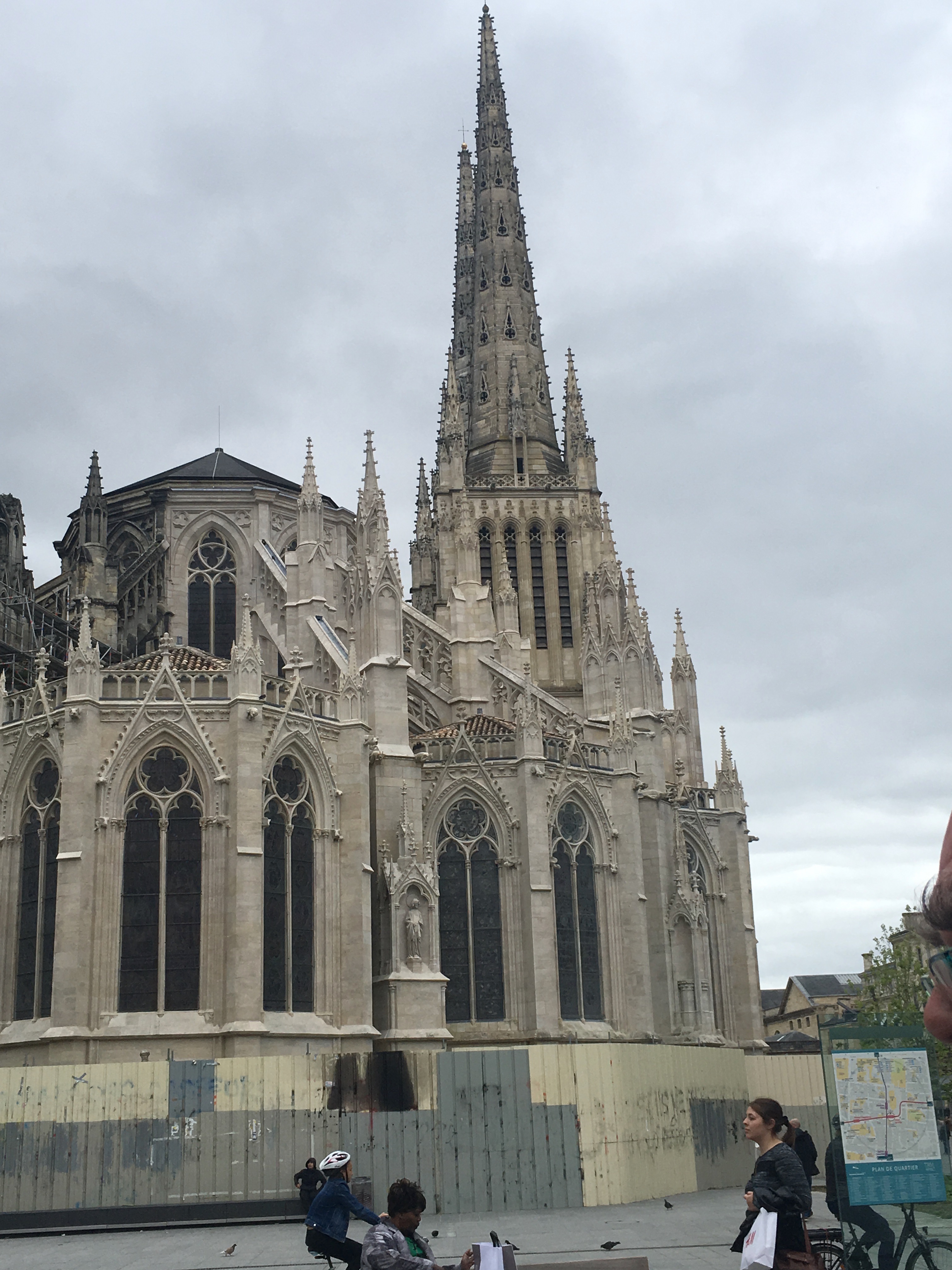
Saint Andrew Cathedral was built in the 4th century and it is the first Gallo-Roman cathedral. The cathedral was added onto in 1330, 1440, and 1515. In 1787 a fire destroyed the choir’s stained-glass window and in 1793 it was transformed into a a forage store. In 1803 – 1811 the cathedral was restored as a place of worship.
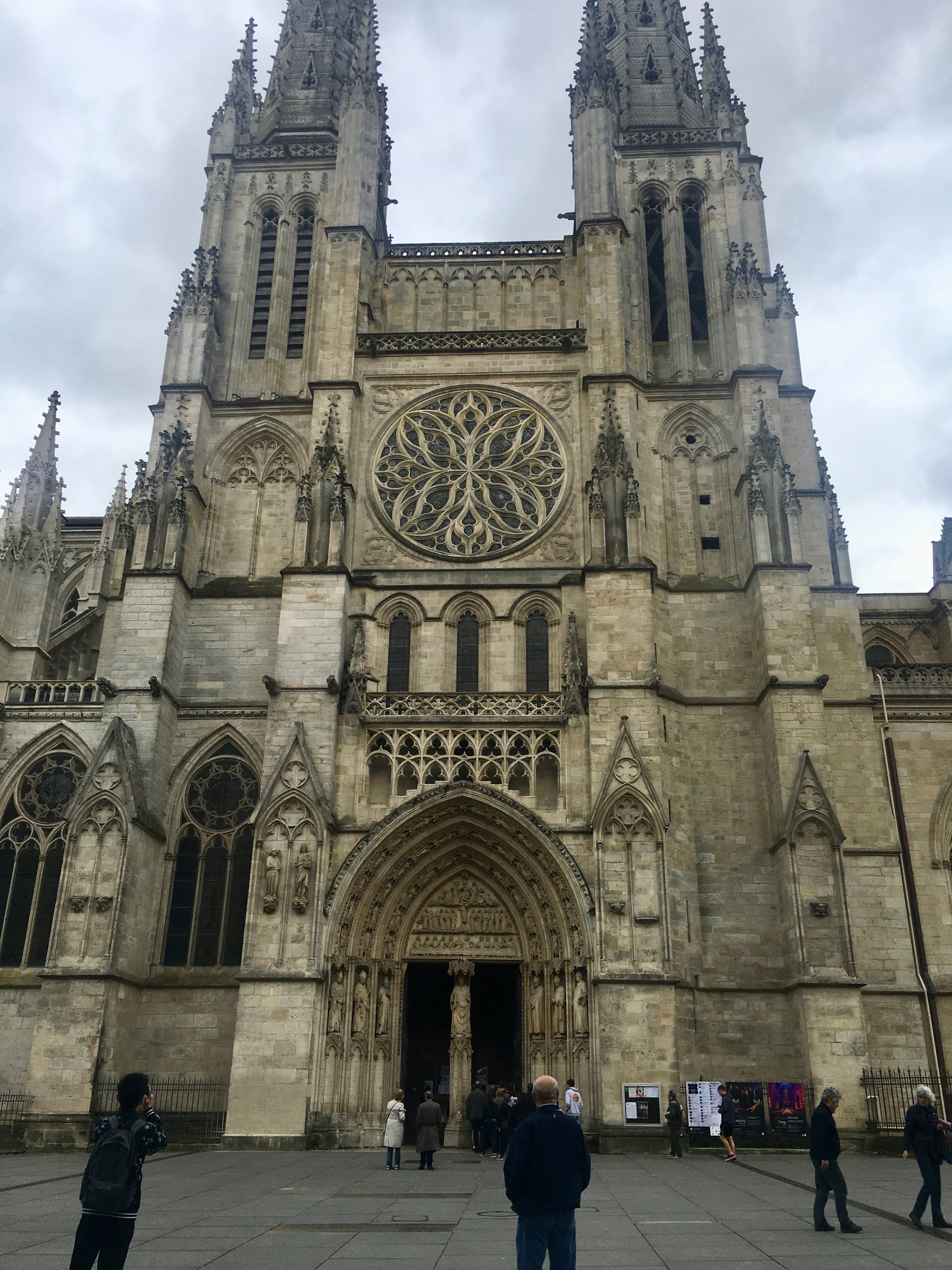
Exterior of the church 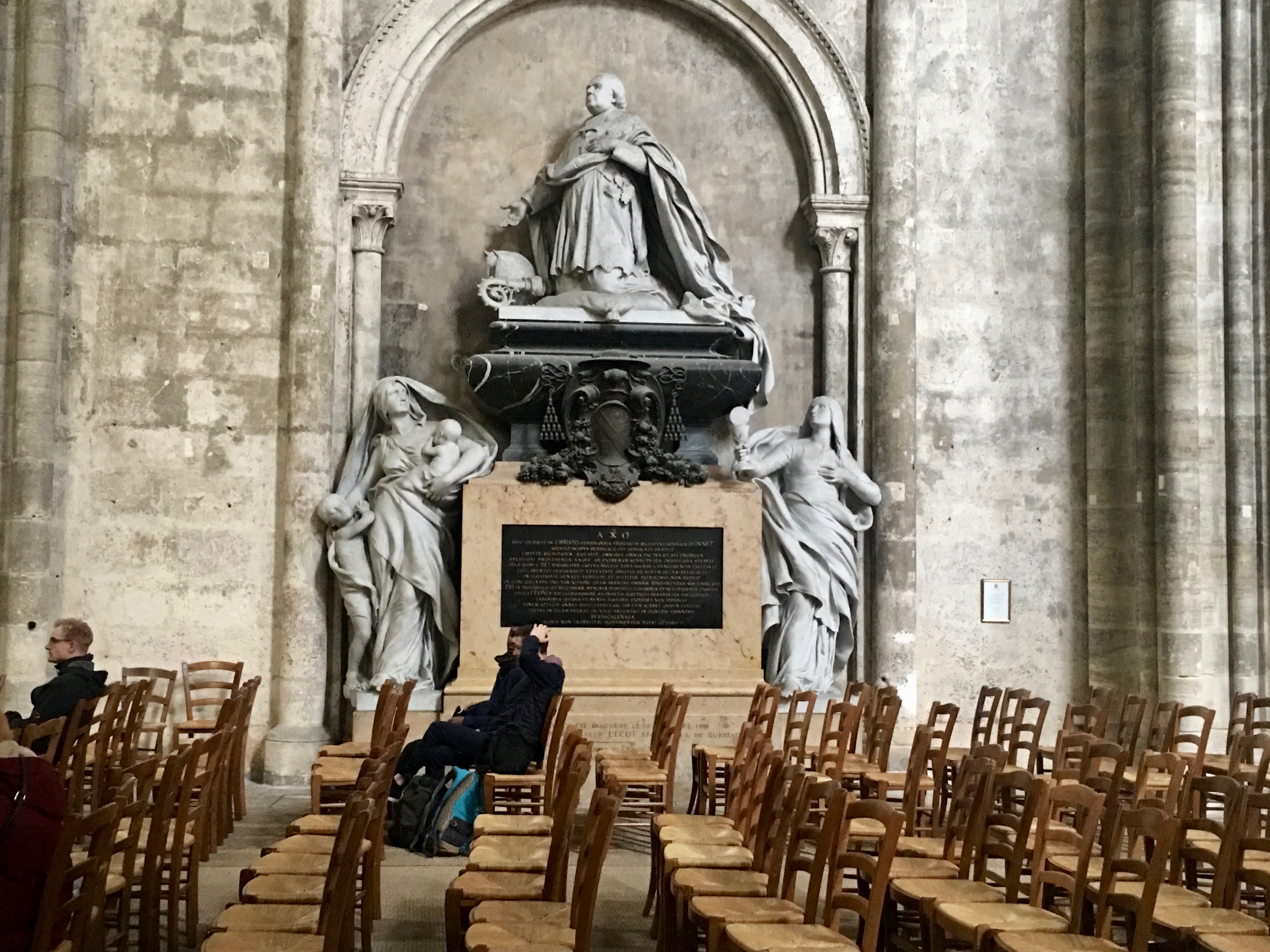
Sculpture inside the church 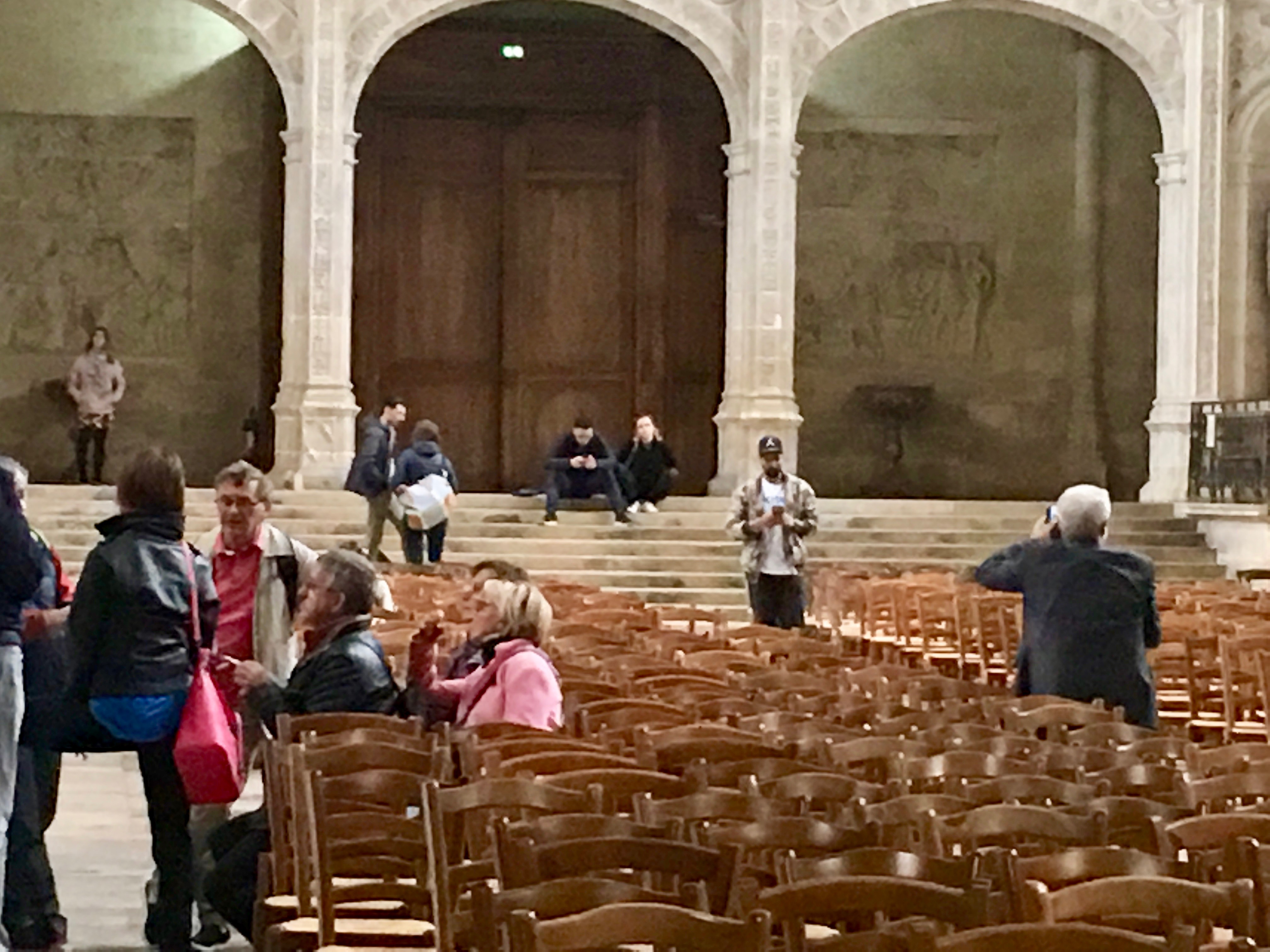
Unusual steps inside the church 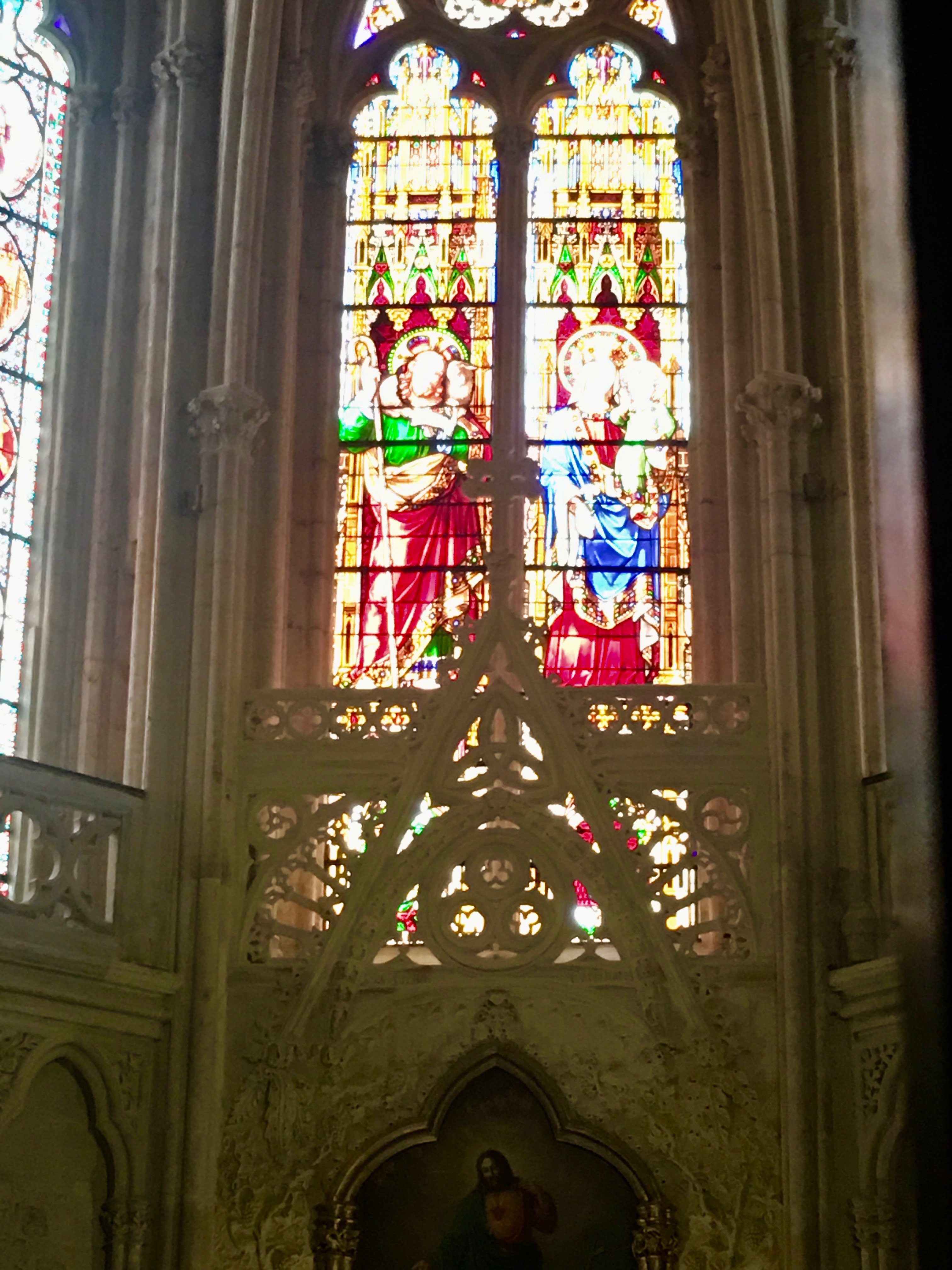
Stained glass window 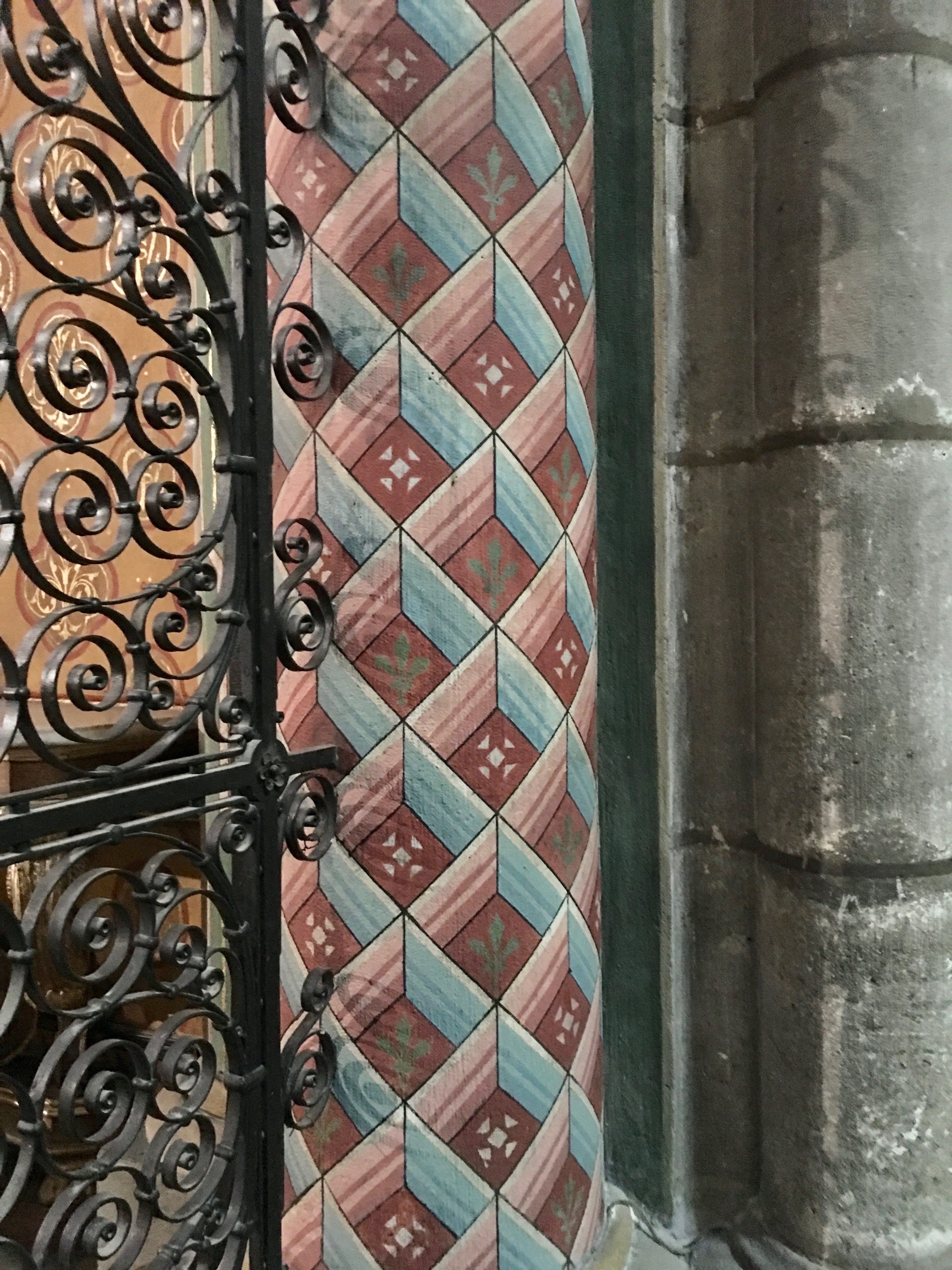
Unusual painted column in the church 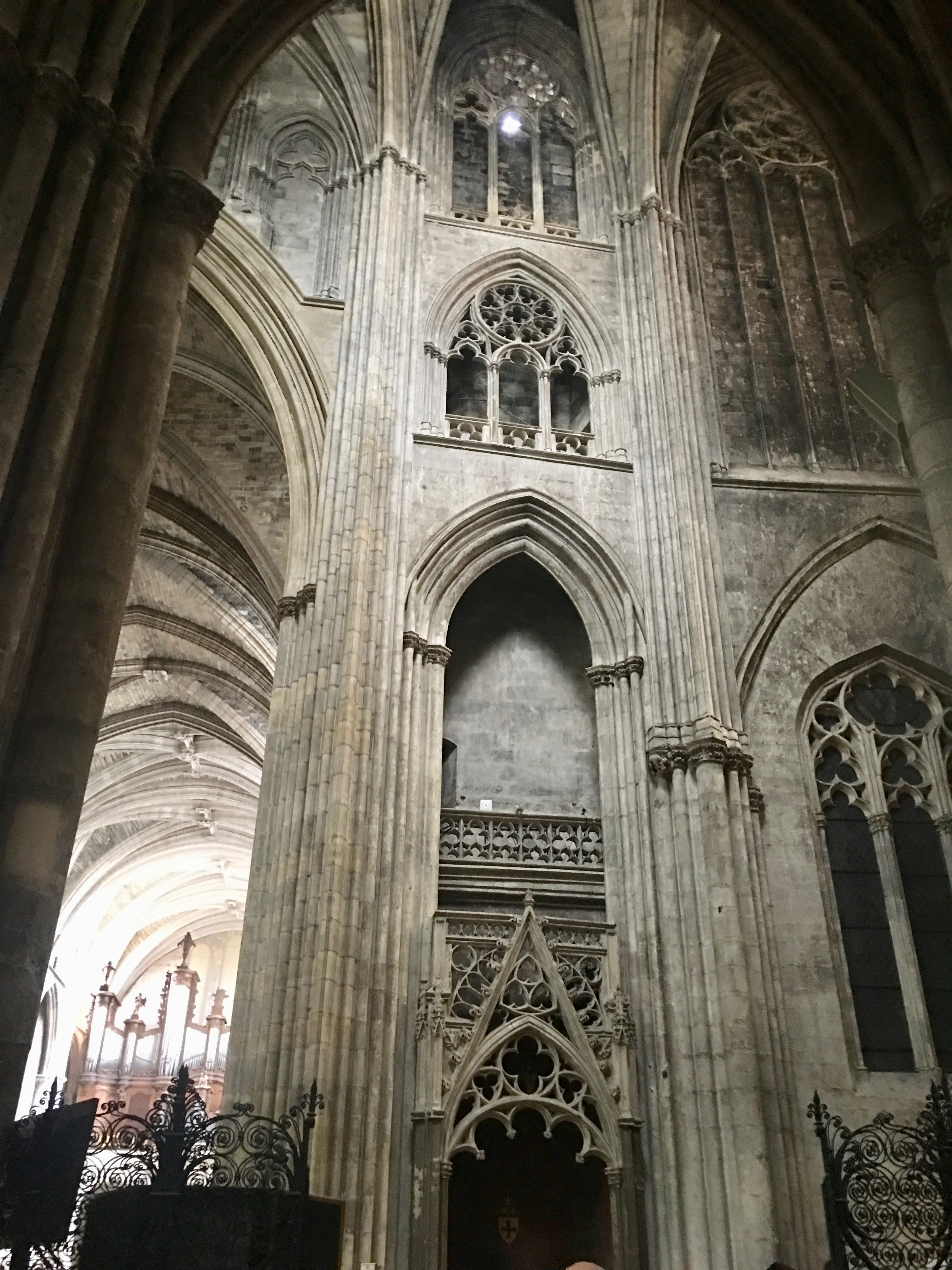
View inside the church
Another view 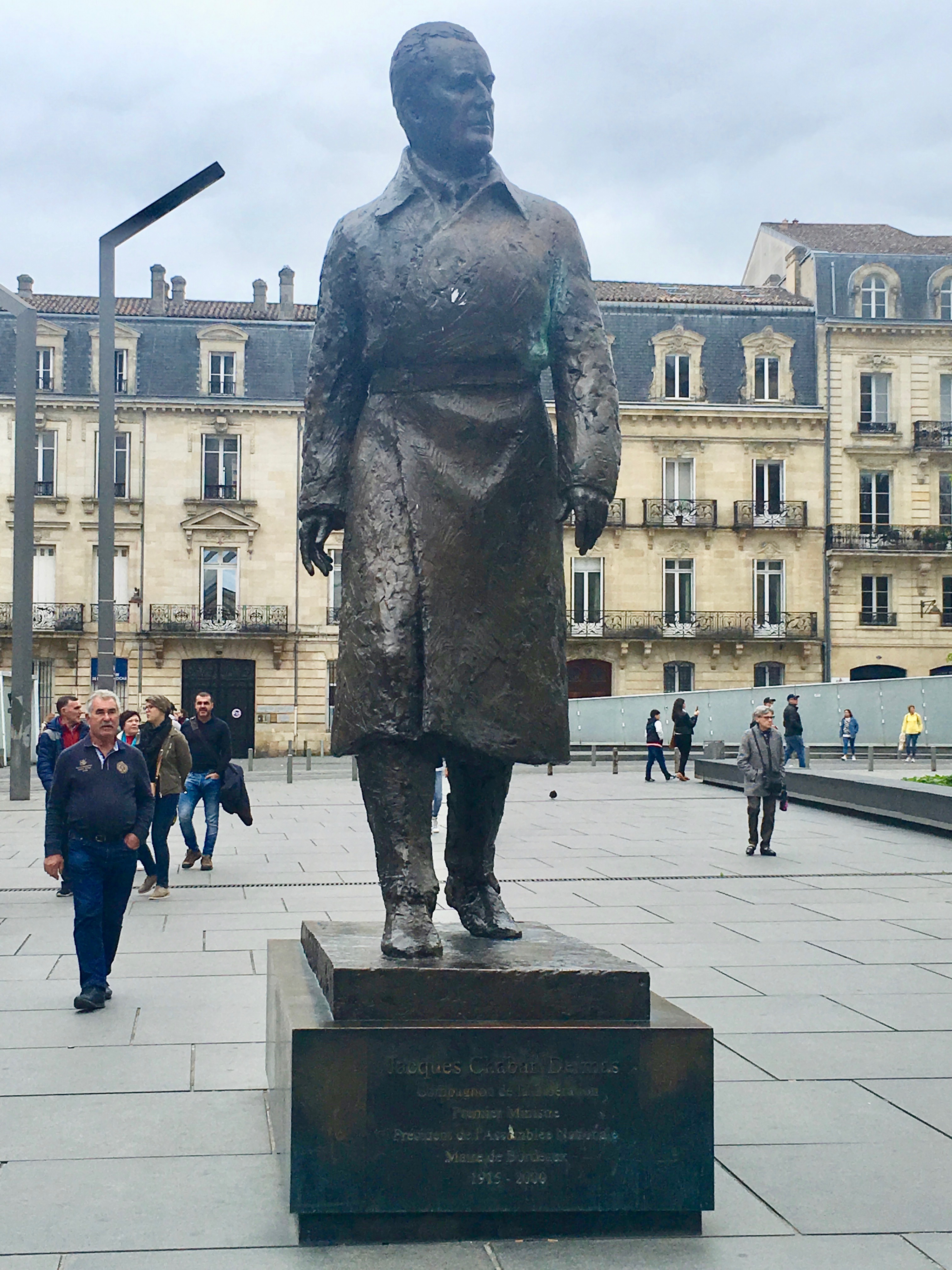
Statue of Jacques Chaban Delmas 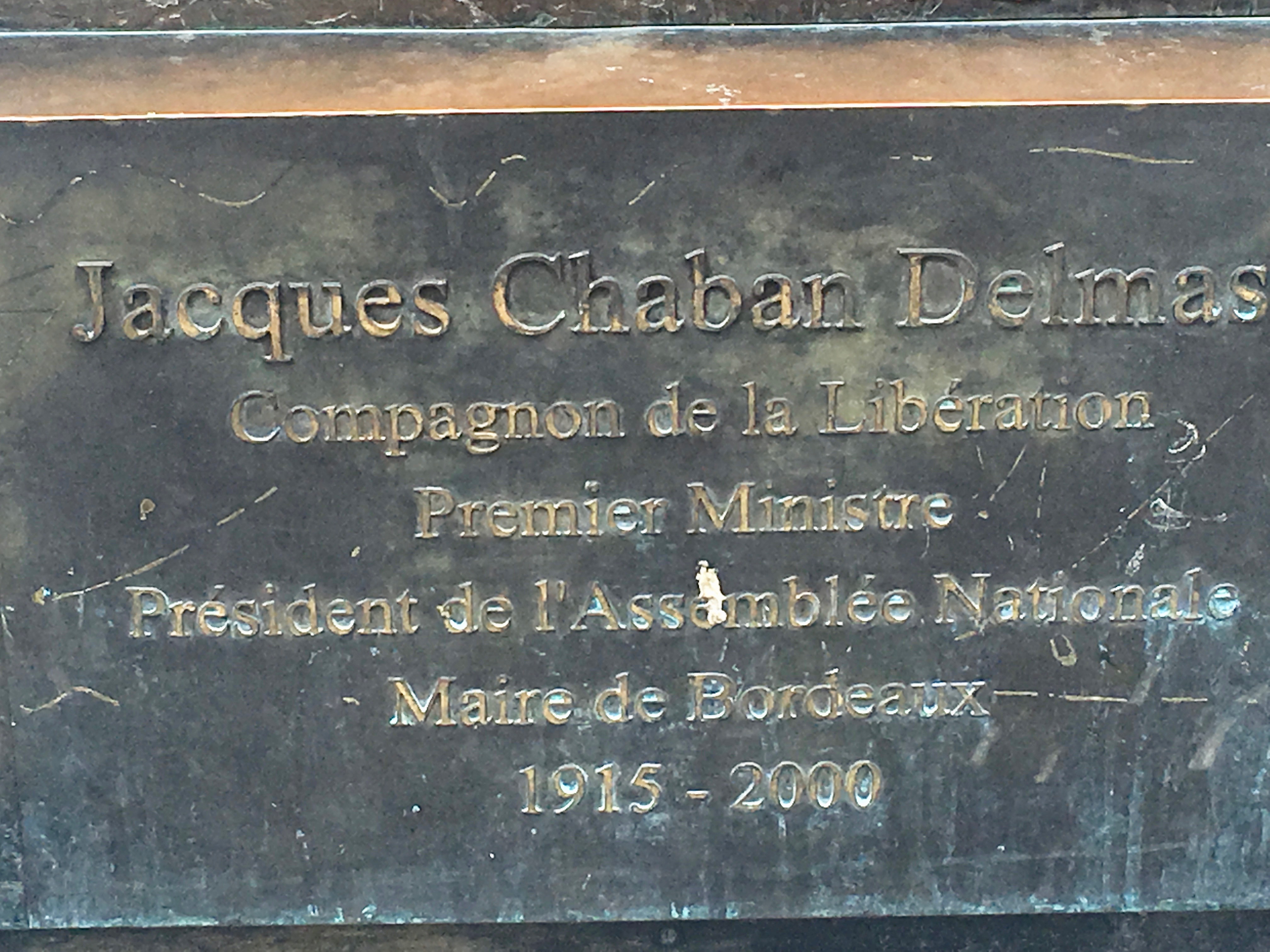
He was a member of the Resistance and took part in the Parisian insurrection August 1944 with general de Gaulle. He later became the Mayor of Bordeaux.
After wandering around we headed back to the train and then to Auros. There was a lot more to see in Bordeaux but unfortunately there was not enough time.

 Meandering With Murphy