The Pantheon, Spanish Steps, Borghese Gallery and finally, Bistrot 64!
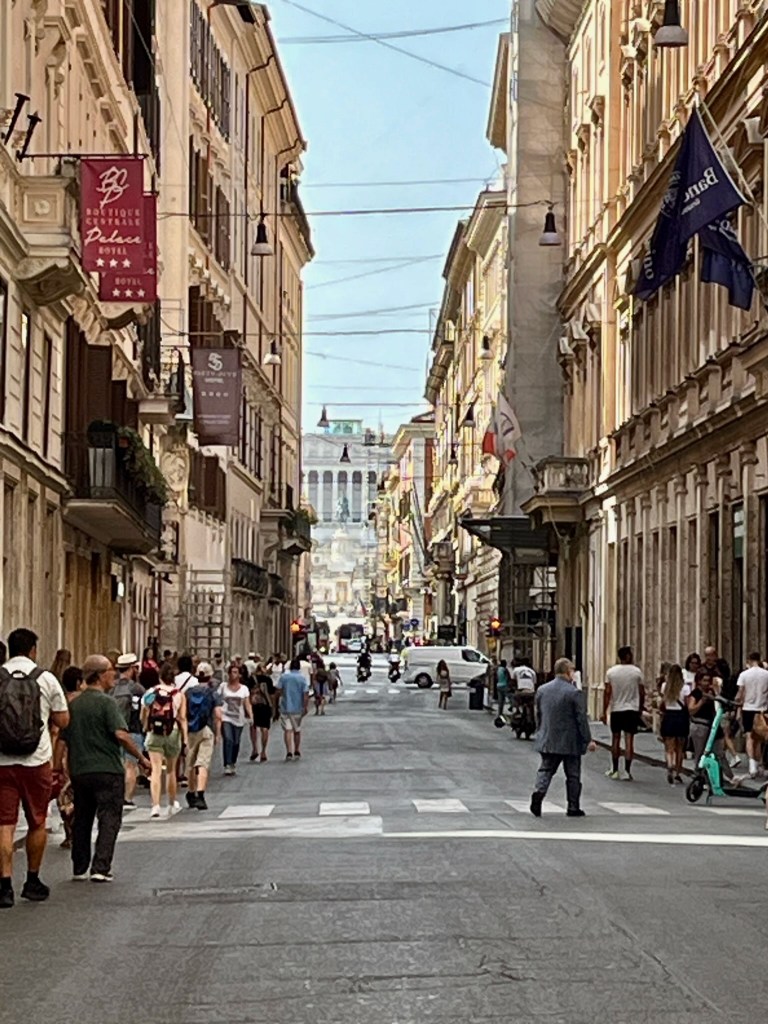
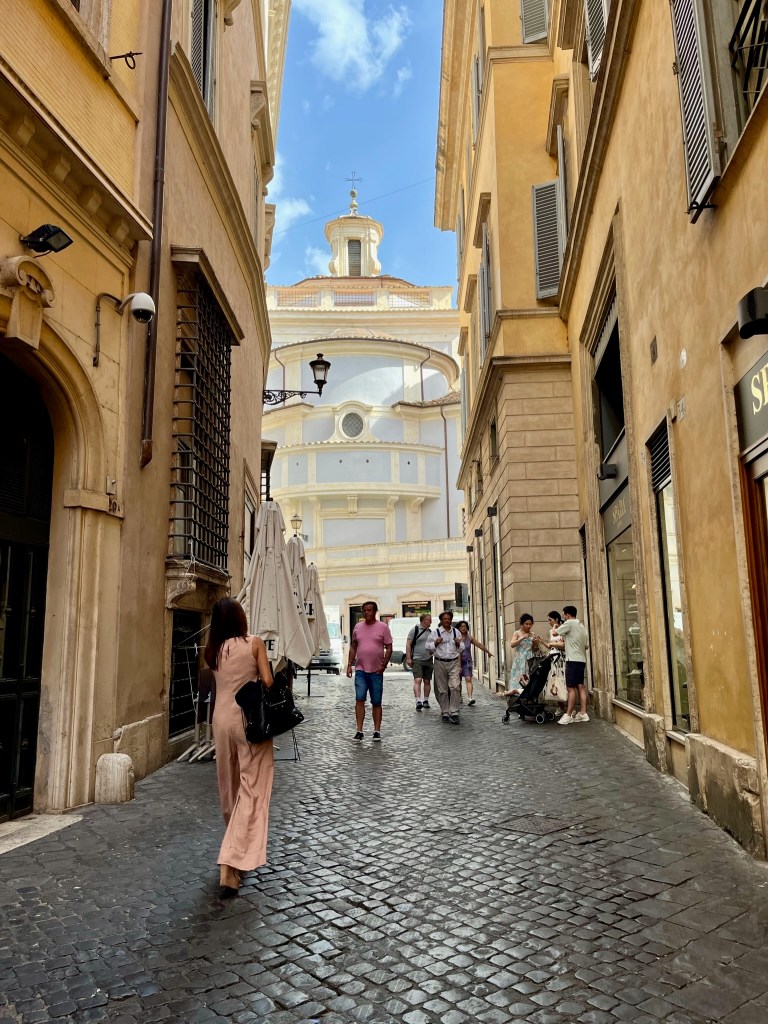
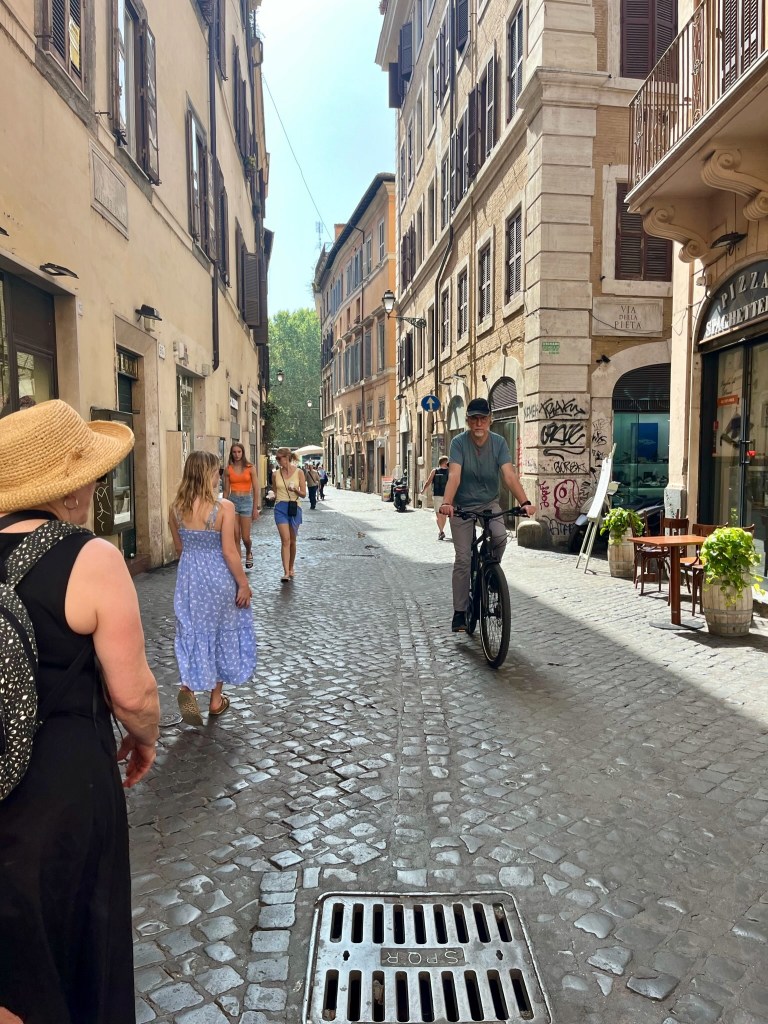
Walking to the Pantheon we passed some interesting streets.
The Pantheon
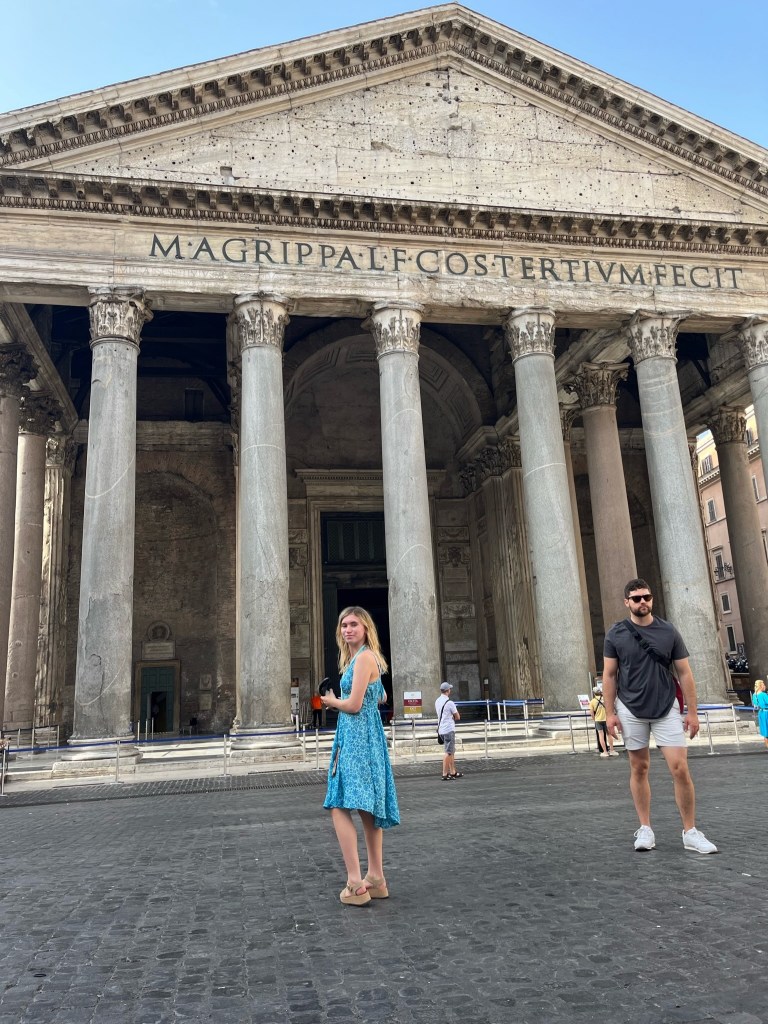
The Pantheon is a magnificent structure. It was built by Hadrian on the site of an earlier temple about 126 AD. And in 609 AD it became a church. Personally, I always like to hear about Hadrian and his constant travels to all parts of the Empire. He build Hadrian’s wall which marked the northern limit of Britannia which I was lucky enough to see parts of it when I was in England.
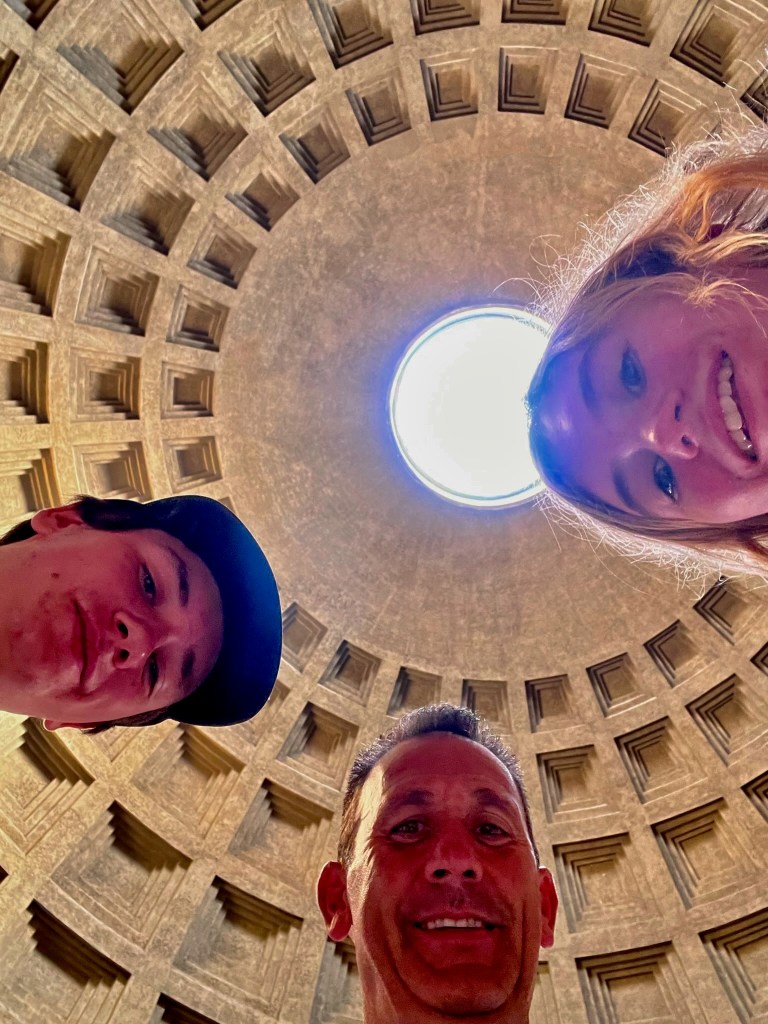
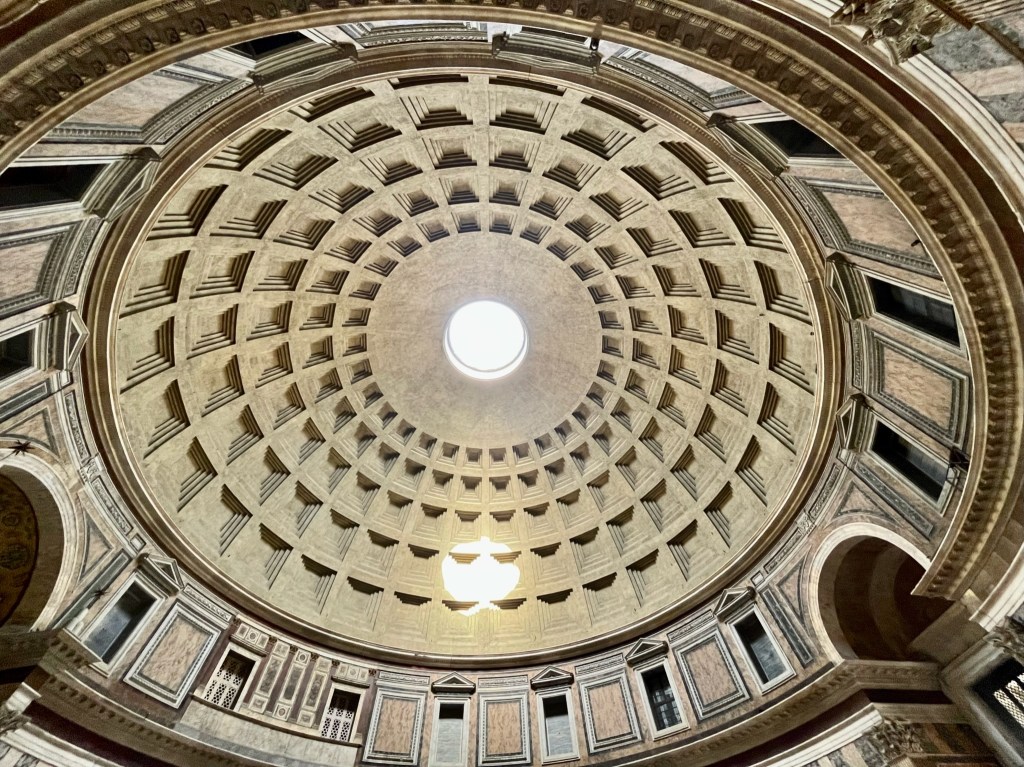
The building is cylindrical with a portico of large granite Corinthian columns under a pediment (a triangular upper part of a building). A rectangular vestibule links the porch to the rotunda with a central opening (oculus) to the sky. The rotunda’s height and diameter are equal: 142 ft. The oculus provides the only light.
It is one of the best preserved of all Ancient Roman buildings, in large part because it has been in continuous use throughout its history.
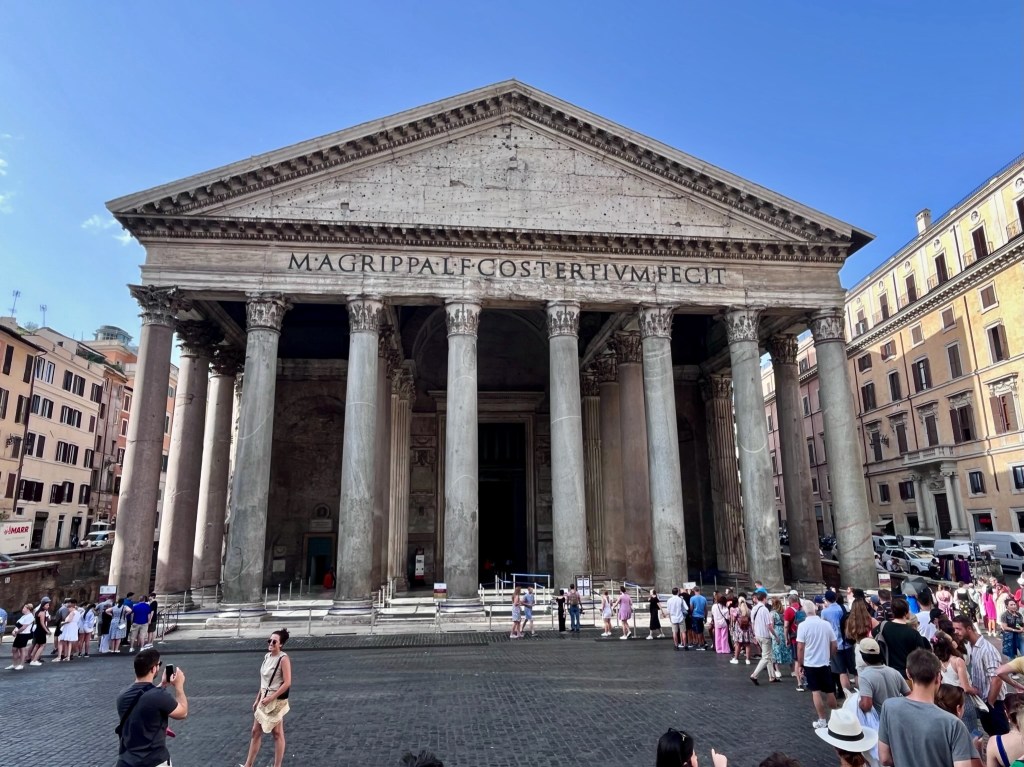
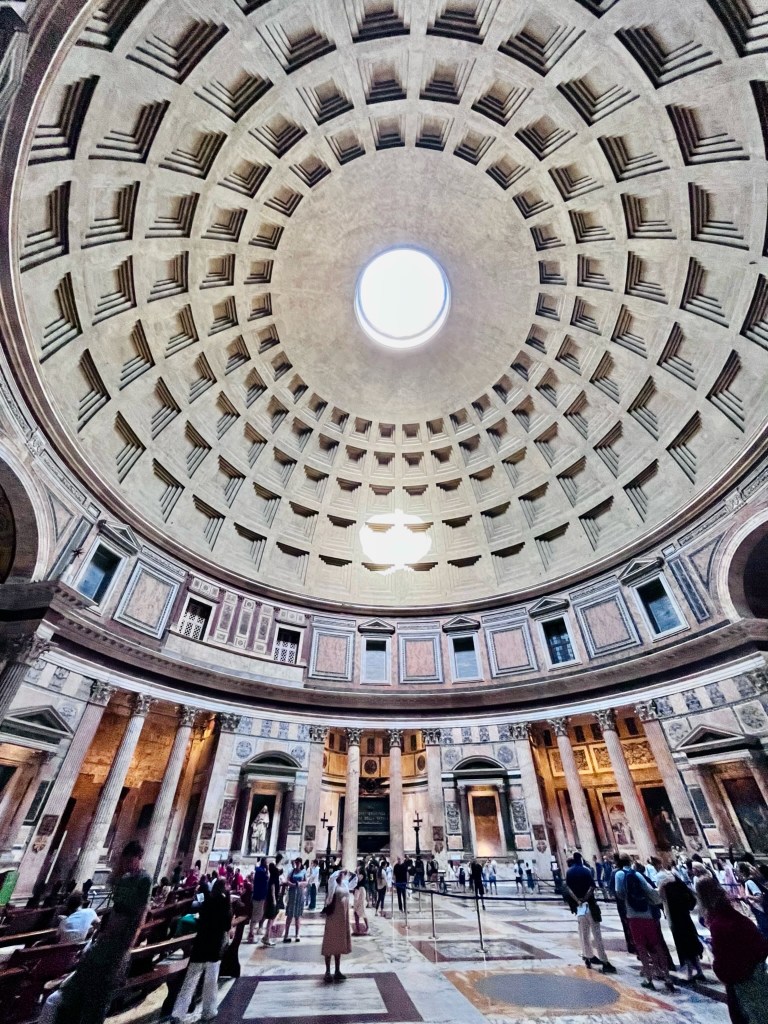
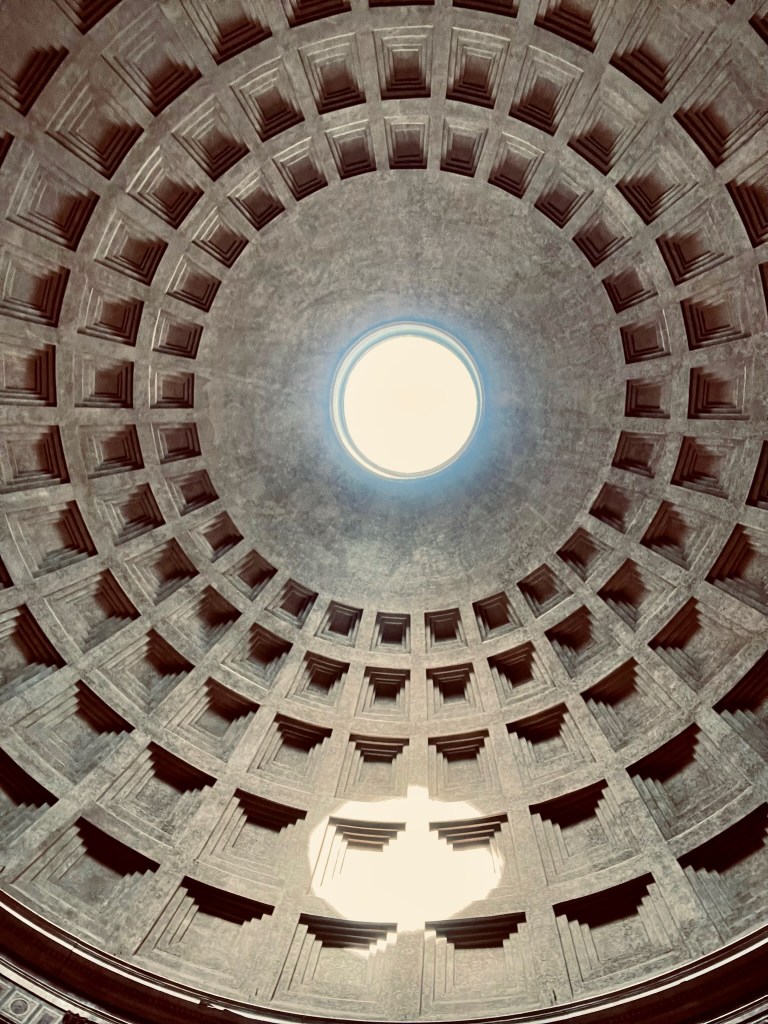
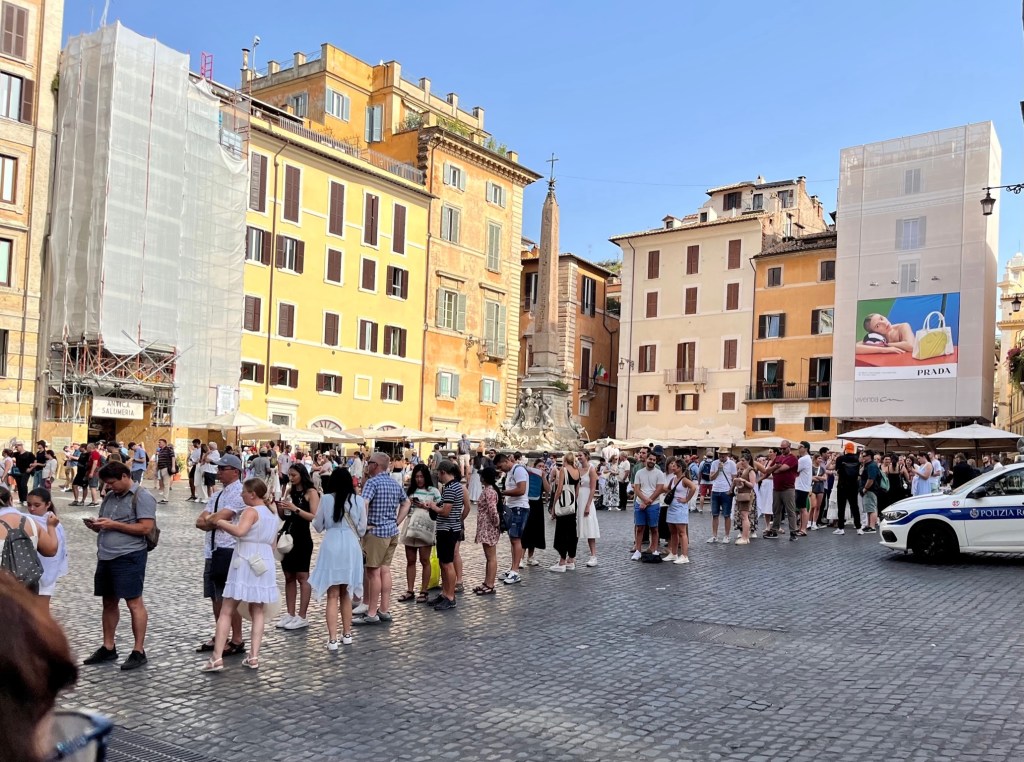
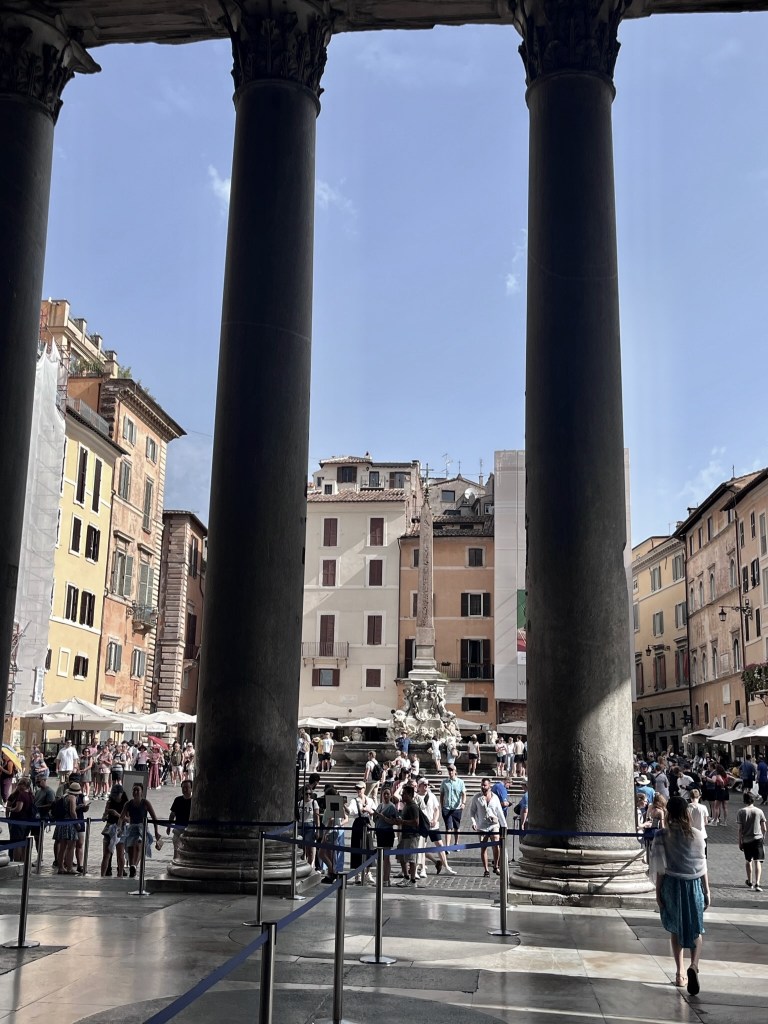
The Piazza in front of the Pantheon is called the Piazza della Rotonda. Fortunately Glenn got tickets the night before so we wouldn’t have to stand in line. This Piazza holds special memories for me as it was a place Scott and I visited on both of our trips to Rome. On the first trip there was a MacDonalds and we saw a man with a sack of burgers and bottle of wine sitting at the fountain and enjoying his lunch. Both times we ate at a restaurant here.
Little did we realize it was a church so of course Beth, Kate and I were not “appropriately” dressed (bare shoulders). So “luckily” there was someone selling scarves and we negotiated a good price. Shortly after we purchased them the vendor was driven off by the Polizia.
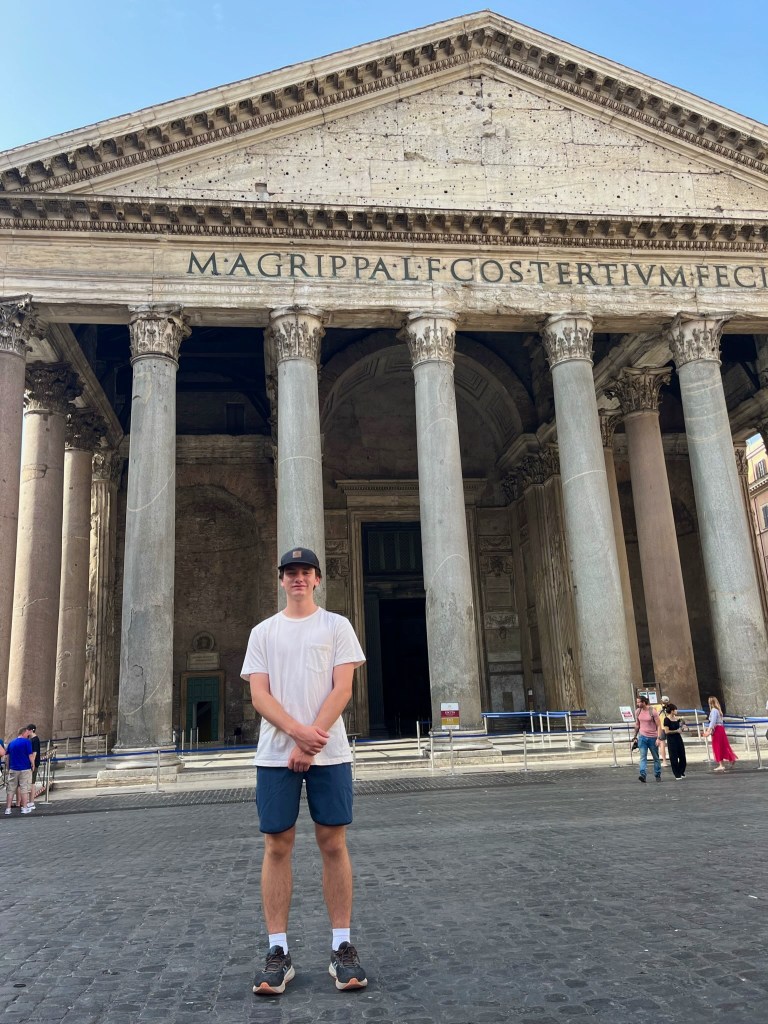

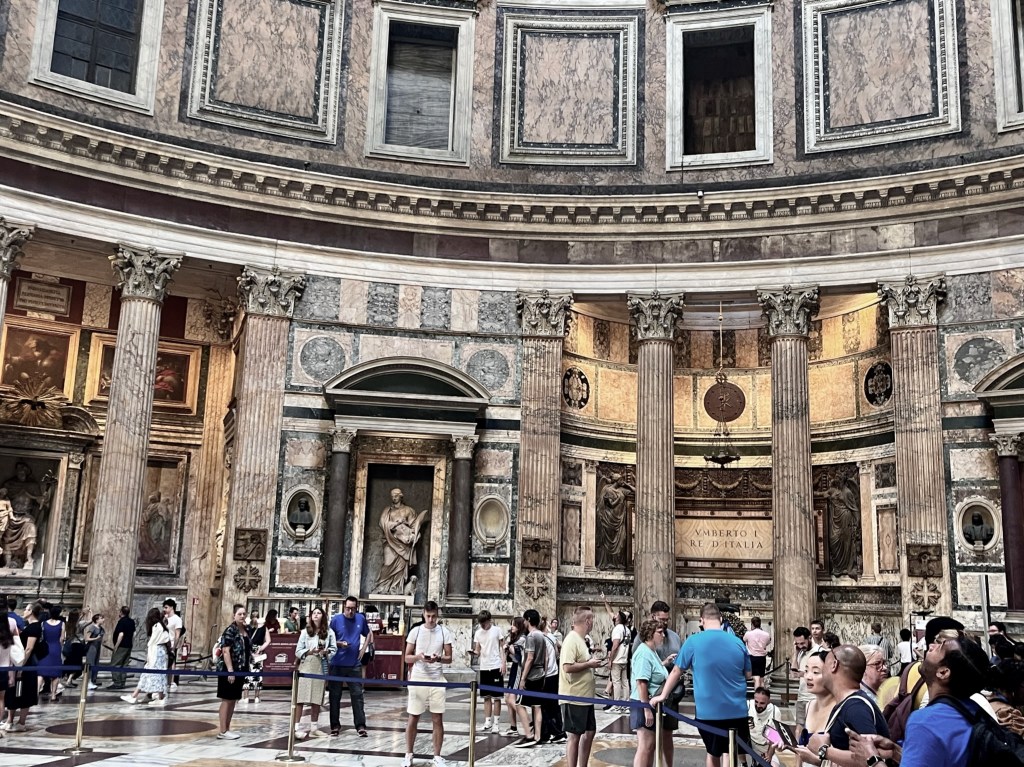
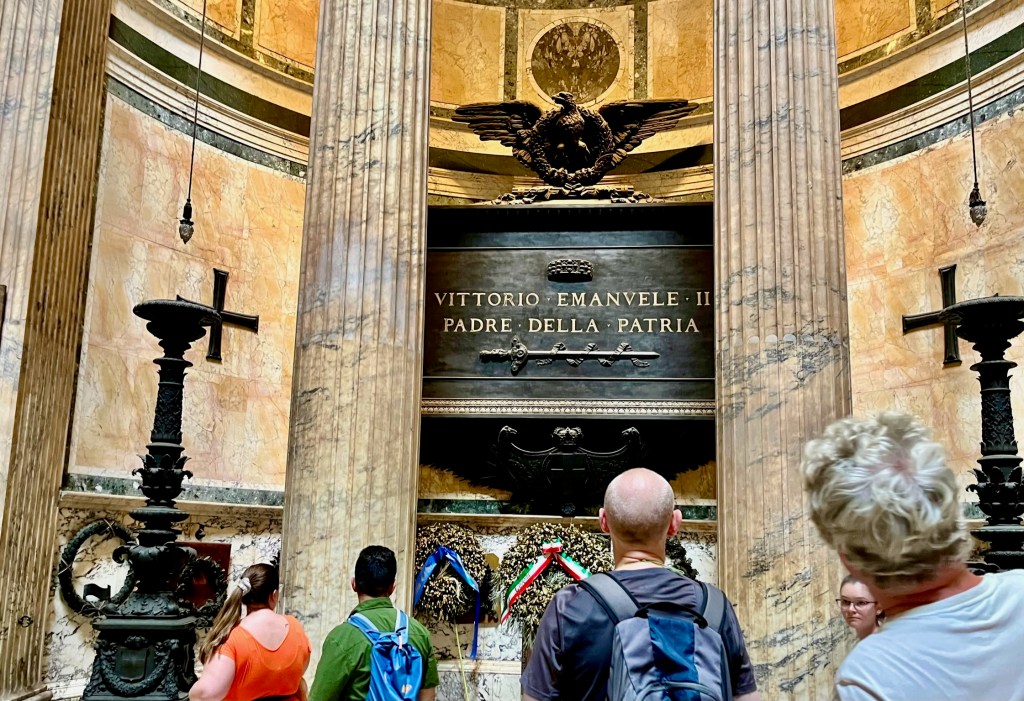
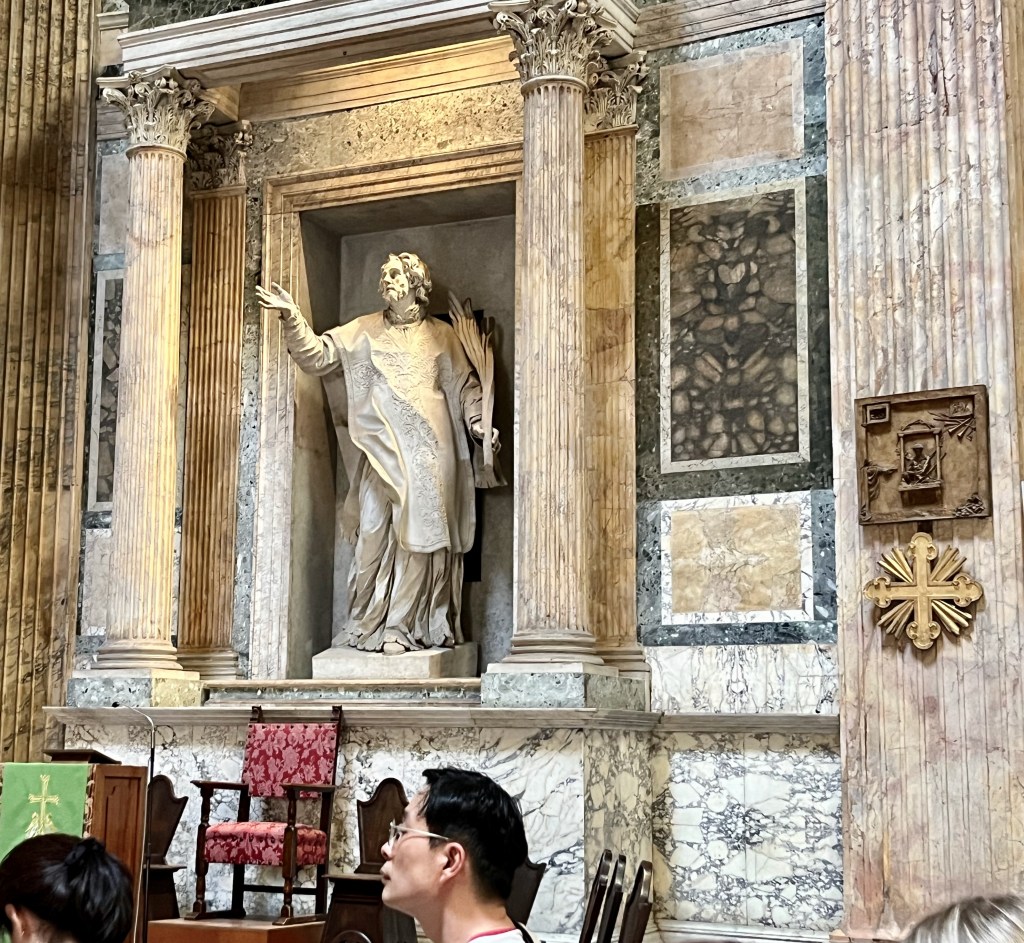
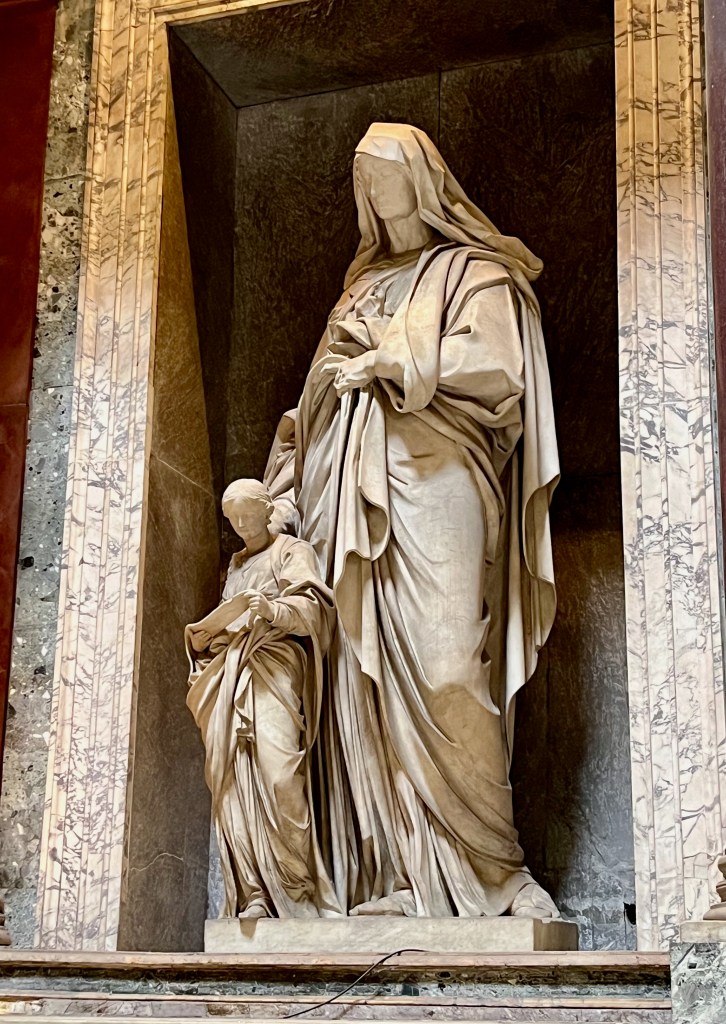
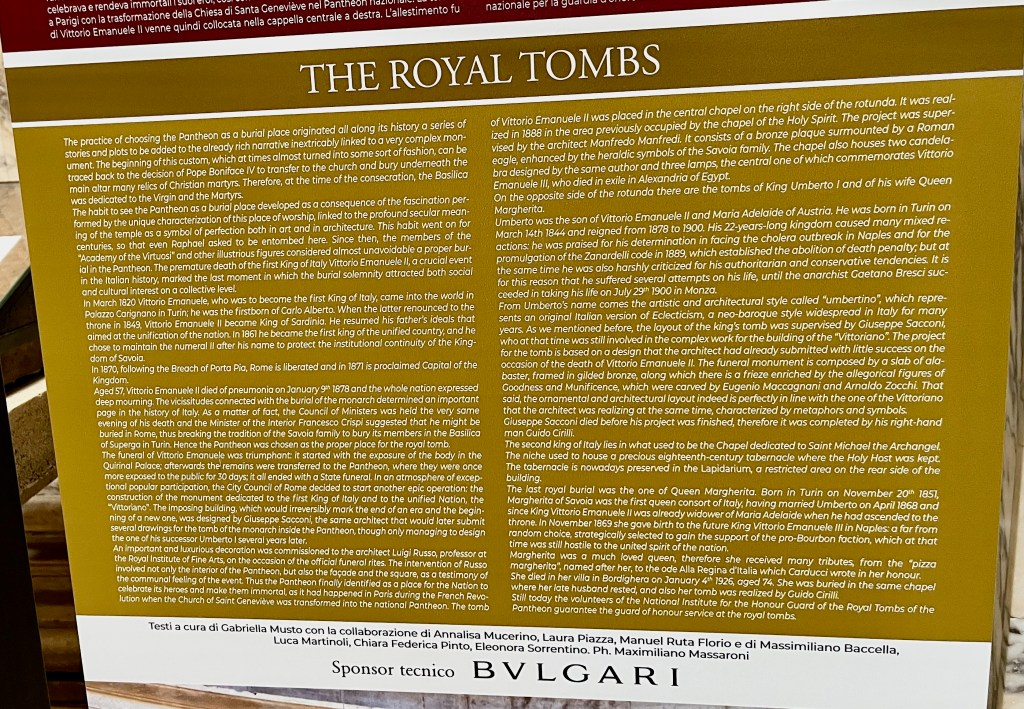
Far left, the Grave of Vittorio Emanuele II, Father of the Nation. He reigned over the Kingdom of Piedmont and later was crowned King of Italy. The middle is a statue of a man with a quill and on the left is the Madonna of Clemency.
Spanish Steps
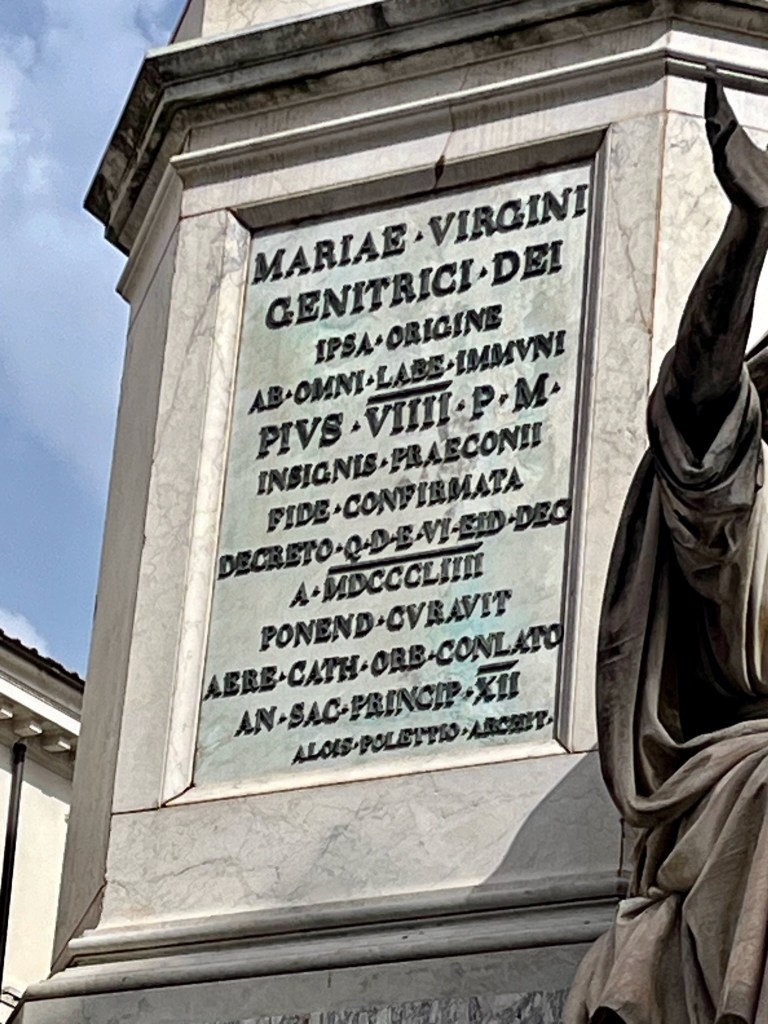
On the way to the Spanish Steps we saw the the Column of the Immaculate Conception in the Piazza Mignanelli. It depicts the Virgin Mary carrying a wreath of flowers. It was dedicated in 1857 and erected by the city firemen. Each December the head of the Italian fire department presents a bouquet of flowers around the Virgin Mary with the motto “We stop fires, giving our hearts.” This signals the official beginning of the Christmas Season.

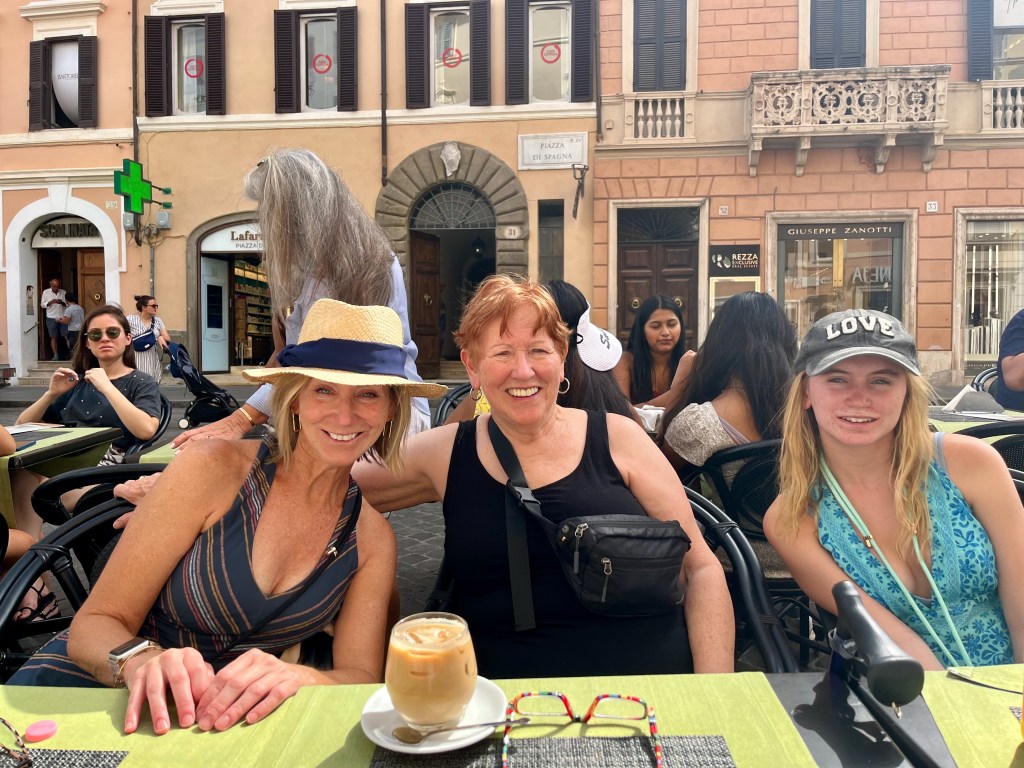
Before we got to The Spanish Steps we decided to take a break and have some coffee. We drank a lot of iced cappuccinos. An aside, we discovered that the cappuccinos were much, much cheaper than ones at Starbucks!


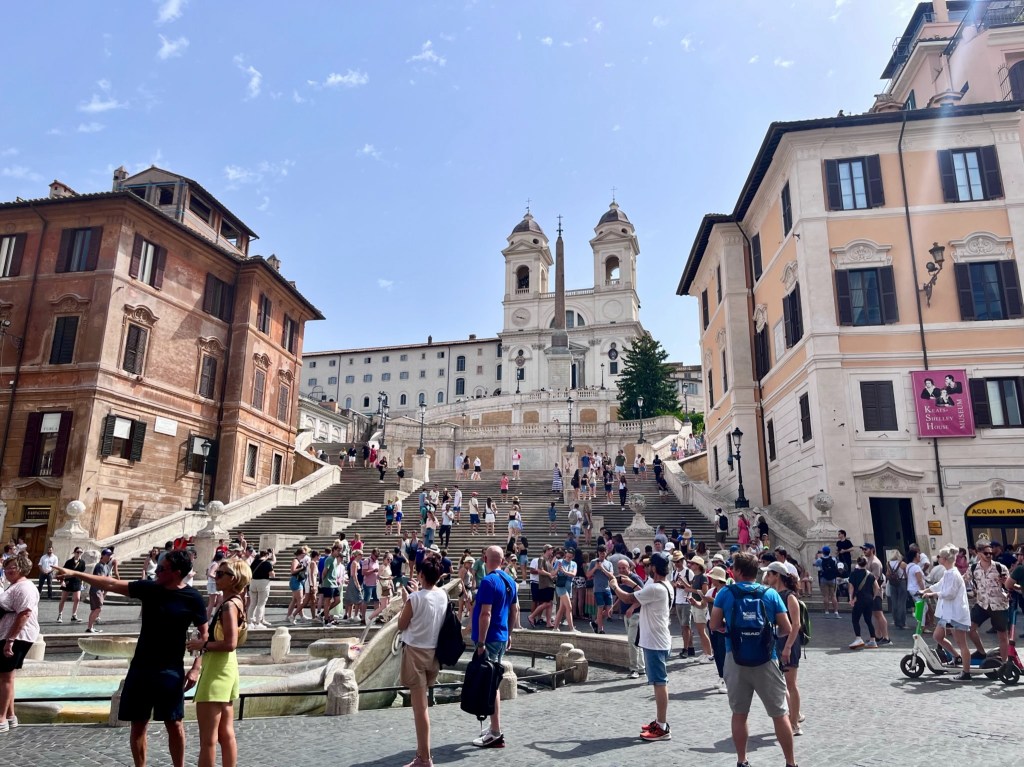
The Spanish Steps is the central feature of the Piazza di Spagna. In the 17th century Spain’s ambassador to the Holy See had his headquarters on the square and the area around it was was deemed to be Spanish territory. It is in heart of the city’s main hotel district. It is the most famous square in Rome.
The fountain, Fontana della Barcaccia, is small and was designed by Bernini or his father. It is a boat half submerged in a shallow pool. It is a public place where you can fill your water bottles.
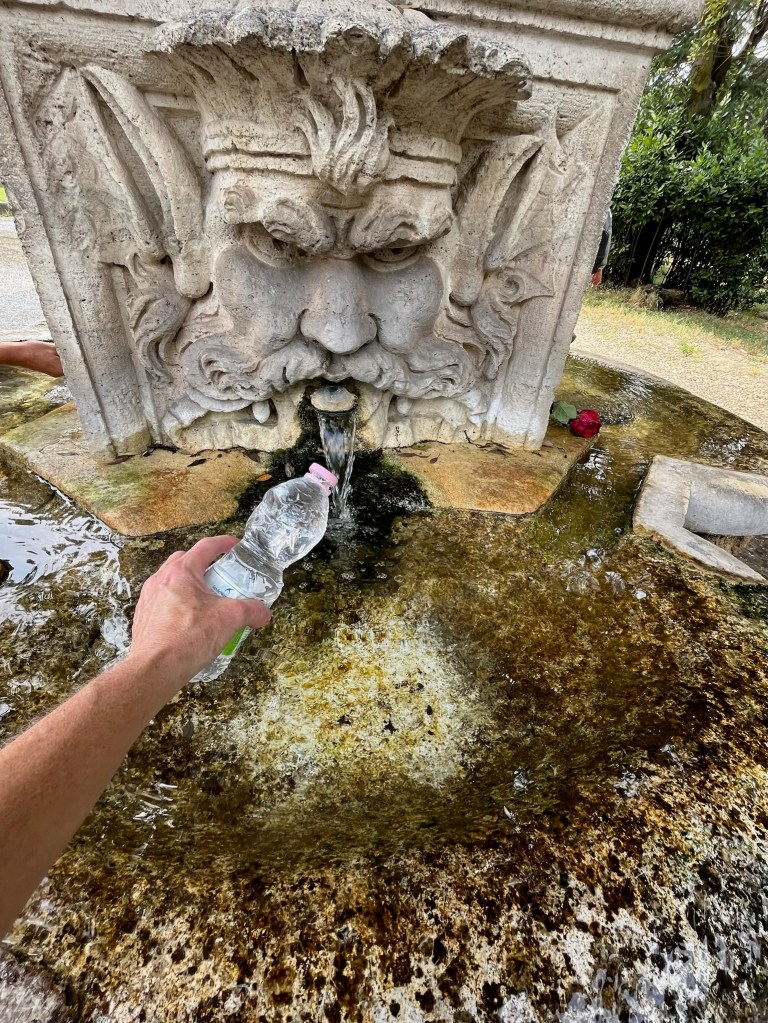
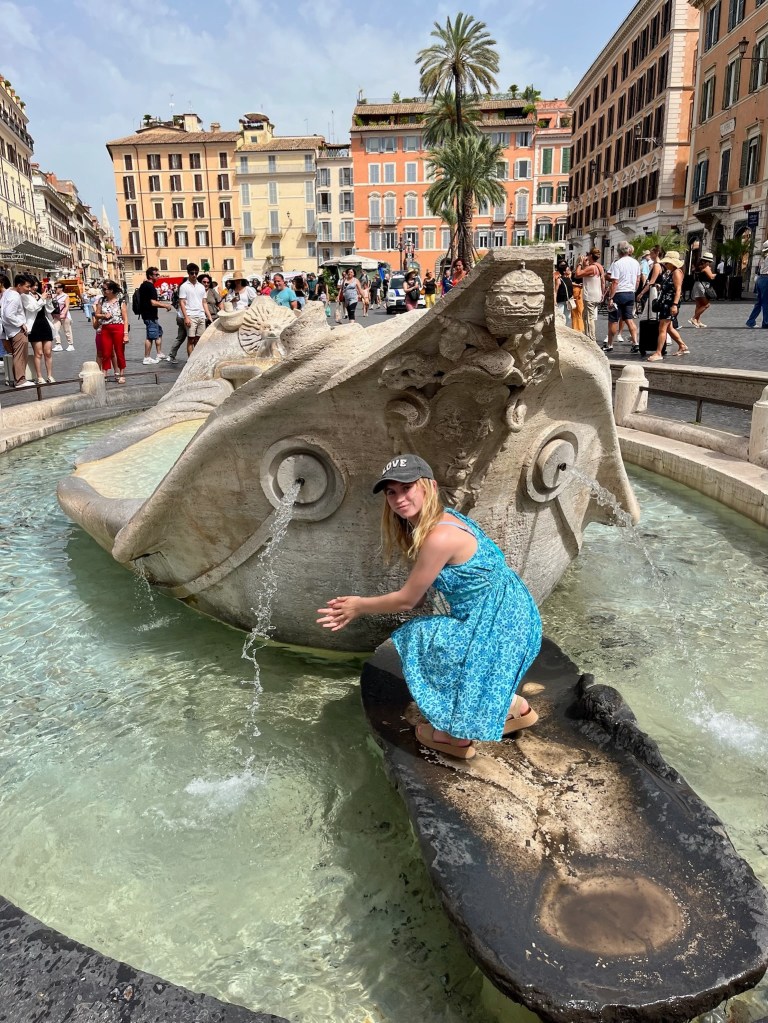
I decided to go back to the apartment but it did not stop the Goodman’s from going to the top.
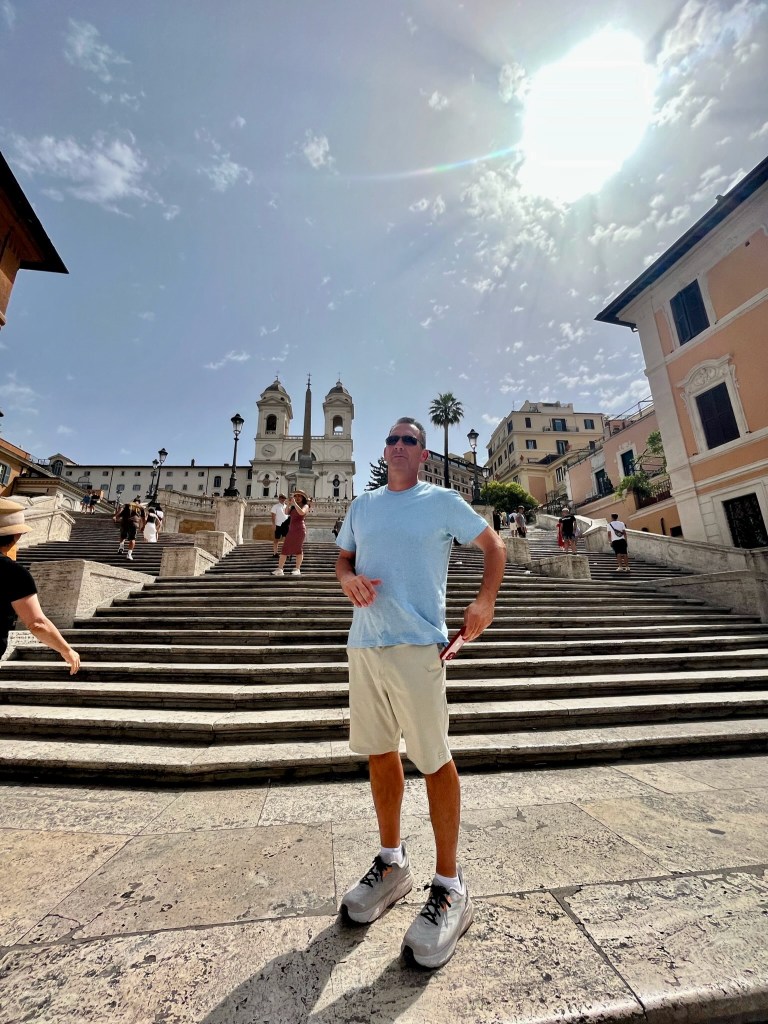
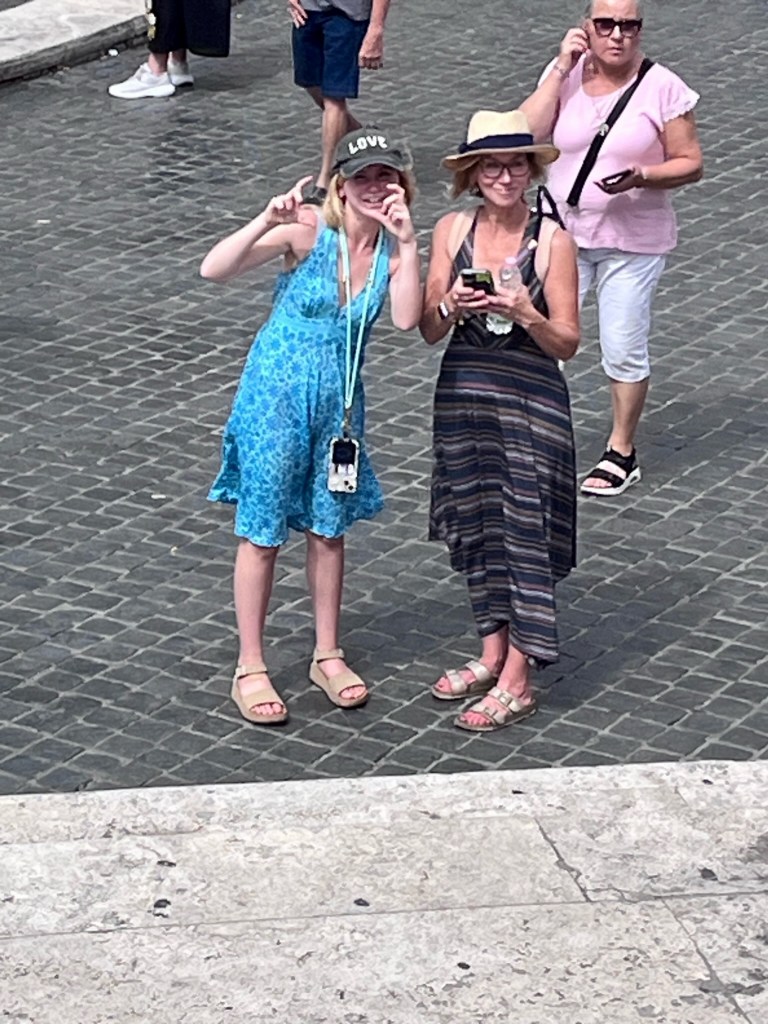
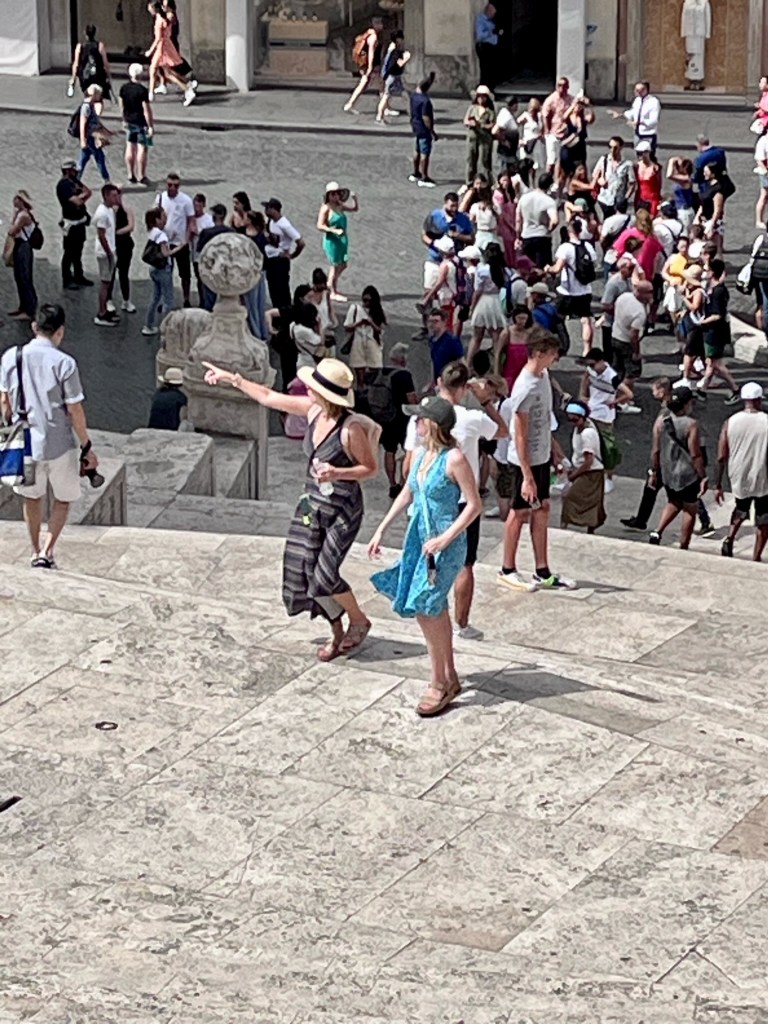
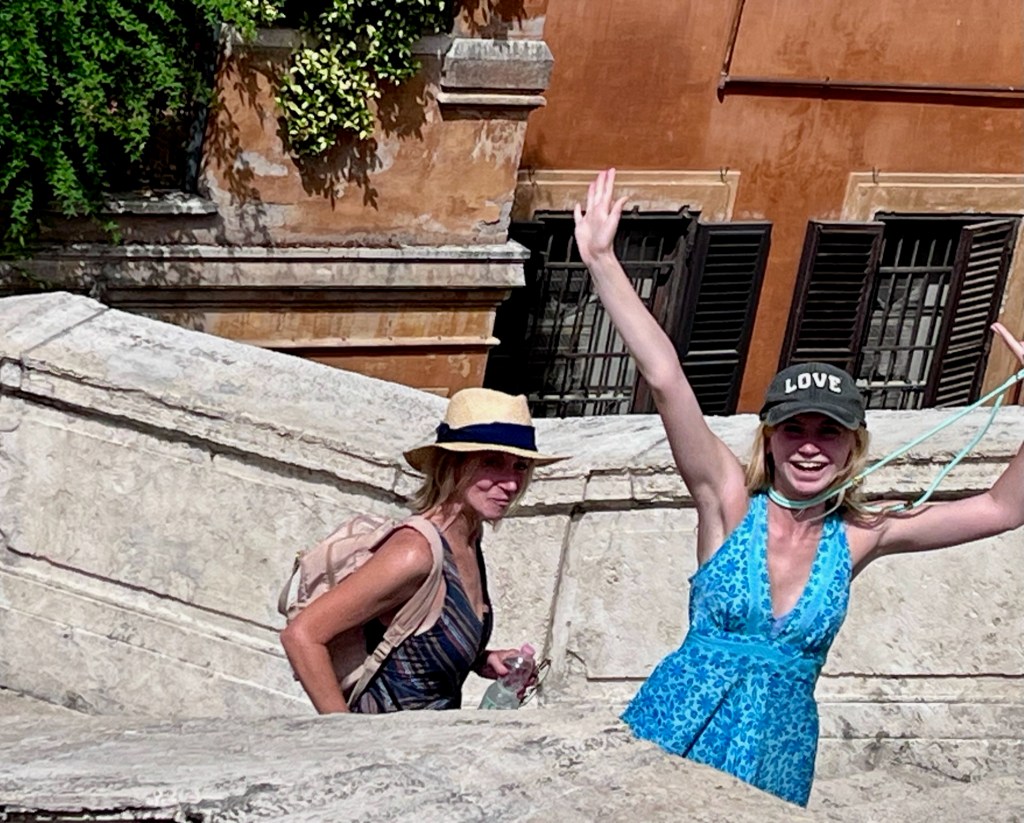
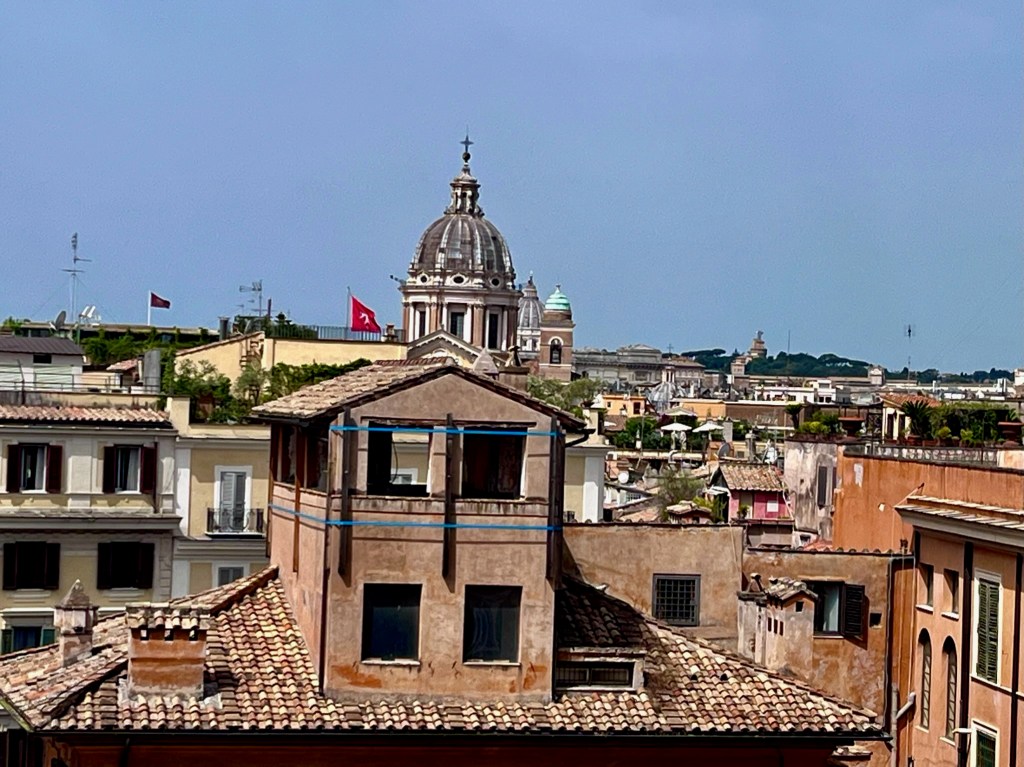
View from the top.
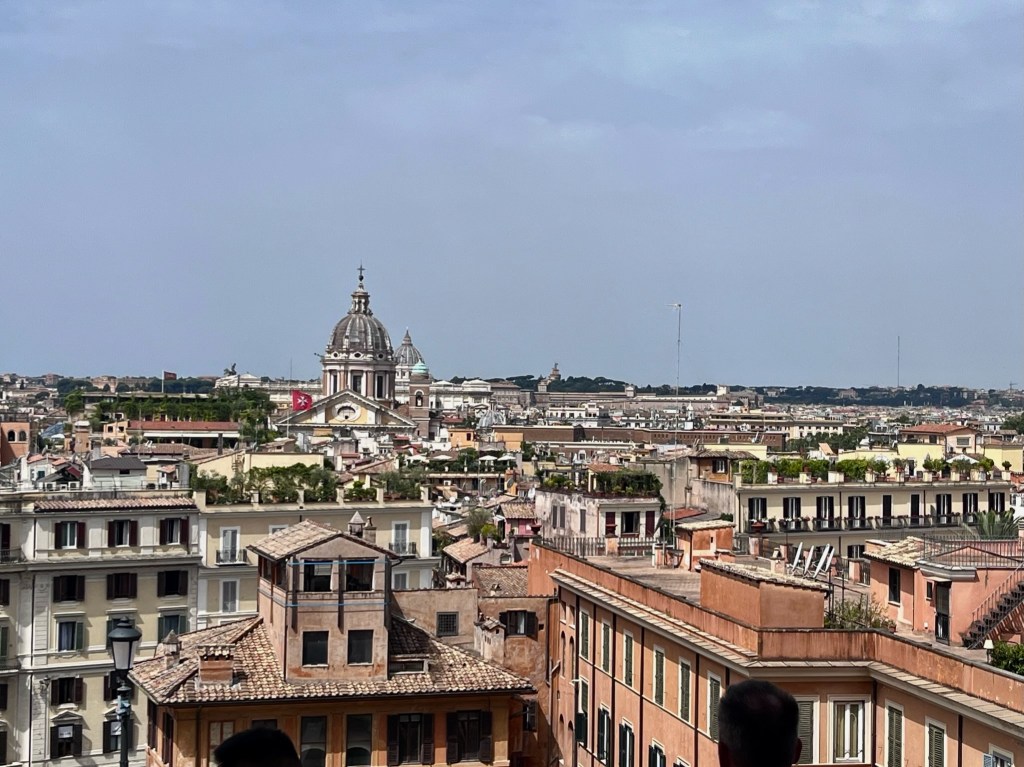
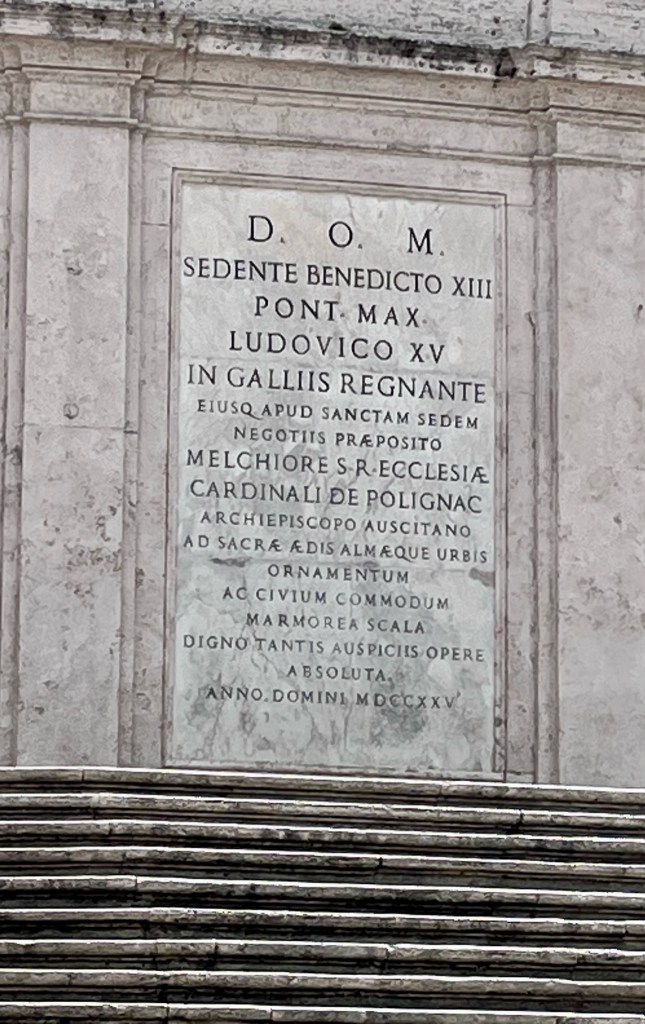
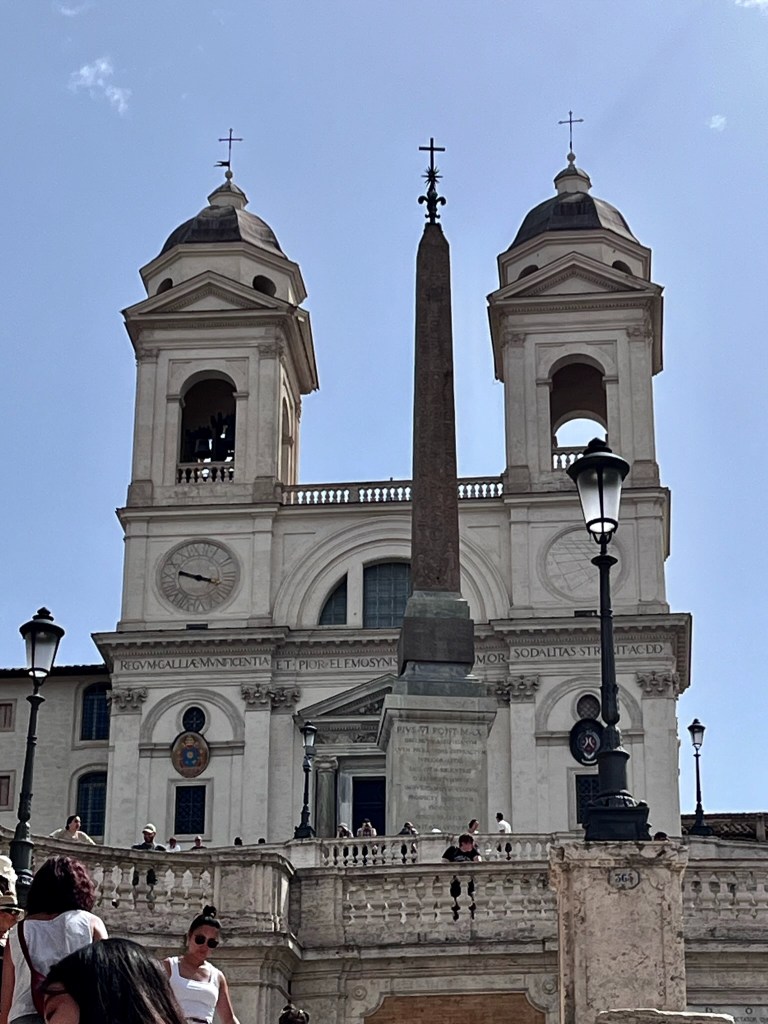
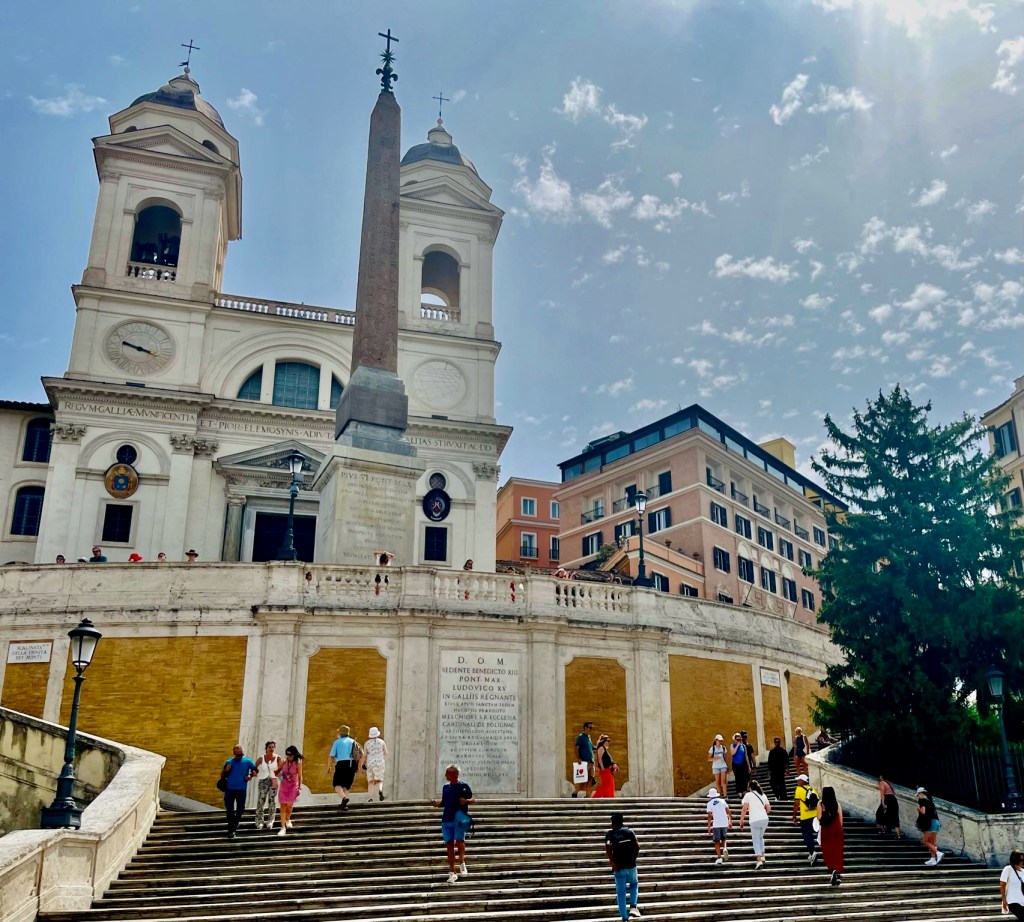
The church at the top of the stairs is the Trinita die Monti. It is unusual for Rome as it was founded by the French in 1495.
The Borghese Gallery
The Borghese holds a special place in my heart. Scott and I visited it on our first trip to Rome and went back again with his mother, Helen. It was one of Scott’s most favorite places and a place I always tell travelers to Rome not to miss.
The Borghese Gallery is one of the most famous art galleries in the world and is housed in the former Villa Borghese Pinciana. The paintings, sculptures and antiquities was acquired by Cardinal Scipione Borghese, the nephew of Pope Paul V in the 17th century. He not only collected Bernini sculptures but also commissioned him to create several sculptures. It houses the largest collection of Bernini works in the world. It is not only a gallery but the third largest park in Rome.
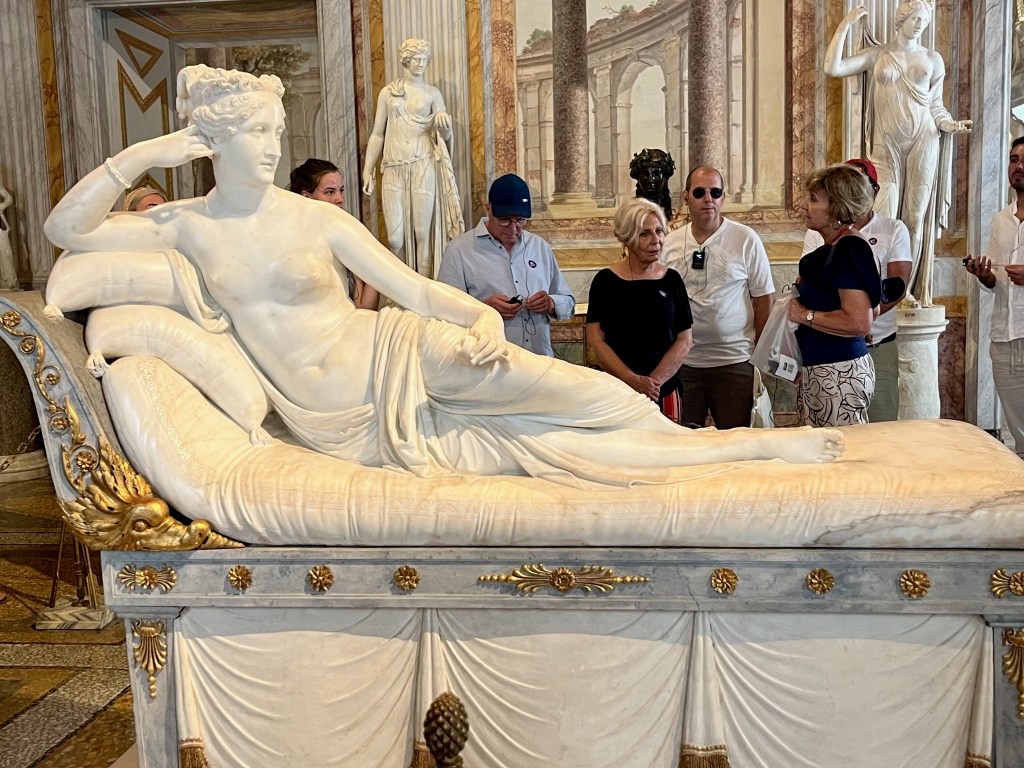
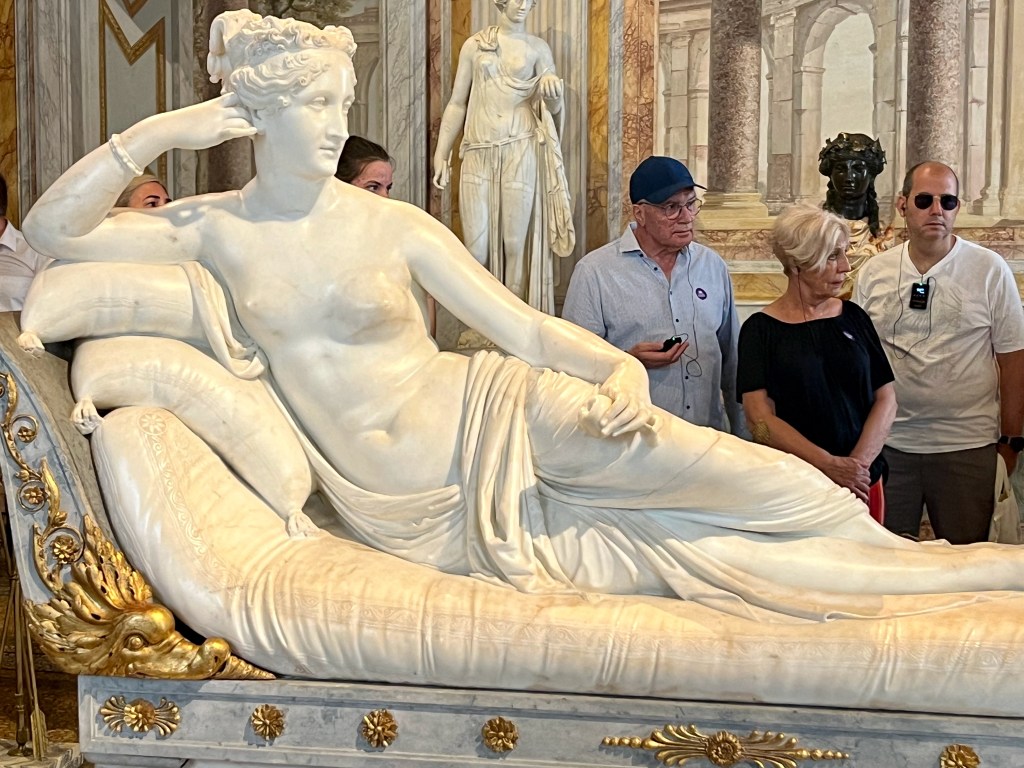
Pauline Borghese was Napoleon’s sister and a beautiful sculpture by Bernini is one of the most famous of the collection. In 1807, Prince Camillo Borghese was strong-armed by his brother-in-law, Napoleon Bonaparte, into “selling” him hundreds of works from the family collection. In all 695 pieces, most of the antiquities, sculptures, vases and reliefs were packed up and crated off to France. The Louvre has several of these pieces and when Scott and I were in Paris we visited the Louvre and saw them on display.
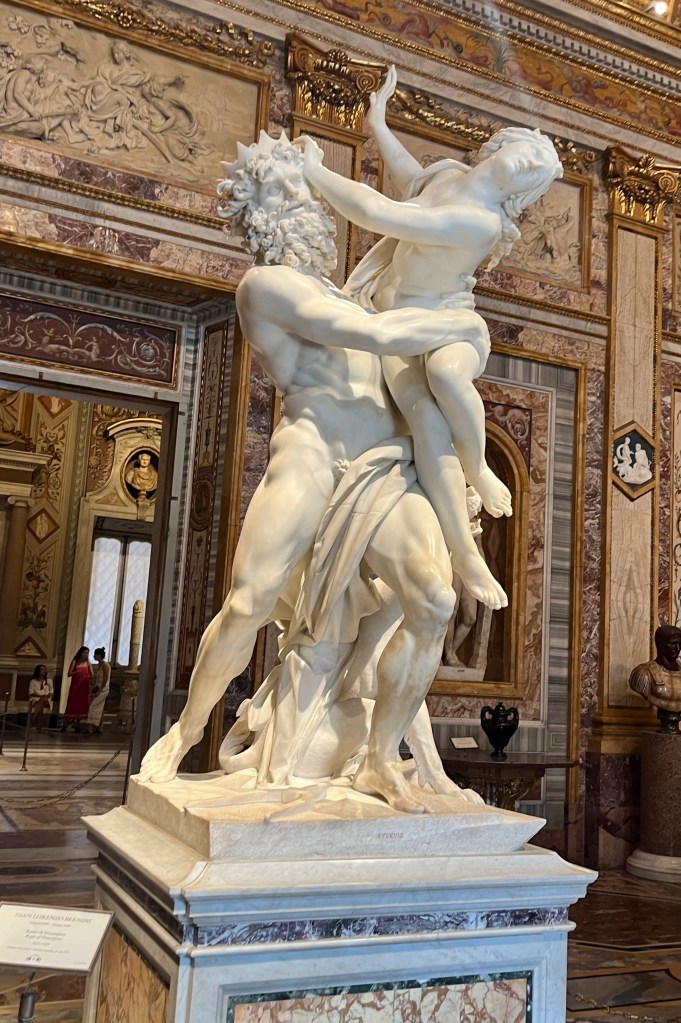
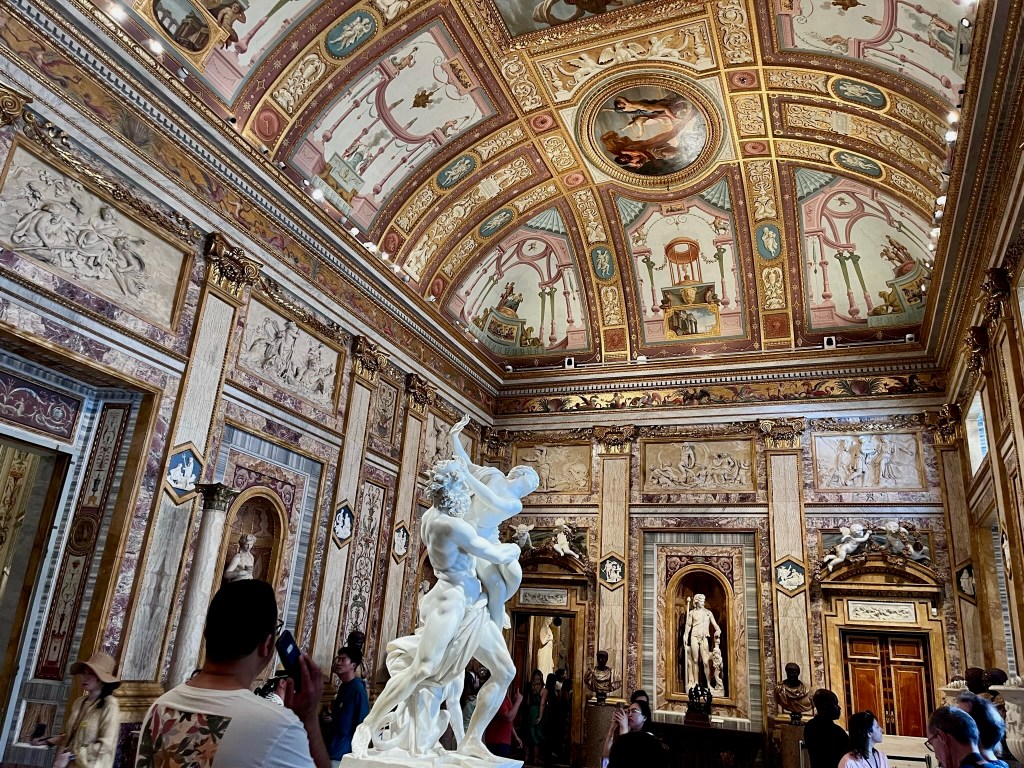
The Rape of Proserpine by Bernini is so powerful. Note you can just feel him gripping her thigh. It was one of Scott and my favorites in the whole collection.
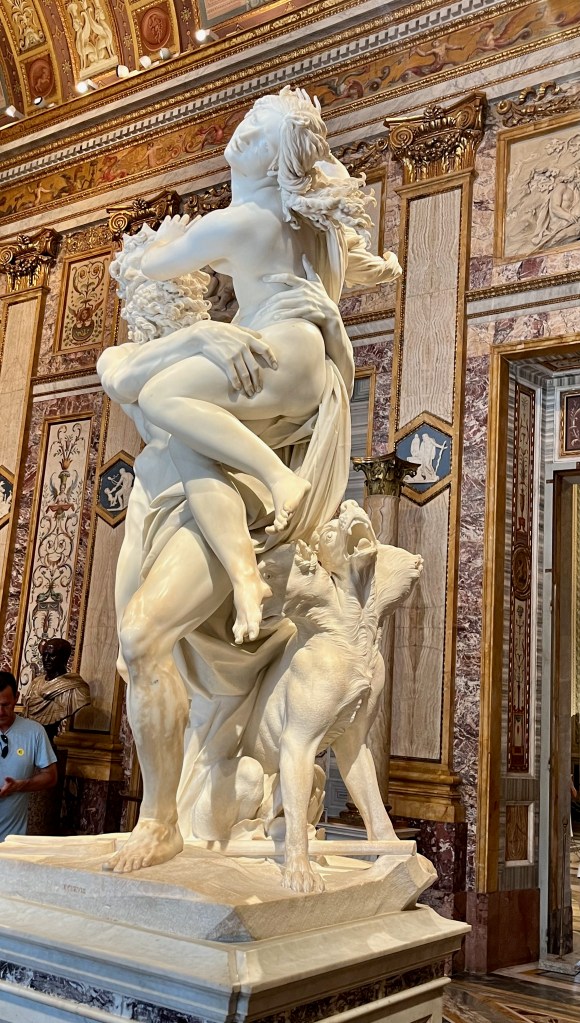
Pauline Borghese.
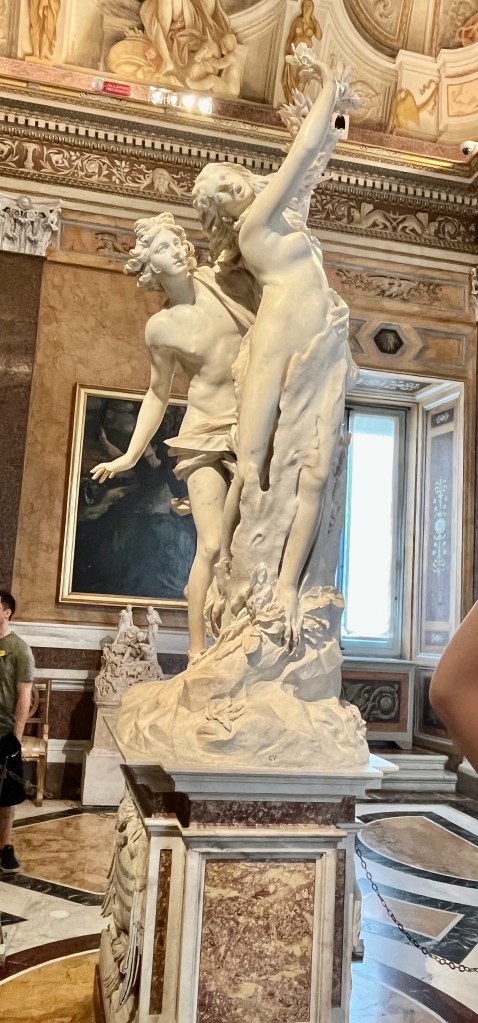
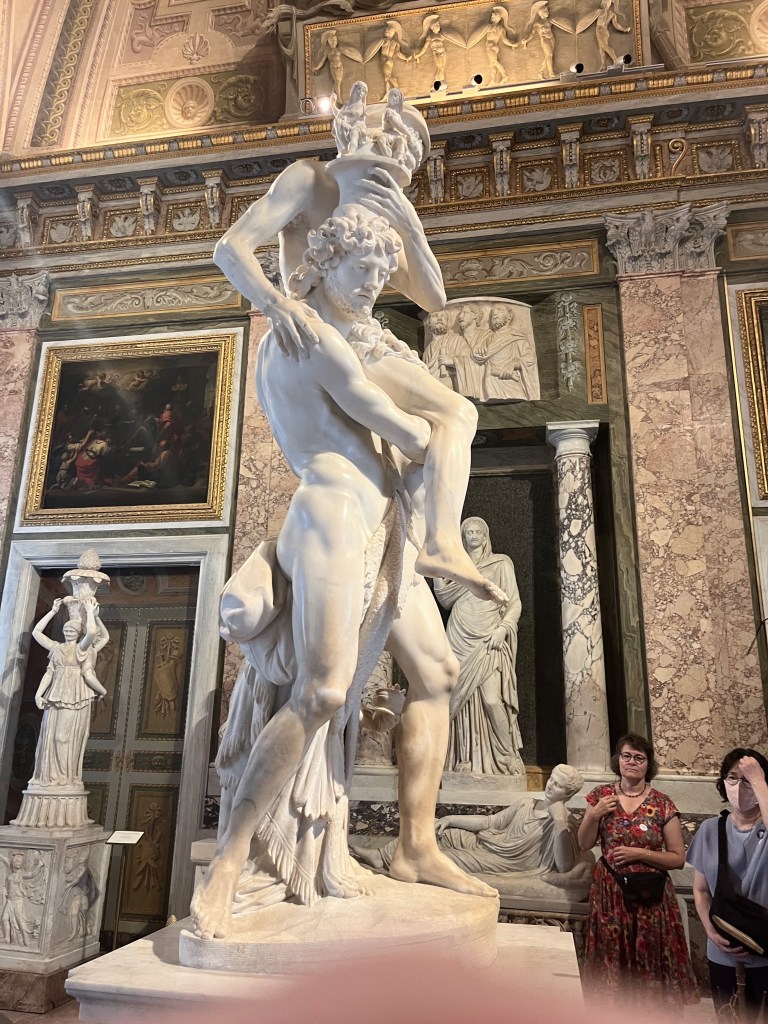
Apollo and Daphne on the left and a young man (Aenoas) with his father (Anchises) on his back and his son (Ascanius) by his side both by Bernini.
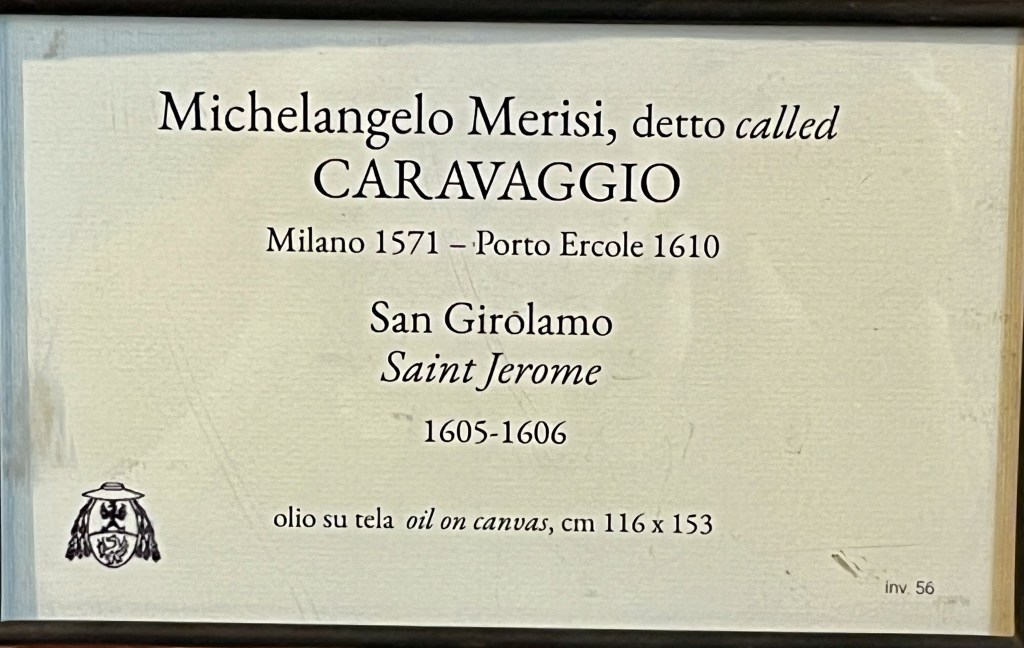
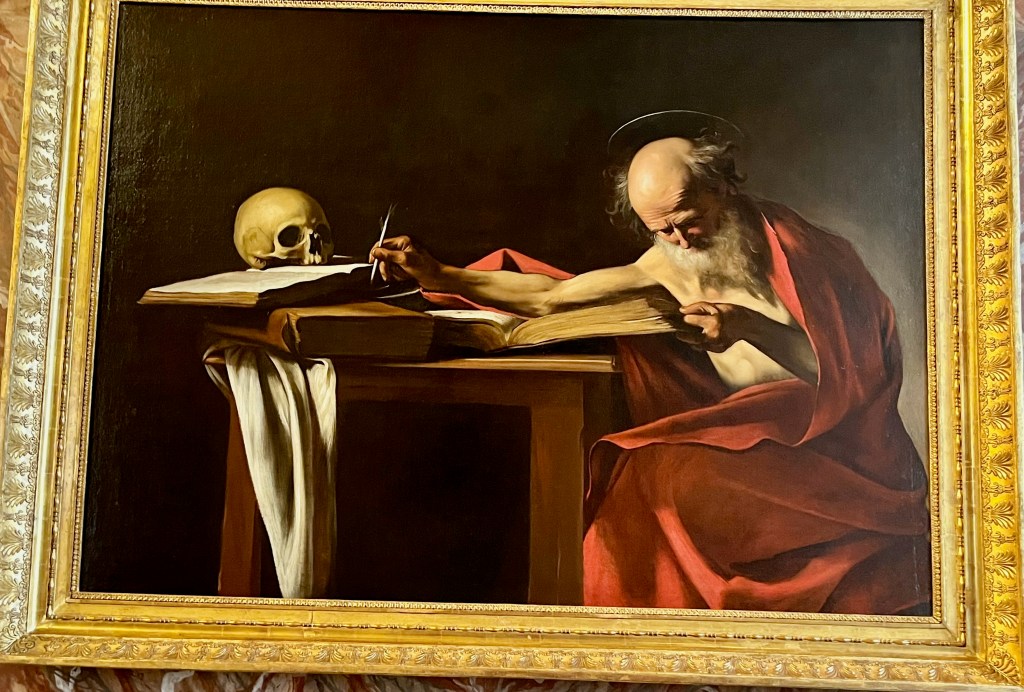
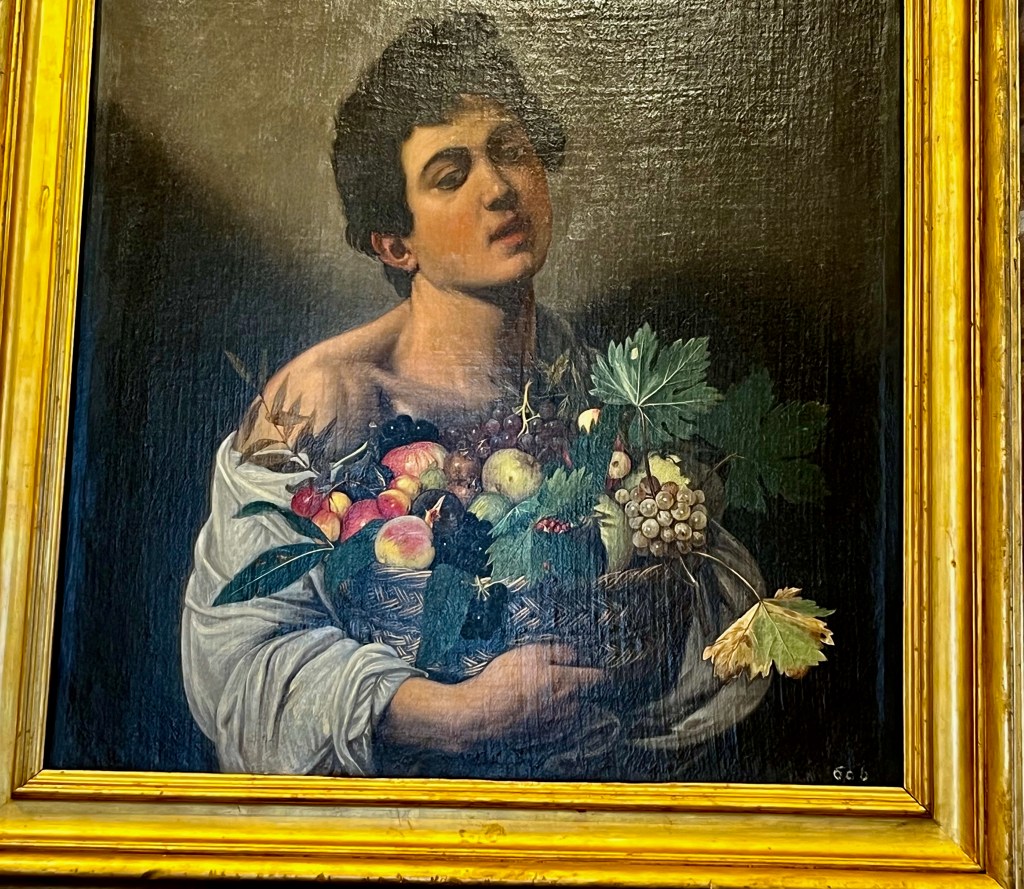
Paintings by Caravaggio (St Jerome and Boy with a Basket of Fruit)
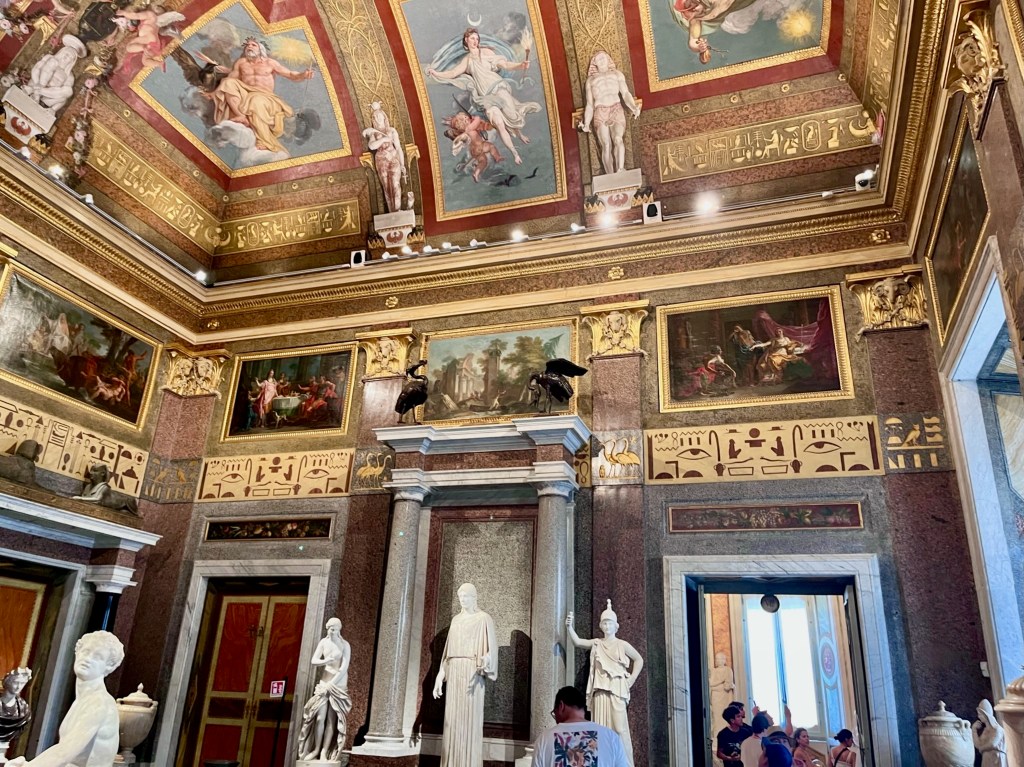
There are also magnificent ceilings.
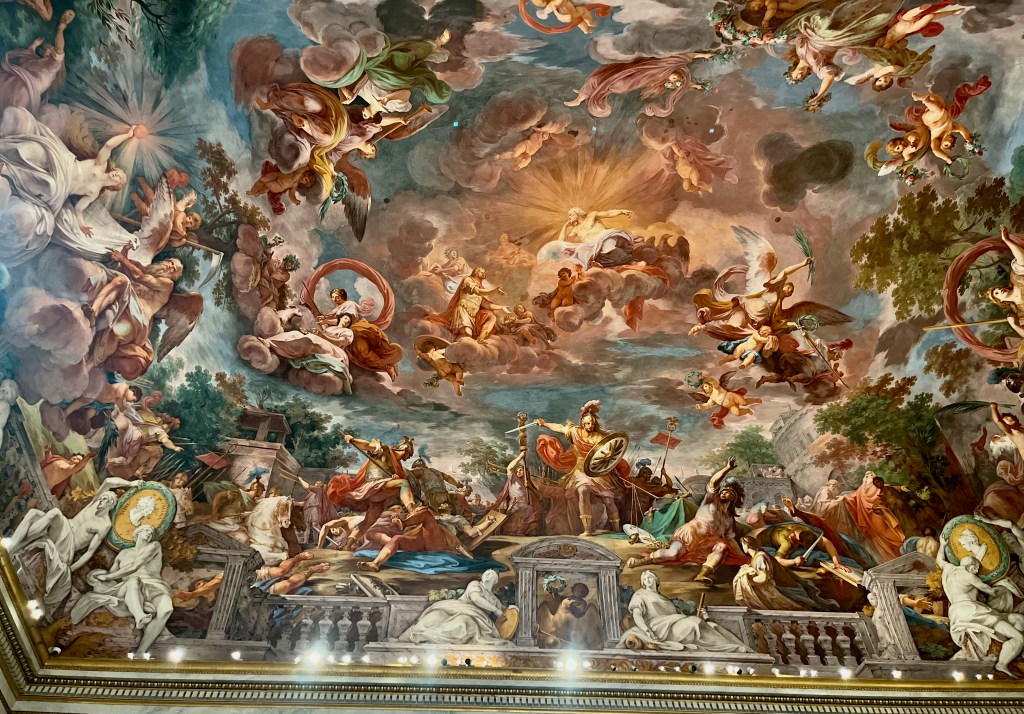
This ceiling below is by Mariano Rossi and depicts Camillus in battle while Romulus pleads with Jove.
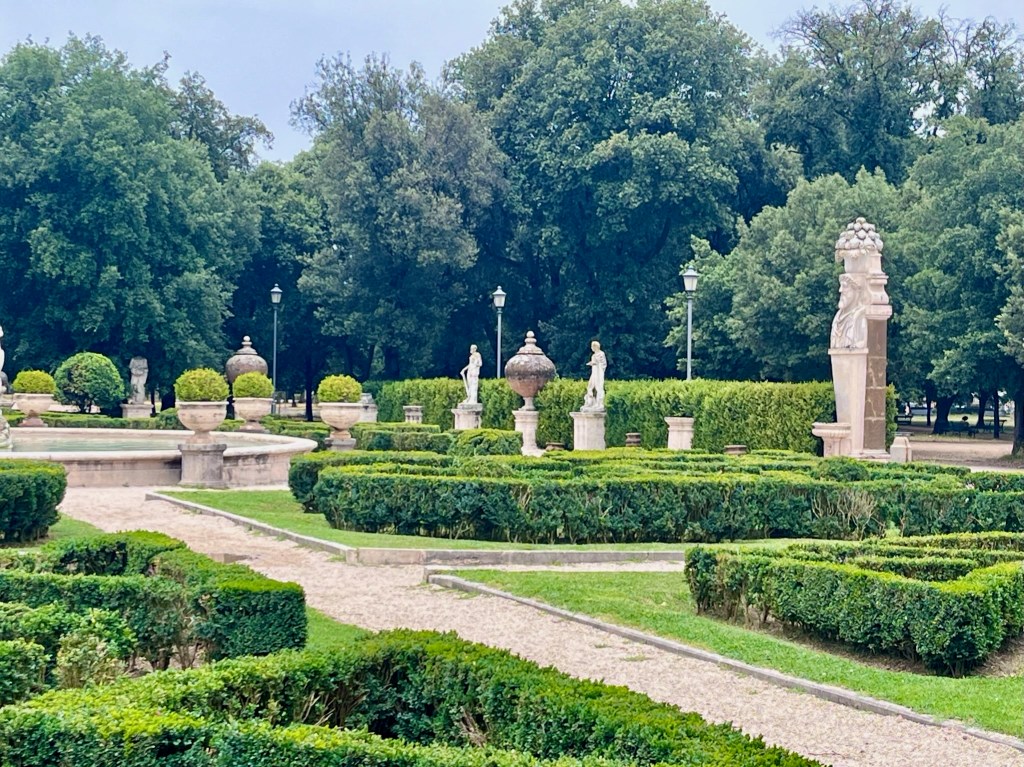
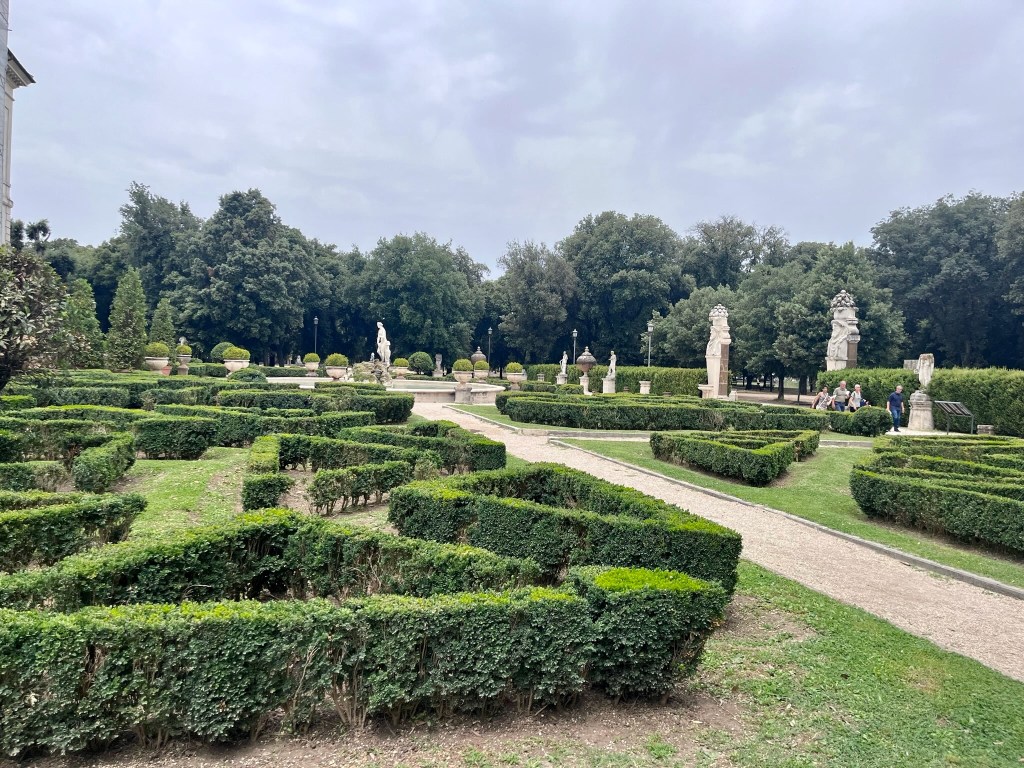
The gardens.
Bistrot 64
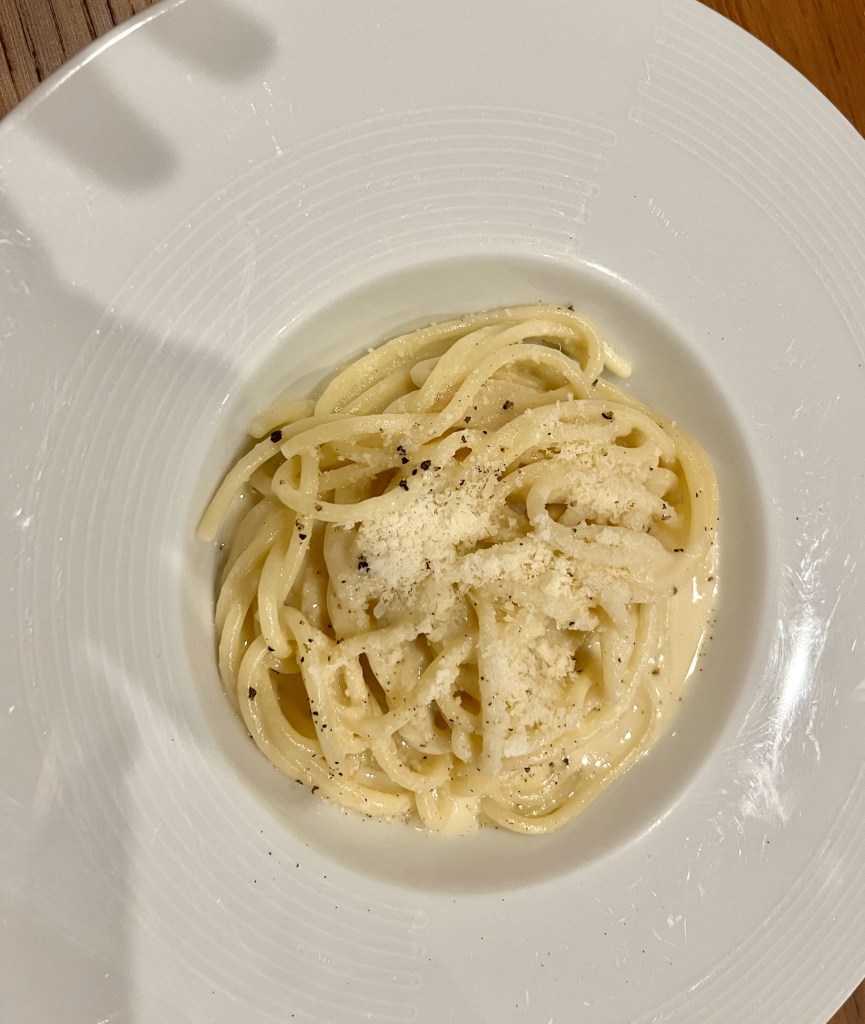
I watched Stanley Tucci’s finding Italy. In the Rome segment he visited Bistrot 64 and had what he described as the best Cacio e pepe he had ever had. I watched this several times writing down the recipe until I thought I finally had it down. It was good but tricky to make trying to get the cheese not to clump was a challenge. So, when I found out I was going to be going to Rome I started trying to make a reservation on the website and then calling. I discovered the restaurant was closed for remodeling but I finally got a reservation and we were going!!!! This restaurant had received a Michelin Star.
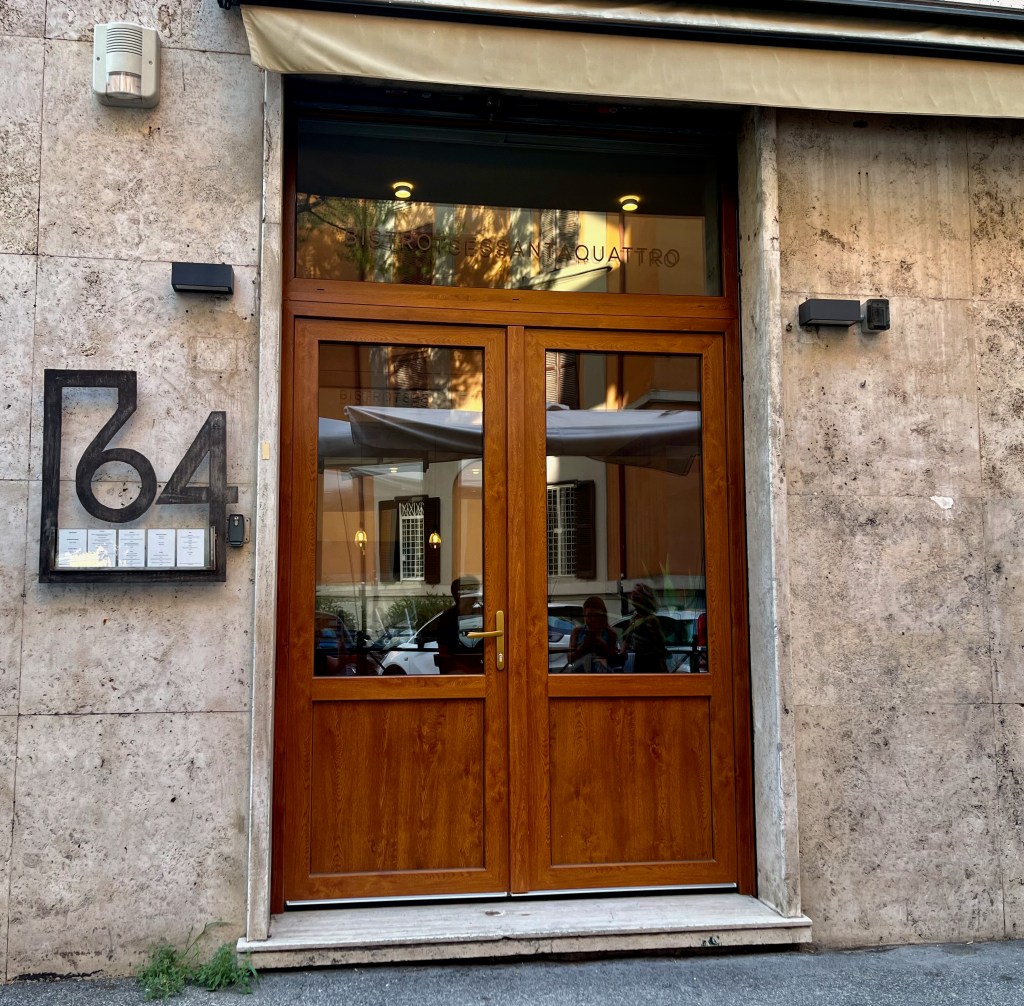
Bistrot 64 is located outside the Roman wall in a neighborhood which I imagine people who worked in the city live. We learned that the restaurant had a major remodel and further more, Michelin Stared chef Kotaro Noda was no longer there. Rather disappointing. The wait staff we met did not even seem to know about Stanley Tucci! Anyway, because we were 5 people we all had to order the 5 course menu. (All I really wanted was a huge plate of Cacio e pepe!). The cuisine is Italian and Japanese.
Here is the menu and Beth and I selected to get the wine parings. Although in retrospect we could of just ordered a bottle. Glenn just had a glass.
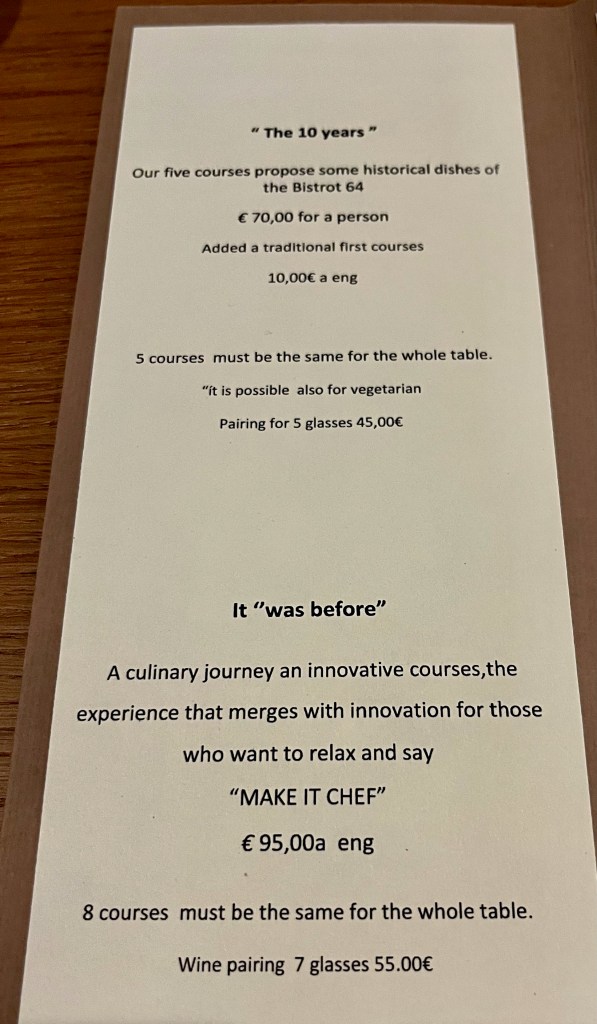
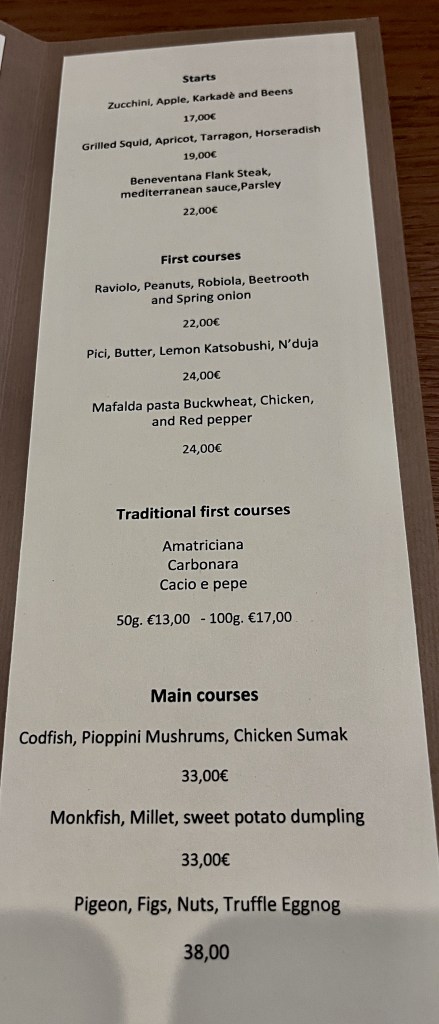
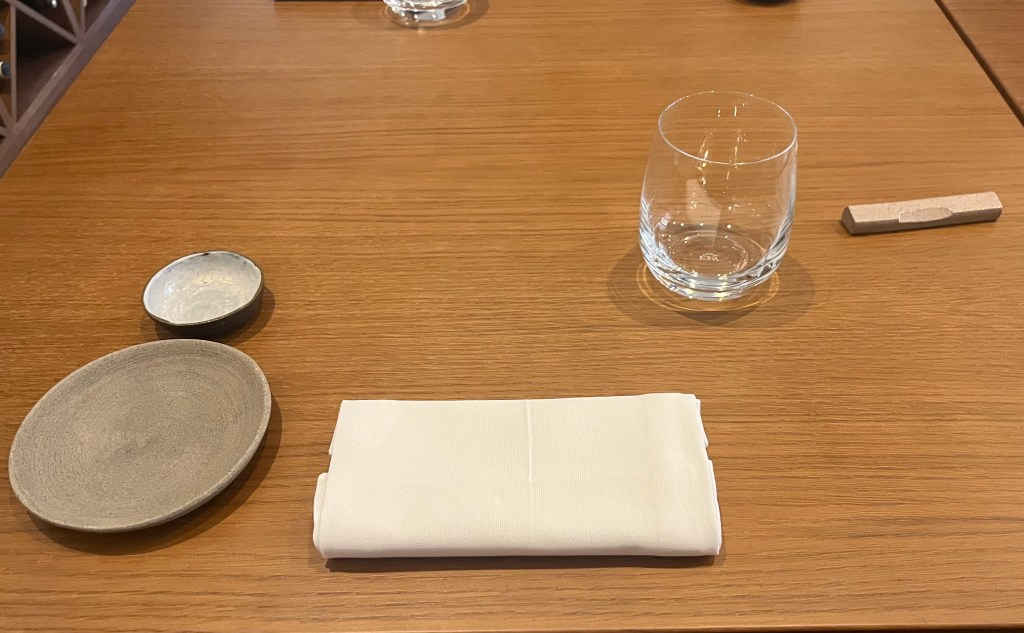
Table setting. The wooden piece on the right is for your fork.
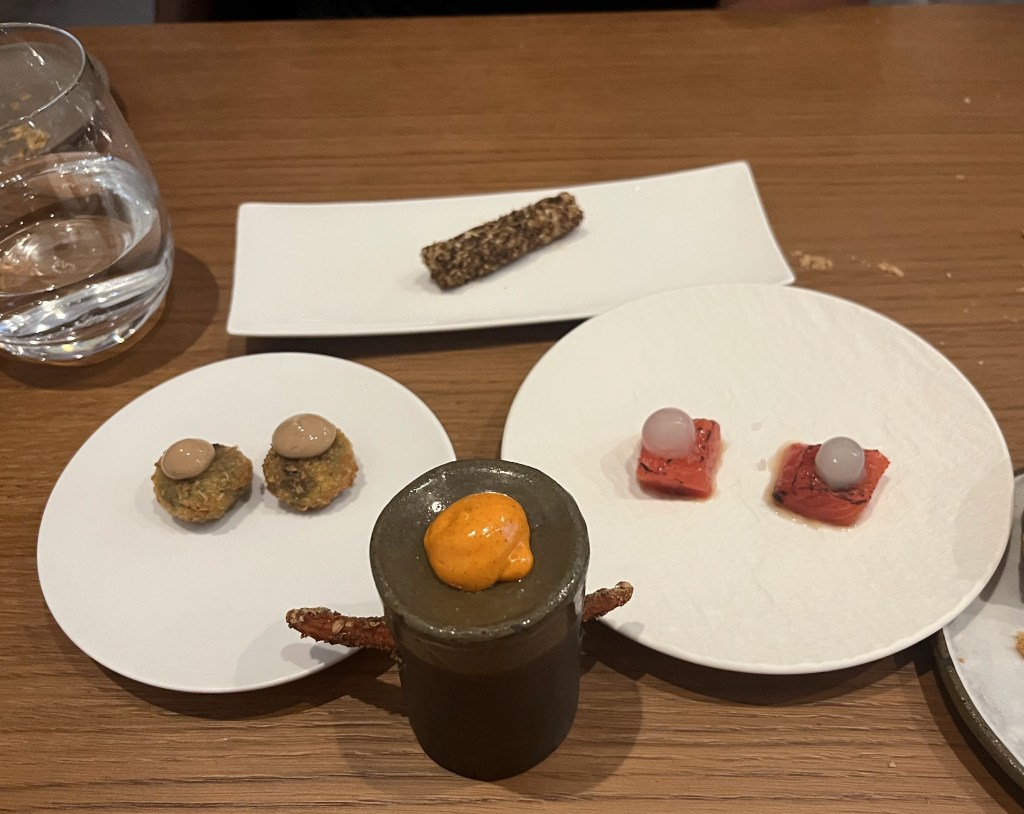
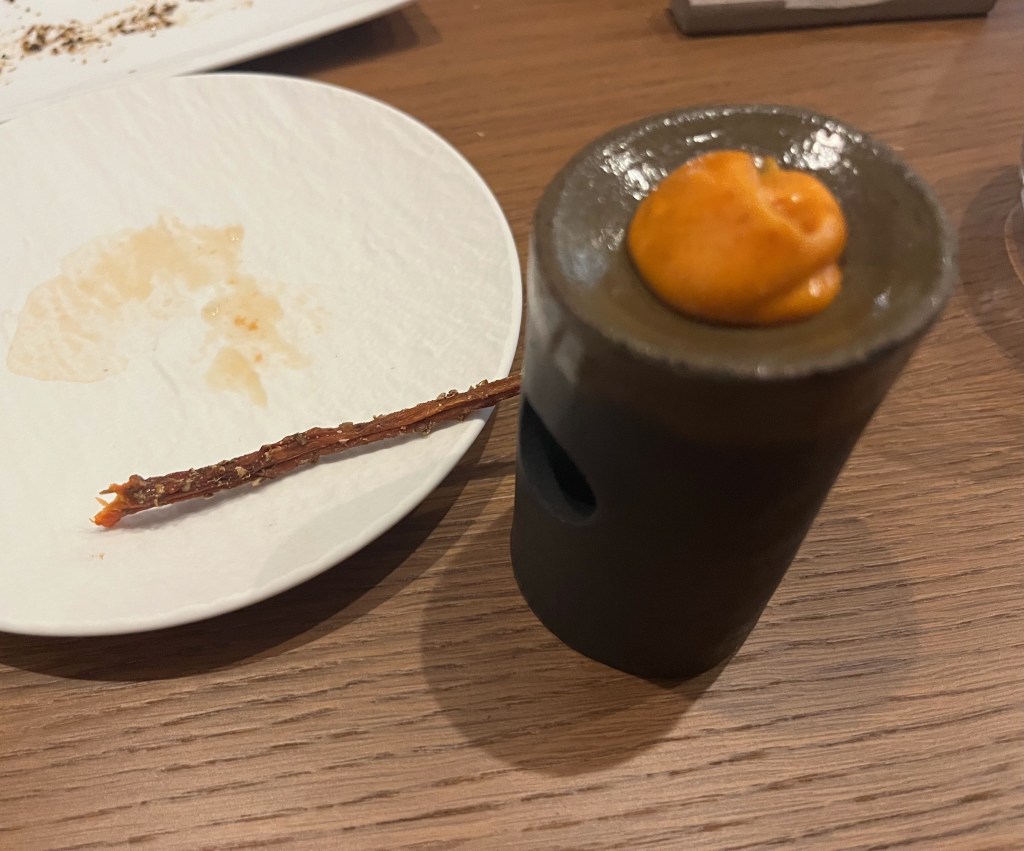
Course one was a Chef’s Creation. It include Top: beef tartare coated with herbs, Left: mushroom caps with a chipotle crema, Right: Pickled watermelon with lemon sorbet and Bottom: Carrot puree with a roasted carrot root. All were delicious and surprisingly the carrot root was good.
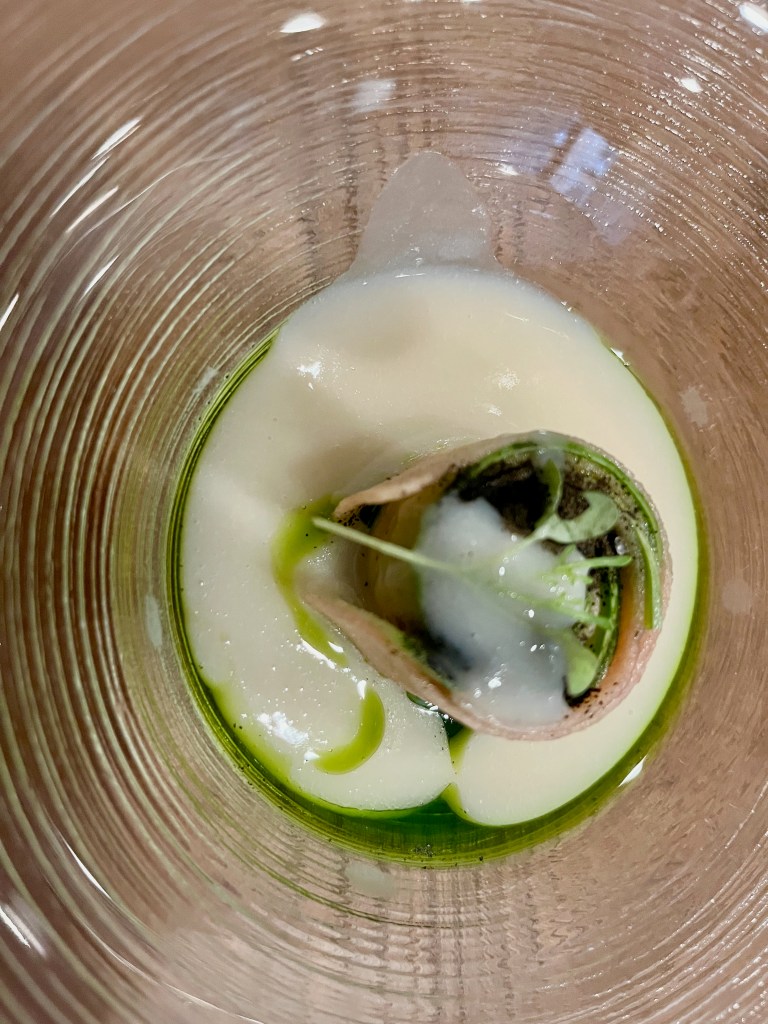
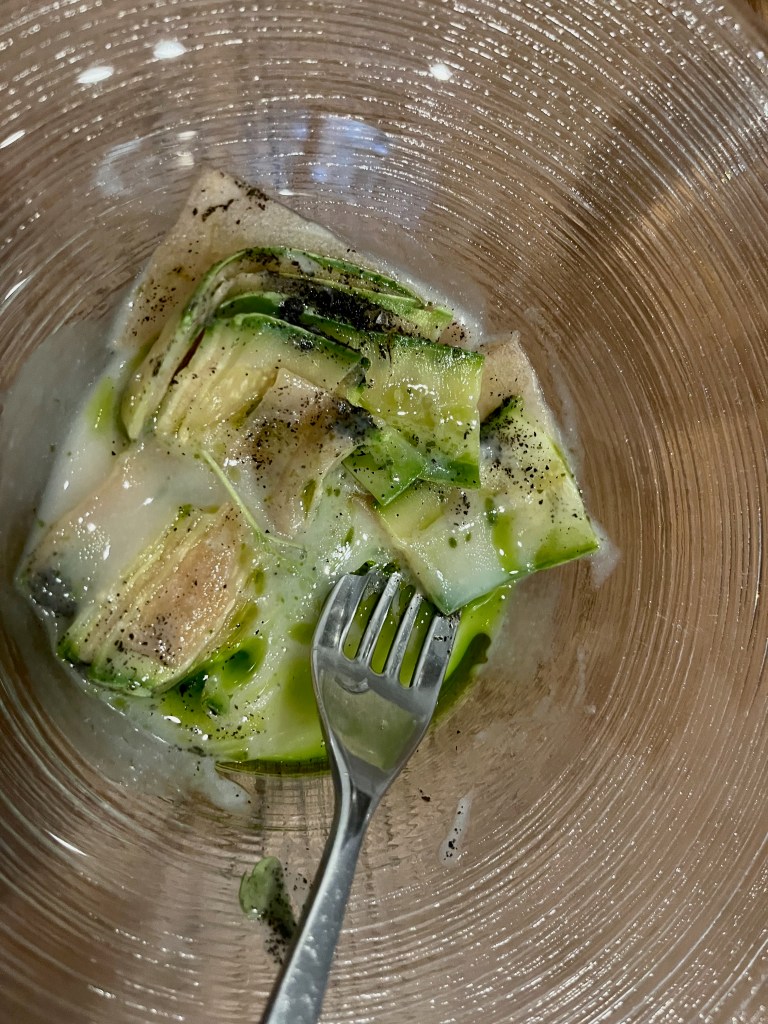
Starter: Zucchini, Apple, Karkade (tea) and beens. The zucchini and apple were wrapped around the beens and surrounded by the Karkade foam.
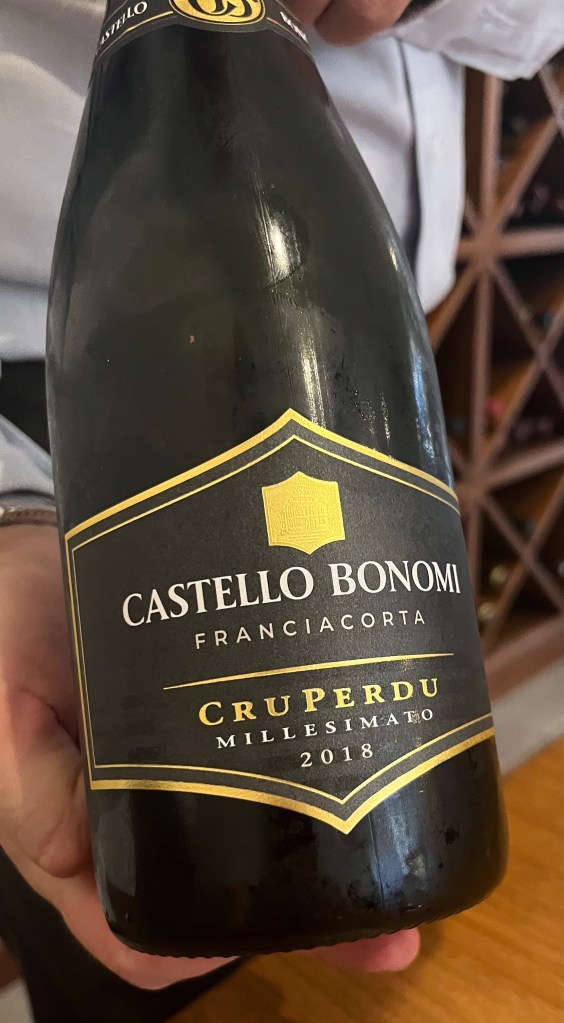
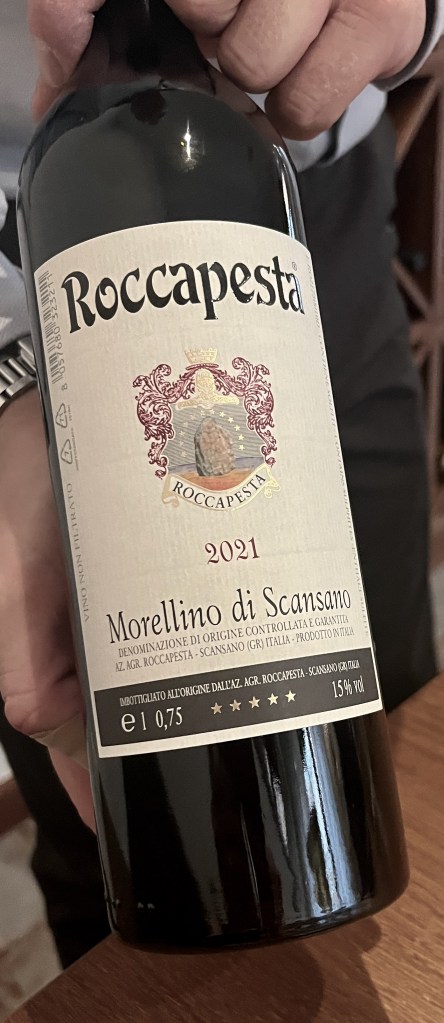
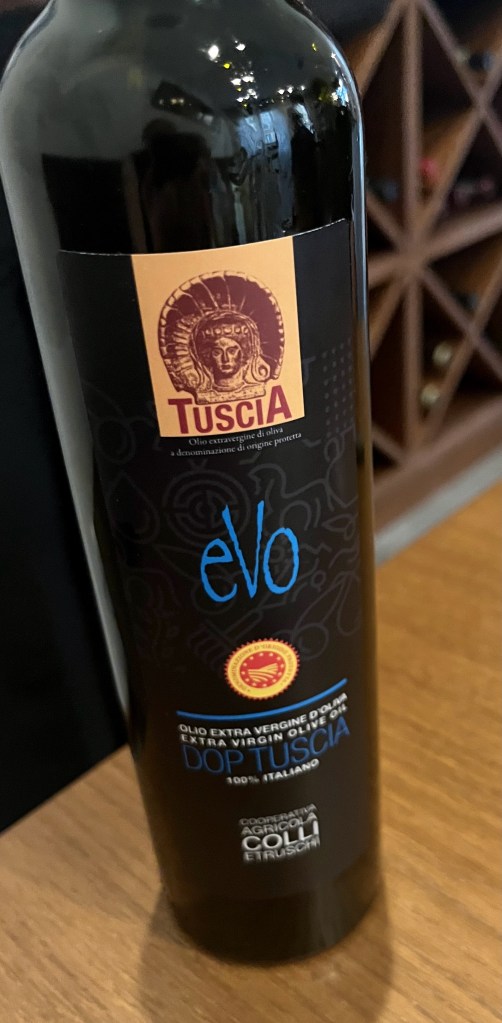
The first wine is a sparkling 70% Chardonnay and 30% Pinot Noir from Piemonte. We all got to sample this. The Second wine was a Tuscan Sangiovese that Glenn ordered just a glass and the third bottle is an EVOO.
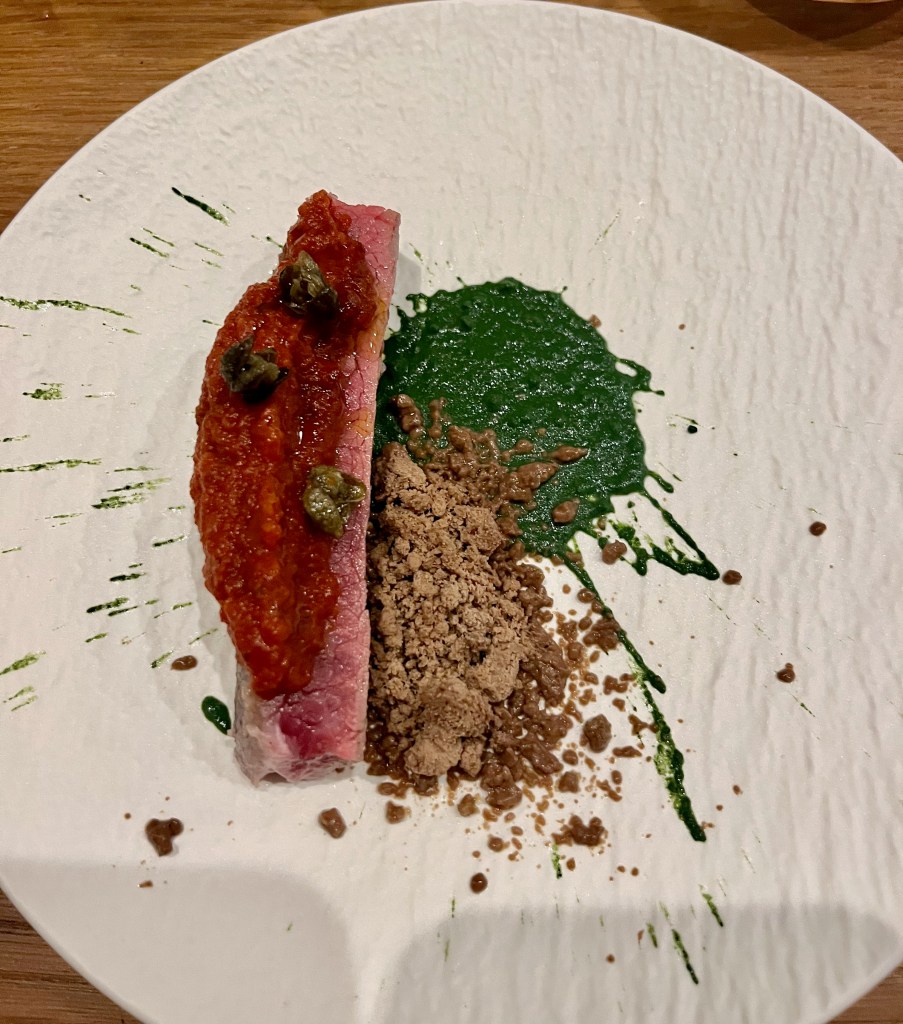
The third plate was Beneventana flank steak, mediterranean sauce and parsley. Beneventana flank steak is a Tuscan style preparation of flank steak marinated for several hours in lemon zest, olive oil and rosemary.
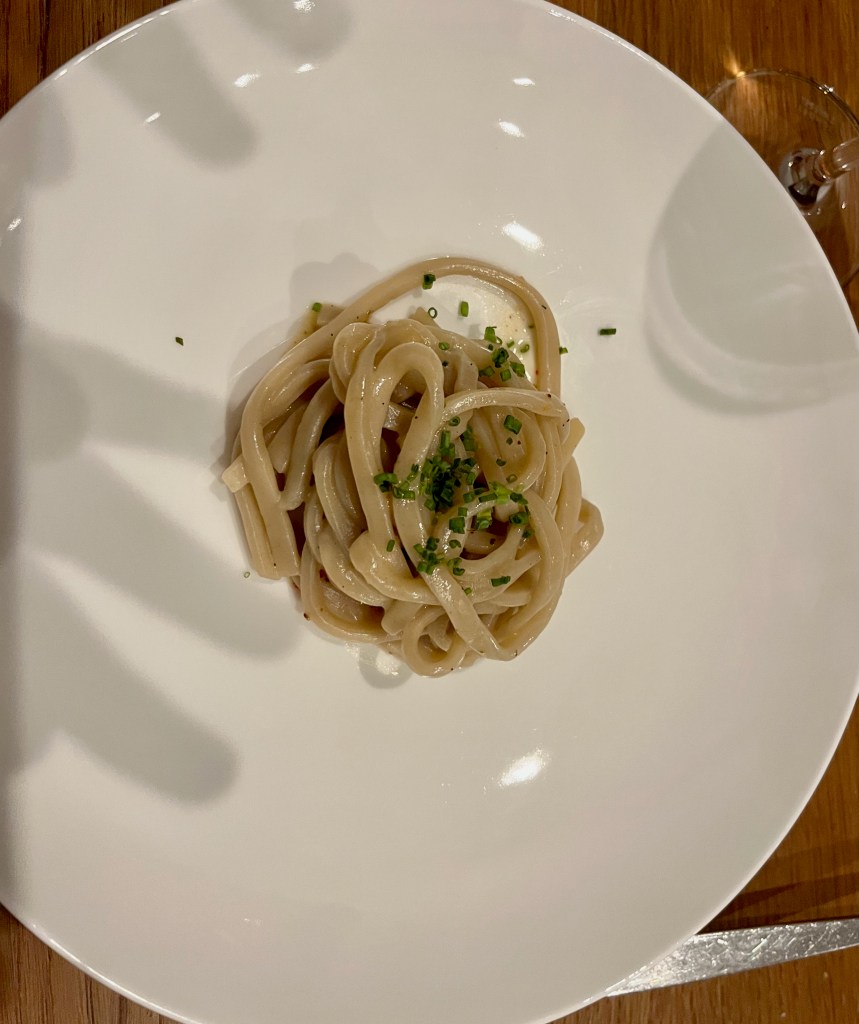
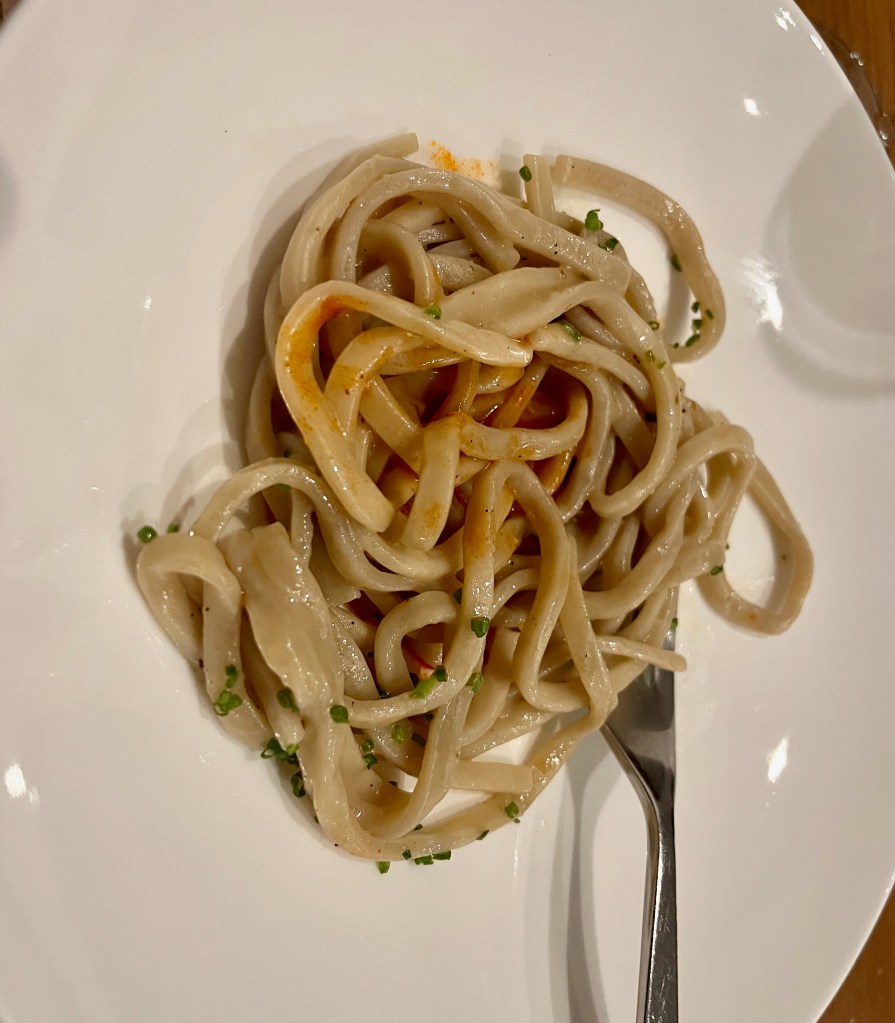
The fourth plate was Mafalda pasta Buckwheat, Chicken, and Red pepper. The red pepper was underneath and you had to combine it as in the second picture.
The star: Cacio e pepe. It was magnificent!
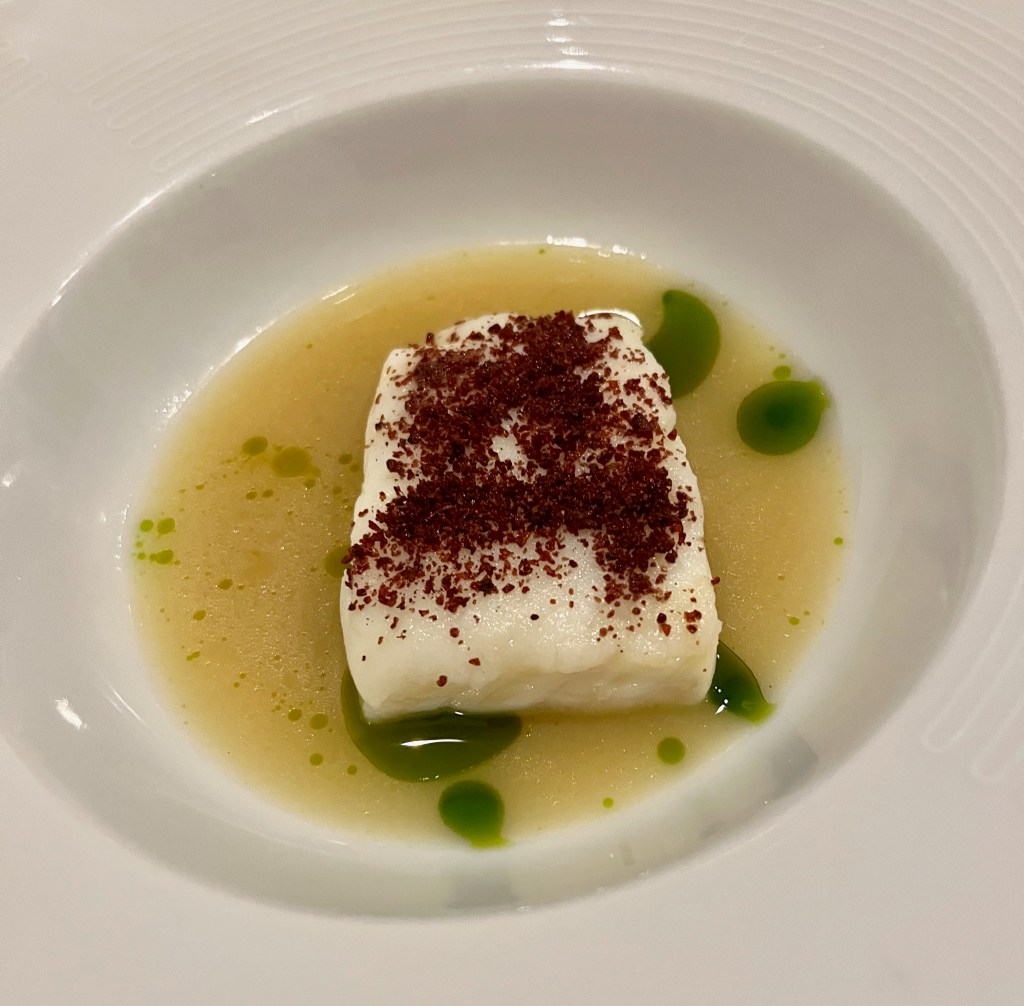
The main course was Codfish, Pioppini Mushrooms (long, thin stems and flat silky caps), Chicken Sumak broth.
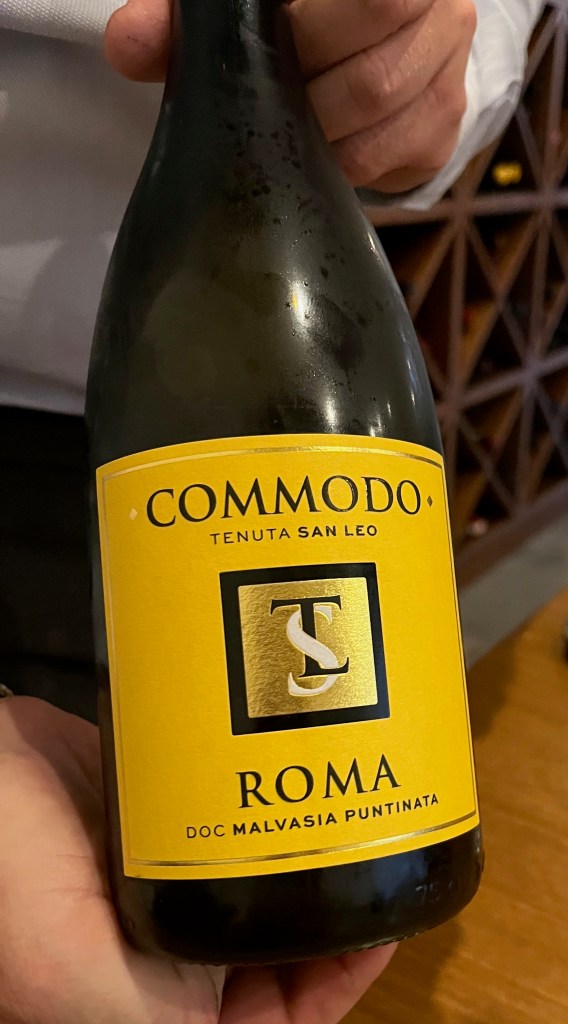
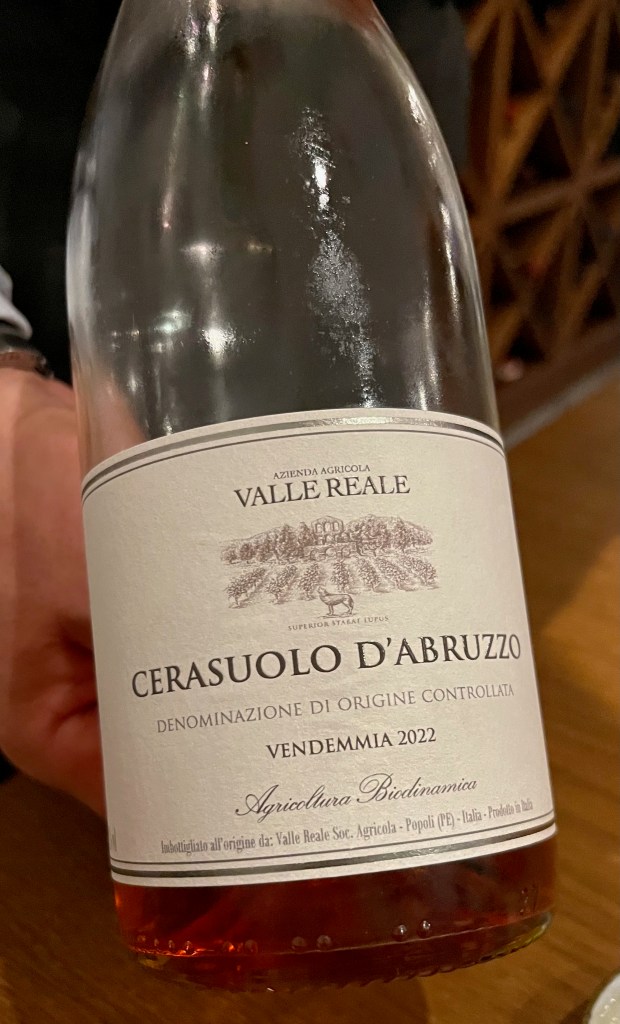
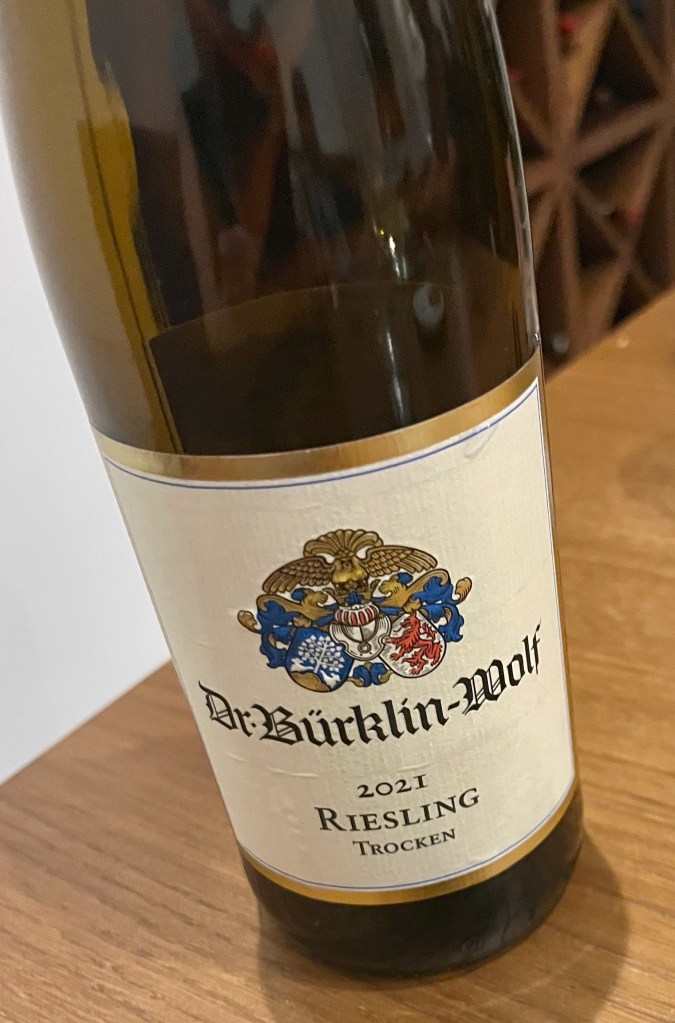
The first wine is a Malvasia Puntinata (white dry), the second is a Rose and the last is a dry Riesling. All three pair well with the dishes. Surprisingly, the beef dish was paired with a white.
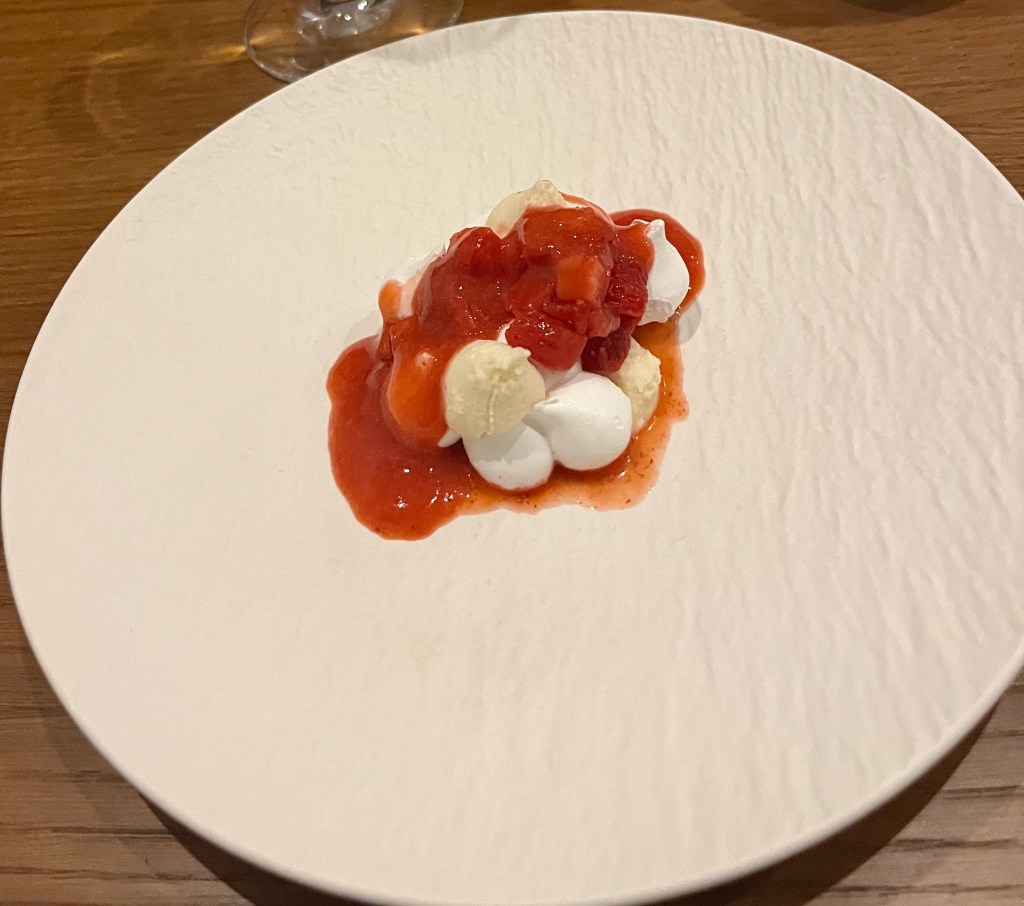
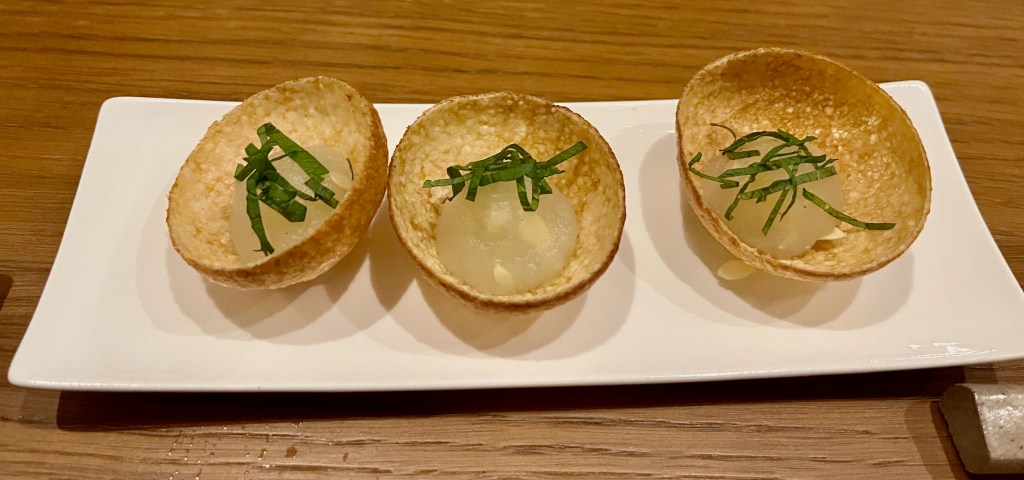
Two desserts. The first was strawberries with puffs of meringue and whipped cream. Delicate and delicious. The second was a final palate cleanser of lemon like sorbet with basil.
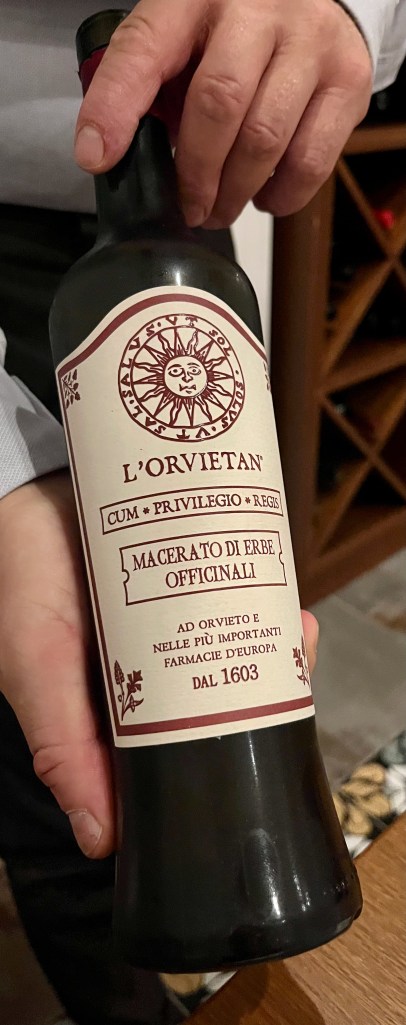
Final wines were a semi sparkling Muscat Bland and the last was a digestive. The L’Orvietan is an ancient (1603)blend of 25 types of medicinal herbs described as a “potion”. It was used for medicinal purposes but also to “cure” love sickness! It was dry with a very bitter aftertaste and it was not our favorite.


 Meandering With Murphy