Monday, 30 June
We had a little later start so Julien treated us to delicious French toast accompanied by juice, fruit and yogurt. It was cooked perfectly and not soggy.
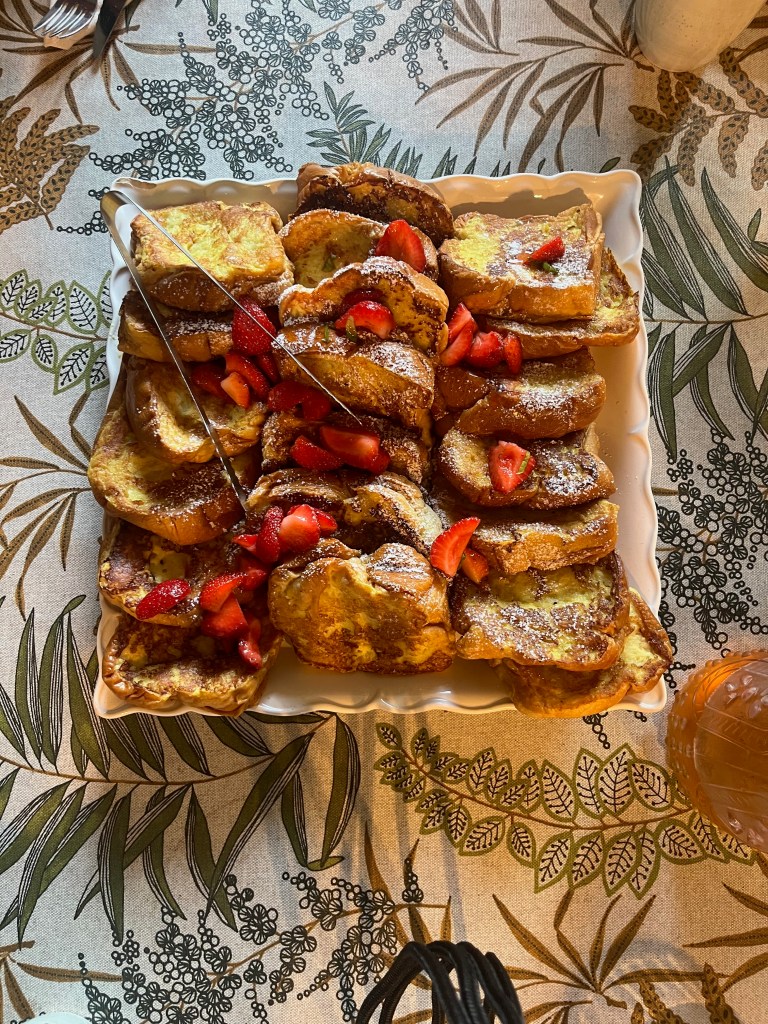
After breakfast we were headed to a Chocolate Workshop with Master Chocolatier Patrick Brossard. His shop is in La Reole, about a 20 minute drive from Auros.
Master Chocolatier Patrick Brossard and the Chocolate Workshop
Although Patrick Brossard didn’t fall into chocolate when he was little, his encounter with chocolate over 35 years ago sparked a passion for this exceptional product, which naturally led him to become a Chocolate Artisan: working with the product from its source to explore each stage of its transformation, ensuring fair compensation for planters, and also pursuing a humanitarian approach by helping schools so that children can fully enjoy their childhood!
He is committed to sharing his constantly renewed creations and flavors, showcasing all the artistic facets of this amazing product, passing on his knowledge by training apprentices, or promoting it by offering “Journey from Bean to Chocolate” courses, and allowing individuals and professionals to learn or improve their skills during workshops.
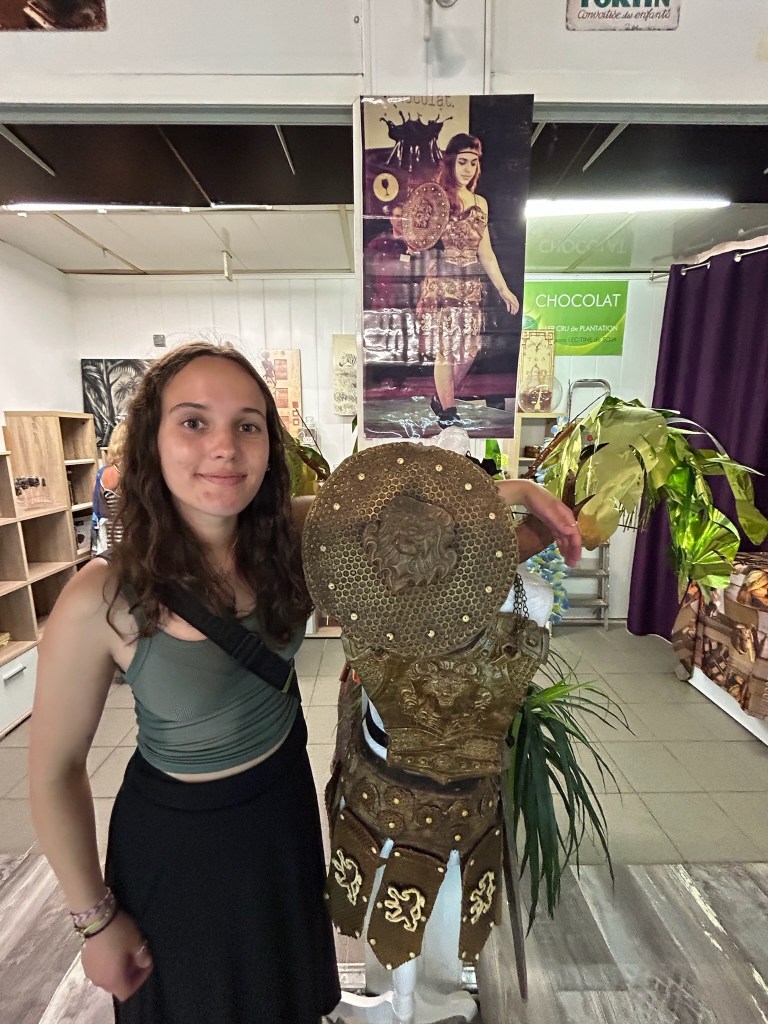
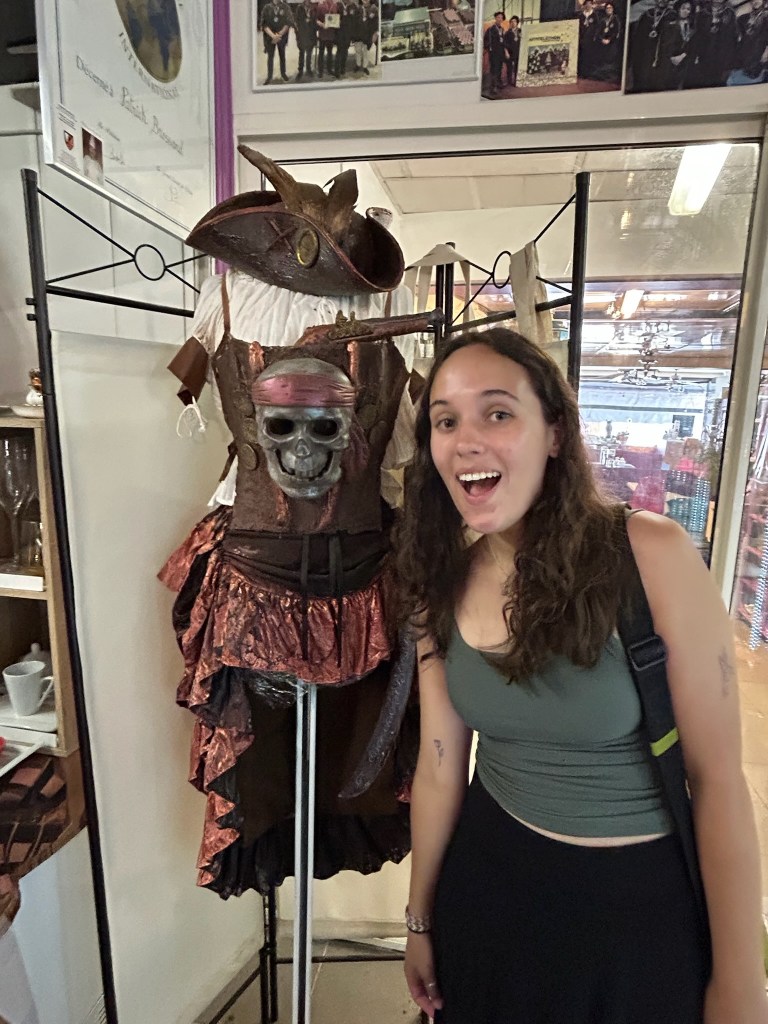
He also participates in numerous trade shows where he can give free rein to his creativity by making chocolate dresses worn like works of art during runway shows.
For the past five years, he has pushed this research forward by creating a new cocoa bean processing technique: Low-temperature steamed chocolate! By bringing out all the notes specific to each variety and terroir, eliminating the bitter and astringent notes characteristic of chocolate made from roasted beans, and eliminating the use of lecithin, he has reconnected lovers with high-cocoa dark chocolate by offering a healthy product with a taste as close as possible to its original aroma!
Numerous awards have honored his expertise and inventiveness, his commitment to defending fair-trade chocolate, and his constant passion for defending his craft. Discover the fascinating world of a chocolate enthusiast!
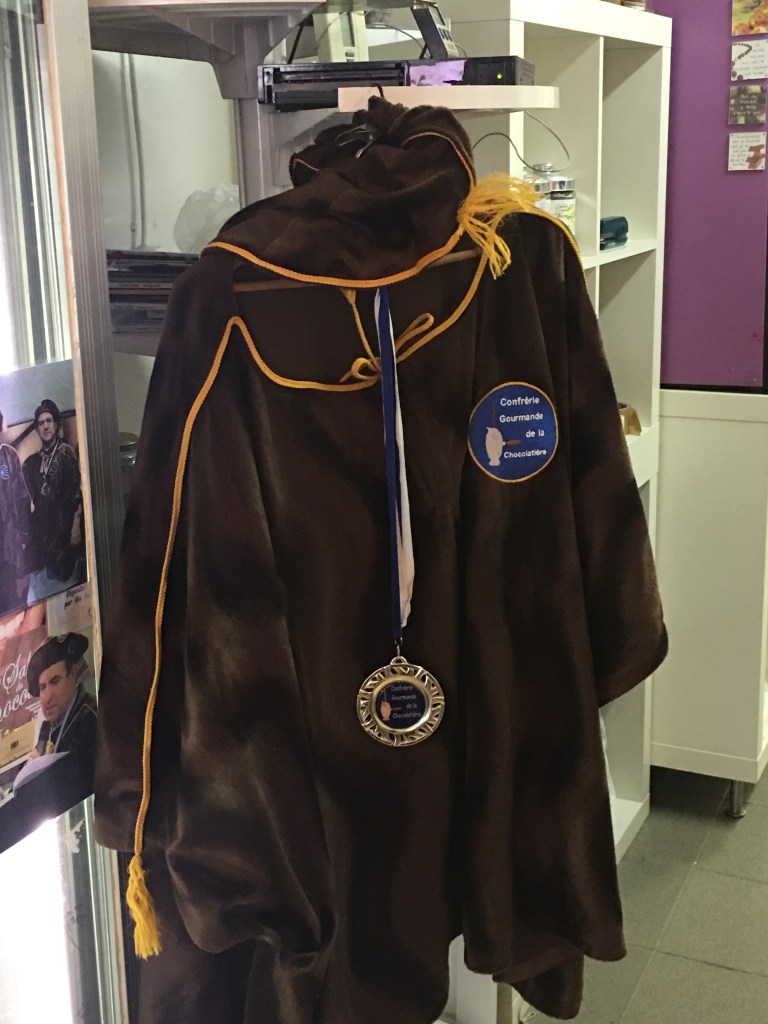
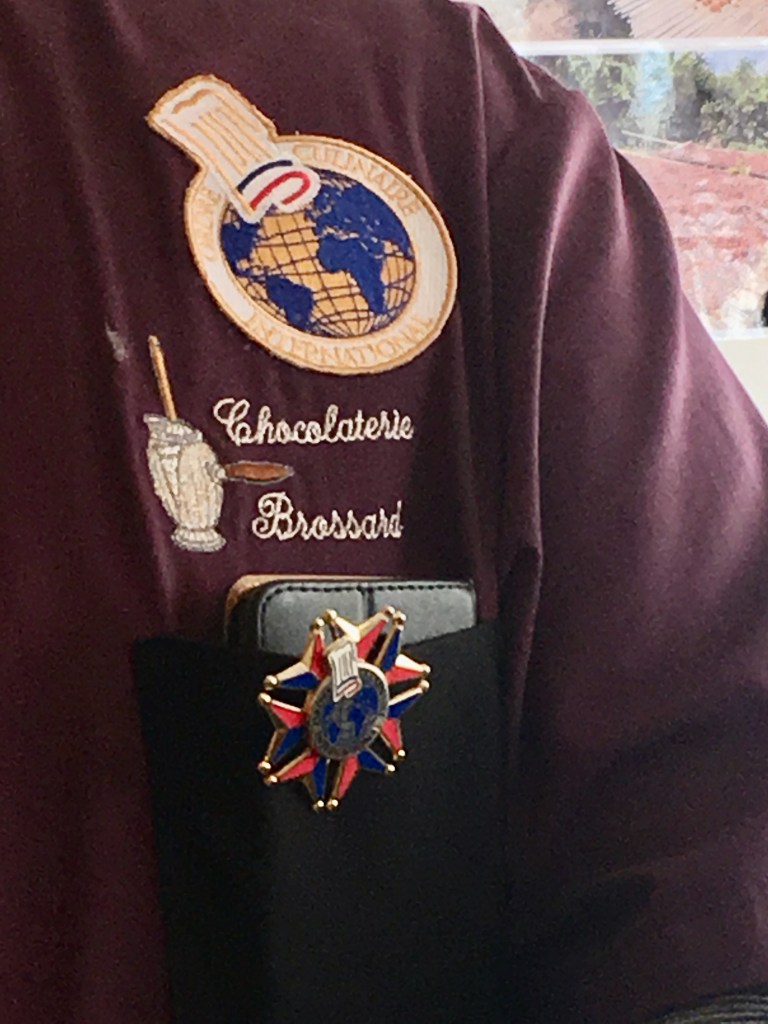
Some of his awards and honors.
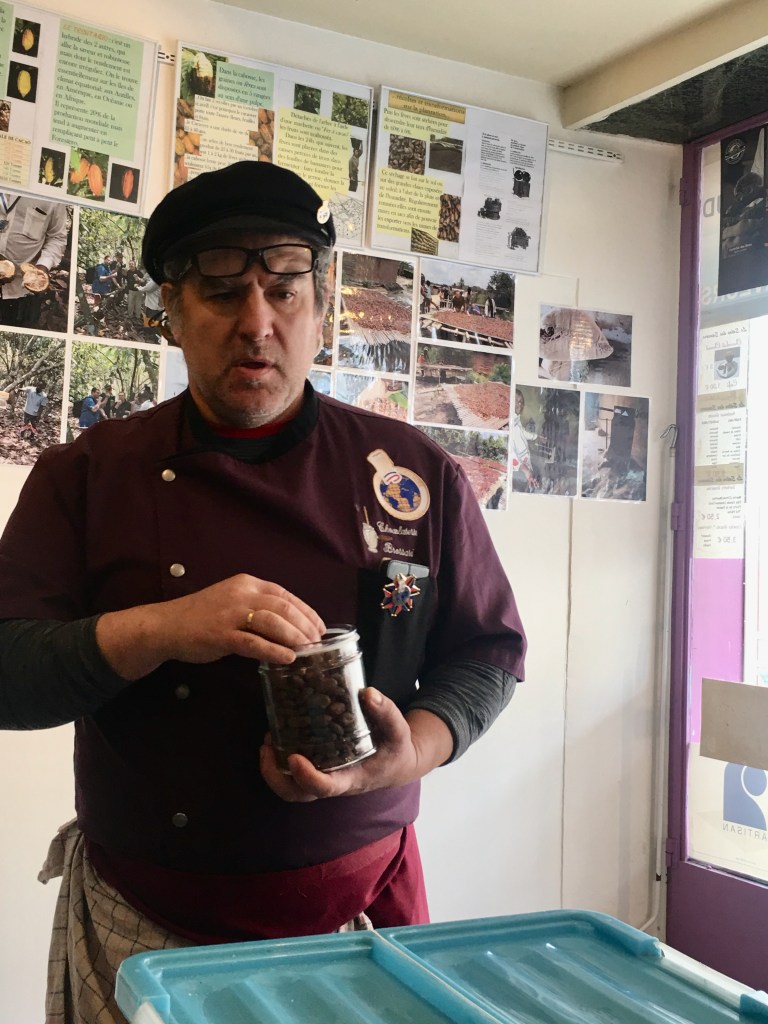
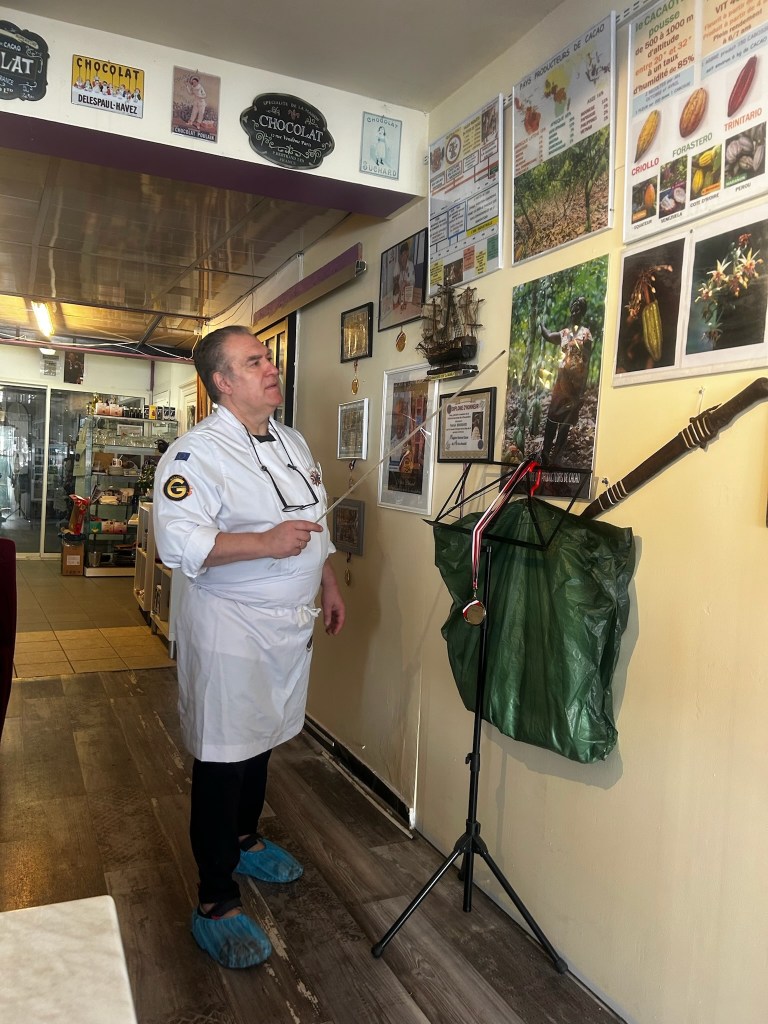
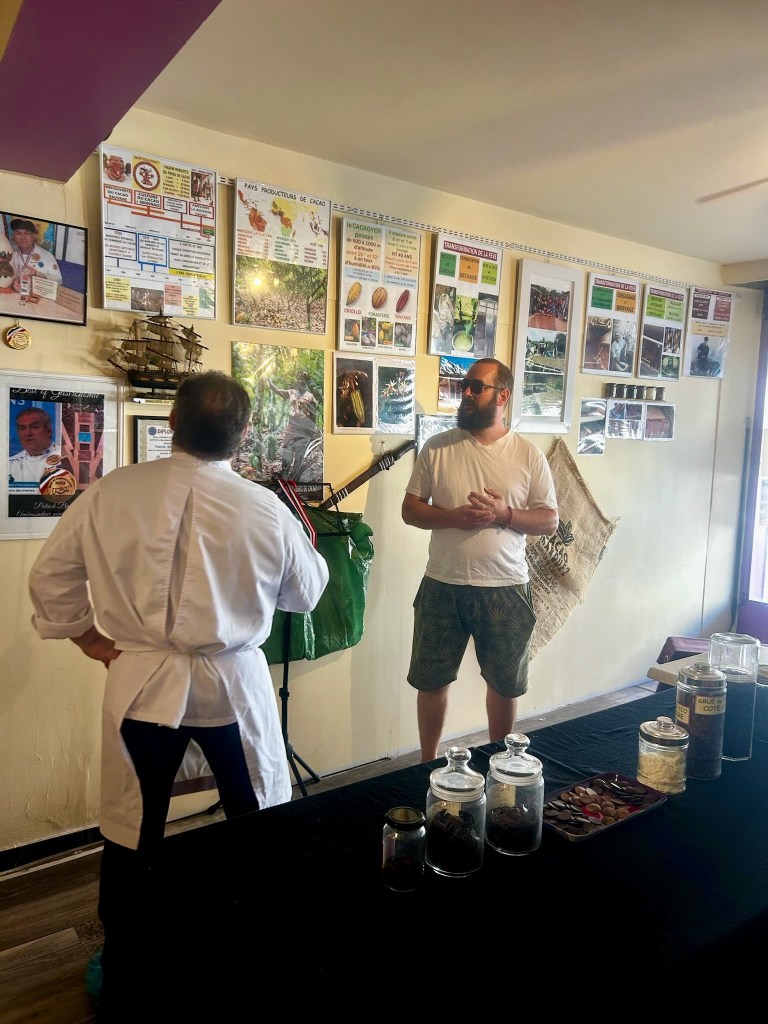
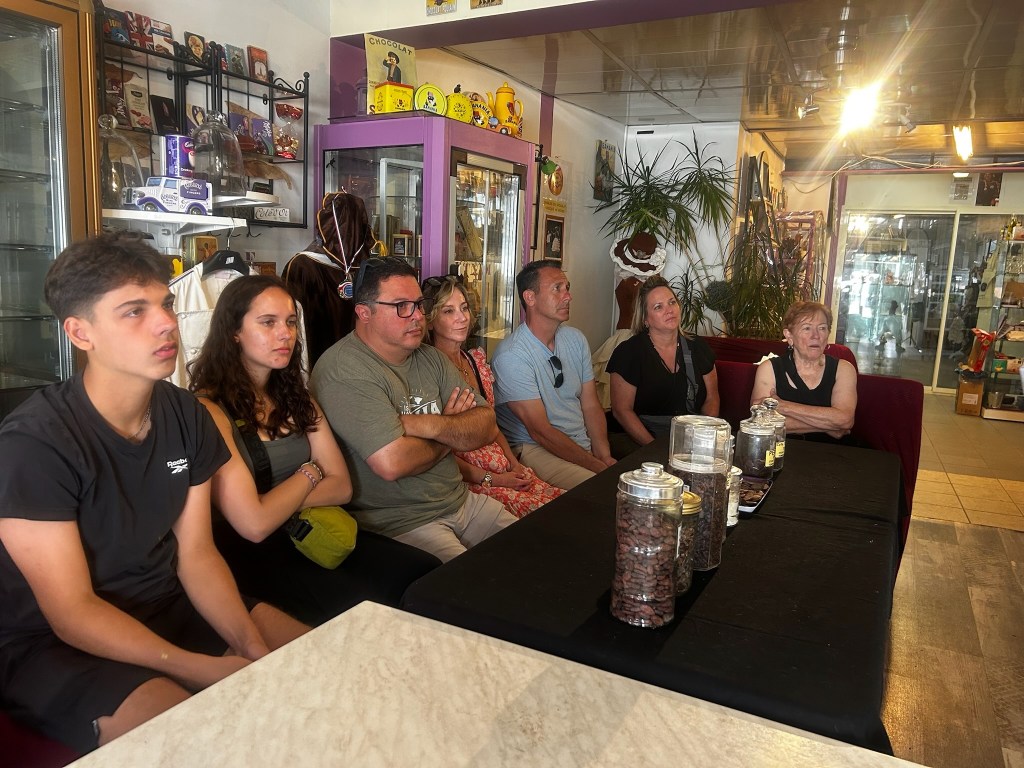
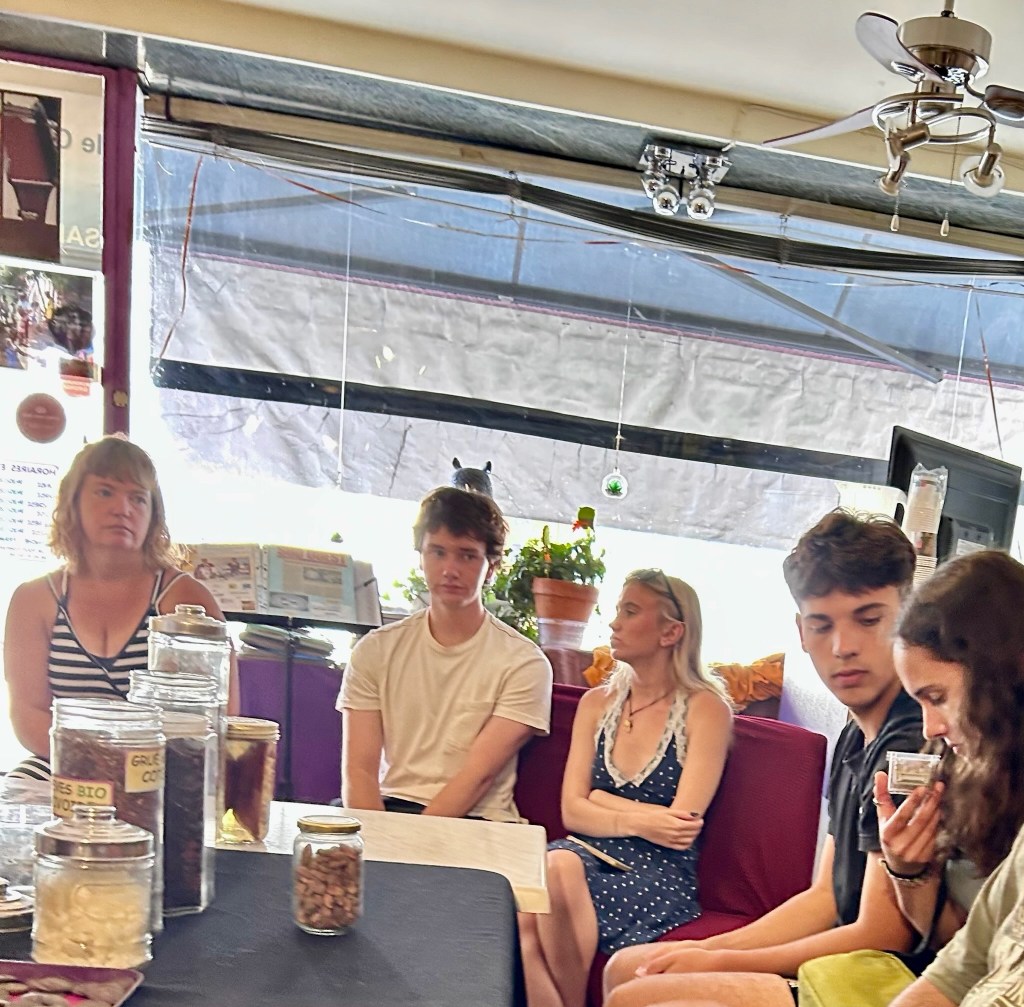
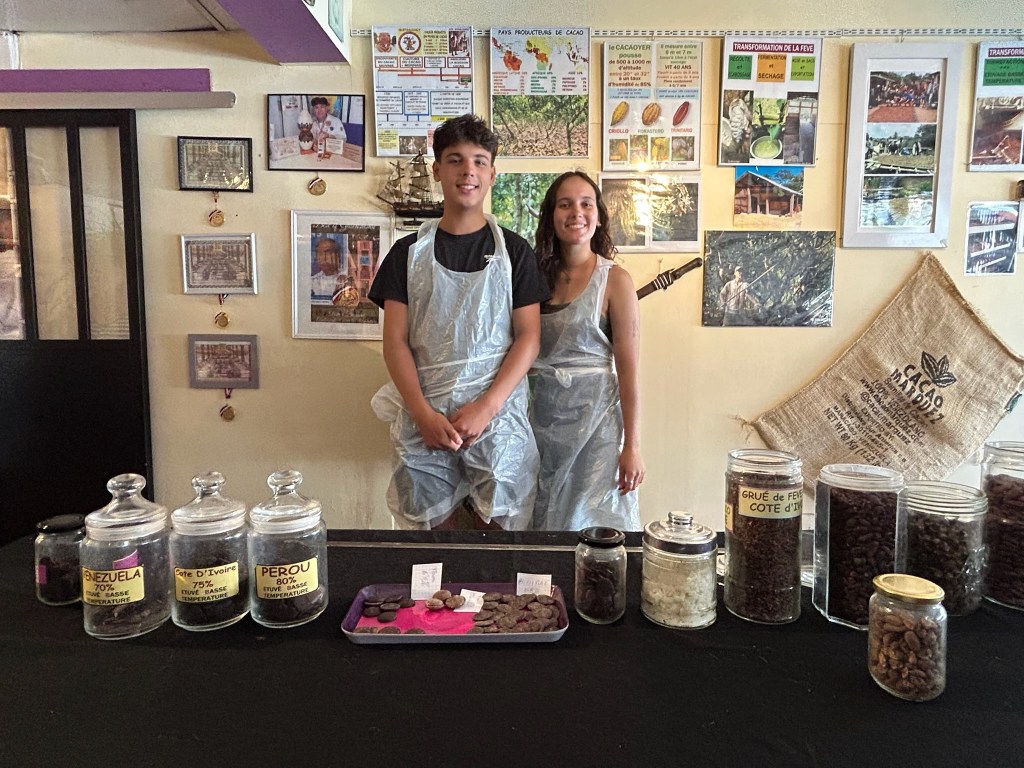
Below, Patrick explained about the beans and how they are grown, the different types of beans and the countries they came from. He also explained the percent of cocoa.
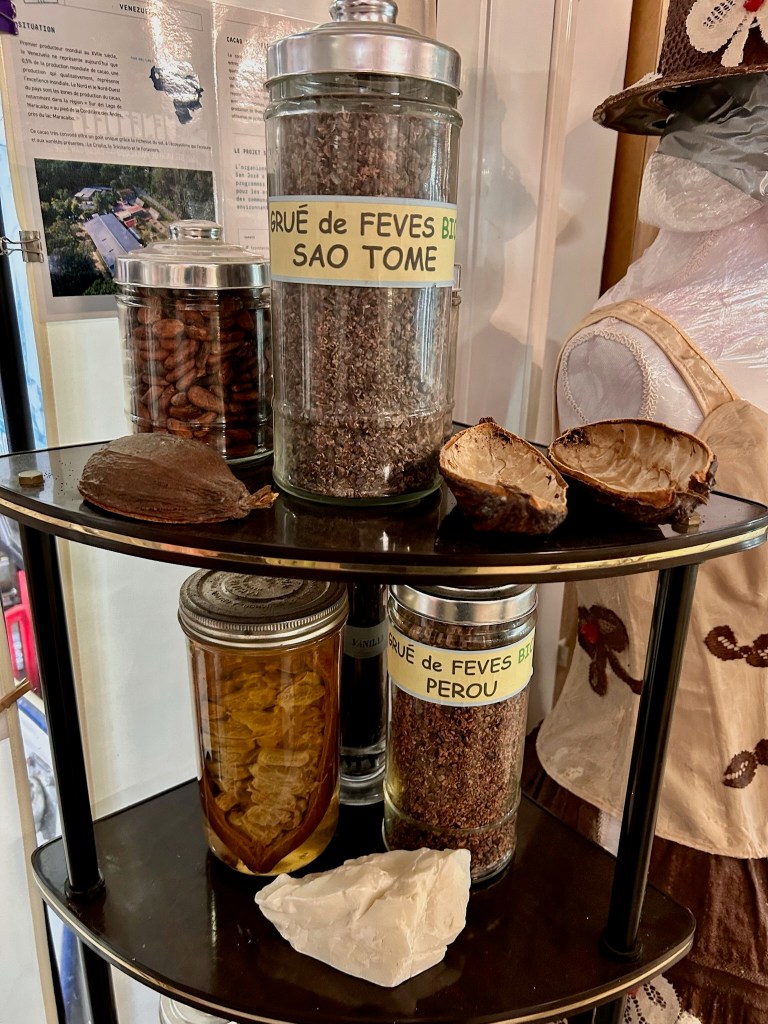
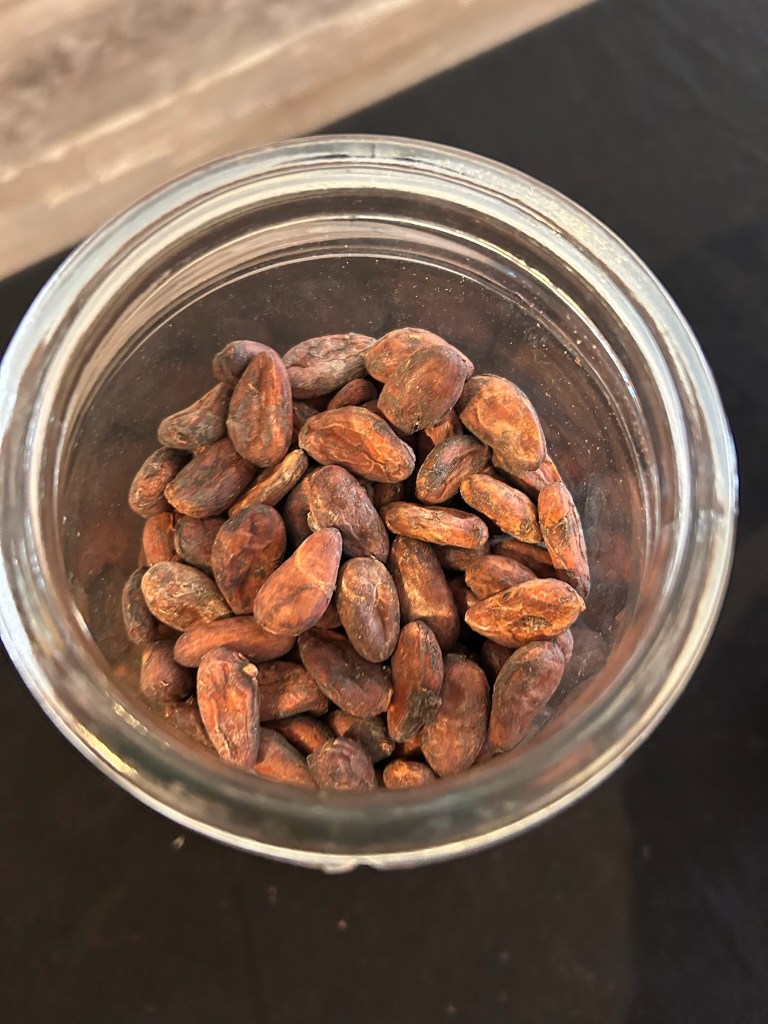
Amelonado Cacao
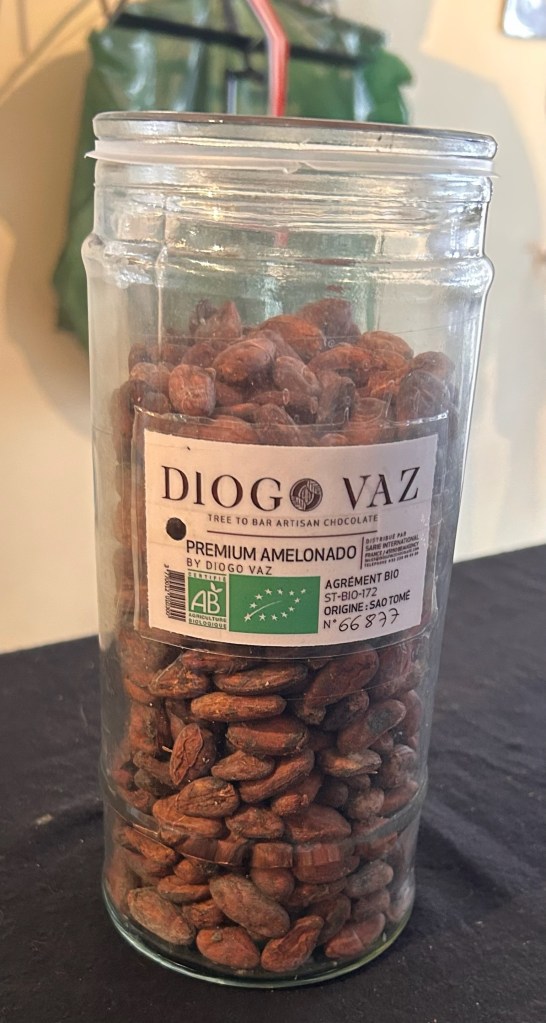
Amelonado Cacao is one of the 10 unique cultivar clusters, and one of the most common. It’s deeply chocolaty & bitter with strong earthy undertones and a large round pod. Most of the cacao brought to Africa in the 18th and 19th centuries originally came from this cultivar type.
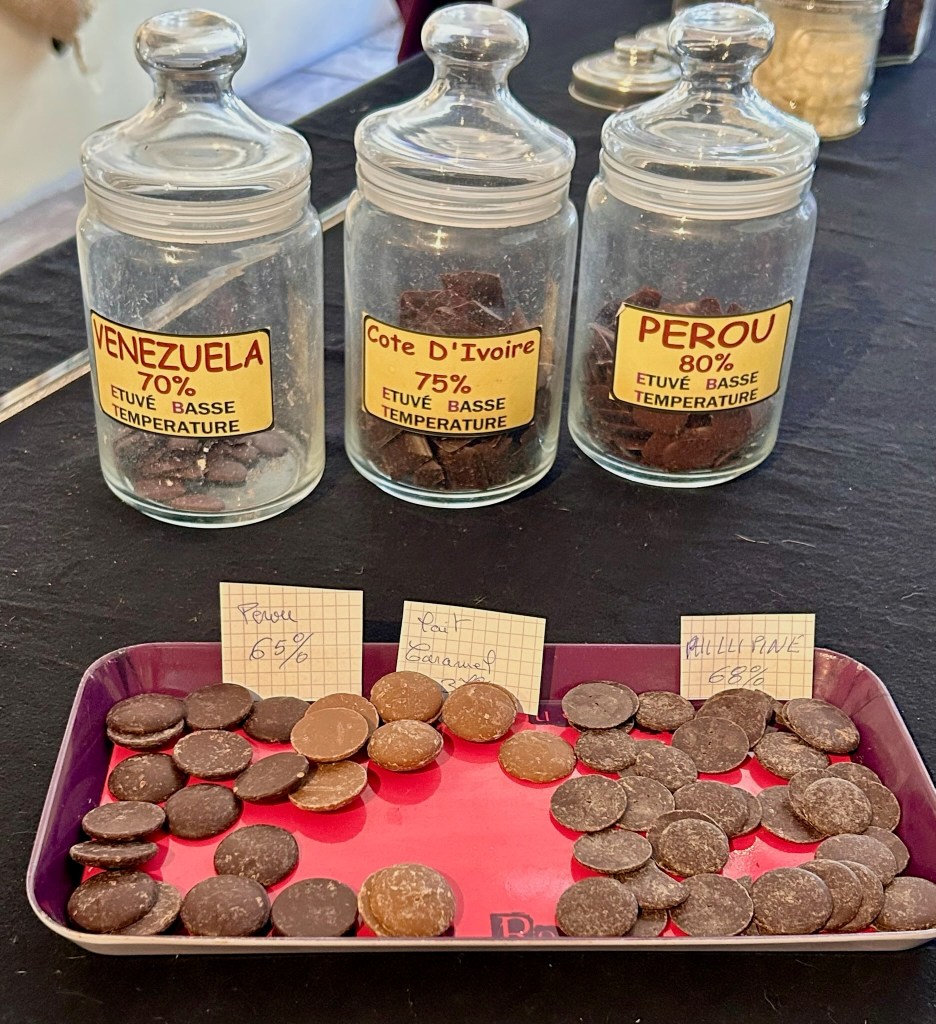
Three Chocolates
- Venezuela 70%
- Cote D’Ivoire 75%
- Perou 80%
We tasted Perou – 65%, Lait Caramel and Aillipine 68%
We listened and got to smell and taste the chocolate.

We then donned aprons and went into the chocolate making area where he showed us his new cocoa bean processing technique: low-temperature steaming of the chocolate. See above in the introductory note about him.
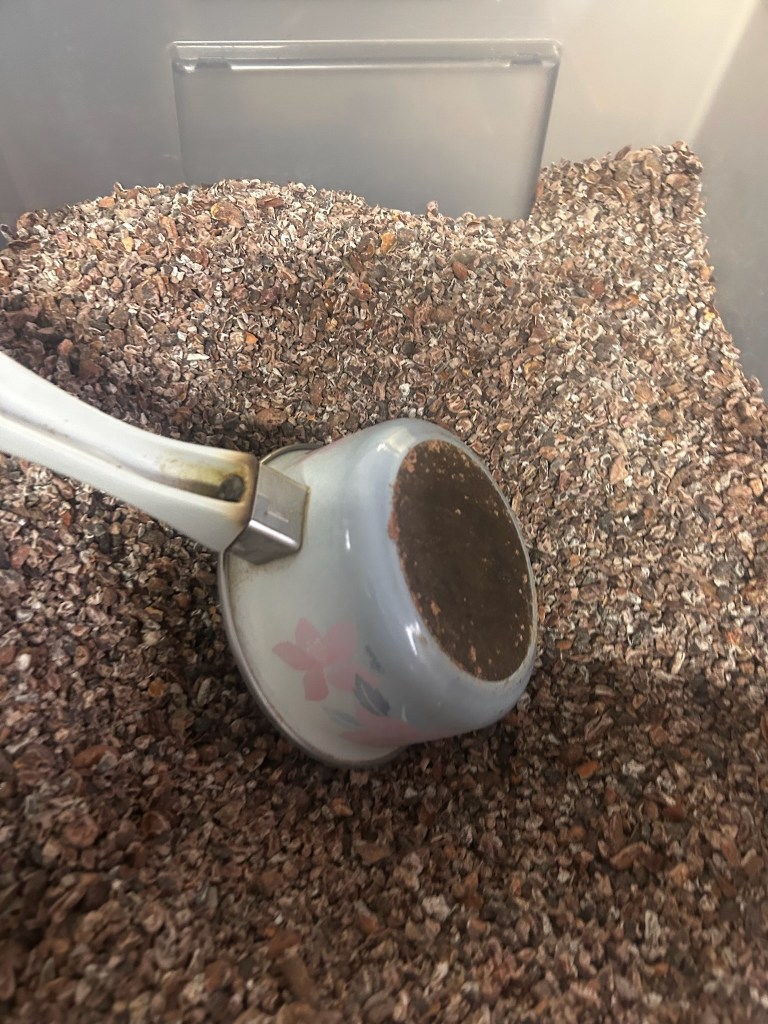
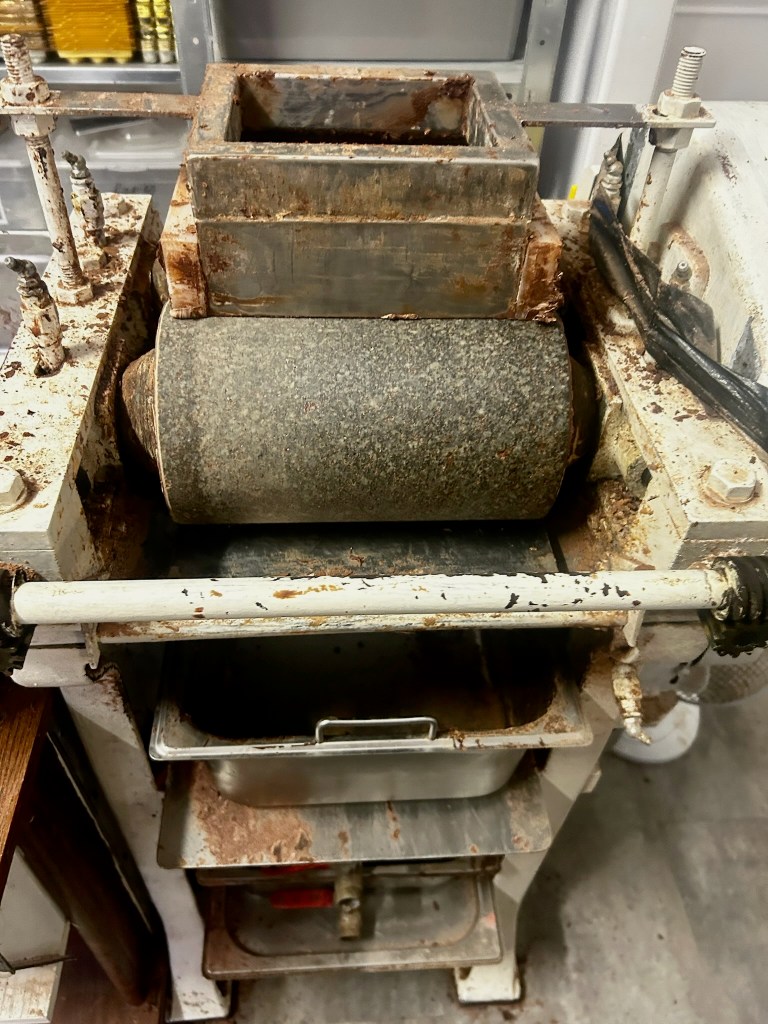
Explaining the process.
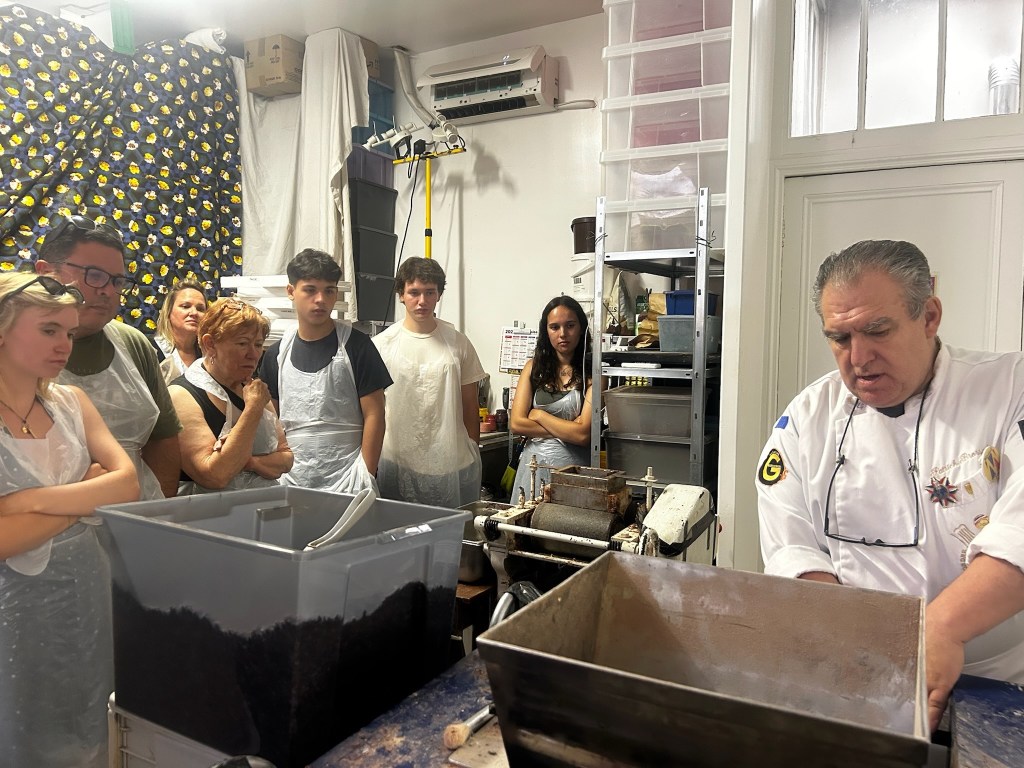
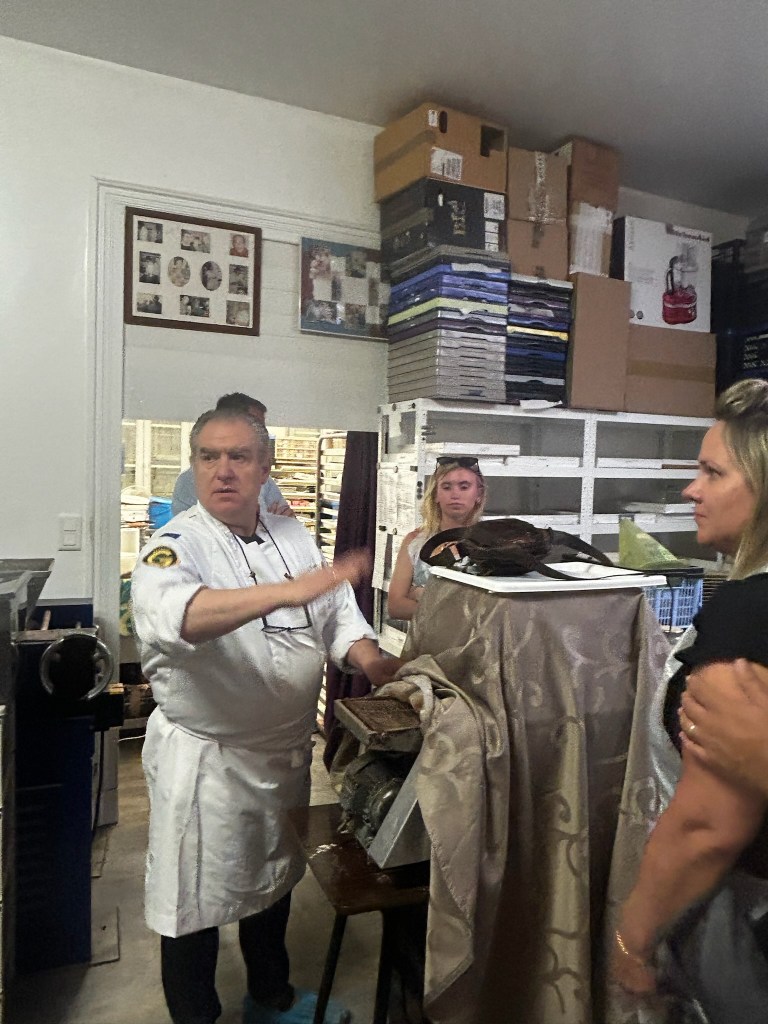
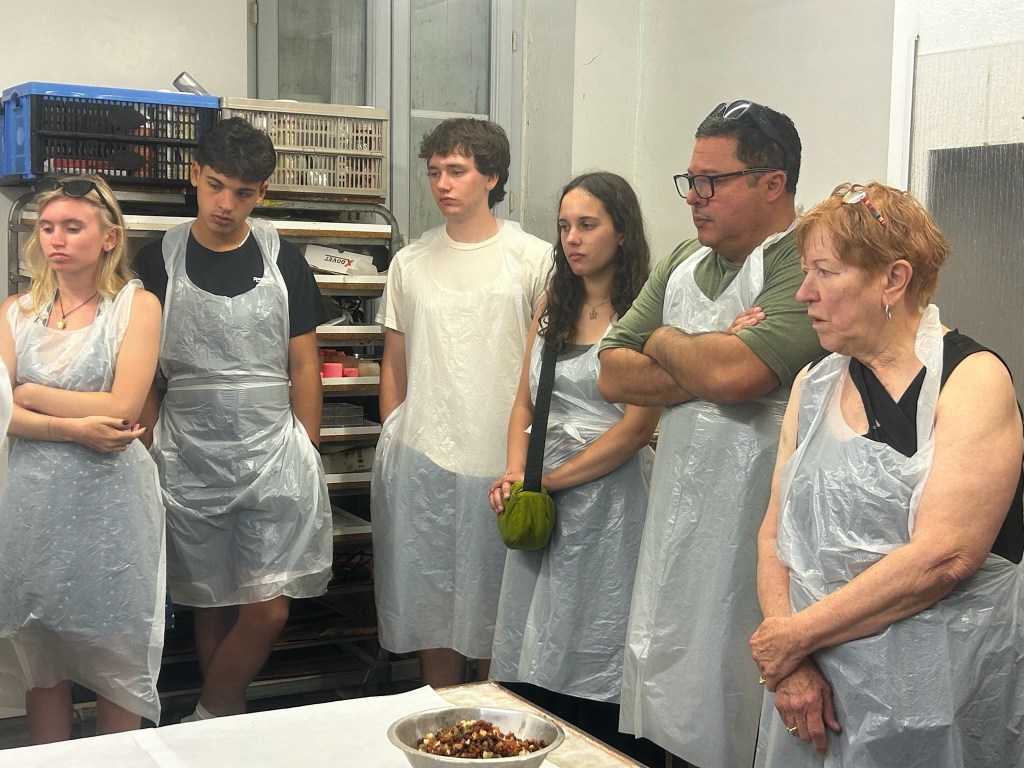
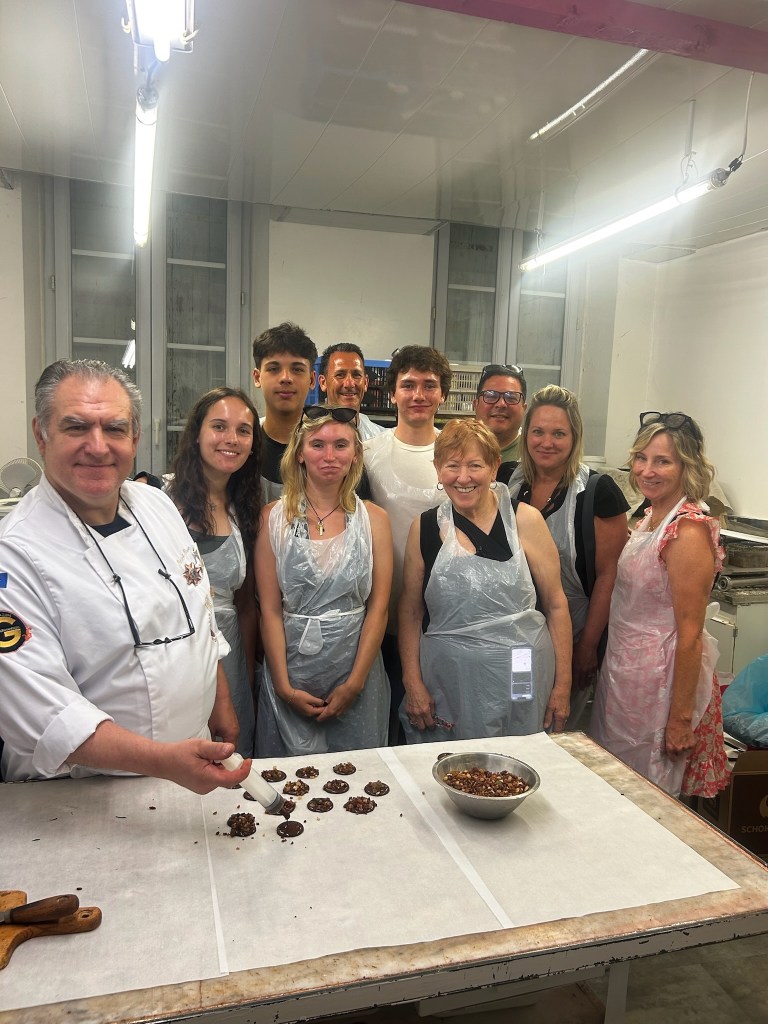
And now we got to try our hand at making chocolates! We were not able to do the full chocolate making experience with molds because it was too hot. We settled for making chocolate discs.
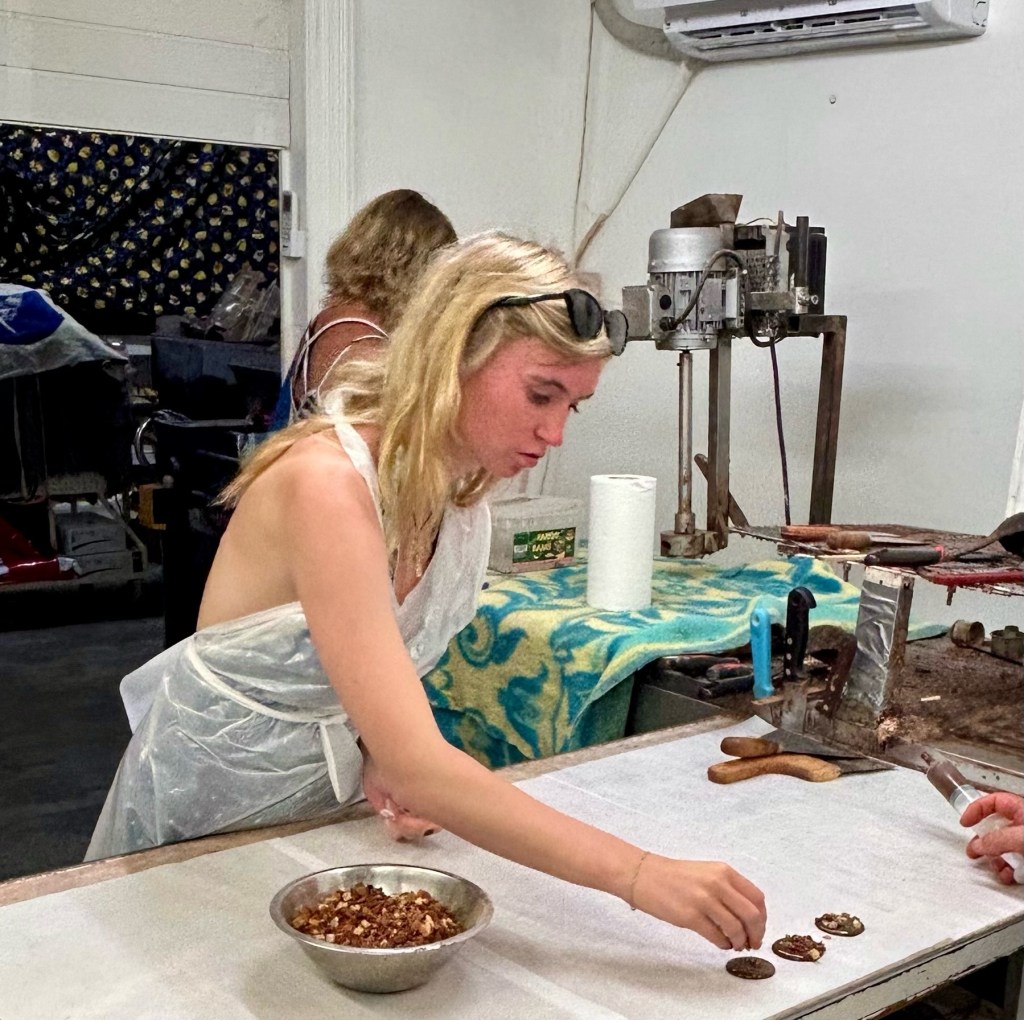
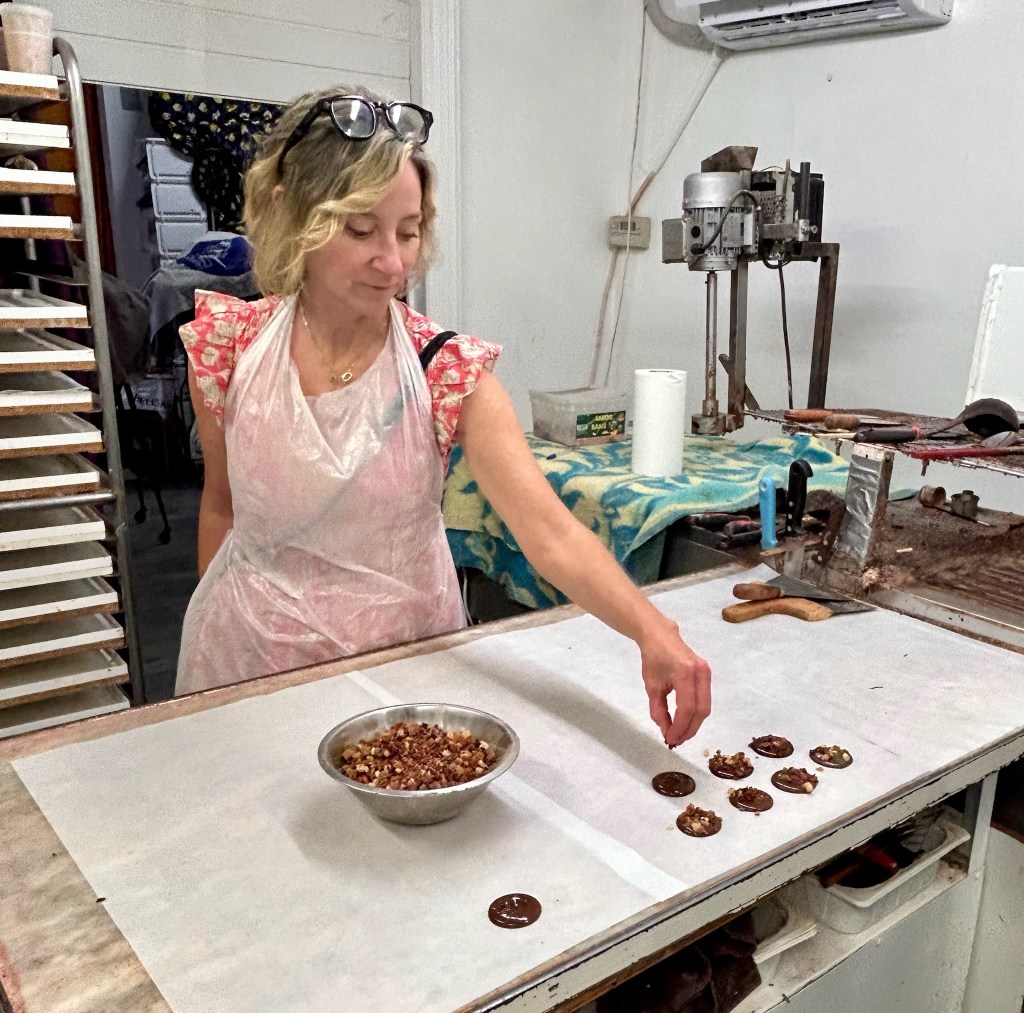
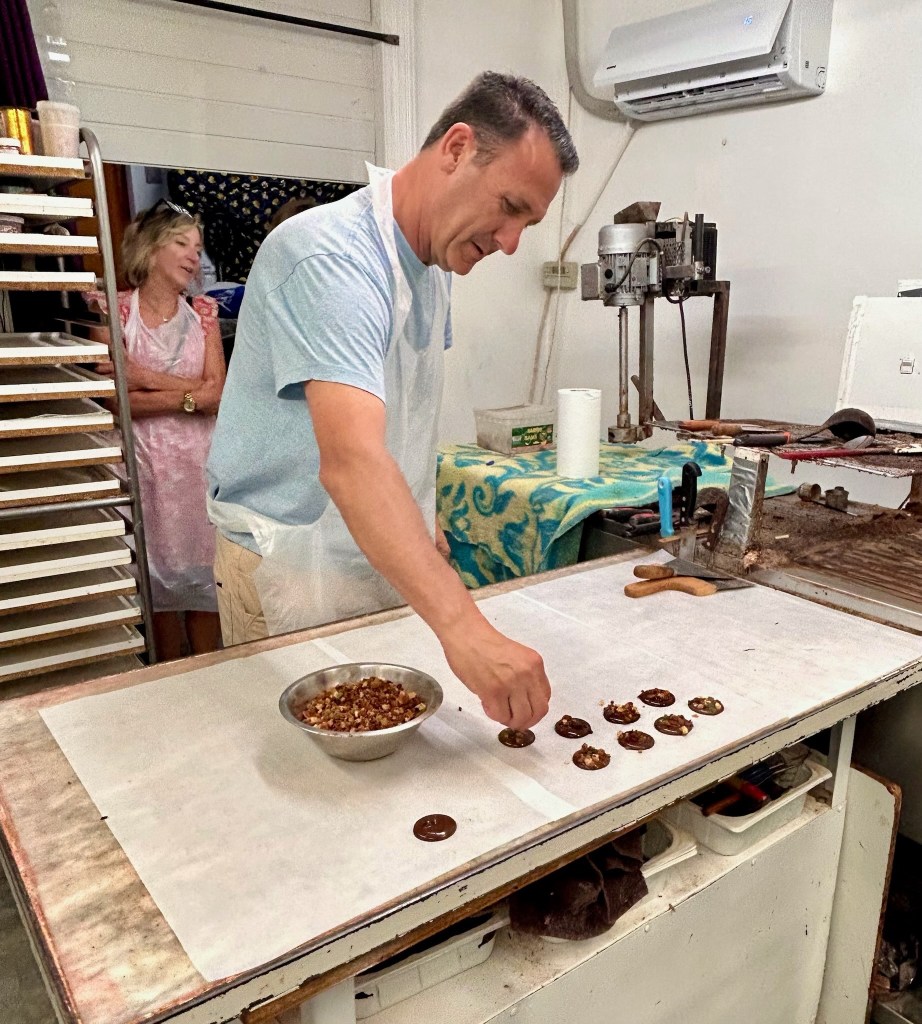
The Goodmans creating their chocolate discs. Not sure where Jacob was.
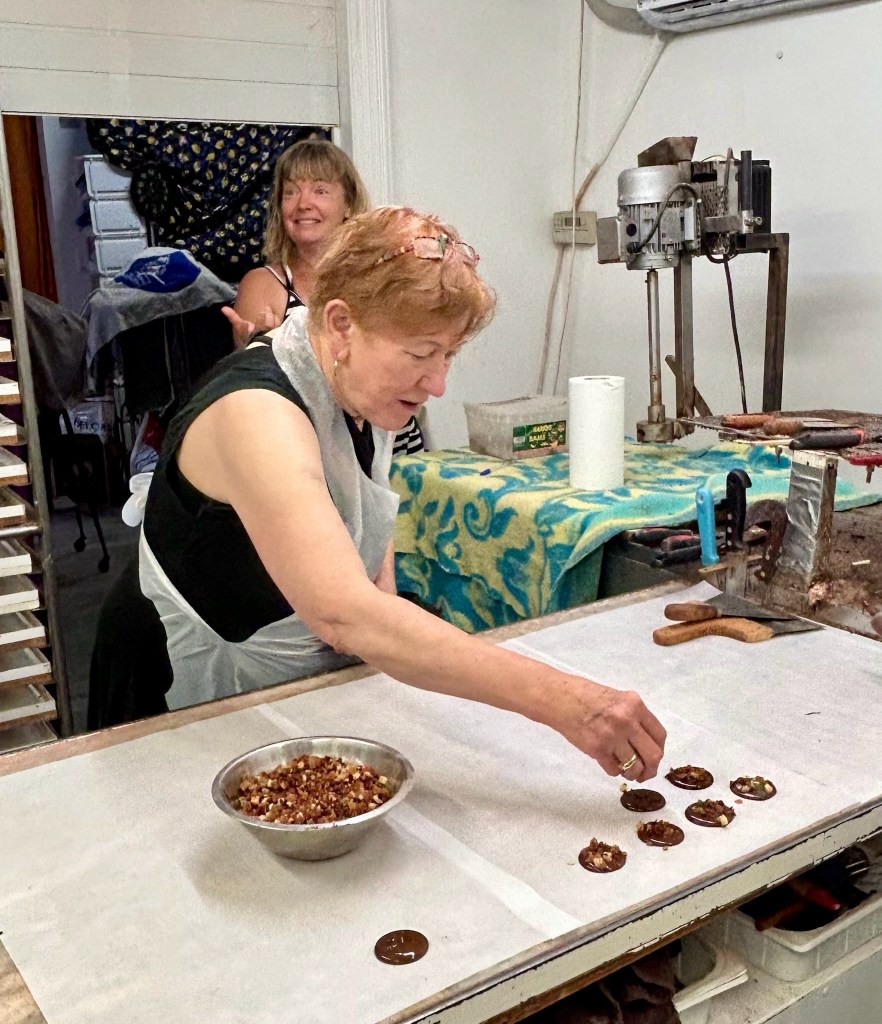
My creations.
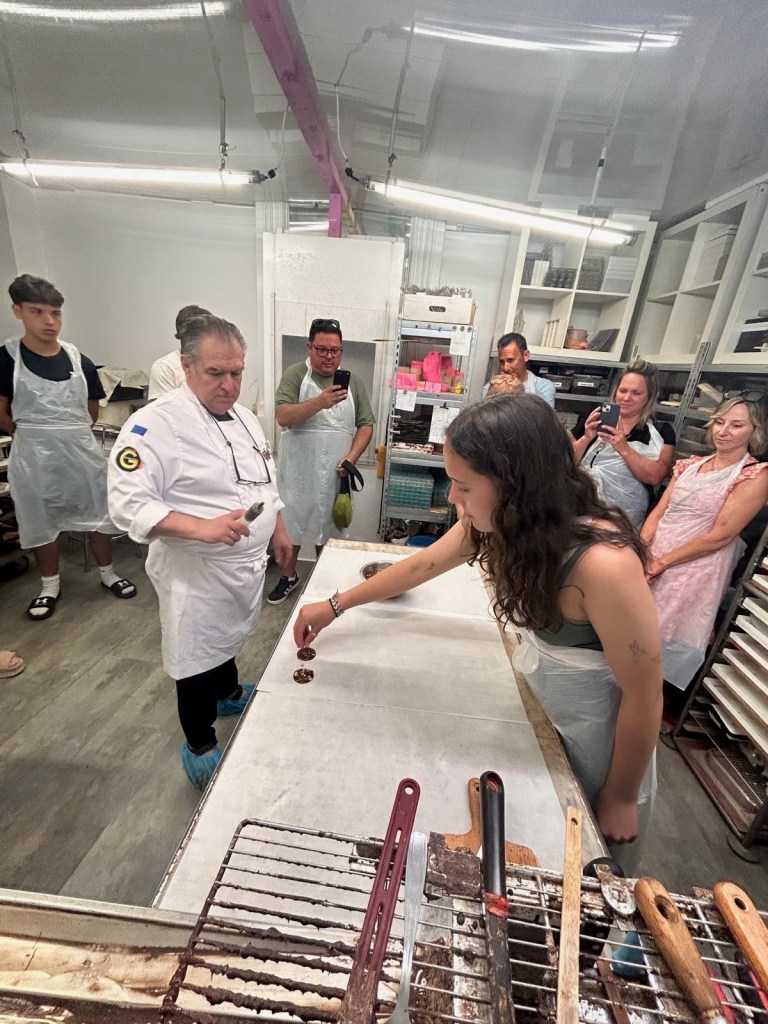
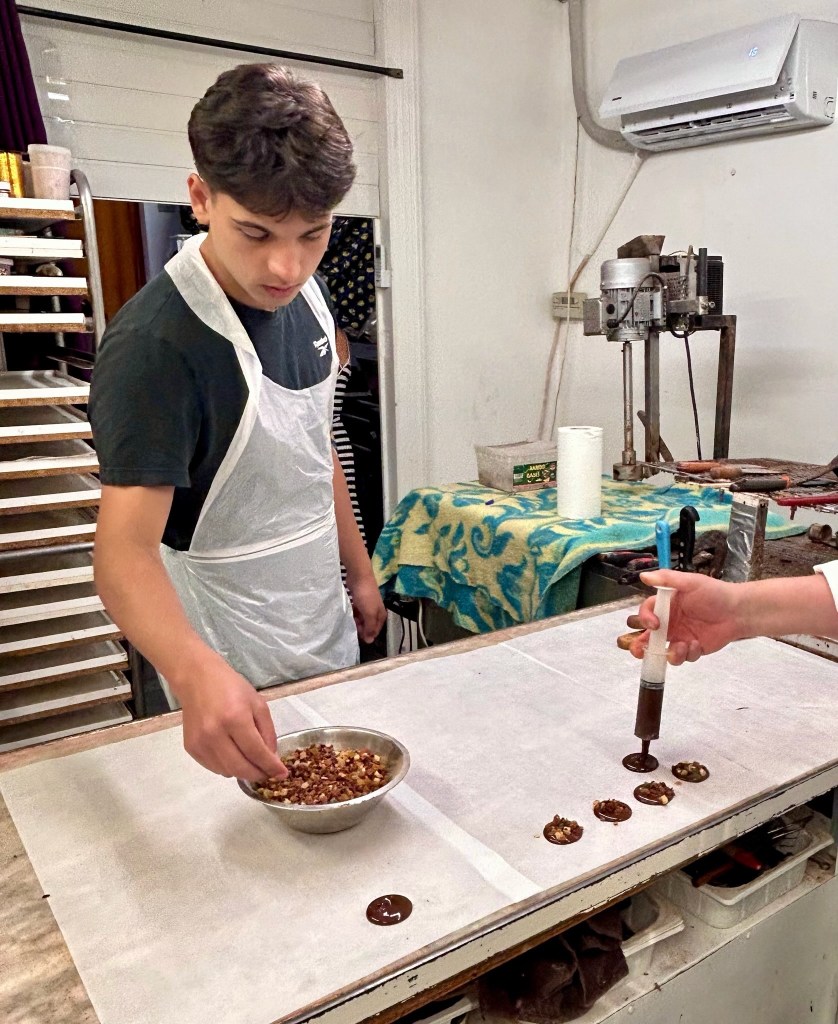
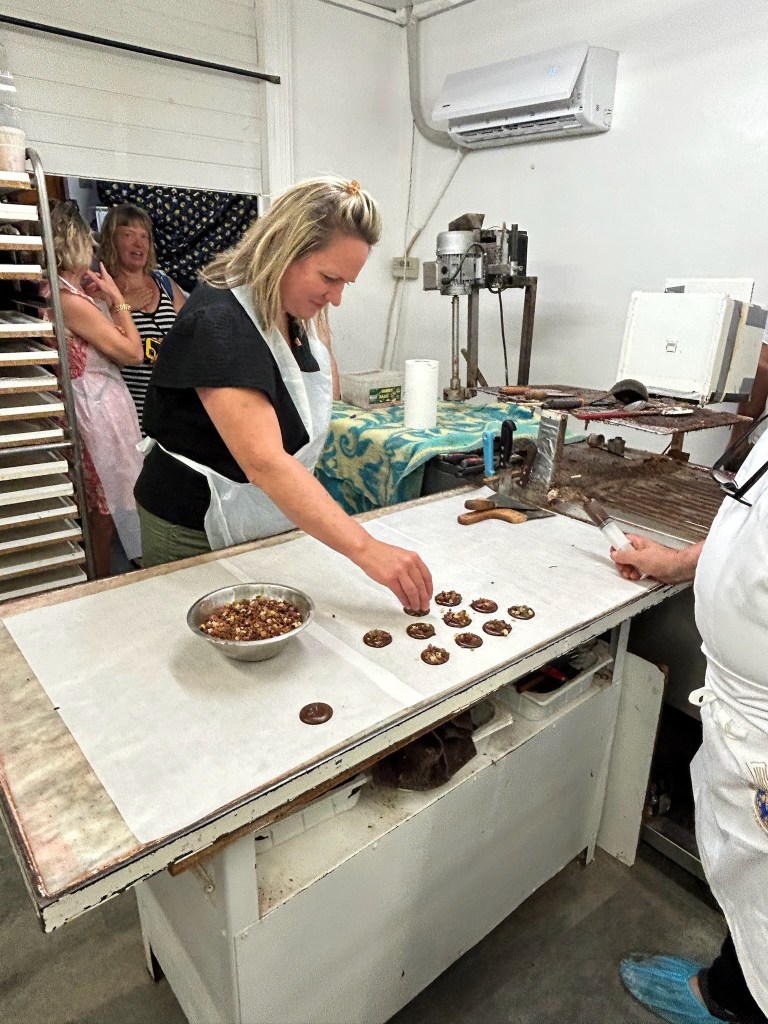
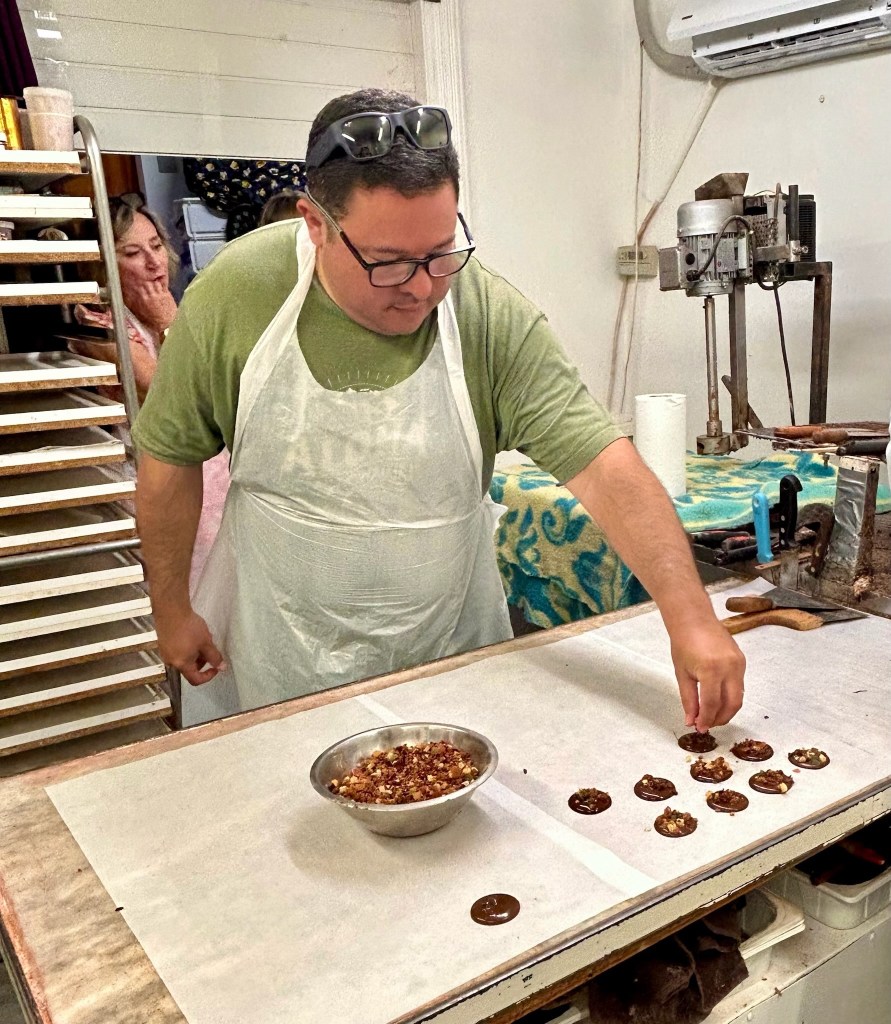
The Meeks getting into the action!!
Voila!!!
Sydney and Dylan in front of the chocolate display.
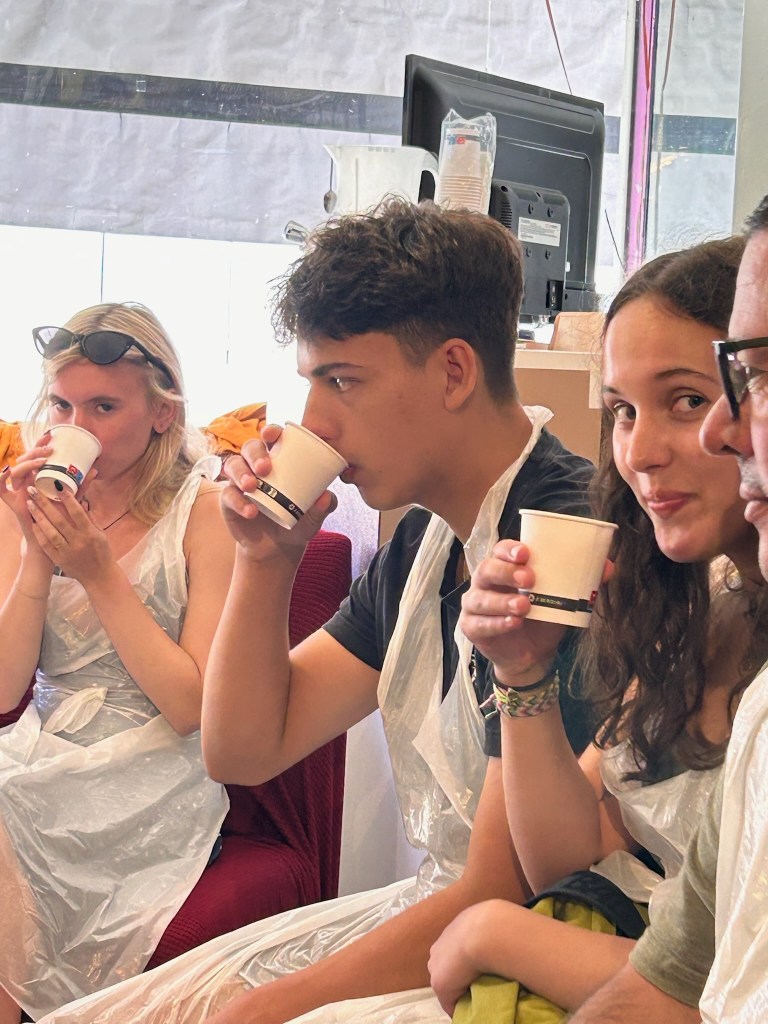
Patrick brewed us hot chocolate to taste. It was so creamy and chocolatey.
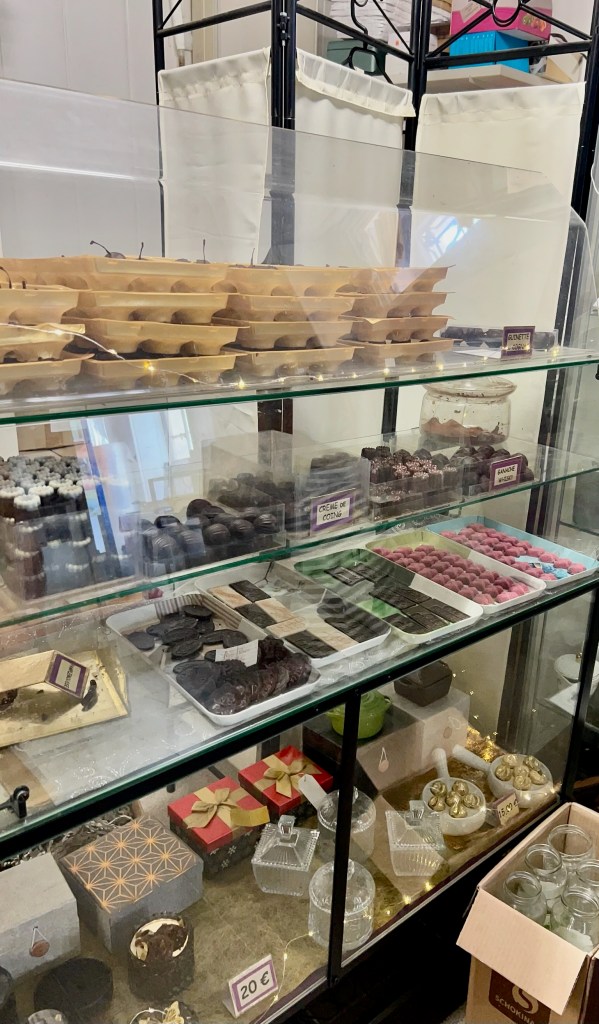
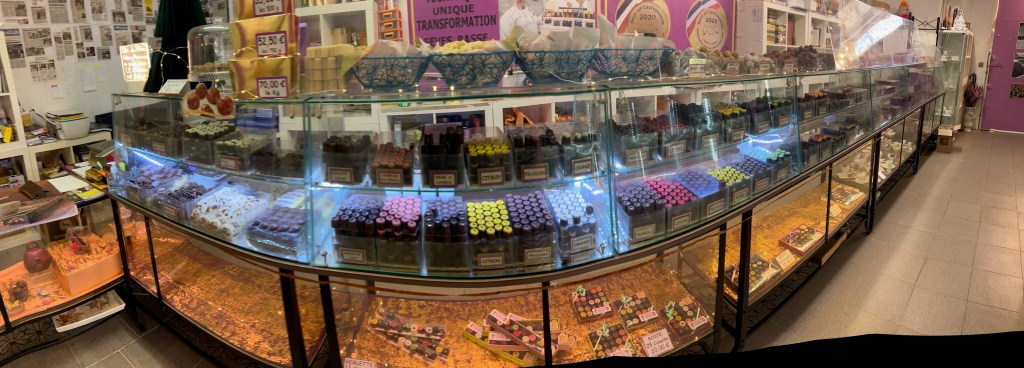
Then we got to go into the shop to look around and of course buy some chocolates.
Some of Patrick’s creations that he made for some competitions. Sydney wanted one of those outfits!!!
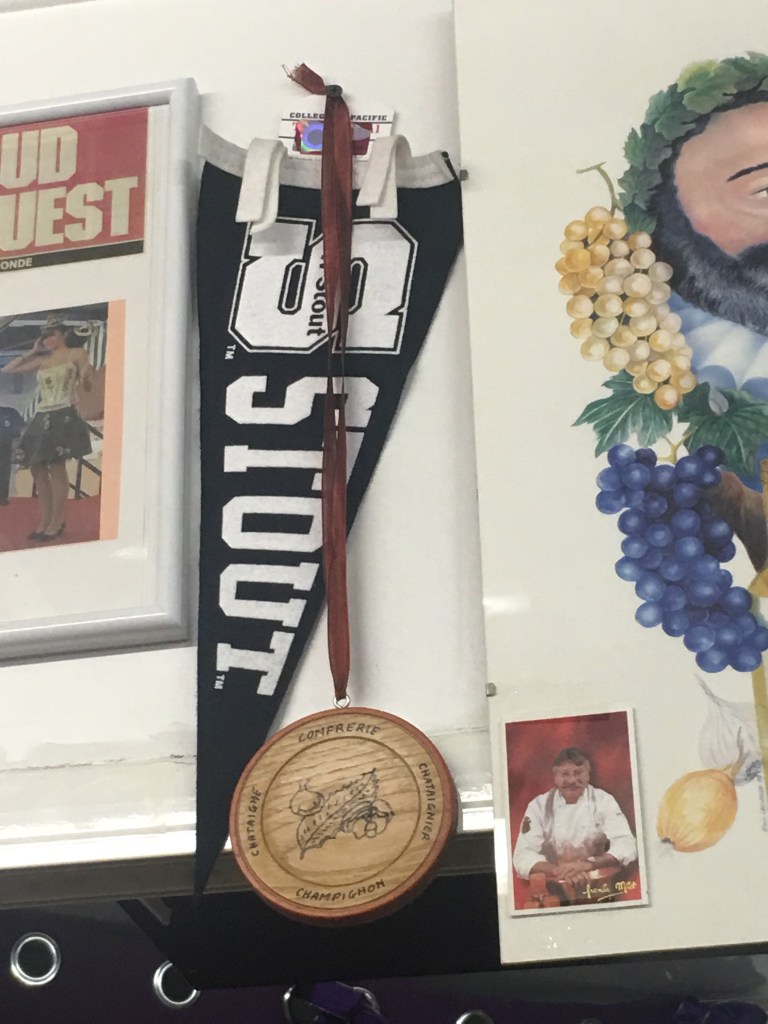
Several years ago Peter D’Souza, a professor at UW Stout, would take several culinary students to Rouge Bordeaux. Part of their experience included learning about and making chocolates. Kris went to UW Stout and had him as a professor. He sent this banner and it hangs in the chocolate shop.
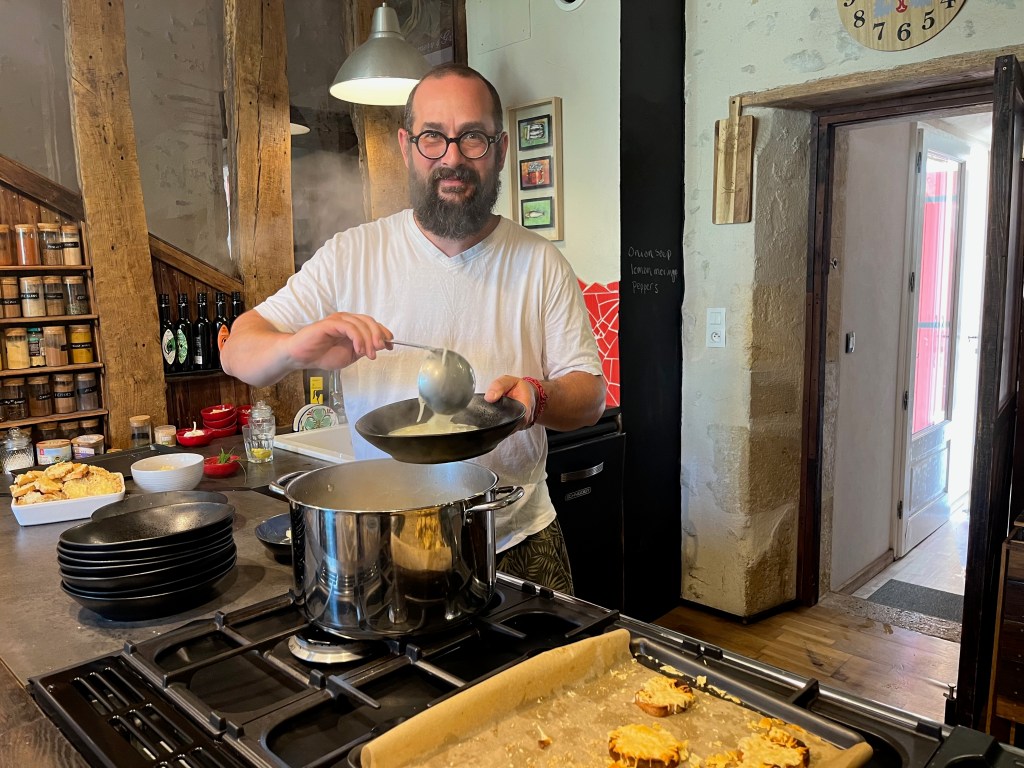
A Lunch of French Onion Soup Made the French Way
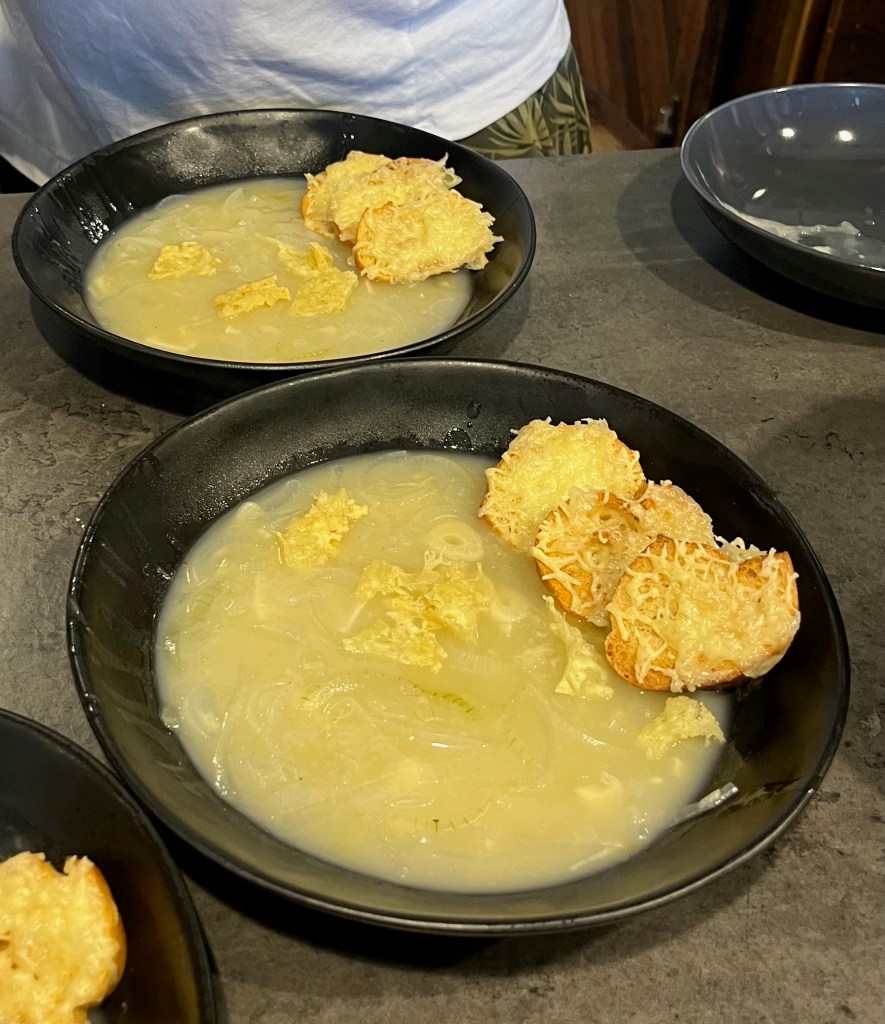
We had planned to have lunch and wine parings at Chateau La Corne but it was too hot so we changed plans to have dinner there and lunch back at Rouge Bordeaux. Julien made French onion soup. It did not look like the French onion soup we are used to. He did not caramelize the onions as much so it is not at dark and he puts the cheese toasts on the side and not in the soup. So now we can say we had “real” French onion soup made by a French chef!! It was delicious.
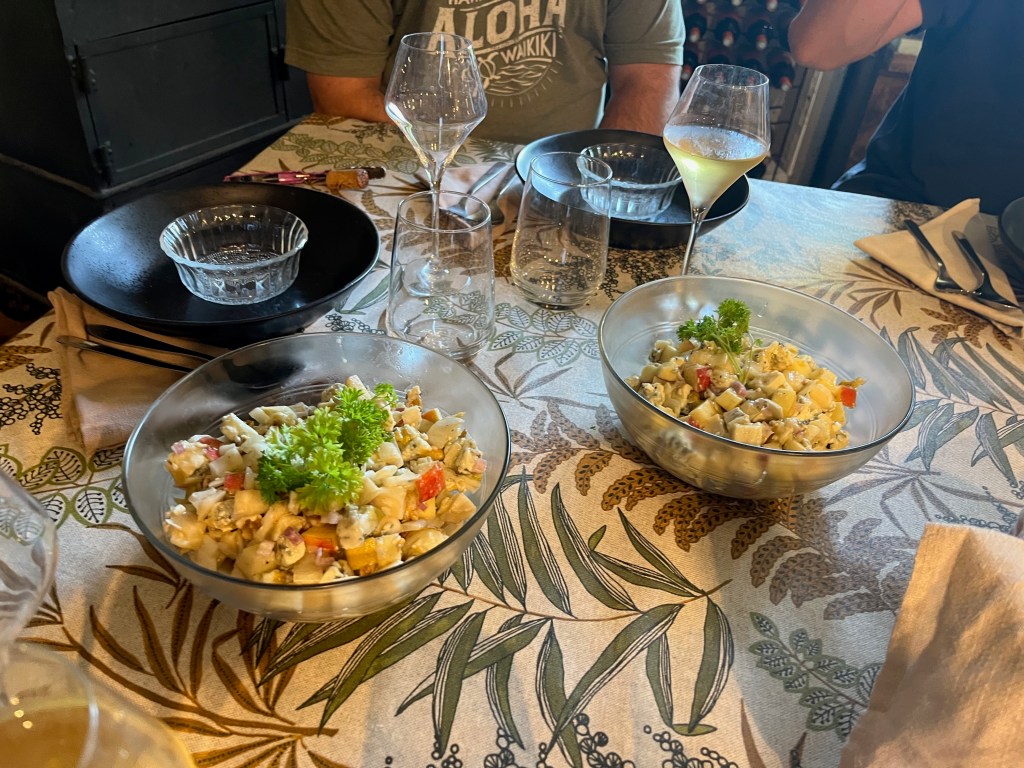
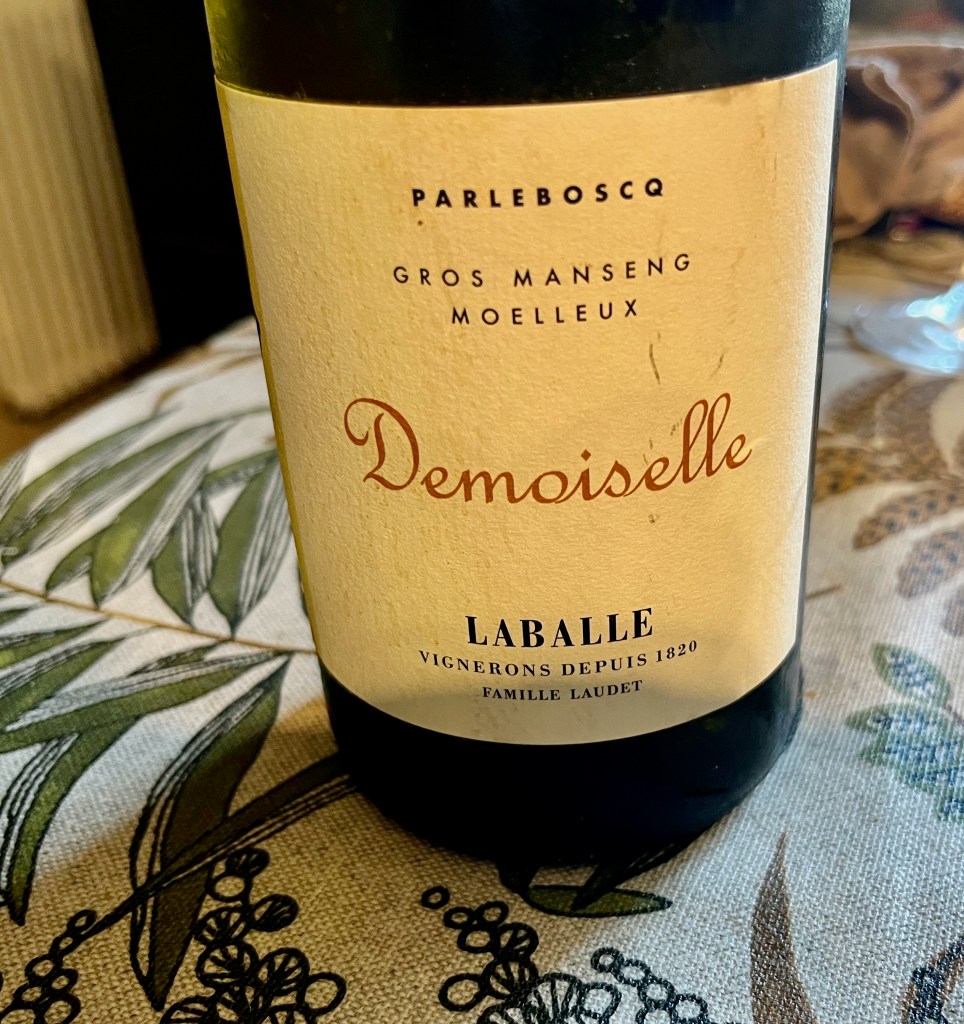
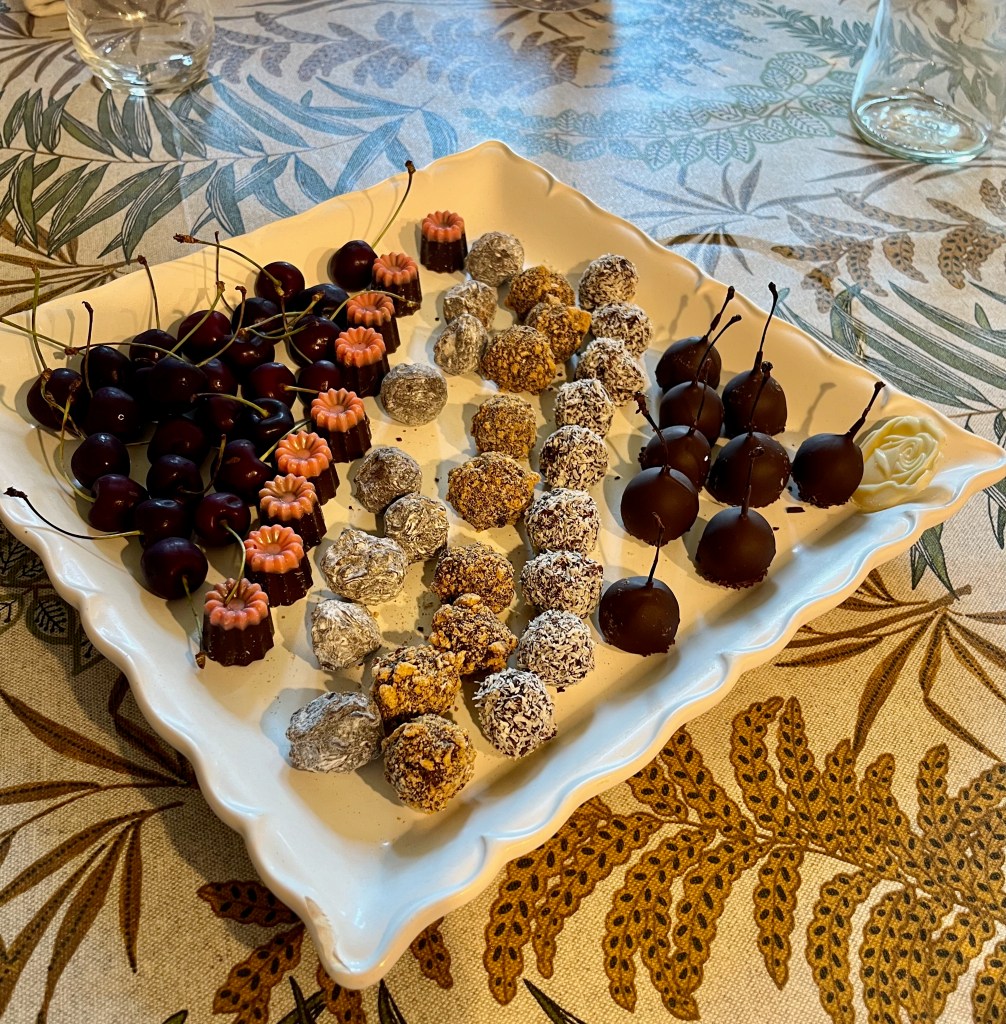
In addition to the soup we had beautiful salads and of course a beautiful white wine. To finish our meal we had chocolates that Julien and Megan purchased at the chocolate shop. Beautifully displayed and it was a treat to have so many chocolates to choose from.
Four Course Vineyard Dinner with Wine Parings at Chateau La Corne
Château La Corne
Located in the village of Le Pian-sur-Garonne in the Côtes-de-Bordeaux-Saint-Macaire A.O.C., a sub region of A.O.C. Bordeaux.
Settled by the Romans, the picturesque hilltop site of Château La Corne is the perfect place for a vineyard and Chateau La Corne has been making wine here since the 1800’s.
La Corne means “horn of plenty” and the property was once self-sufficient. Over 15 types of fruit and nut trees and five acres of vines remain. It is a garden of Eden and an oasis of wildlife. The area is great for nature lovers, as well as gourmands and culture seekers. It is located 45 minutes from Bordeaux and 10 minutes to the local TGV train station in Langon.
Château La Corne shares a boundary with Château Malromé, (the family home of the painter Henri de Toulouse-Lautrec) and Domaine de Malagar (one of the family homes of the famous French writer François Mauriac) is on the next hilltop a few kilometers away.
Steve Lawrence and Diana Lucz are the proprietors and Steve is the vigneron. A vigneron is a person who both farms and makes the wine from it. They have both worked in the fine wine business their entire careers and lived in Napa, until 2017, when they got married and moved to France! Steve is originally from Buckinghamshire, England and Diana from Tucson, Arizona. After representing well-known wineries (Veuve Clicquot, Robert Mondavi, Chalone, Stag’s Leap Wine Cellars, Pahlmeyer, Gundlach Bundschu, Cain, Obsidian Ridge, Bergstrom and Adelsheim), they now have their own little place. Château La Corne is the culmination of Steve’s 40-year-old dream to own a property in France and make wine after 35 years in wine sales. And Steve is Diana’s 40-year-old dream to marry her true love!
They practice natural farming and wine making. “As we live surrounded by our vines and spend much time in the vineyards, we farm minimally. By that we mean no Round Up, no pesticides, no herbicides. Using only natural products used for centuries. The vineyard is totally safe for us, our guests and our little dog named Margaux and all the other creatures great and small with whom we share this land.”
Biodynamic winemaking is a governing practice that goes back nearly a century. Unlike organic winemaking, the distinction of biodynamic does not change between countries.
Started in the 1920s by Austrian philosopher Rudolf Steiner, biodynamics represents a method of farming based around a specific astronomic calendar. Each day coincides with one of the elements: earth, fire, air and water. Days are organized by fruit days (preferable for grape harvesting), root days (pruning), leaf days (watering) and flower days, where the vineyard should be untouched.
Biodynamic practices don’t go solely by this calendar, however. Steiner also instructed followers to use fertilization preparations. One technique used in biodynamic farming involves cow horns filled with compost that are buried in the vineyards, only to be dug up later. Another is using horsetail as a pesticide. Horsetail is effective as a preventative measure against pests and diseases, strengthening the plants’ natural defenses before an infestation takes hold.
If you’ve seen “biodynamic” and “organic” grouped together, there’s a reason for that. Biodynamic wines employ organic practices, as they avoid pesticides and depend on compost, rather than chemical fertilizer. The majority of these wines are, therefore, also organic in practice.
Wine making is minimal too with fermentation by only native yeasts. The long natural fermentation stays cool, which helps retain all the fine aromas. For example, our 2017 white took 22 days to ferment versus the 5 days it would have taken with processed yeast. We then put the wine in neutral French oak barrels for maturation. We rack barrels and occasionally use egg whites to ‘fine’ the wine prior to bottling (unfiltered). We use a very small amount of sulfur at bottling to make sure the wine can travel.
All the work in the vineyard is done by hand (by them) and their 1968 Masey Fergusson tractor. We hand pick our grapes at harvest with help from friends and neighbors.
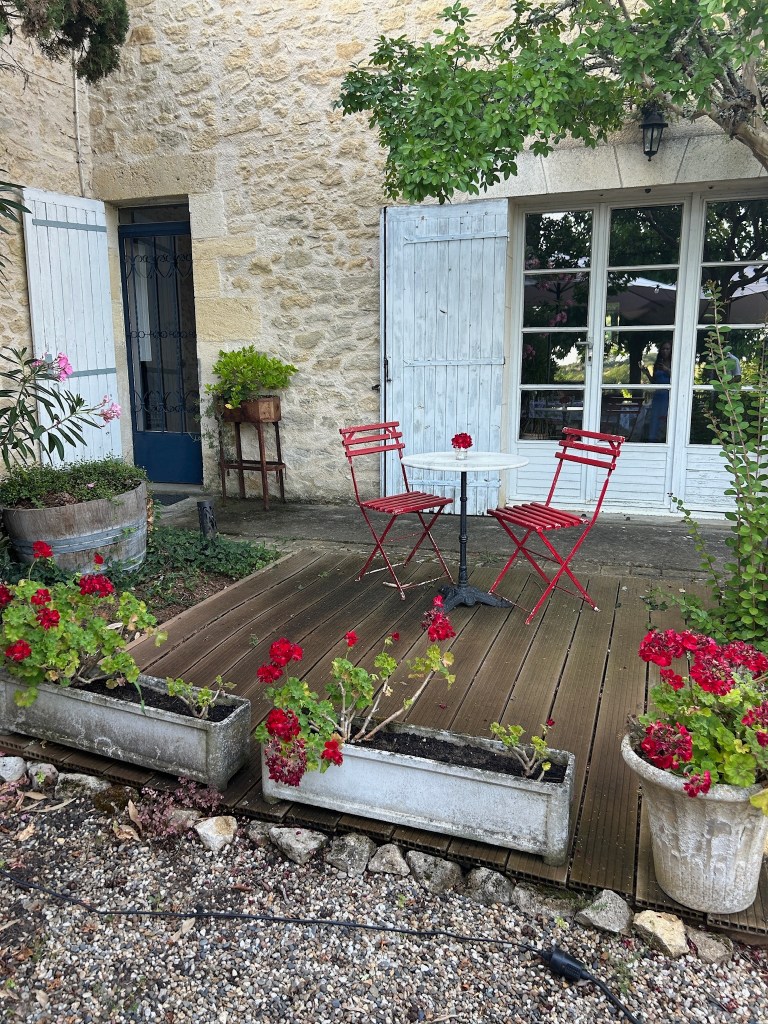
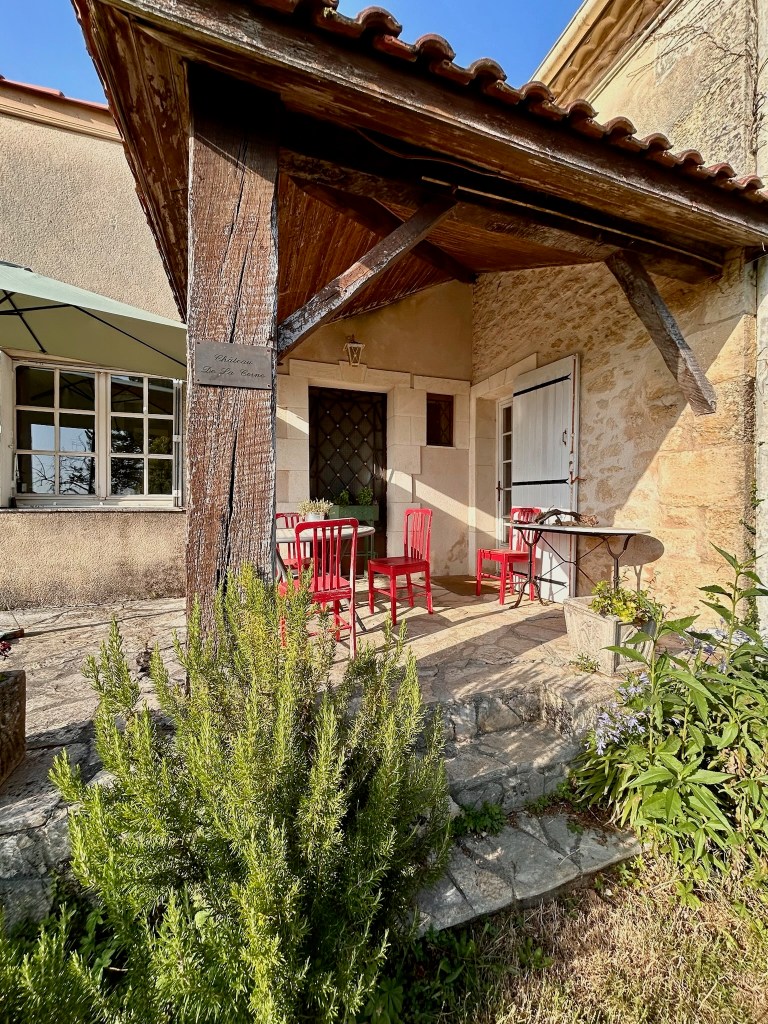
They have a beautiful home and setting. Below is their patio, an old water pump and some beautiful hydrangeas .
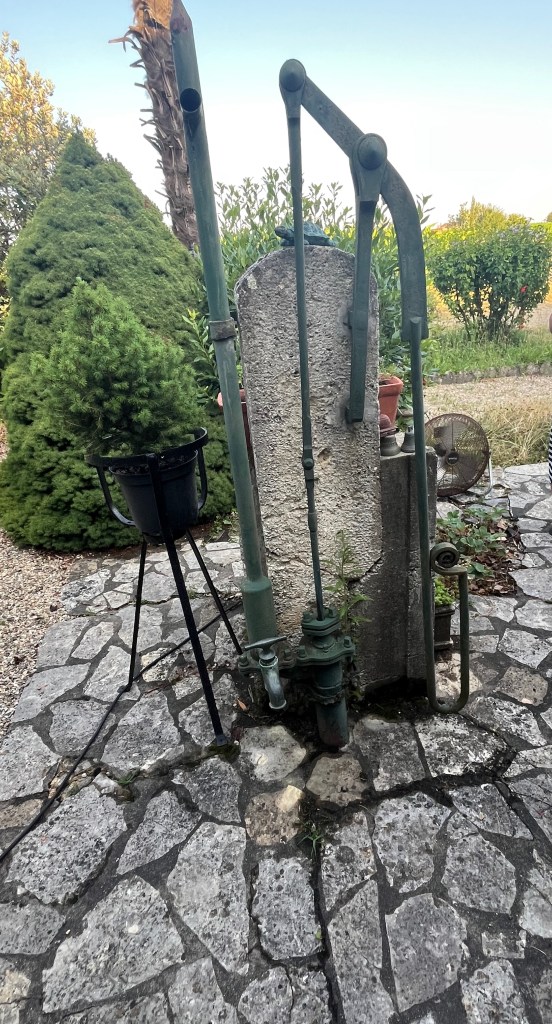
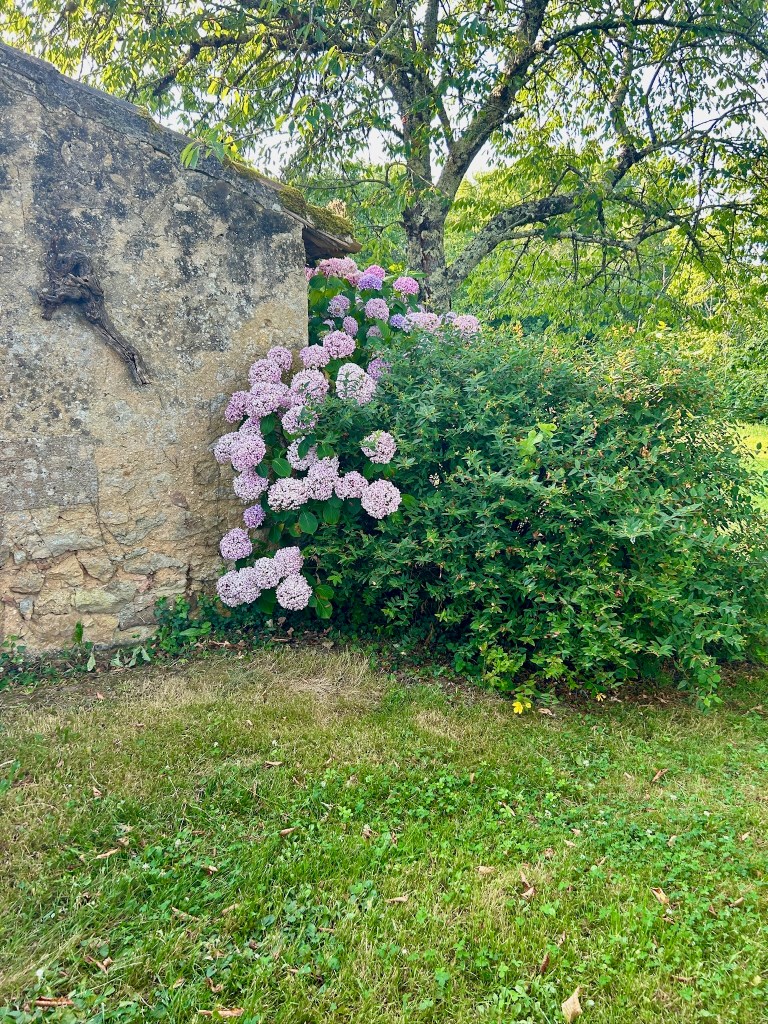
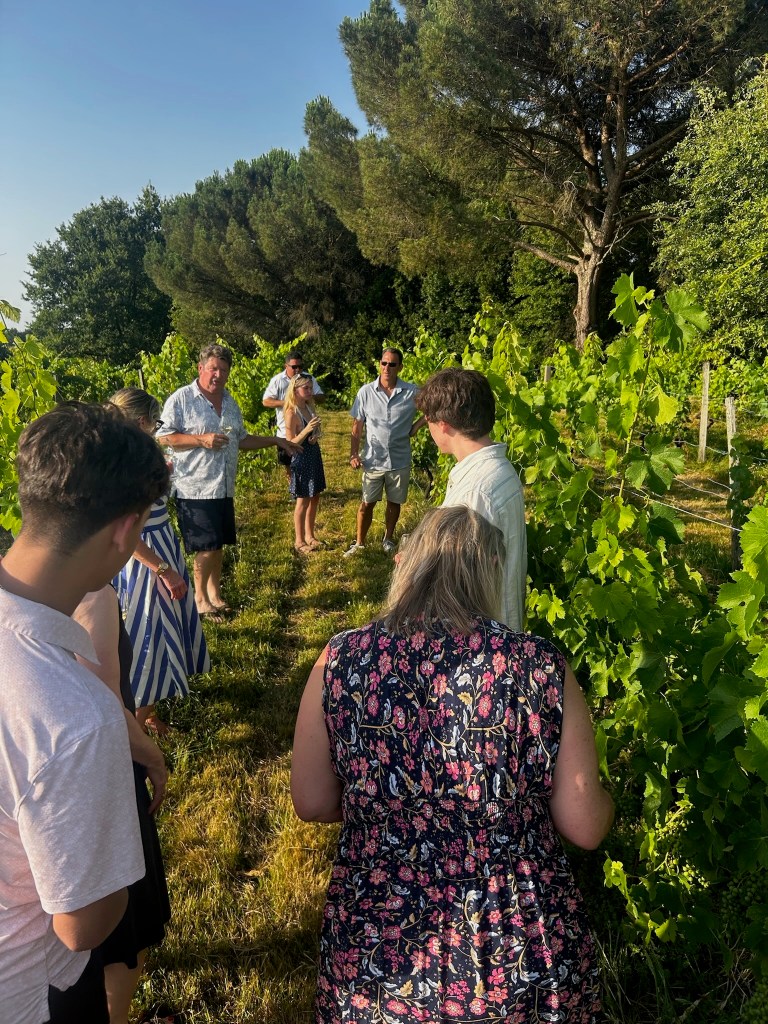
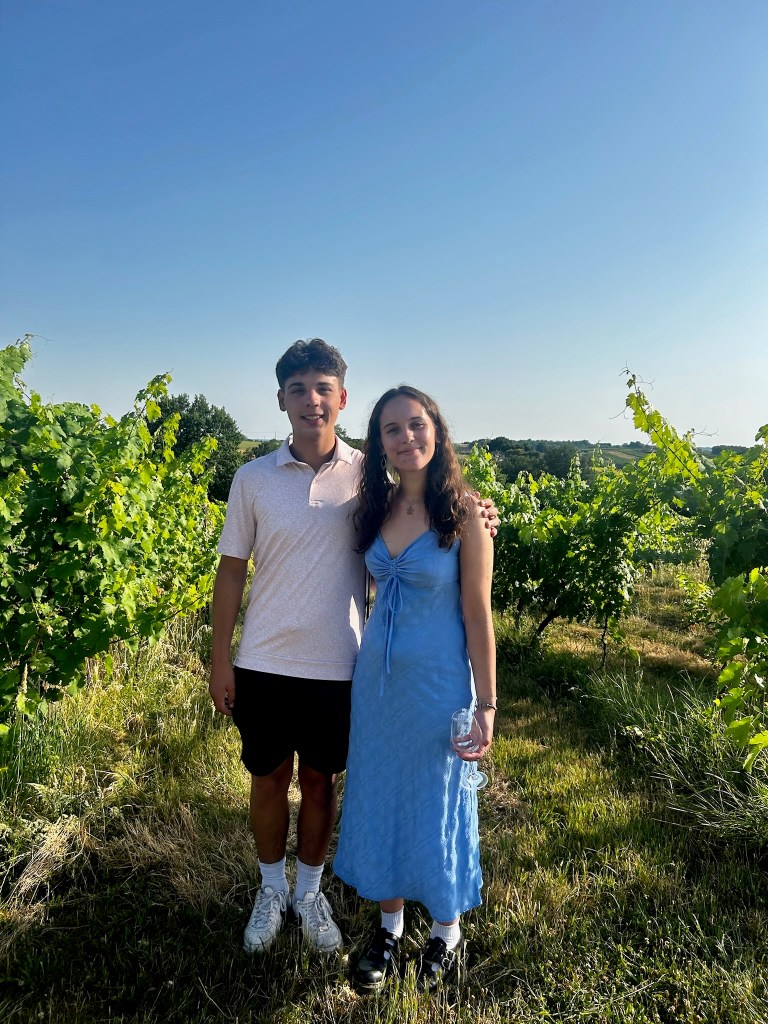
Our first stop was a tour of the vineyard and an explanation by Steve of his vineyard management techniques described above.
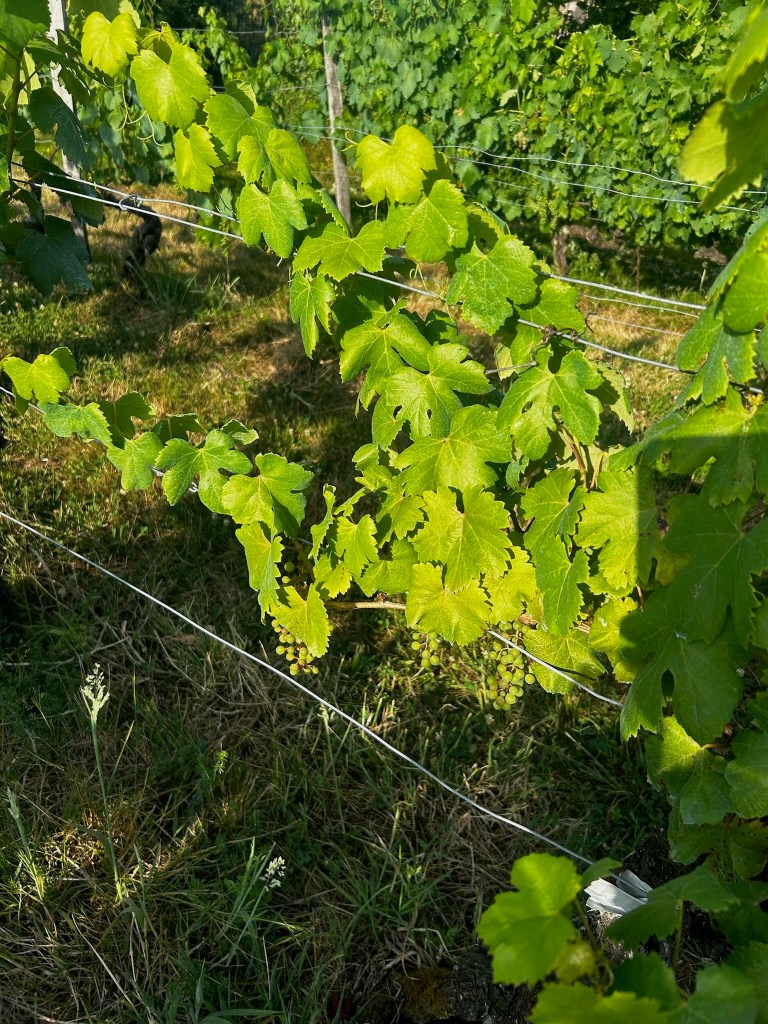
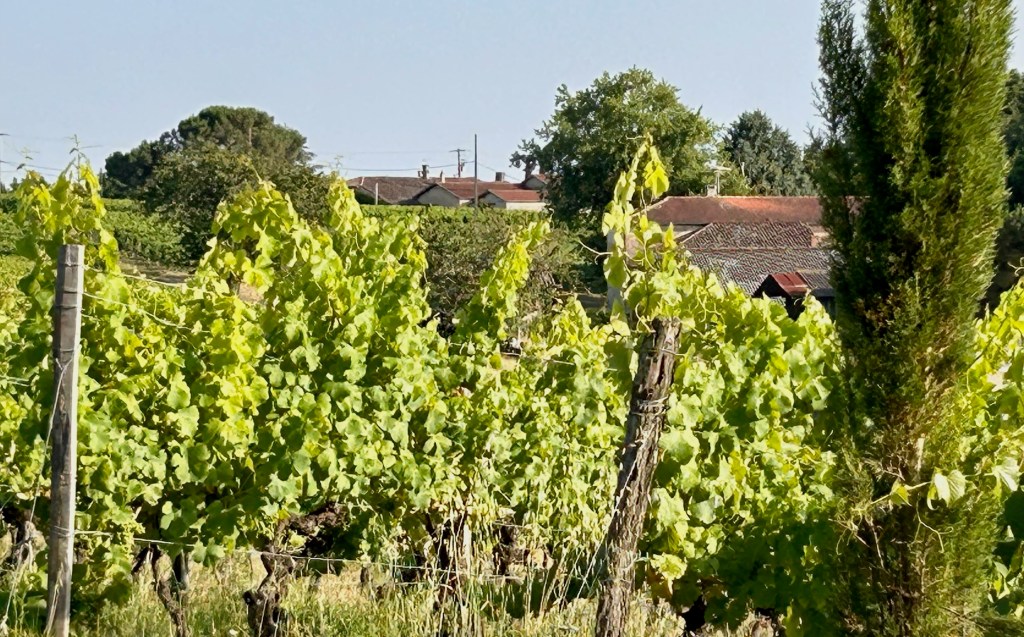
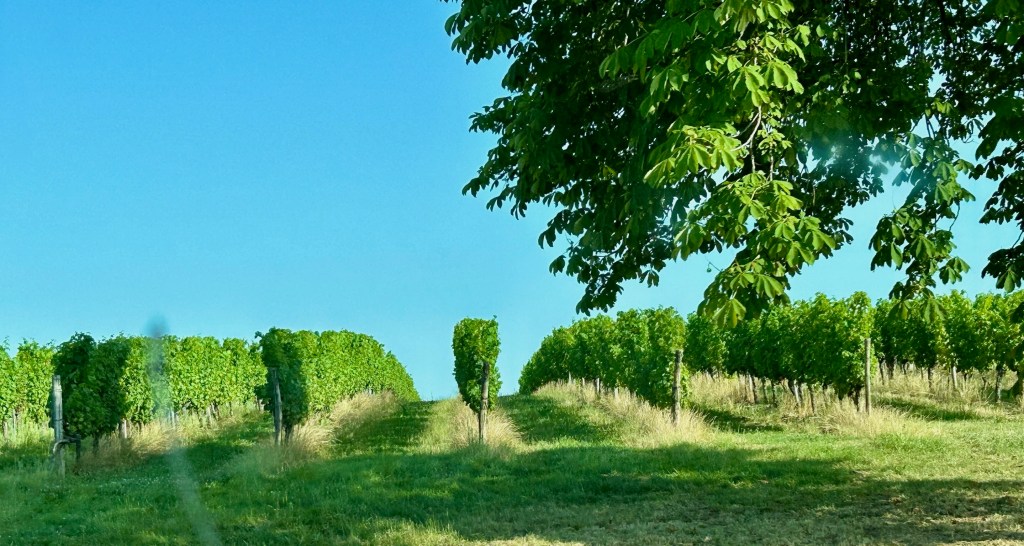
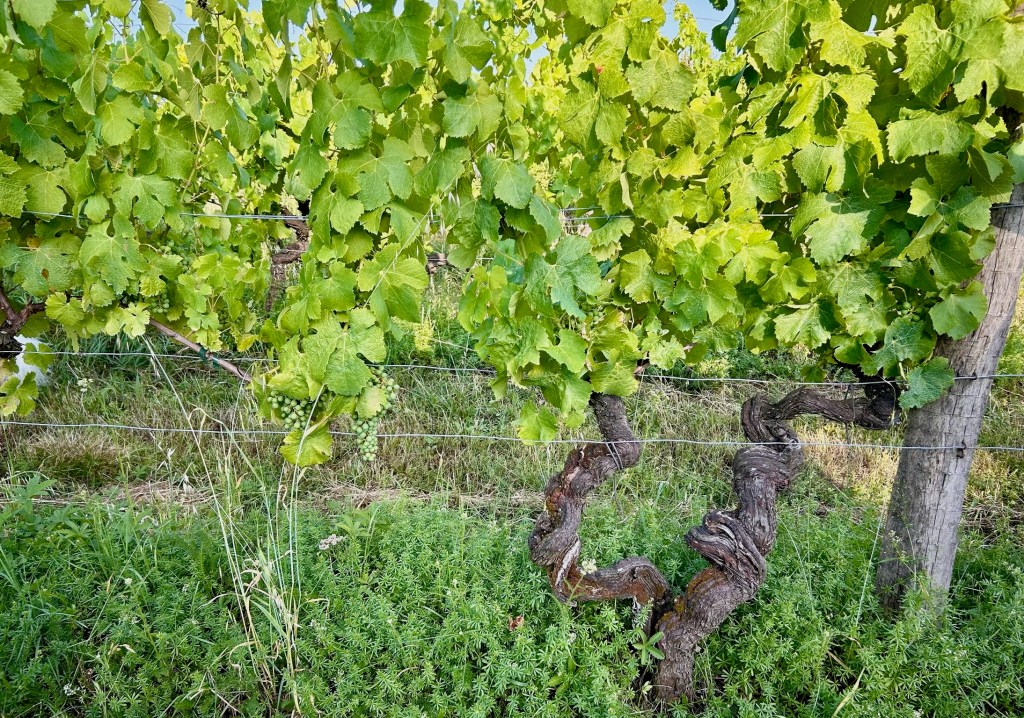
Steve showing us the vines and explaining his techniques.
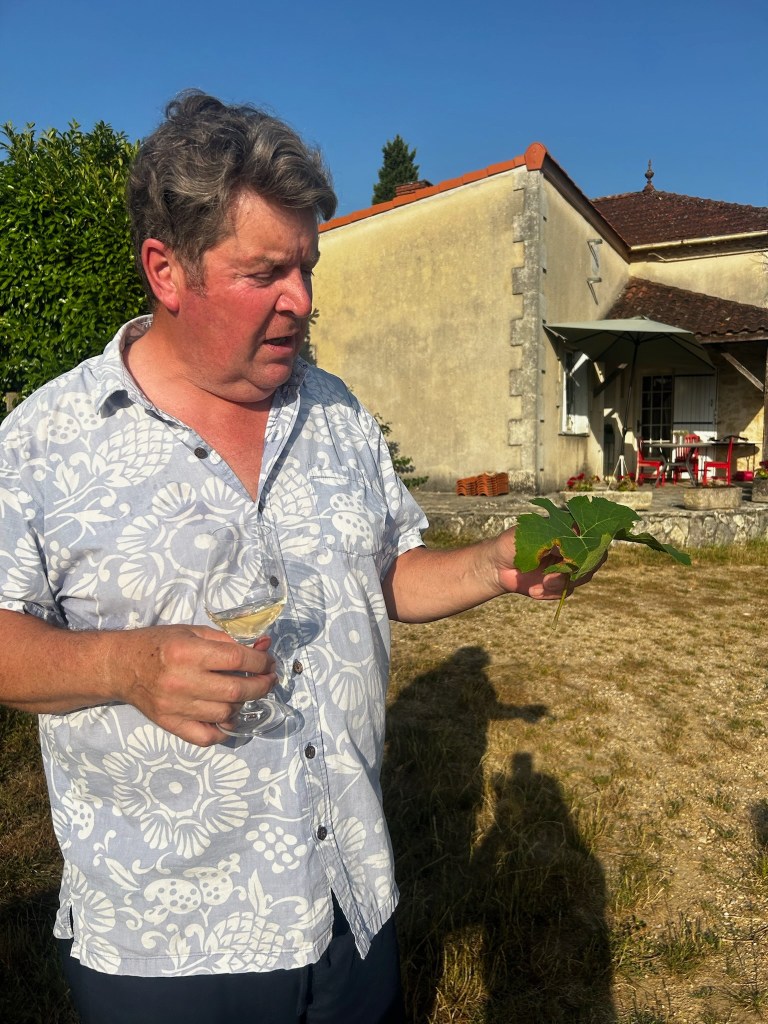
Steve showed us an example of a leaf that had had some disease and he used natural means to treat it of the disease.
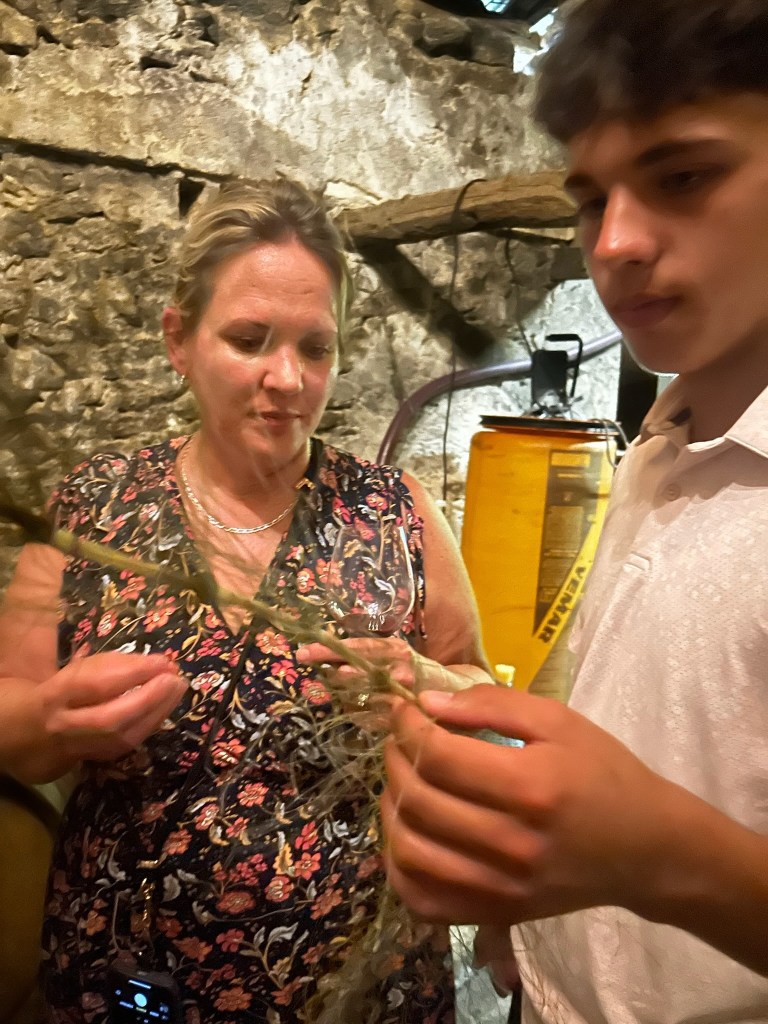
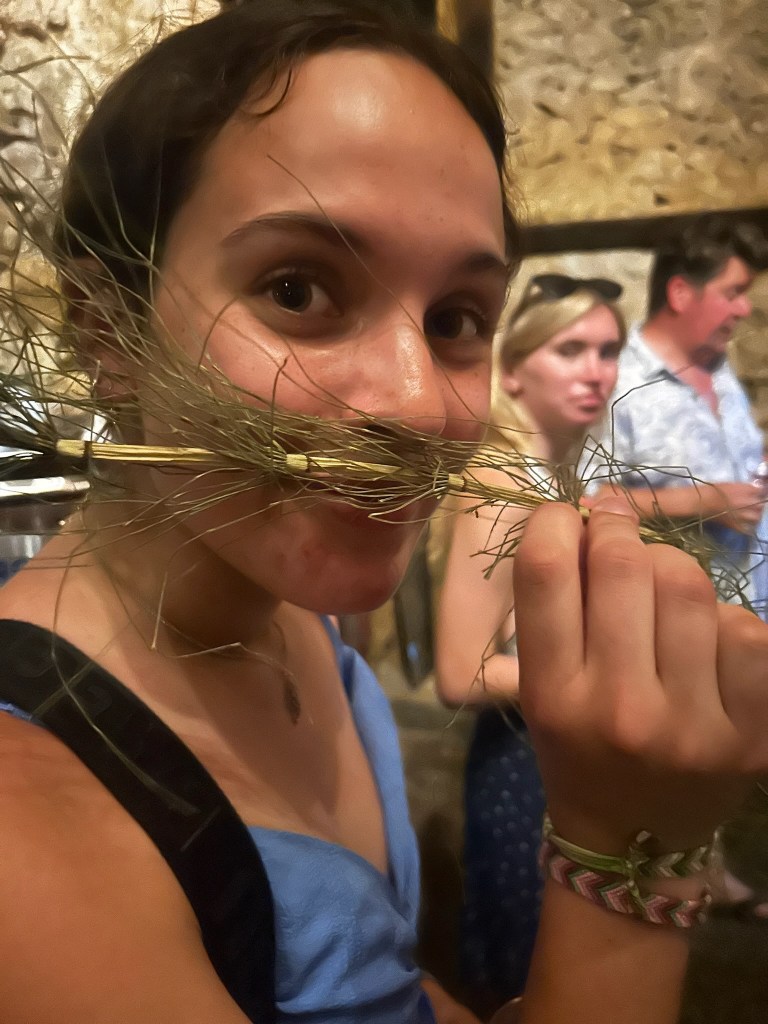
He told us he uses horsetail as a natural pesticide. See above. We had a chance to look at the horsetail from the vineyard.
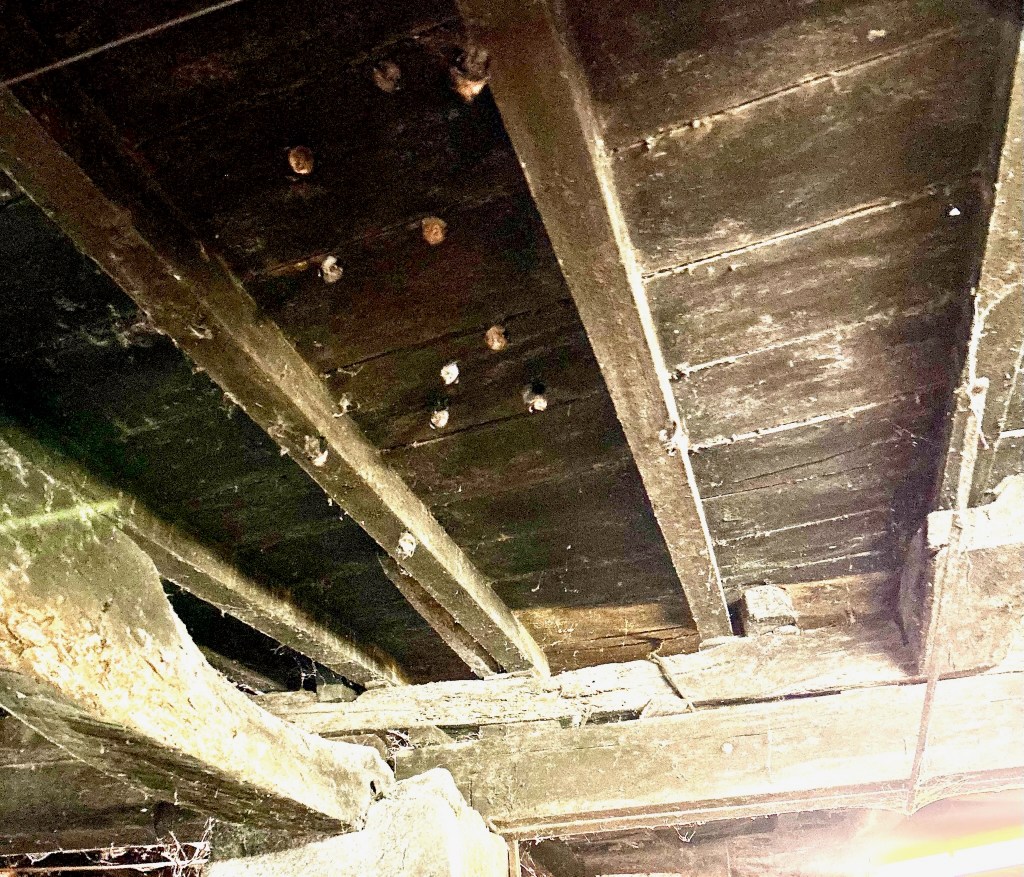
Our next stop was the wine cellar bats and all!s. Fortunately the bats stayed put.
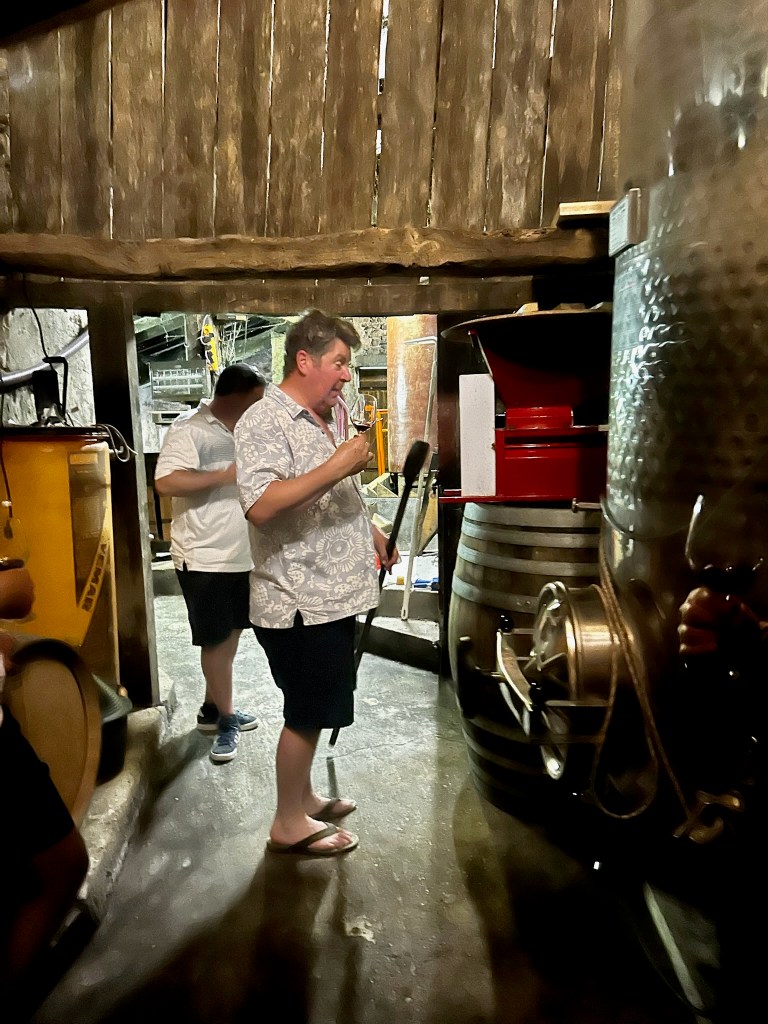
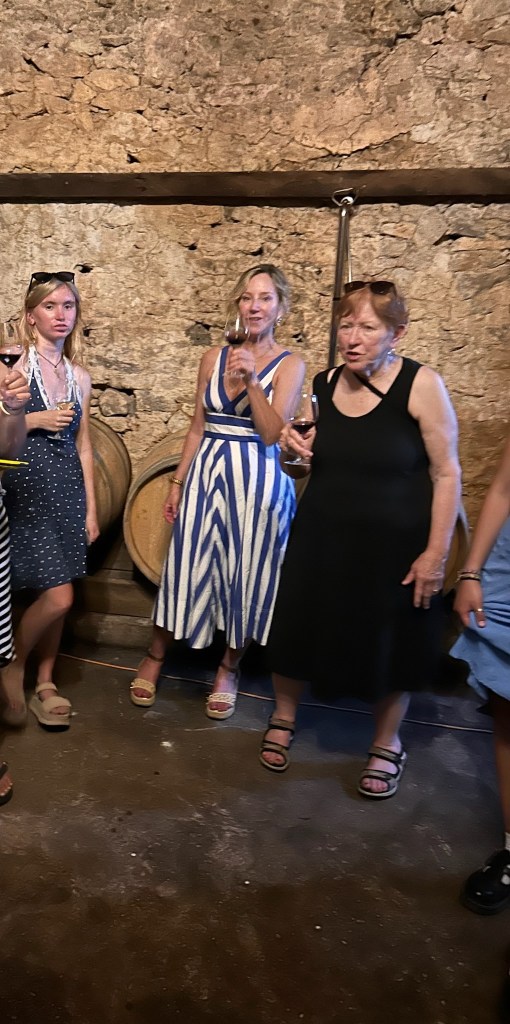
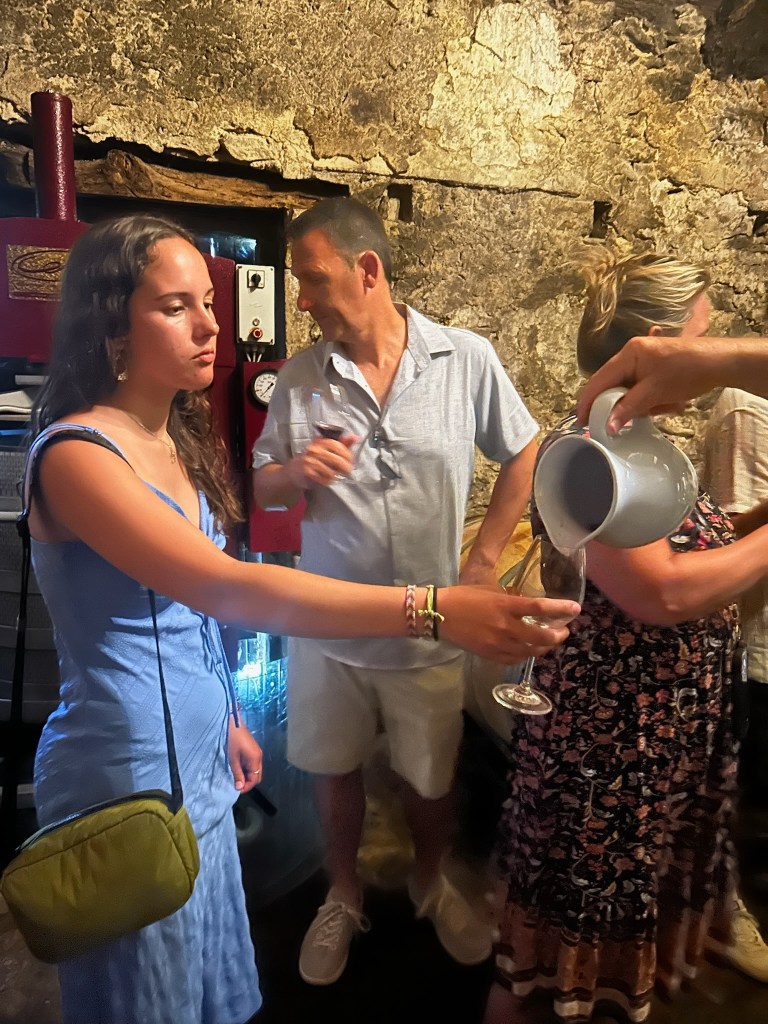
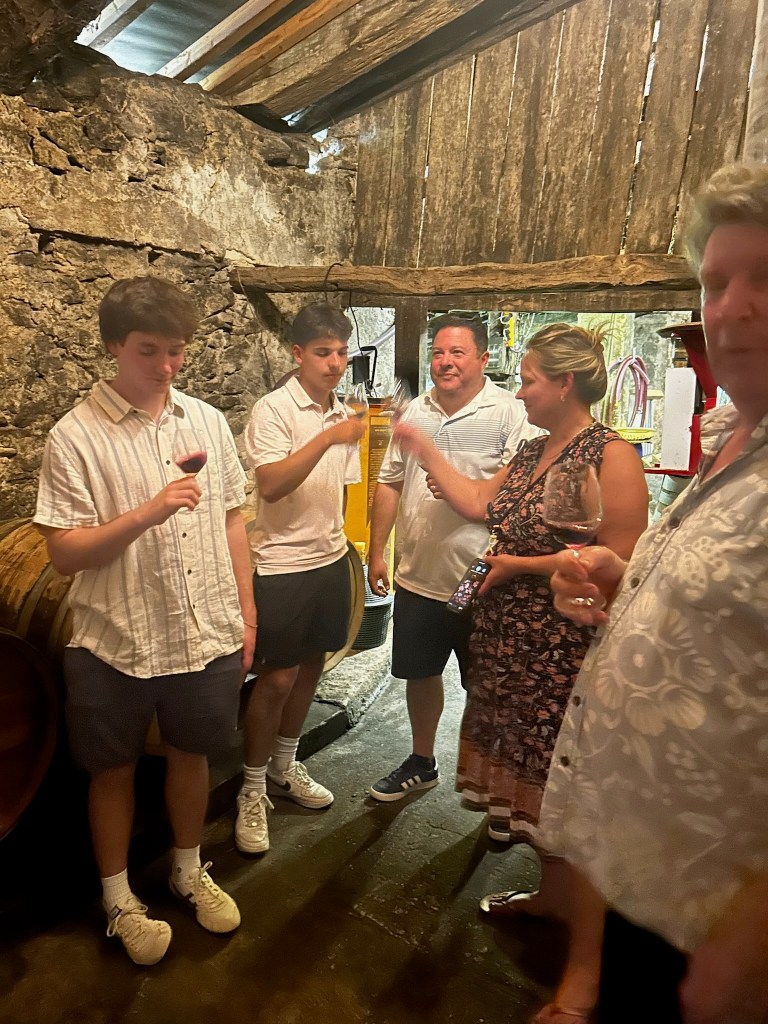
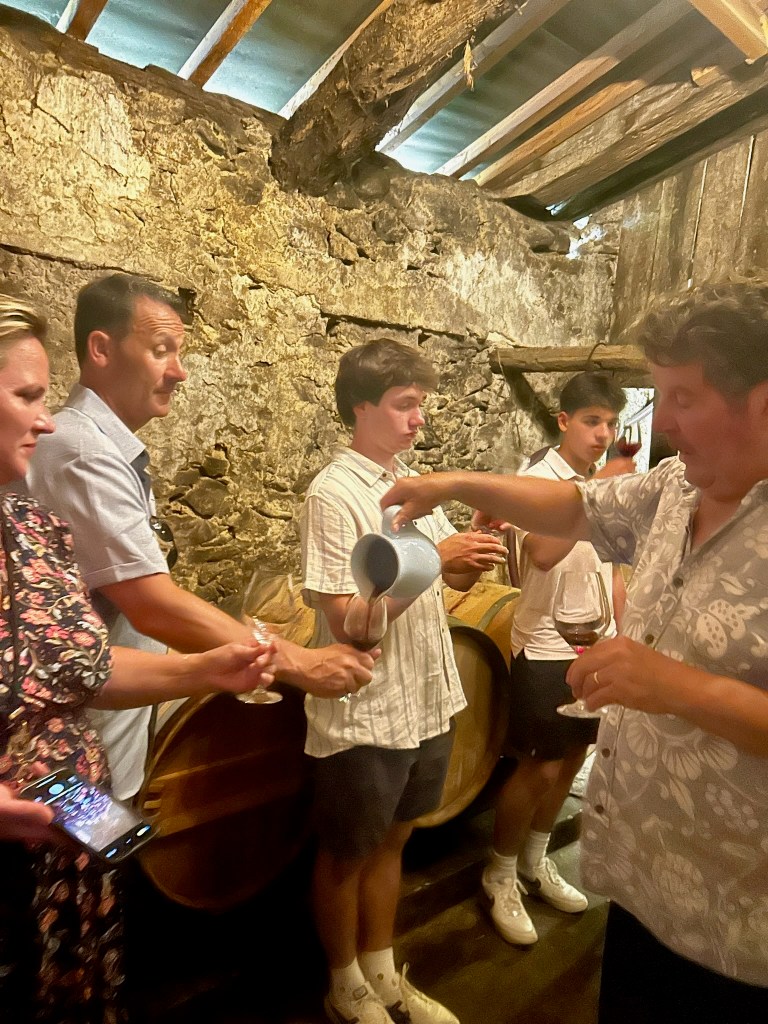
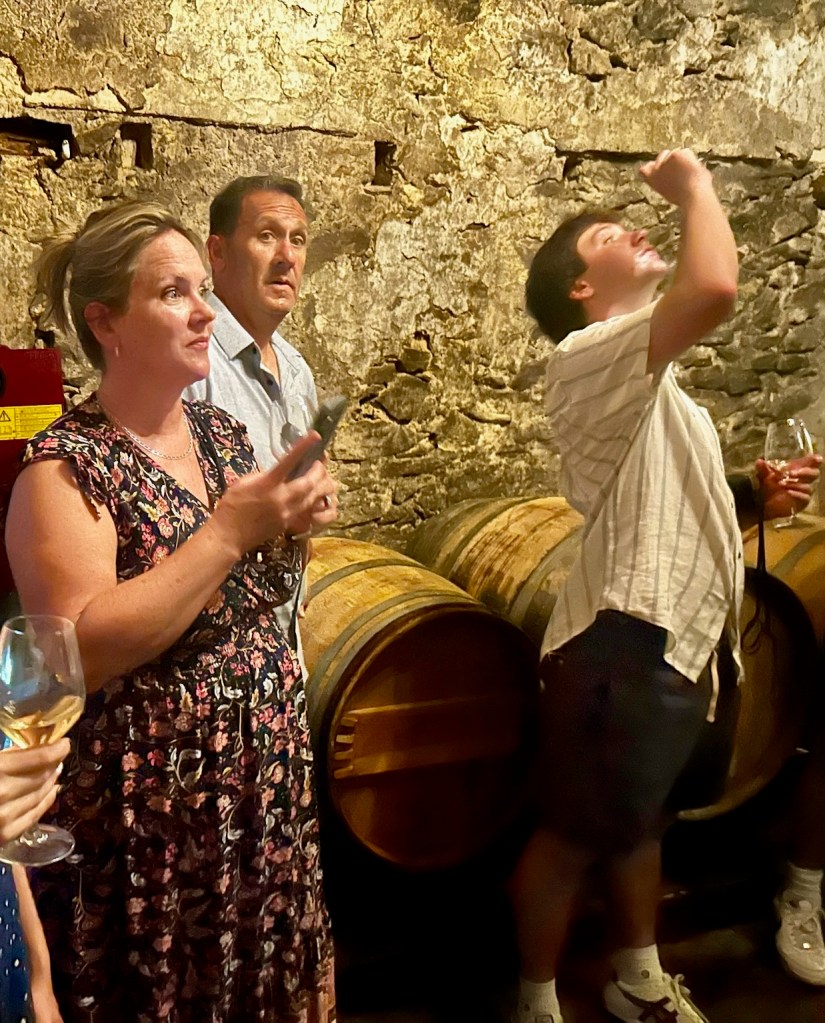
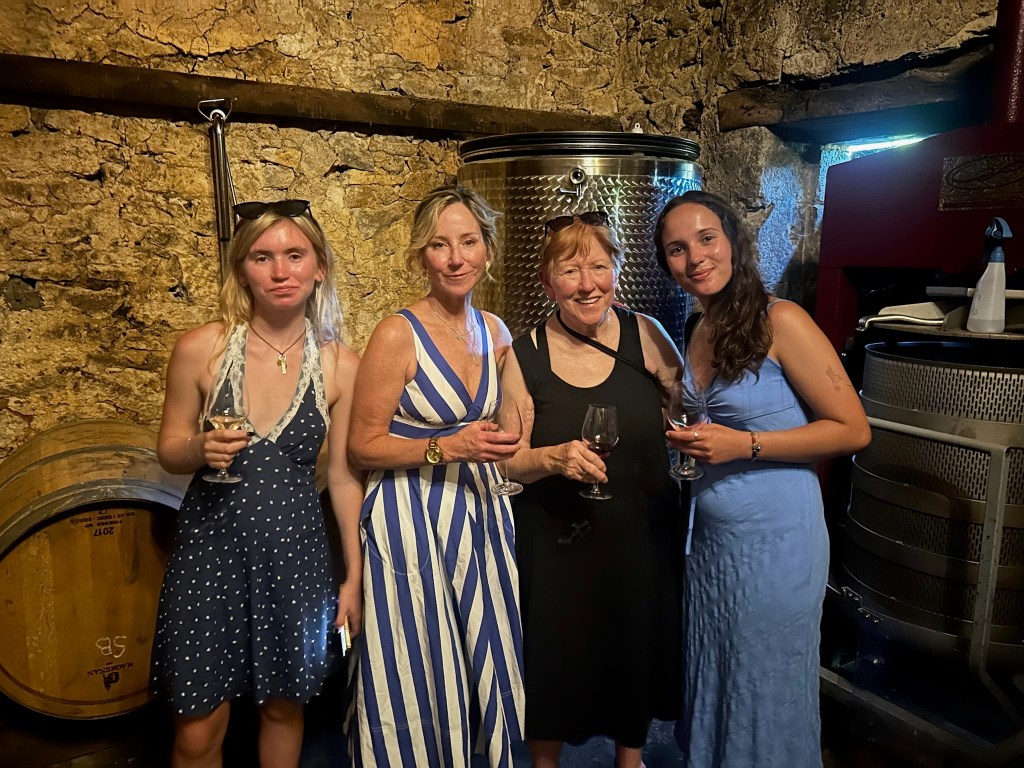
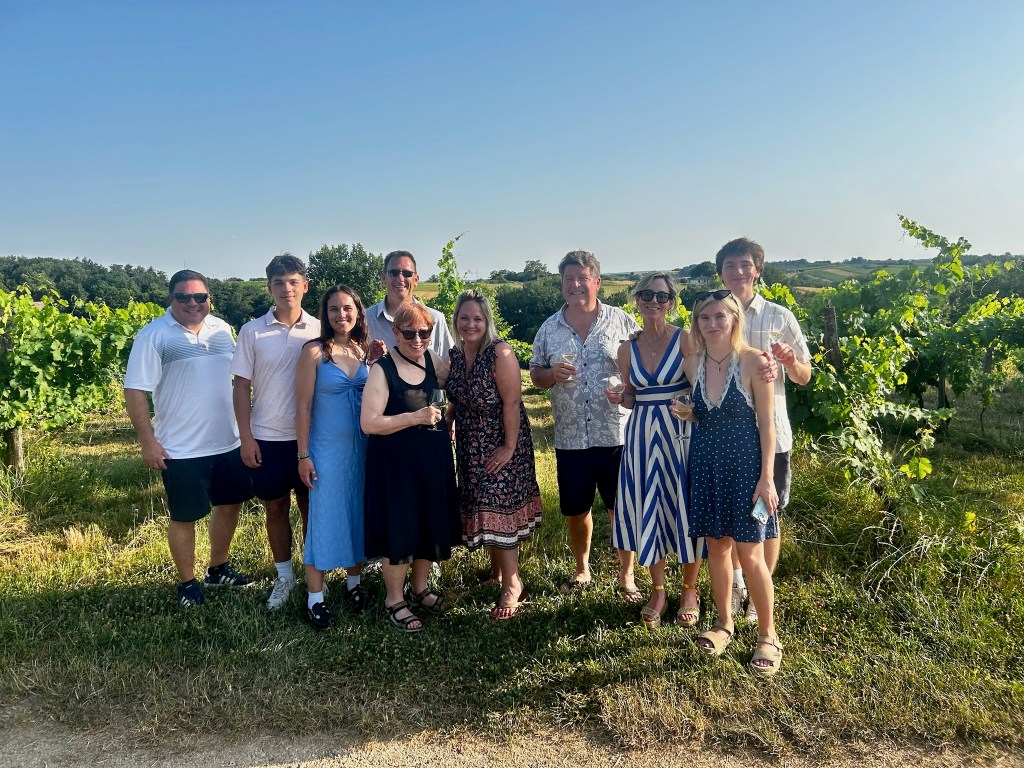
Before we went to eat we all posed with Steve in the vineyard. Beautiful chateau and wonderful hosts.
We ate outside in this beautiful setting.
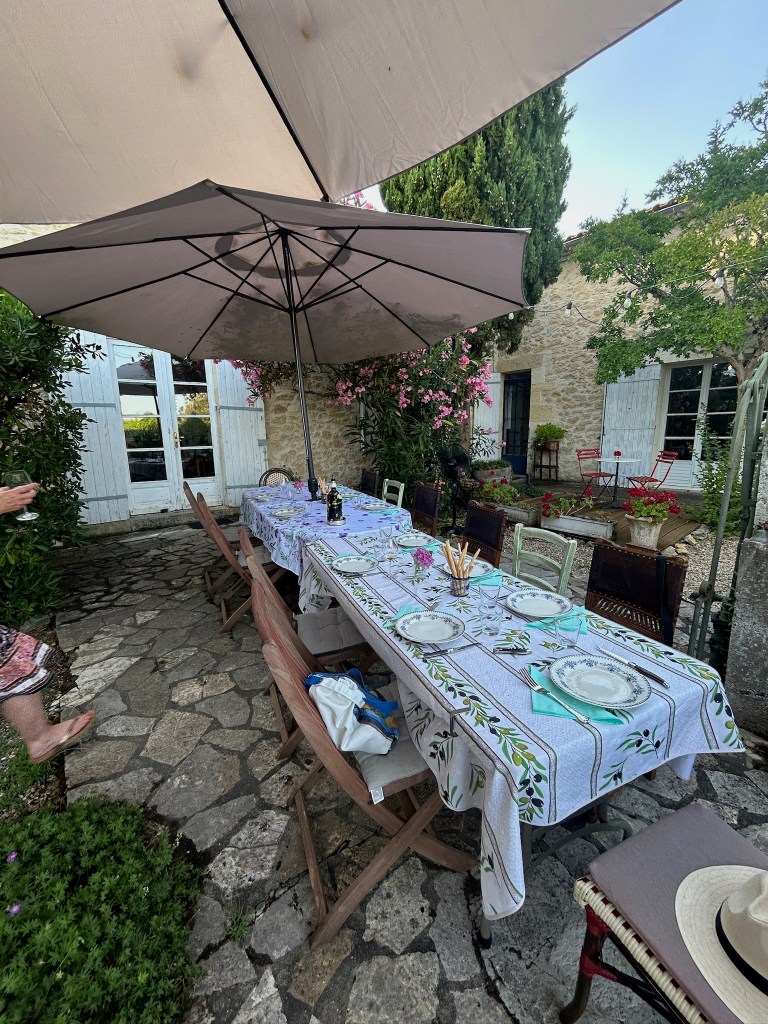
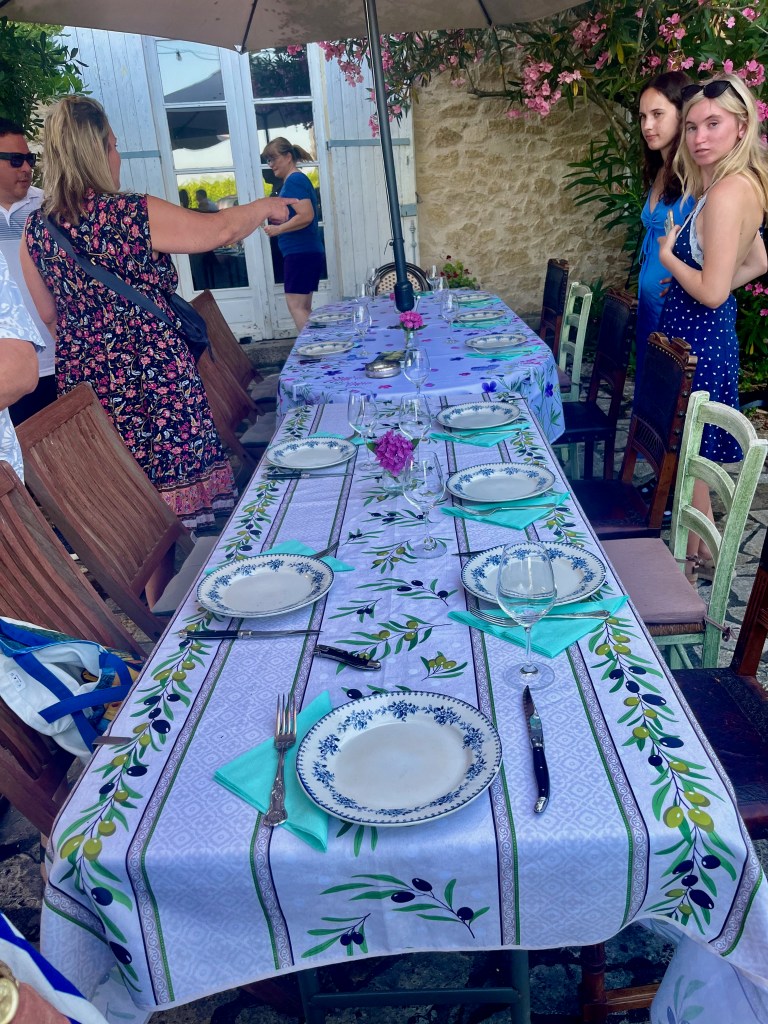
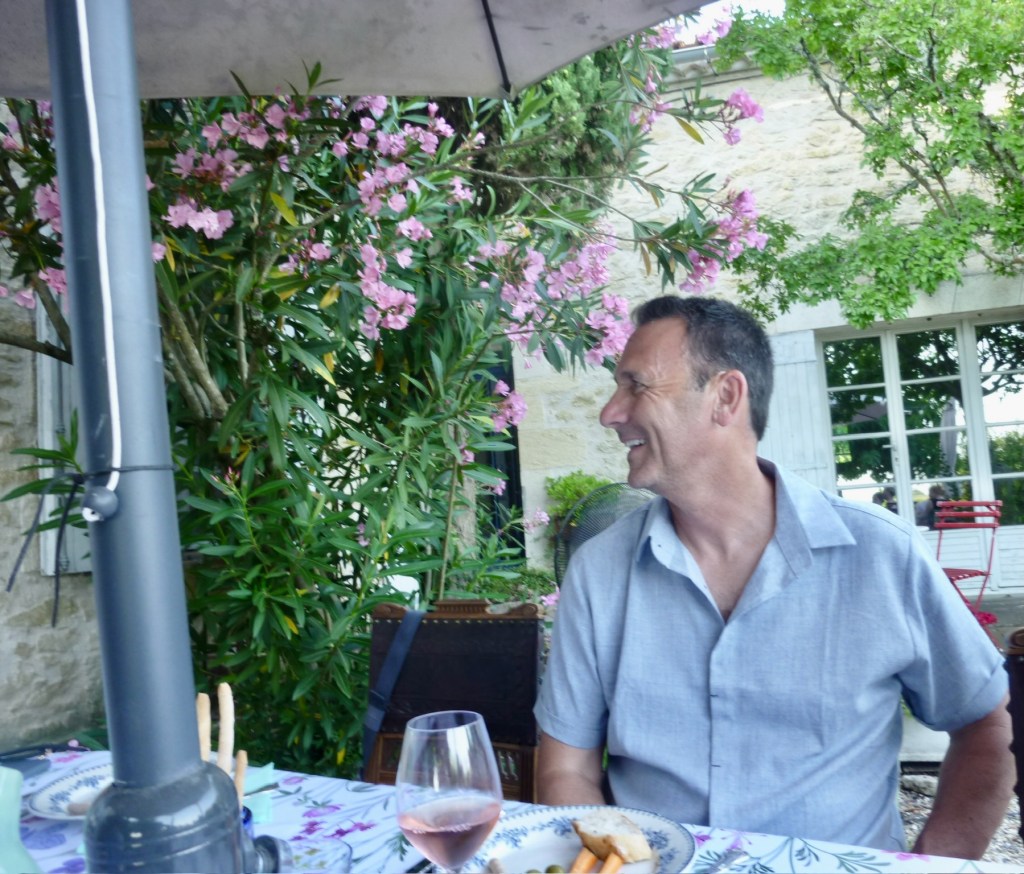
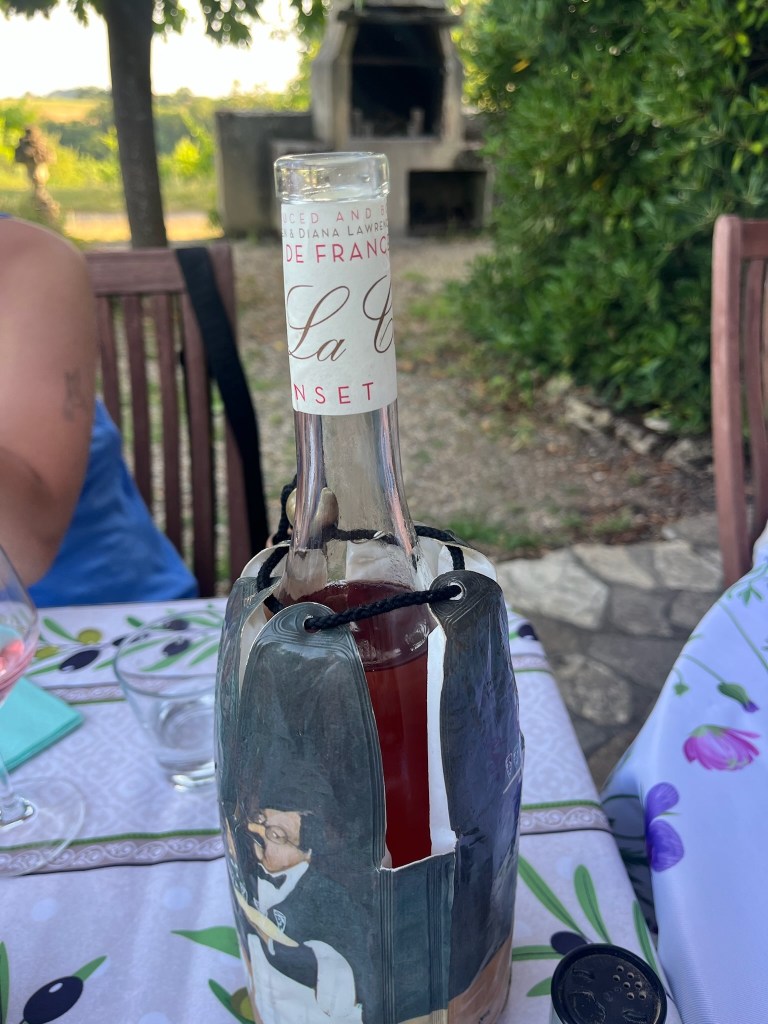
Their beautiful rose was served with the appetizer, white with the salad and we had their red with the main course.
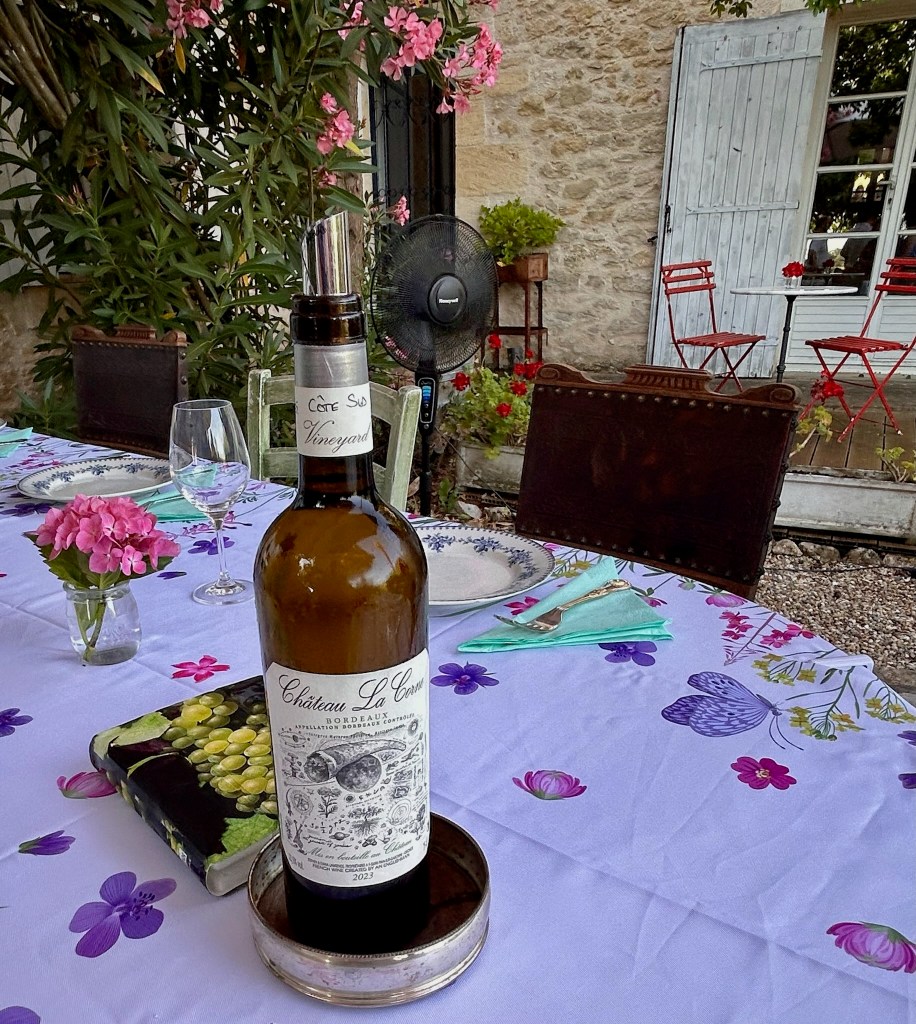
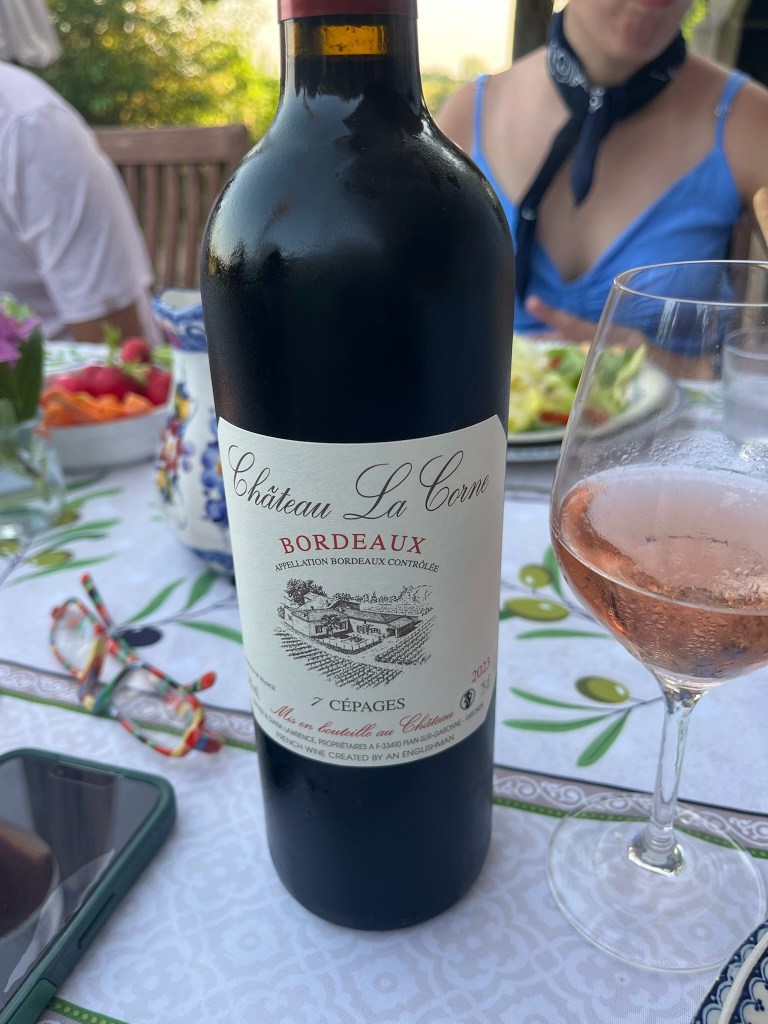
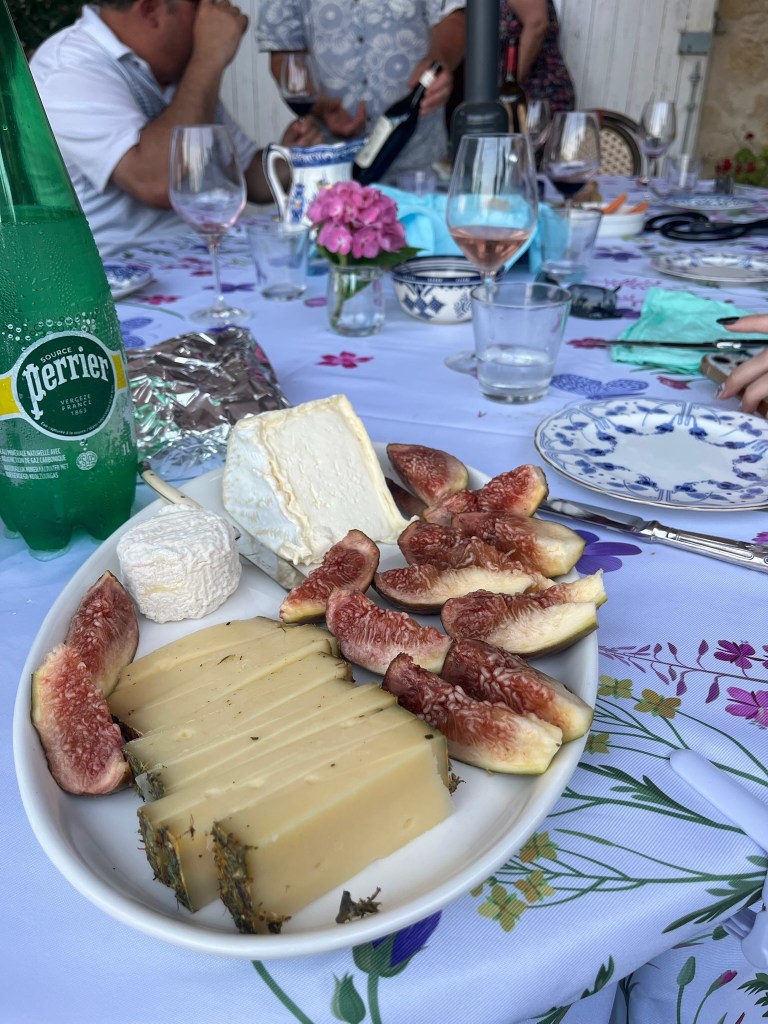
Our appetizer was a beautiful plate of figs, a hard rosemary crusted cheese, a beautiful brie and a round of Chèvre. All served with beautiful crusty bread and bread sticks.
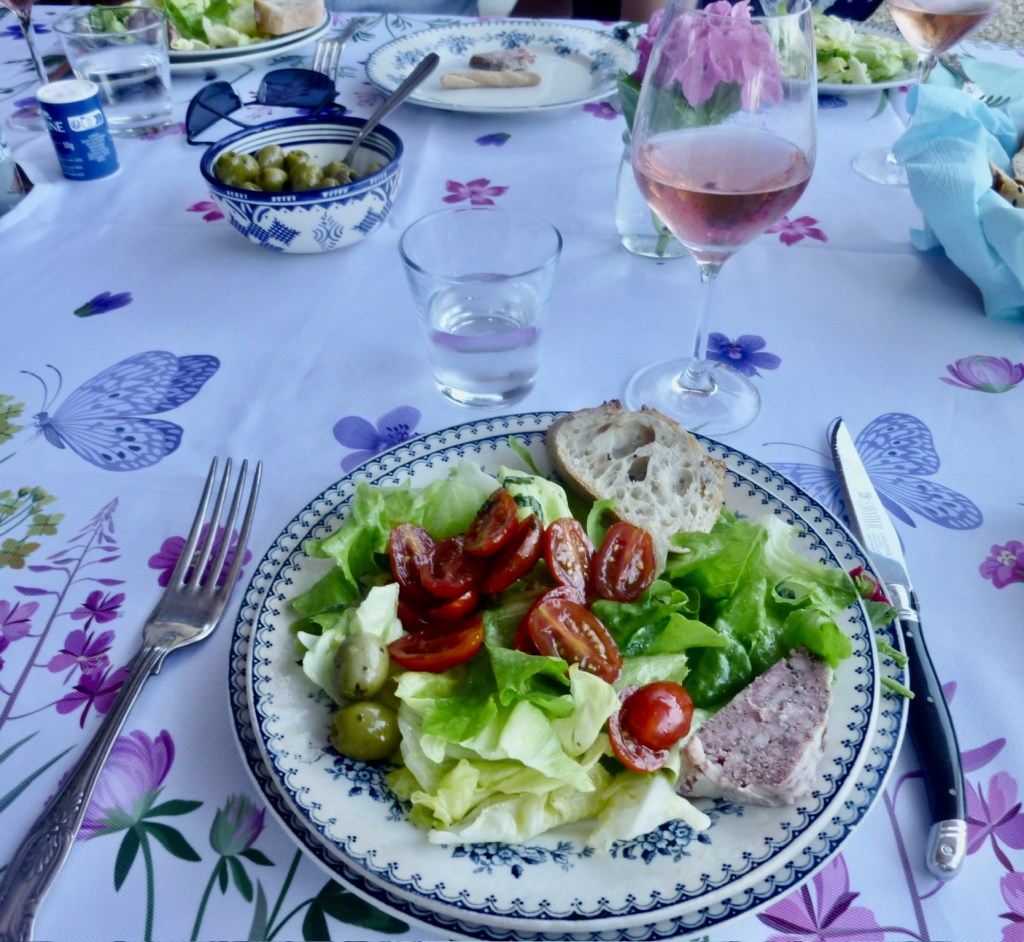
A beautiful salad of foie gras, and cherry tomatoes on bib lettuce. It was dressed with a light vinaigrette dressing and of course bread and breadsticks. The rose was perfect!
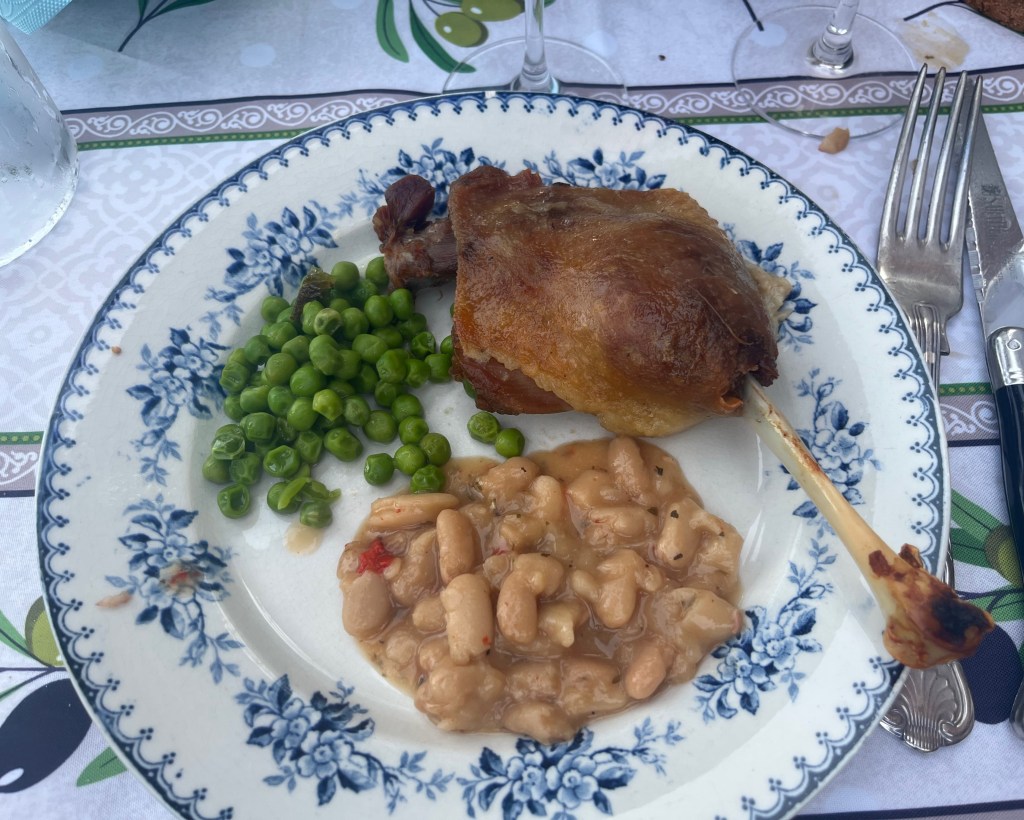
Our main dish and who can resist more duck? Peas, confit de canard and tasty beans. The beans were white beans cooked in duck fat with onions, garlic, tomato paste, garlic, parsley and salt and pepper. Diana revealed it came from a jar! It is from a company call Mercadier and I will be looking for it or a similar product here in the US. They were so good.
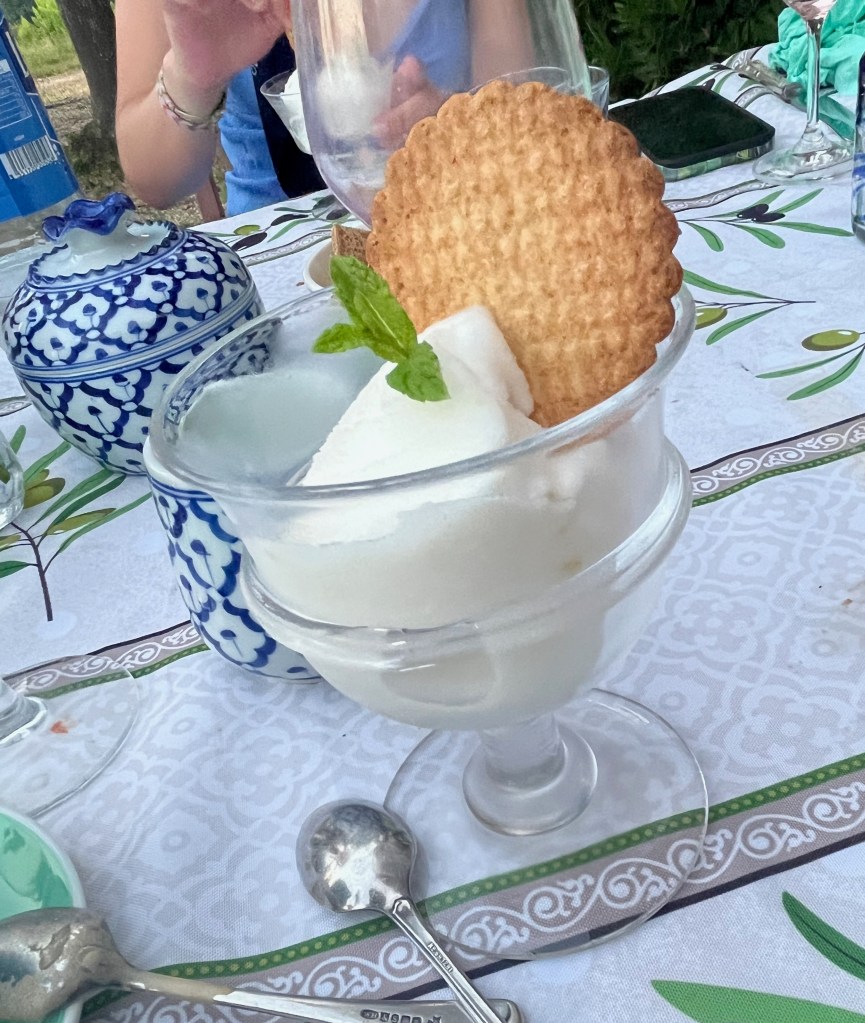
And no meal is complete without dessert. It was still warm outside so this dish of ice cream and a cookie was perfect!
Thank you Steve and Diana for a wonderful evening.
 Meandering With Murphy