The Polizia, the Vatican, St. Peter’s Basilica, Great Lunch & Dinner and a Happy Ending at the Trevi Fountain – Arrivederci Roma
I am not sure if I mentioned that taking the bus in Rome was easy. The bus stopped right outside our apartment and Beth found an app that made it easy to determine the schedule and when the next bus was coming. Beth looked up where to purchase a ticket and so on Wednesday we purchased our tickets.
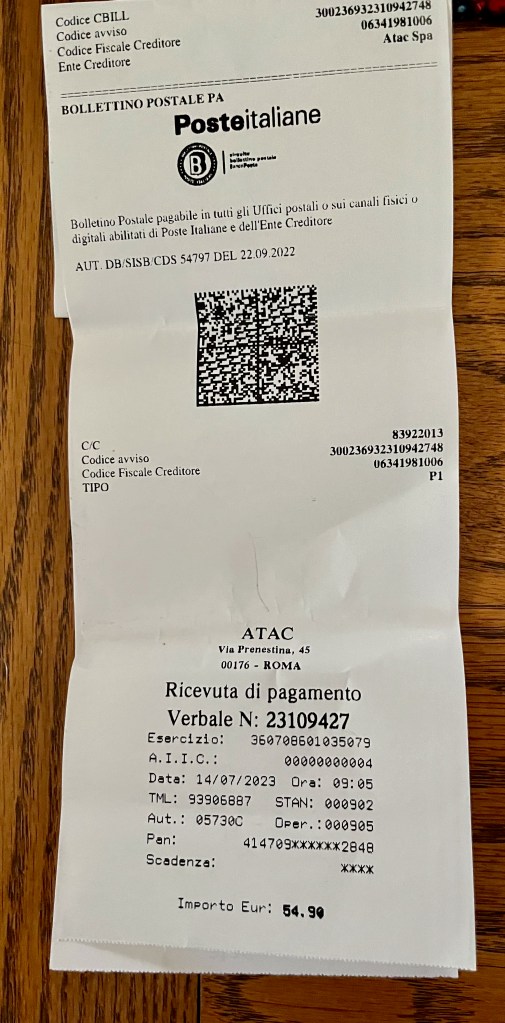
The first time we used our tickets we just got on the bus and did not see what we should do with our ticket so, we just rode the bus. On Thursday we did the same thing and really never looked at what the ticket said. So on Friday, we took the bus to the Vatican. Easy enough UNTIL we got to the stop for the Vatican and two Polizia got on. They asked for our tickets and the next thing we know we were escorted off of the bus. They were telling us in no uncertain terms that we had not stamped our tickets and so WE (all 5 of us) were going to get tickets!!! I said I did not understand the system, but he pointed out it clearly stated in English what to do. I kept talking and Glenn was trying to have me stop which eventually I did. They took some mercy and only gave us three (not five) 54,90 Euro tickets or about $61. They had a credit card machine with them. Lesson learned!
So onward to the Vatican. We met our guide Margherita at the entrance to the Vatican. She was delightful. After my experience at the Forum the guide suggested, because of my knee, I should request a wheelchair. I did and Margherita was wonderful getting people out of the way and moving me forward.
Vatican Gardens
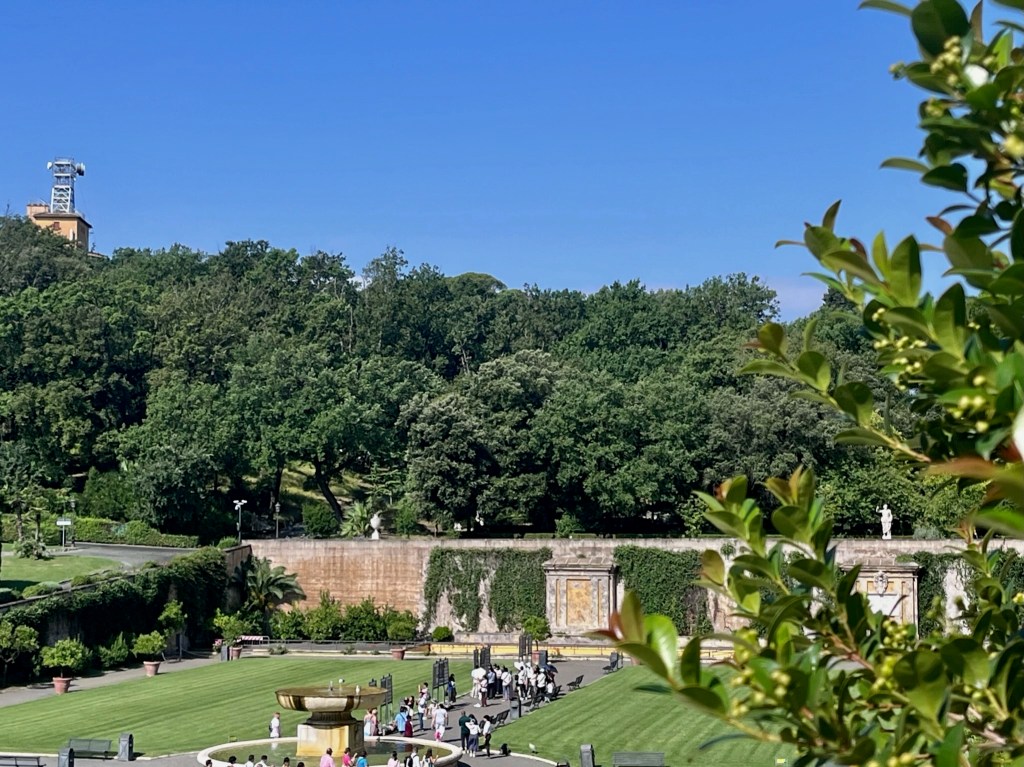
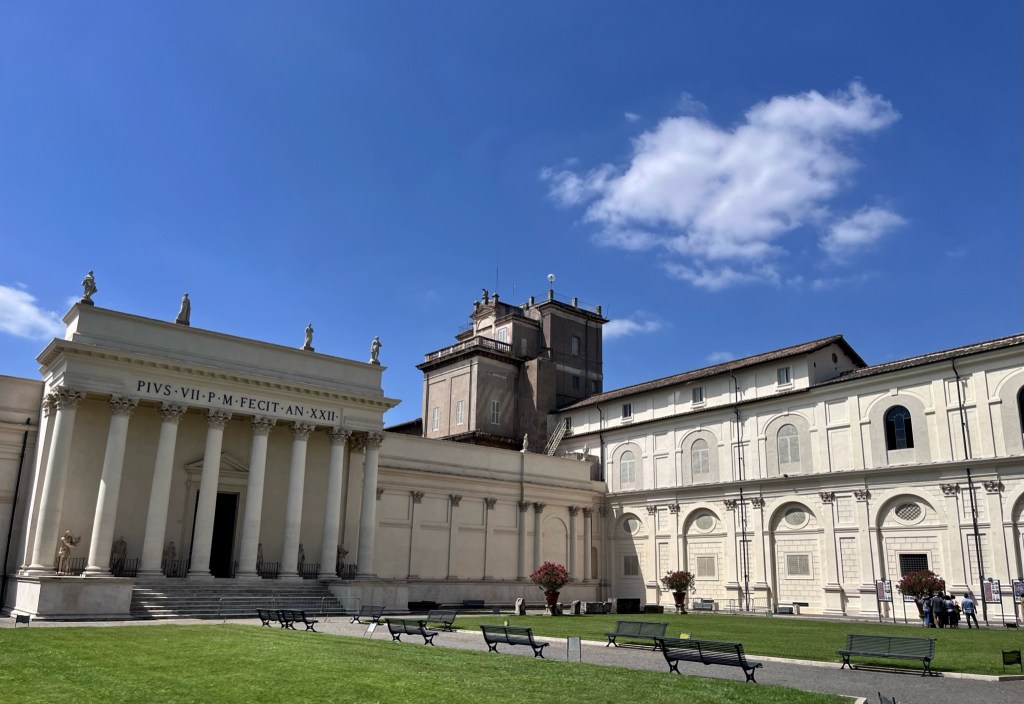
We started on the open space that overlooked the Vatican gardens. This is a small glimpse of the Vatican gardens which cover about 57 acres. You can only visit if you have a special guide. The gardens include forests, medieval monuments, sculpturs, English gardens and floral areas. And a perfect place for a picture.
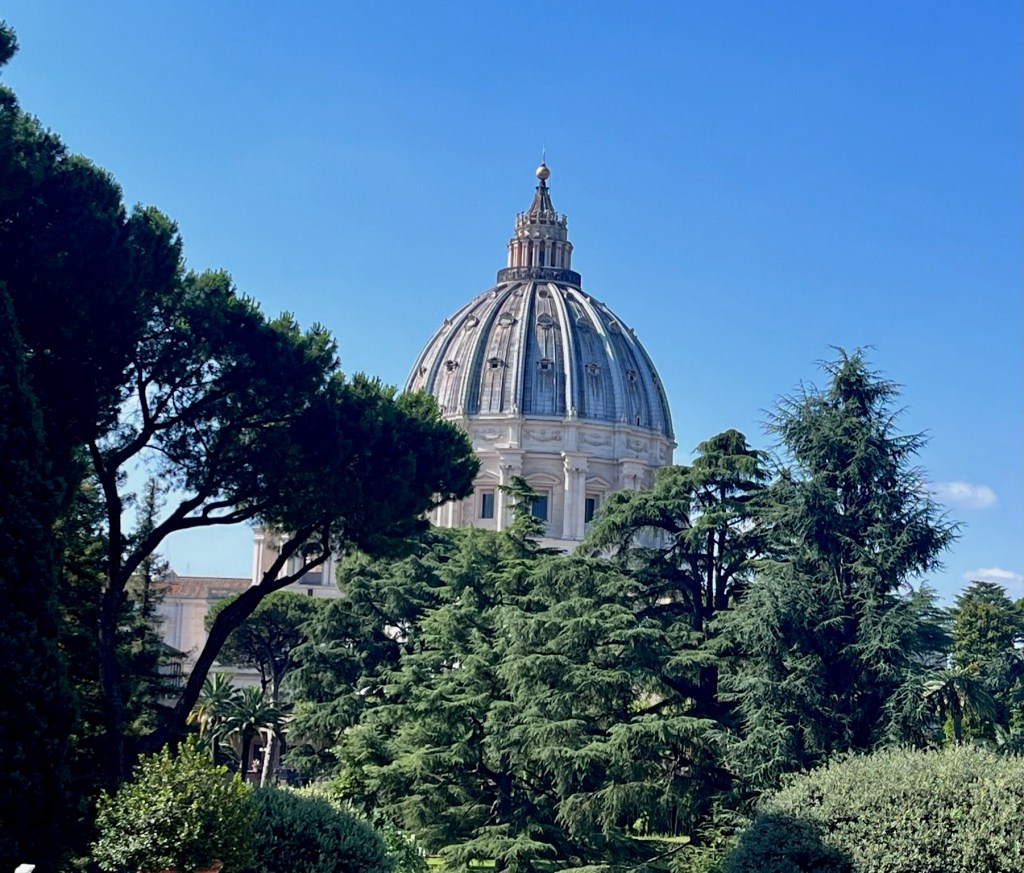
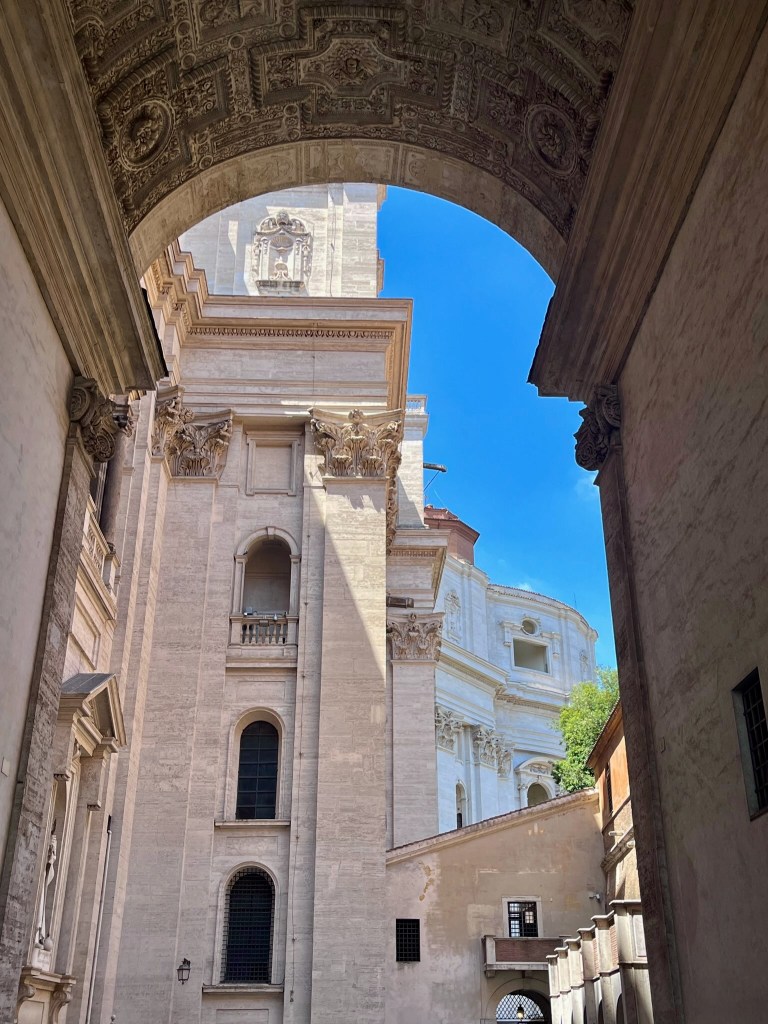
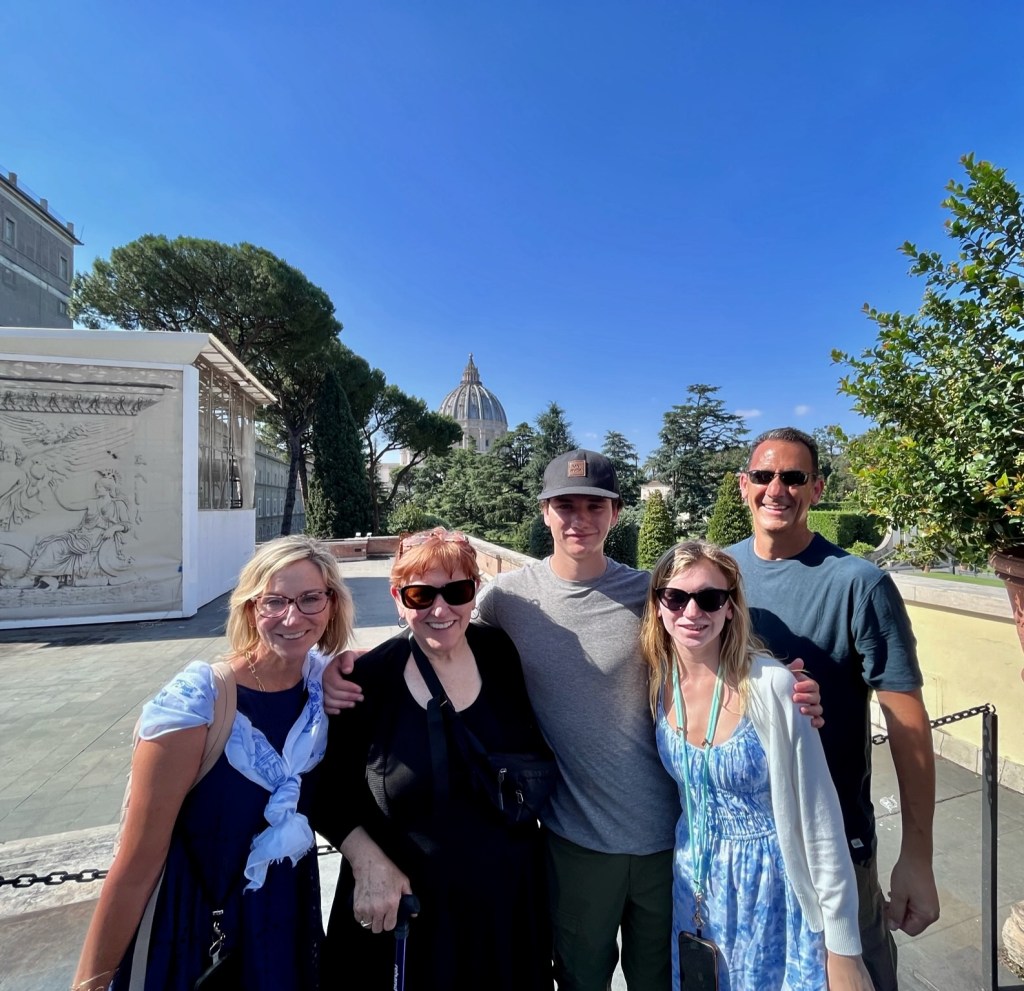
On the way to the Vatican Museums
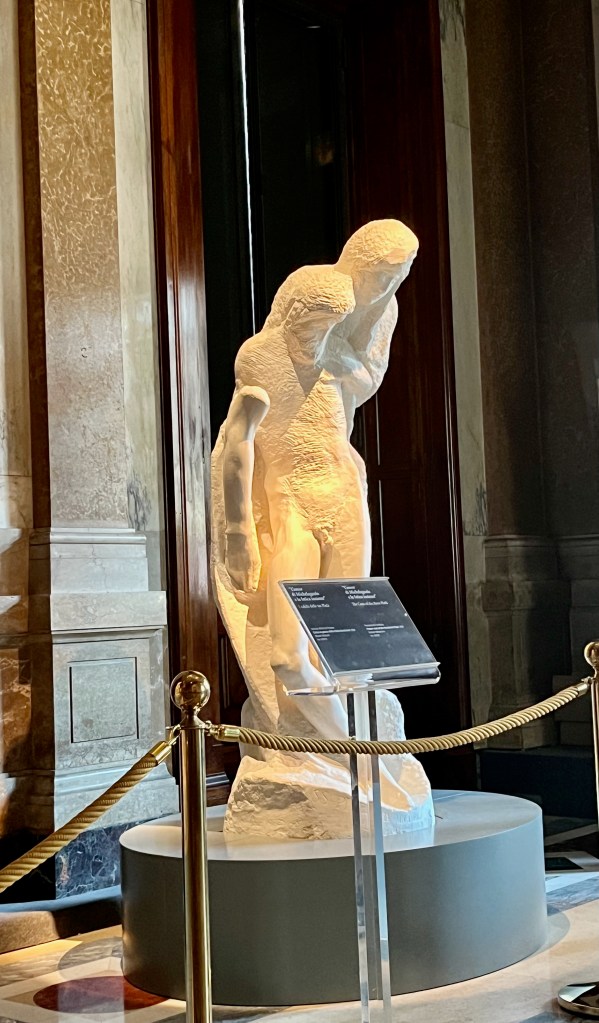
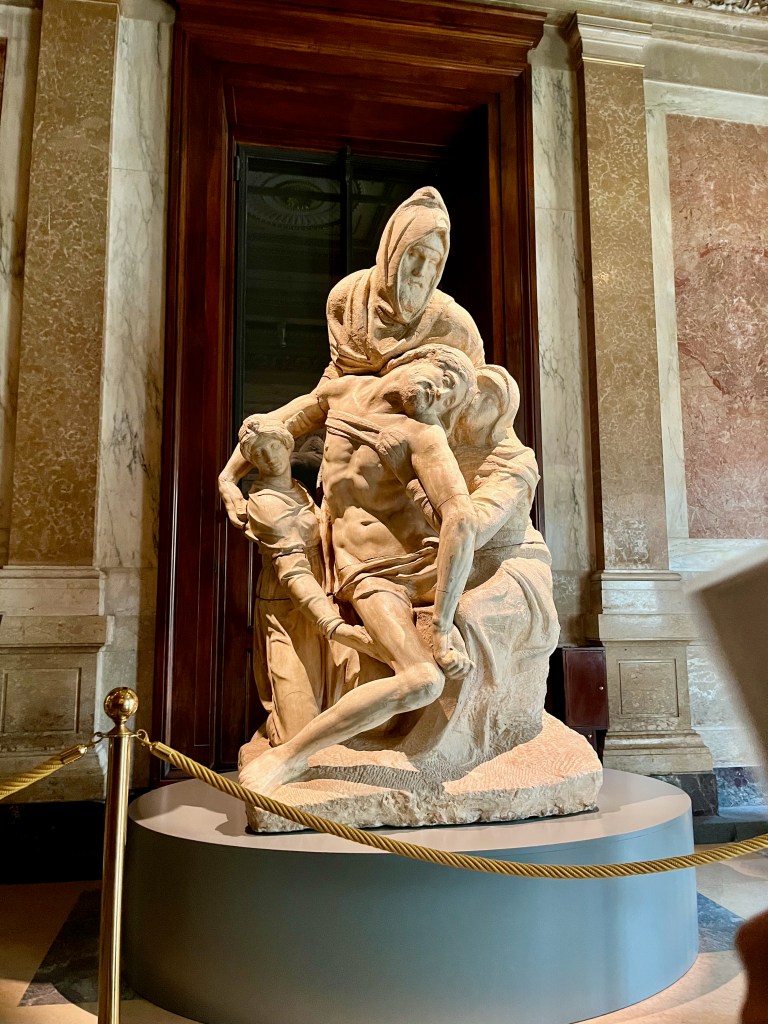
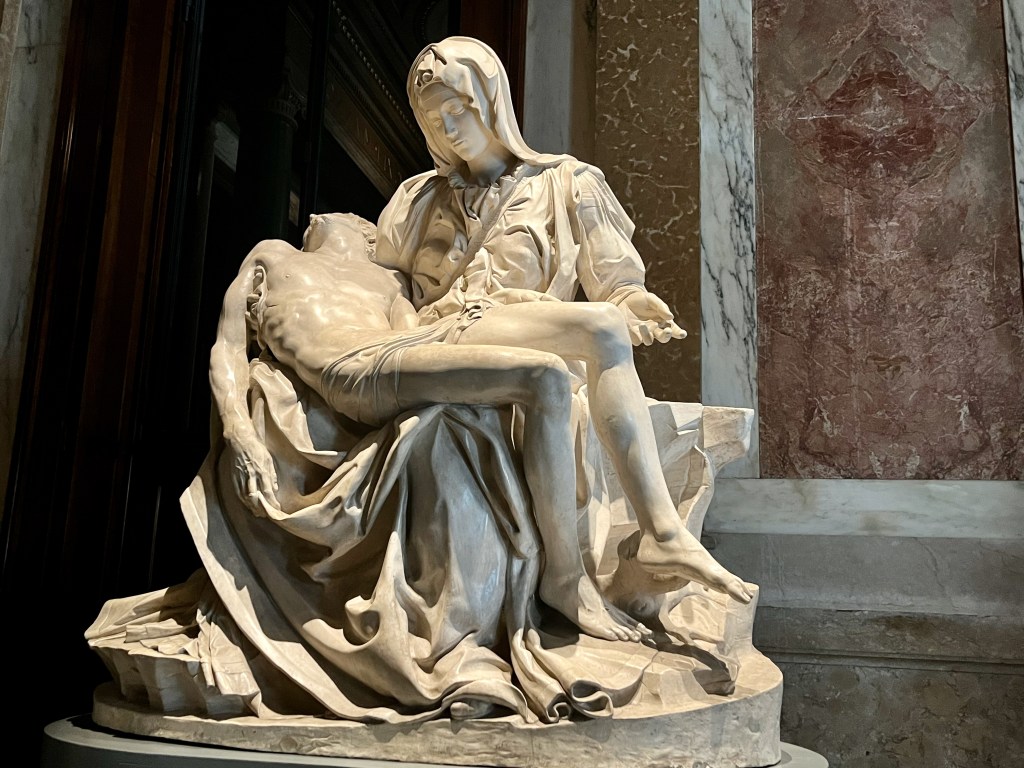
We next moved inside to see these three statues. On the left is a an early Michelangelo and on the right is a sculpture depicting Christ being taken down from the cross. The sculpture below is replica of the Pieta. It was done so people could get a closer look at the beauty of the Pieta because the actual sculpture in St. Peter’s is behind glass.
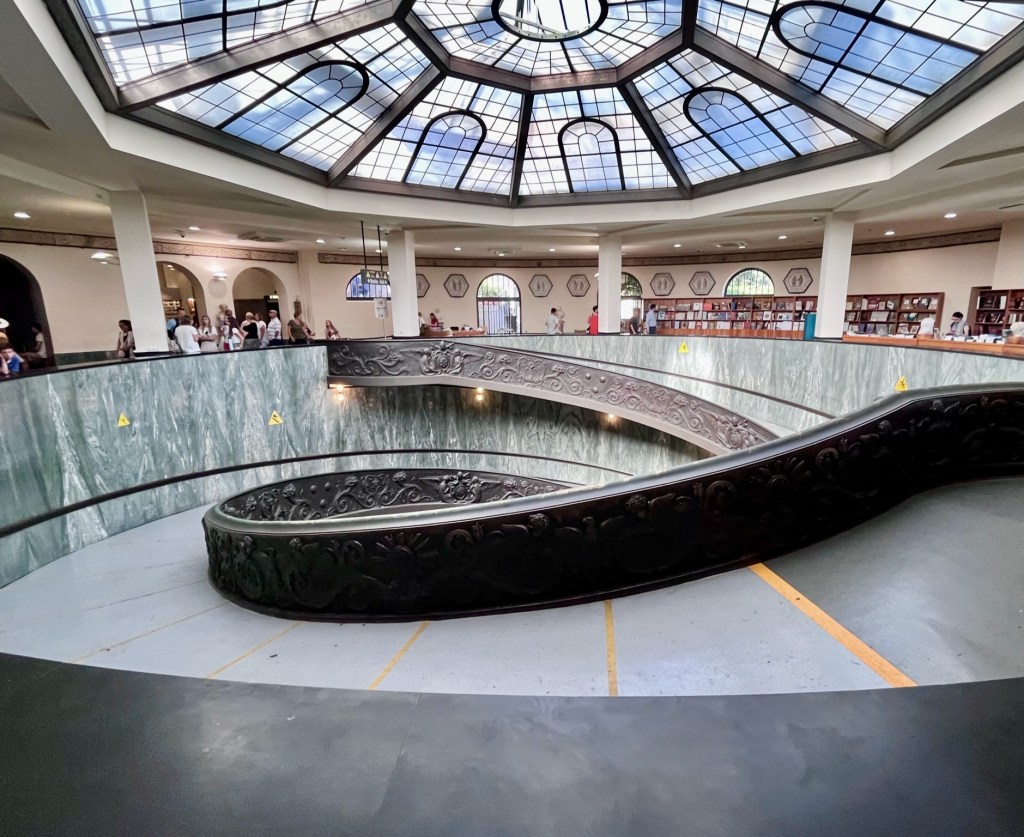
We passed the famous spiral ramp designed by Giuseppe Como in 1932.
Vatican Museums
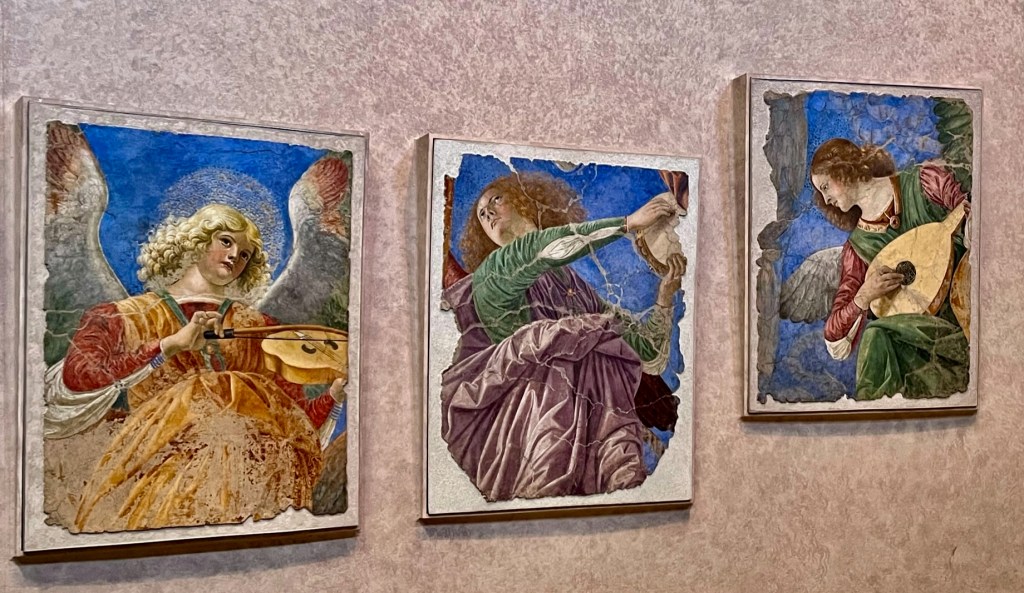
We then went on to the Vatican Museums which house masterpieces created for the spaces in which they remain today. The Picture Gallery, Pinacoteca, houses the work by Melozzo da Forli, the three angels below. These beautiful faces and graceful figures of the musician angels whose soft and humanized expressions present the Renaissance conception of form.
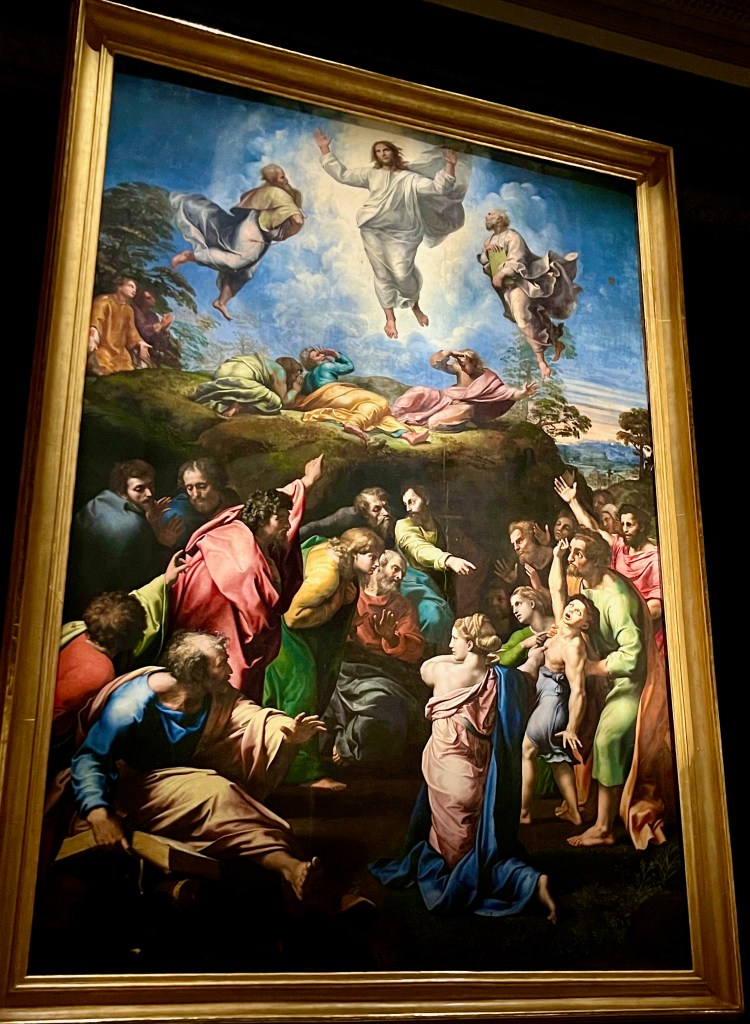
Works by Raphael include his last, The Transfiguration from 1520.
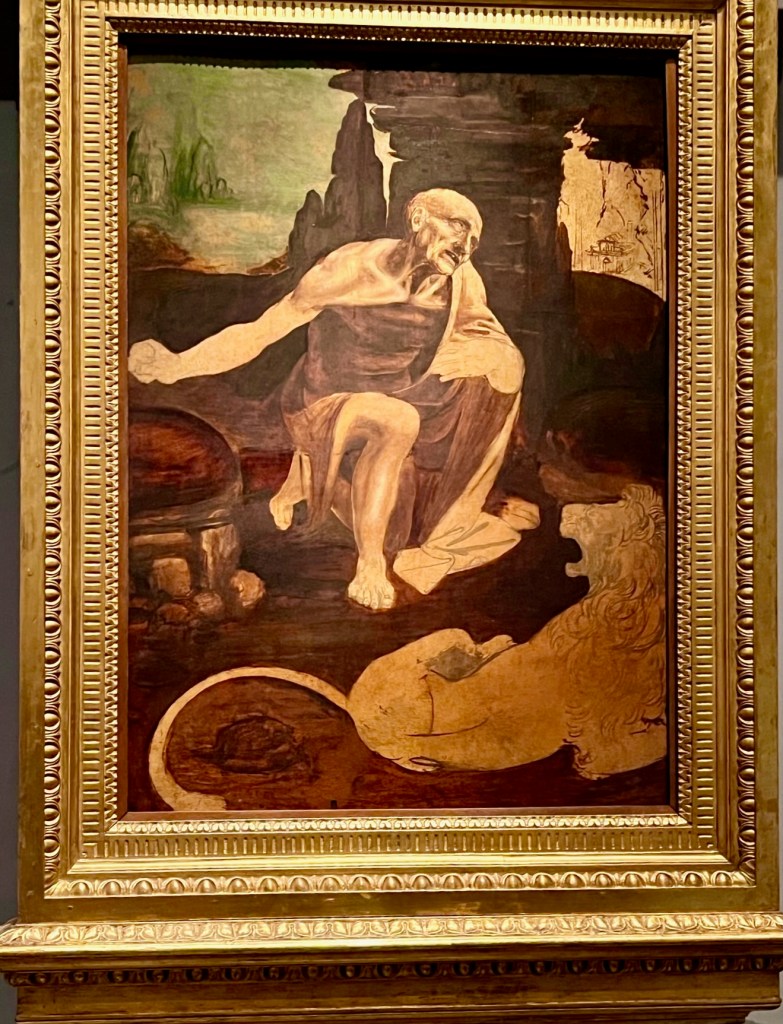
There is also the painting of St. Jerome in the Desert from 1480 by Leonardo da Vinci depicting the suffering and spiritual search of the saint.
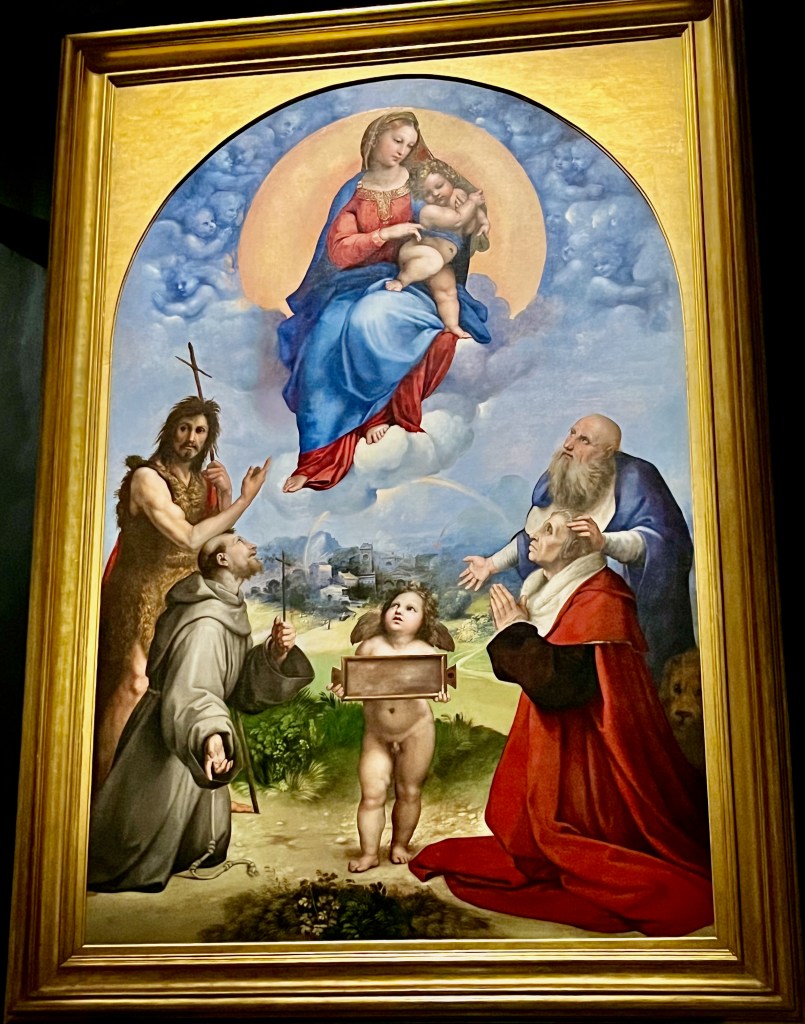
Raphael’s Madonna of Foligno (1511-1512). Besides the Virgin and child, Sigismondo de’Conti is kneeling in the red cape next to St. Jerome with his lion. On the left is St. Francis of Assisi and St. John the Baptist who is wearing a tunic of skins. An angel is in the middle linking the saints of the earth to the Heavenly host. The towers of Foligno are behind them.
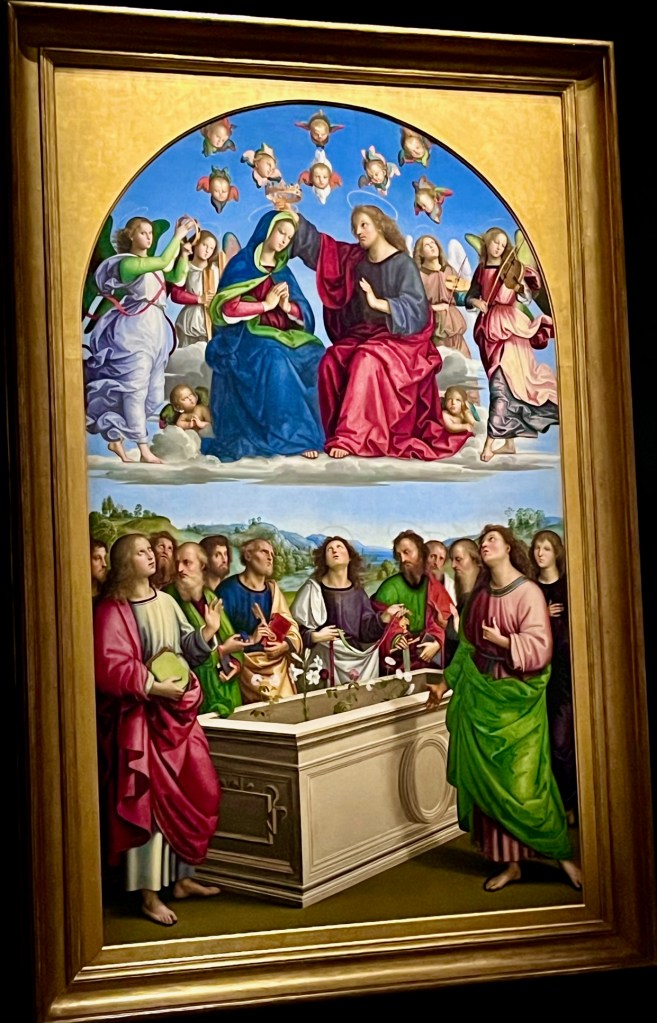
The Crowning of the Virgin by Raphael (1502-1503). The bottom half shows the grave where the Virgin Mary was laid to rest with the apostles around her. Where she would have been in the tomb, there are flowers as she had since ascended to heaven. The apostles are all looking in amazement as they see her image above with Jesus. The upper portion of the painting depicts the Virgin Mary and Jesus, who is crowning her as the blessed mother. The play on color is similar to the Transfiguration where the darker colors are below and as you move upward the color scheme becomes lighter.
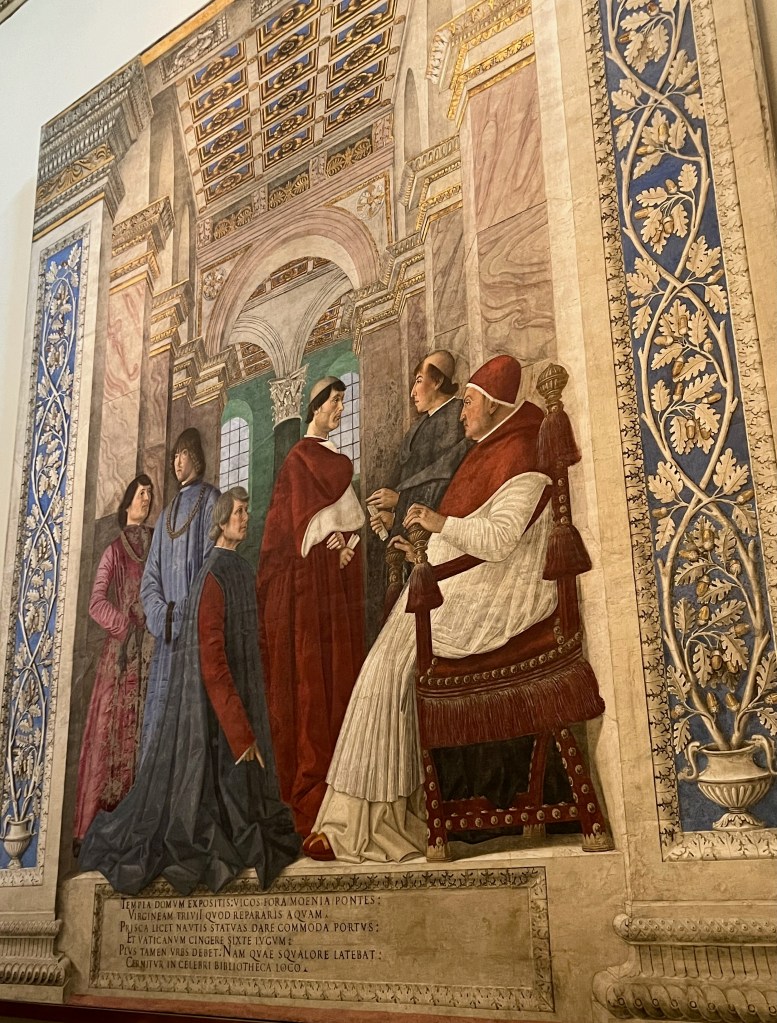
Melozzo da Forli’s depiction of the moment Pope Sixtus IV appointed Bartolomeo Platina to the newly founded Vatican Library’s first Prefect Papal Renaissance Court. He points downward toward a fictively inscribed text composed by him to exalt the achievement of his new boss.
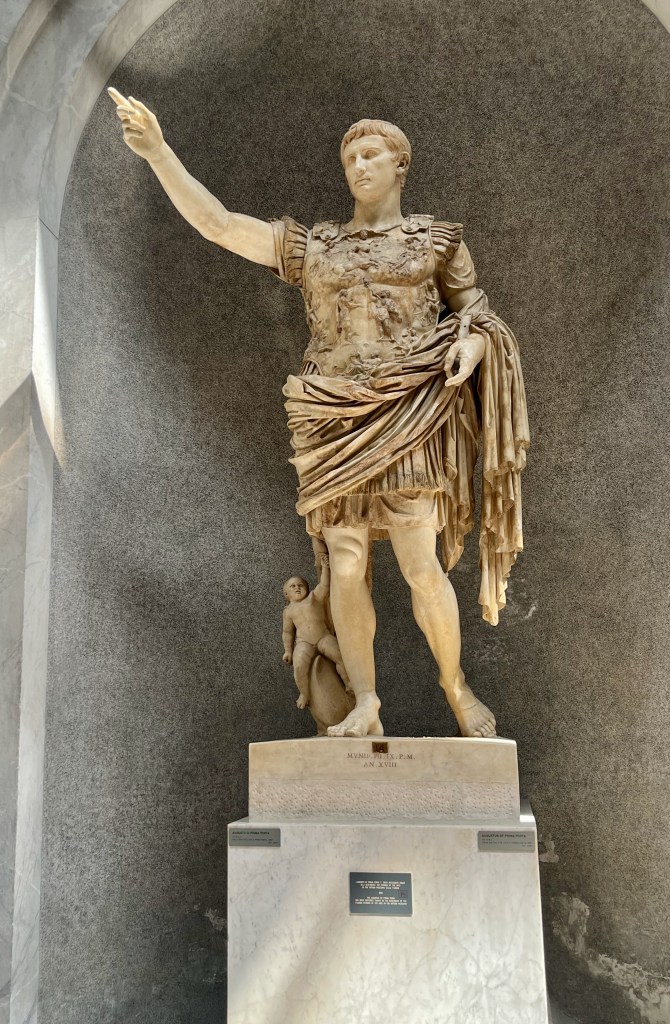
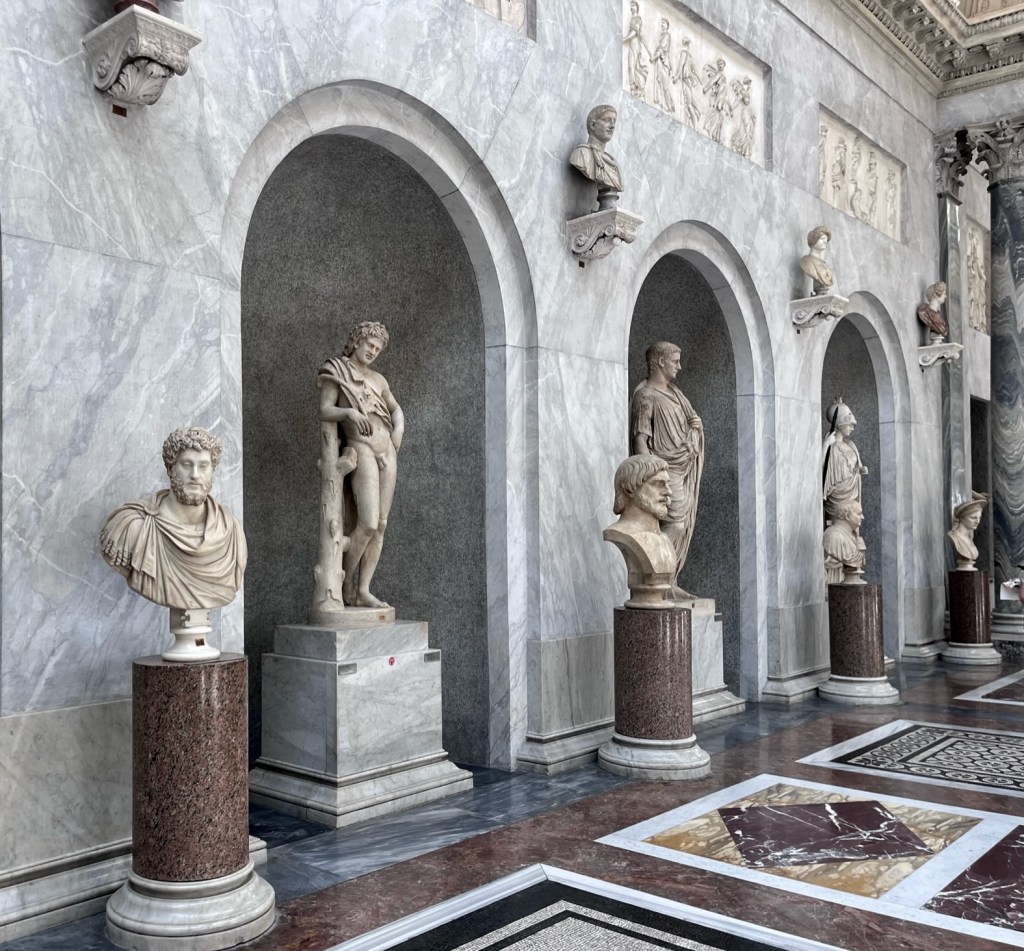
The Museums also preserve a collection of Greek and Roman statues and antiquities. Below is a statue of Emperor Augustus and his adopted son Marcus Agrippa and the next shows several other statues.
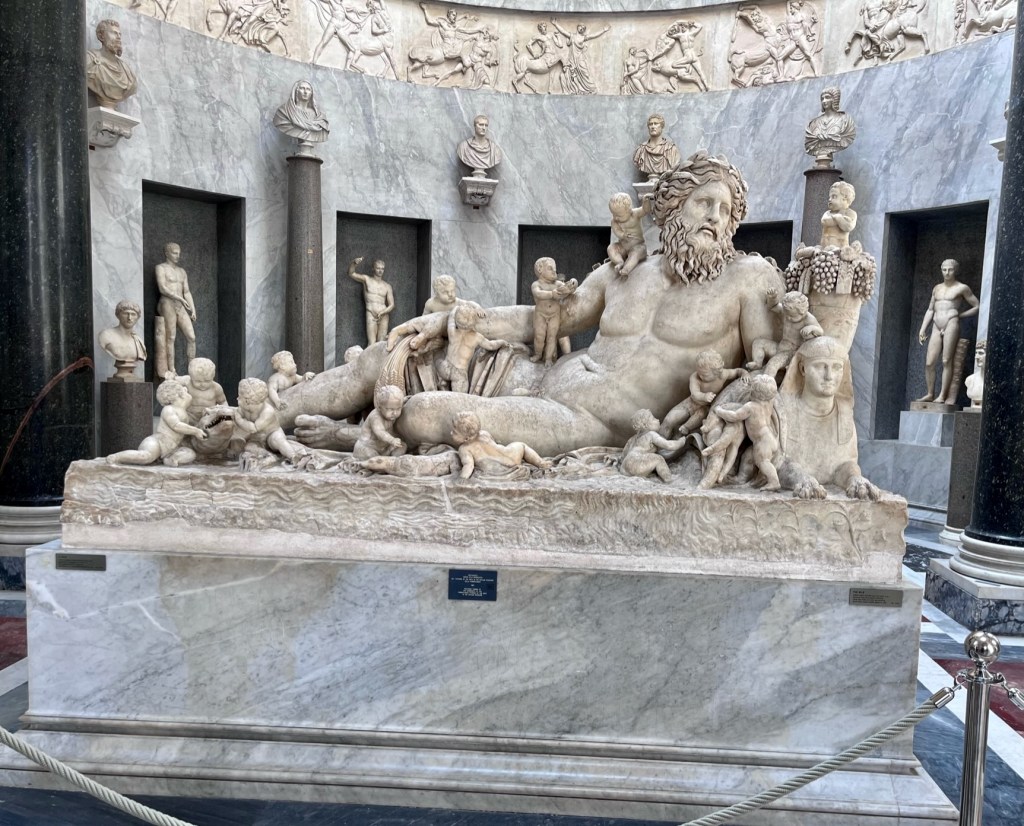
The Roman statue below, The River Nile, by Giovanni Volpato shows the reclining personification of the river, surrounded by sixteen children. The playful children represent the number of cubits of an ideal inundation, and the cornucopia behind the Nile’s left shoulder further alludes to the bounty of the annual flood. The river is shown as a venerable old man stretched out on his side with a cornucopia of fruit in his left arm and ears of wheat in his right hand. Egypt is represented by the presence of a sphinx, on which the figure of the Nile supports himself, and by some exotic animals.
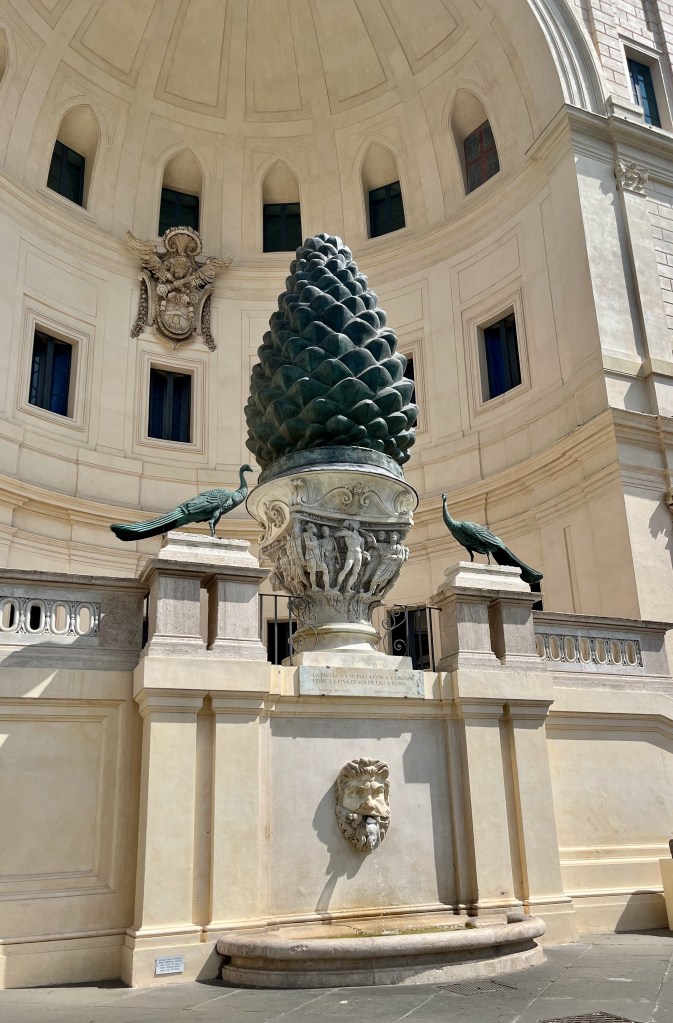
Pine Cone Courtyard
When we left we stopped in the Pine Cone Courtyard so named because of the Fontana della Pigna (pinecone). The pinecone was a former Roman fountain and it represents the pagan symbol of fertility.
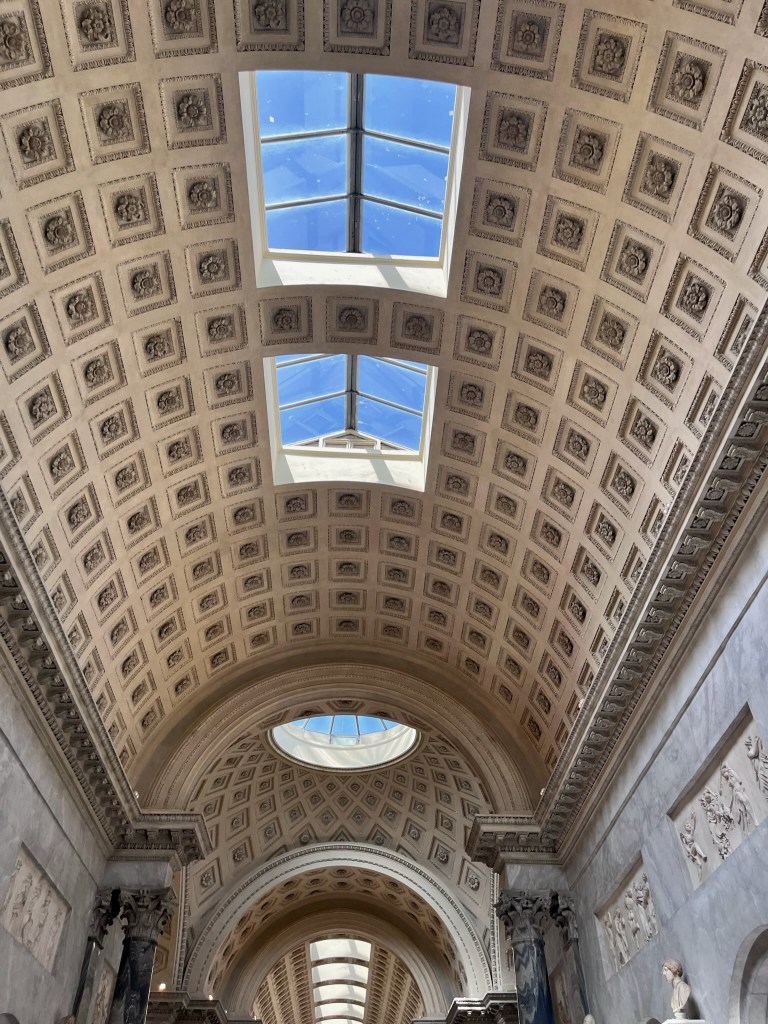
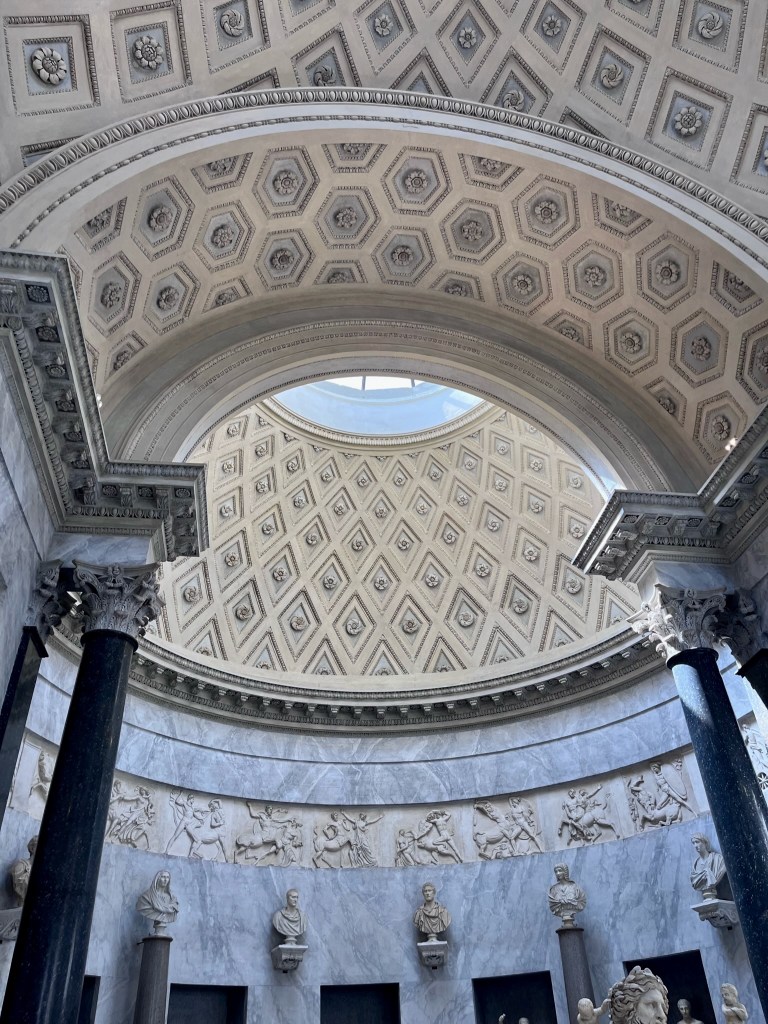
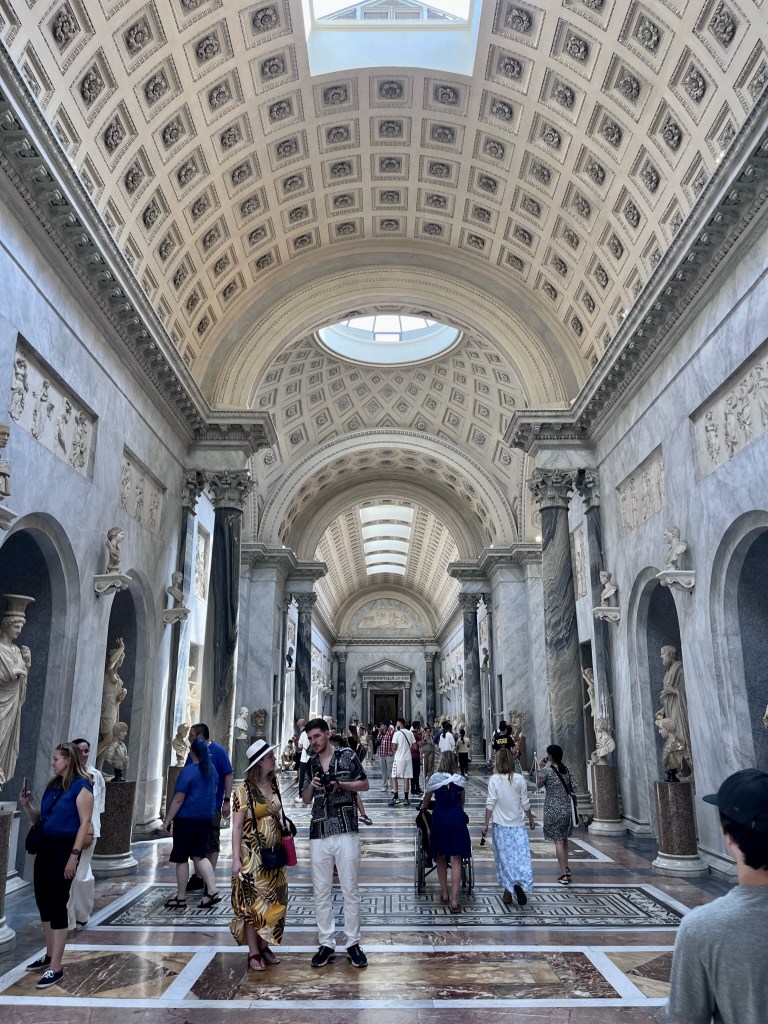
Passageway into the Sistine Chapel
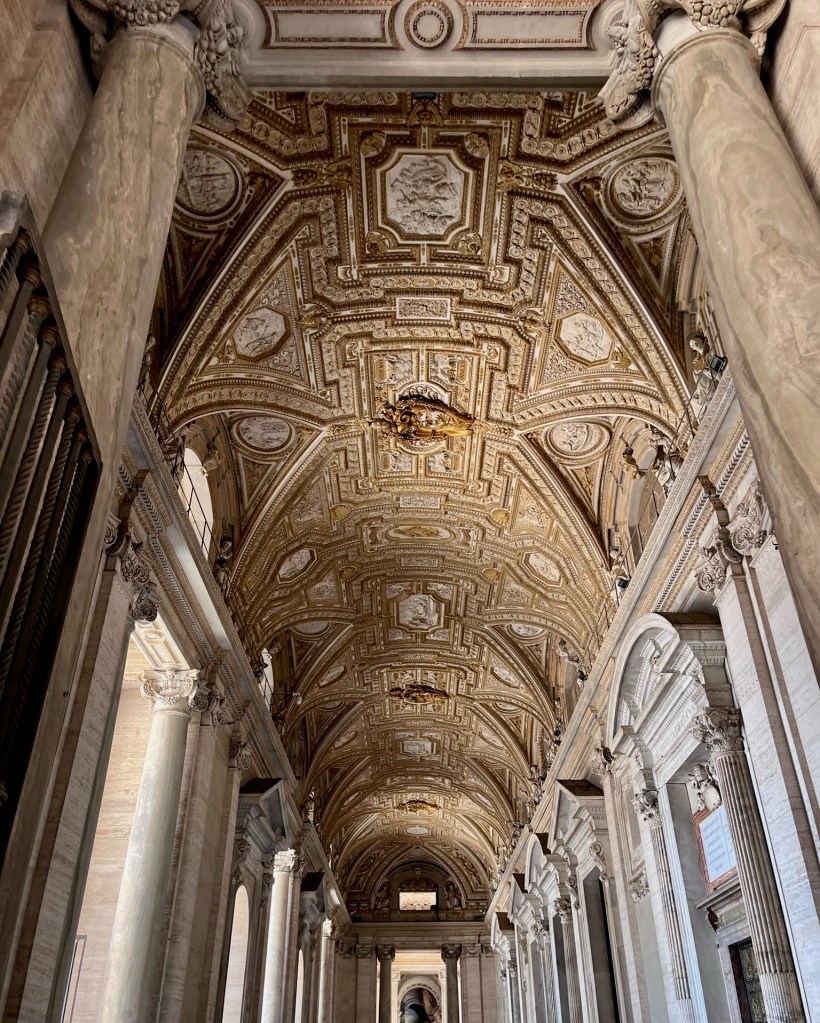
On the way to the Sistine Chapel we walked through the hallways. Beautiful ceilings. Unfortunately, we were not able to take any pictures in the Sistine Chapel.
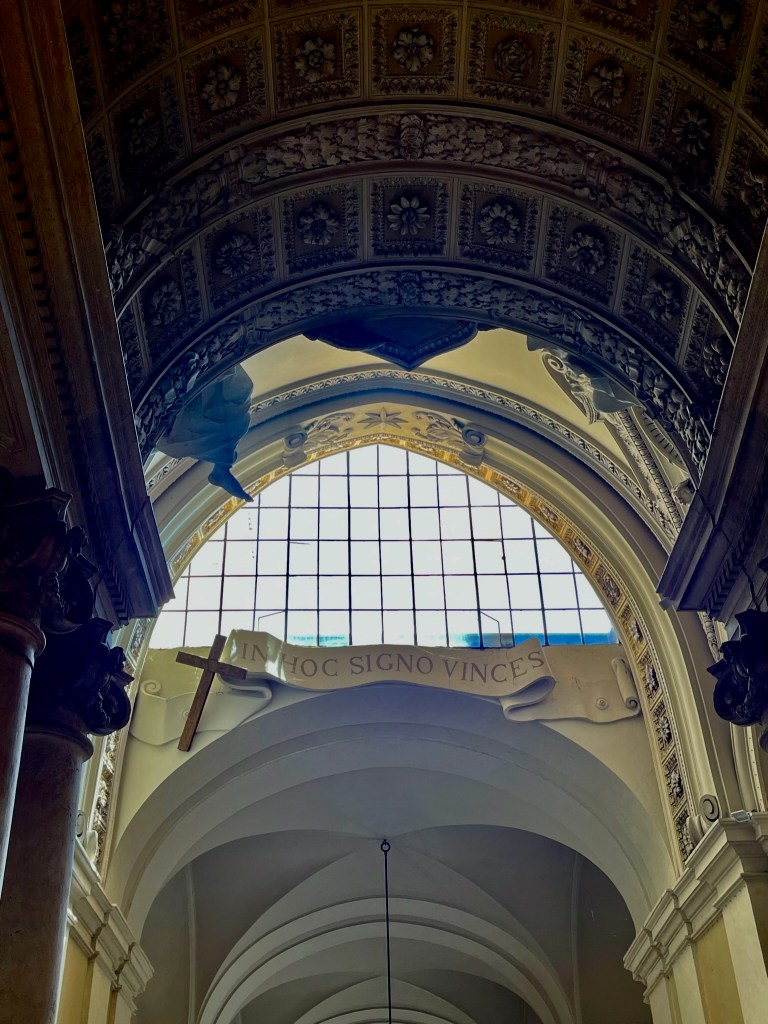
St. Peter’s Basilica
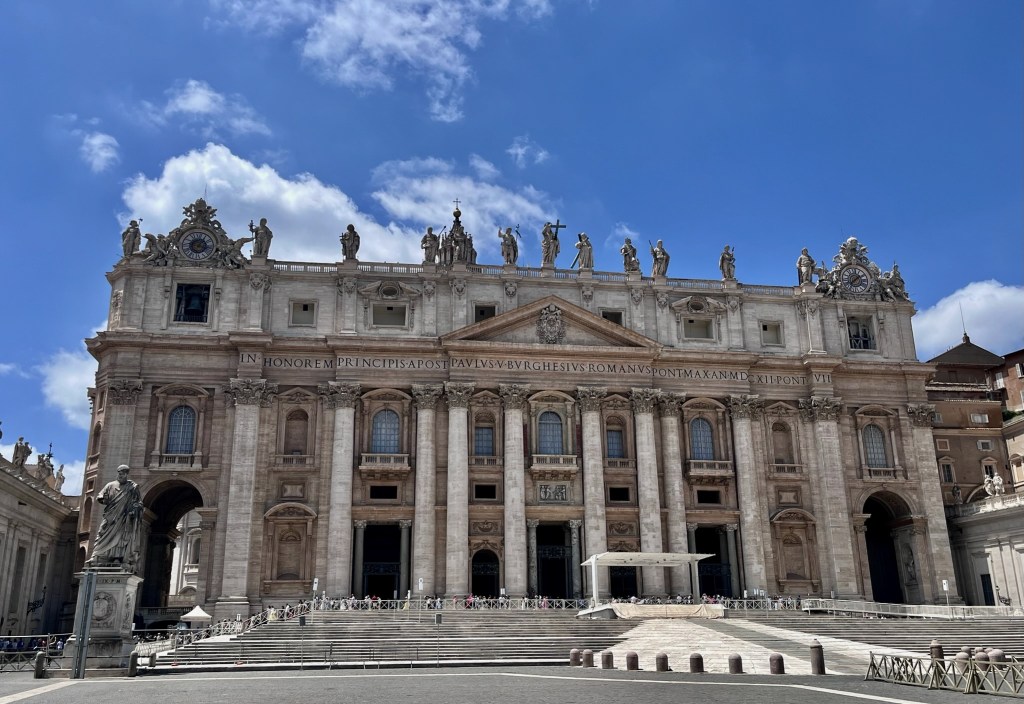
The next stop was St. Peter’s Basilica. The walkway there was magnificent and the bottom photo shows the stairway into the Basilica.
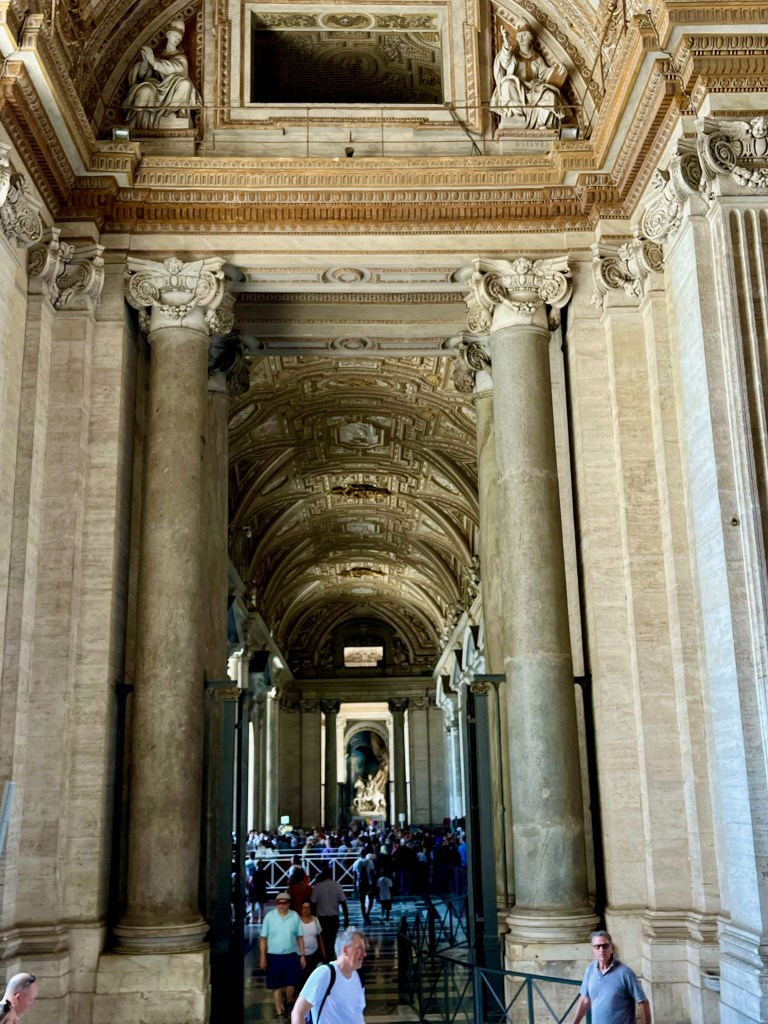
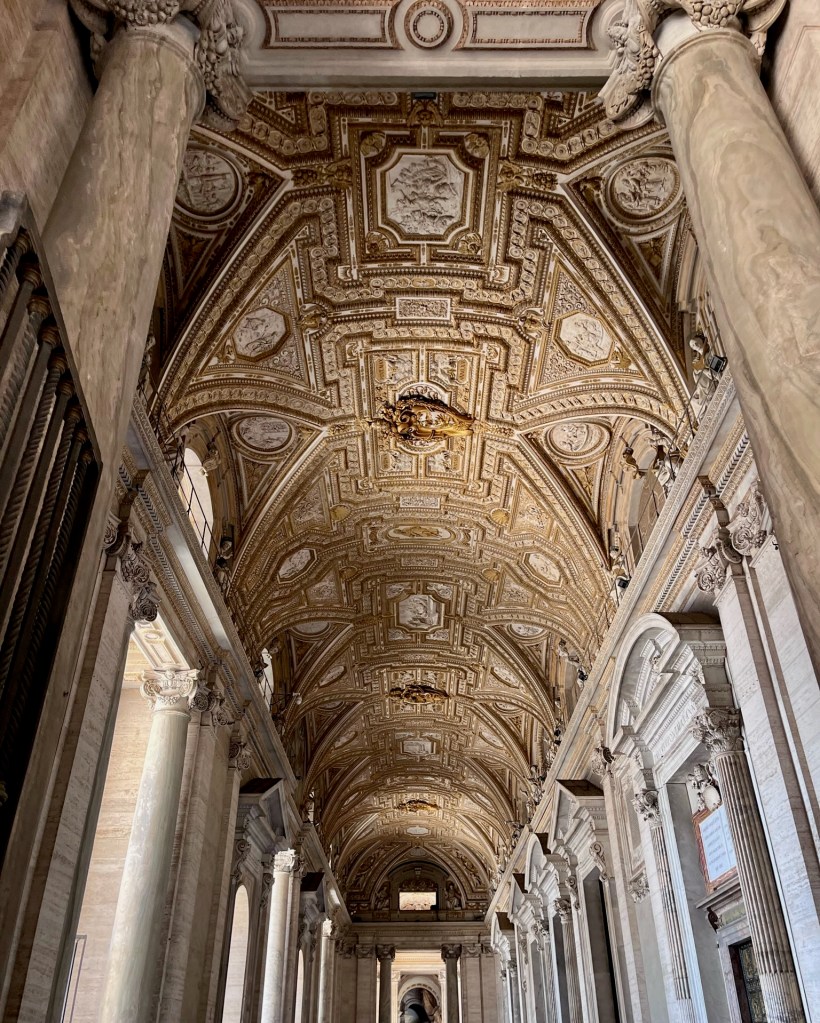
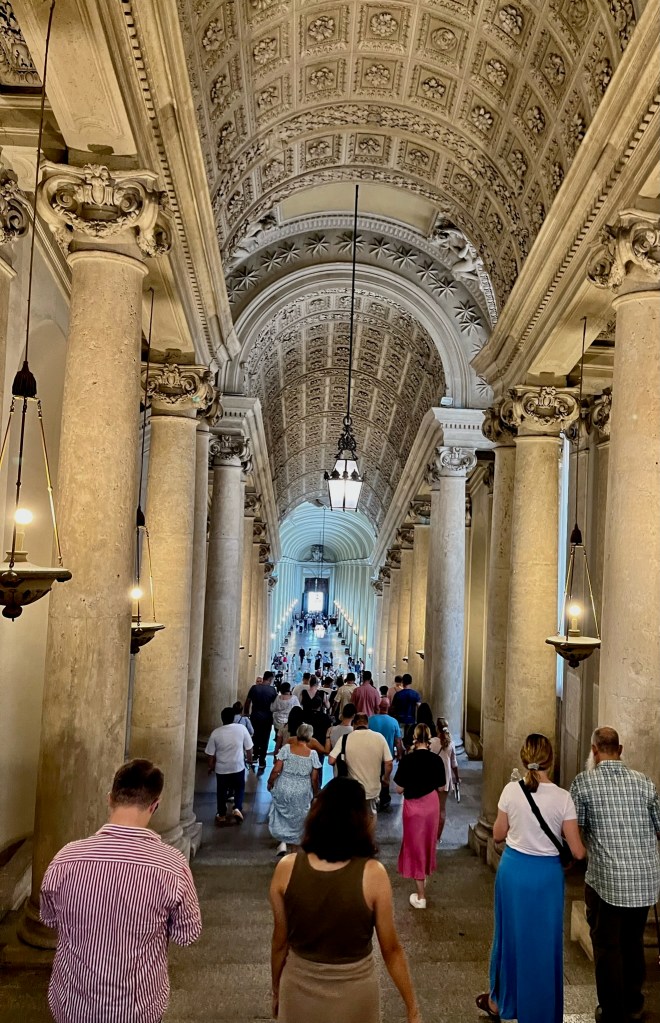
The Basilica of St. Peter was founded in 1506 but not consecrated until 1626 and the great piazza was completed 40 years after that. The Basilica of St. Peters is the heart of a long history of faith. The basilica was designed so that the altar, its spiritual center, would stand directly over the sacred ground where the remains of St Peter lay.
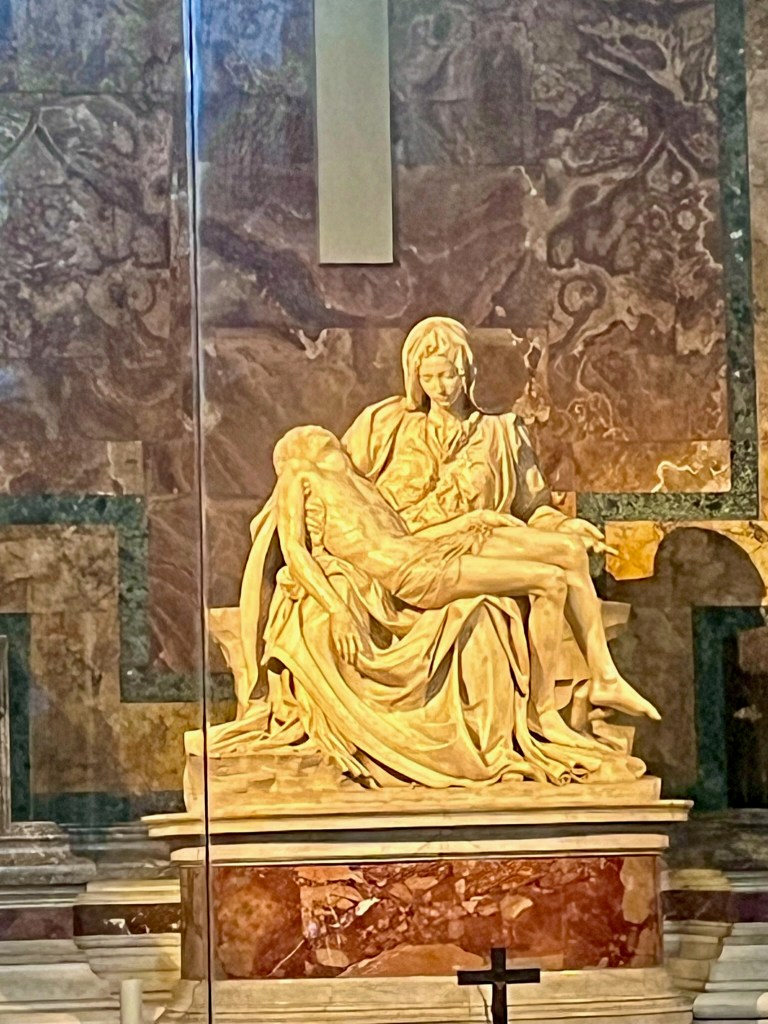
One of the highlights in St. Peter’s is the Pieta. Michelangelo was 24 years old when he completed this Pieta a representation of Mary with the body of Christ taken from the cross. It was his first major commission done for the Holy Year 1500. He captures the sadness of the moment when Mary cradles her crucified son in her lap. Christ’s lifeless right arm drooping down lets us know how heavy this corpse is. Mary looks at her dead son with sad tenderness.
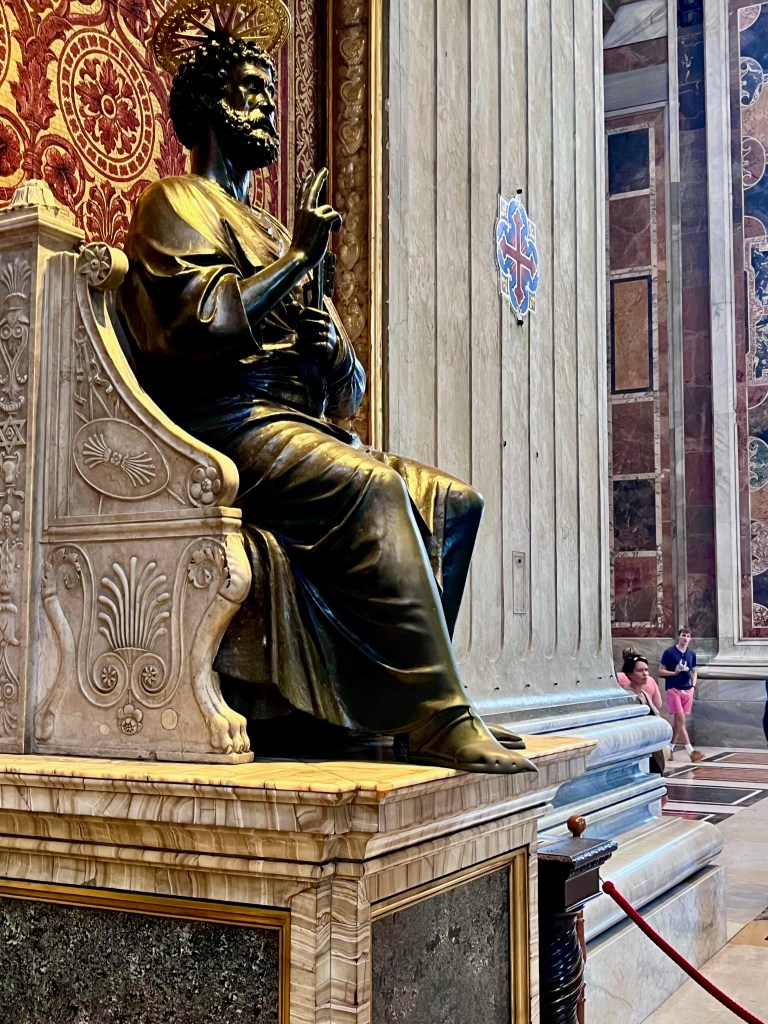
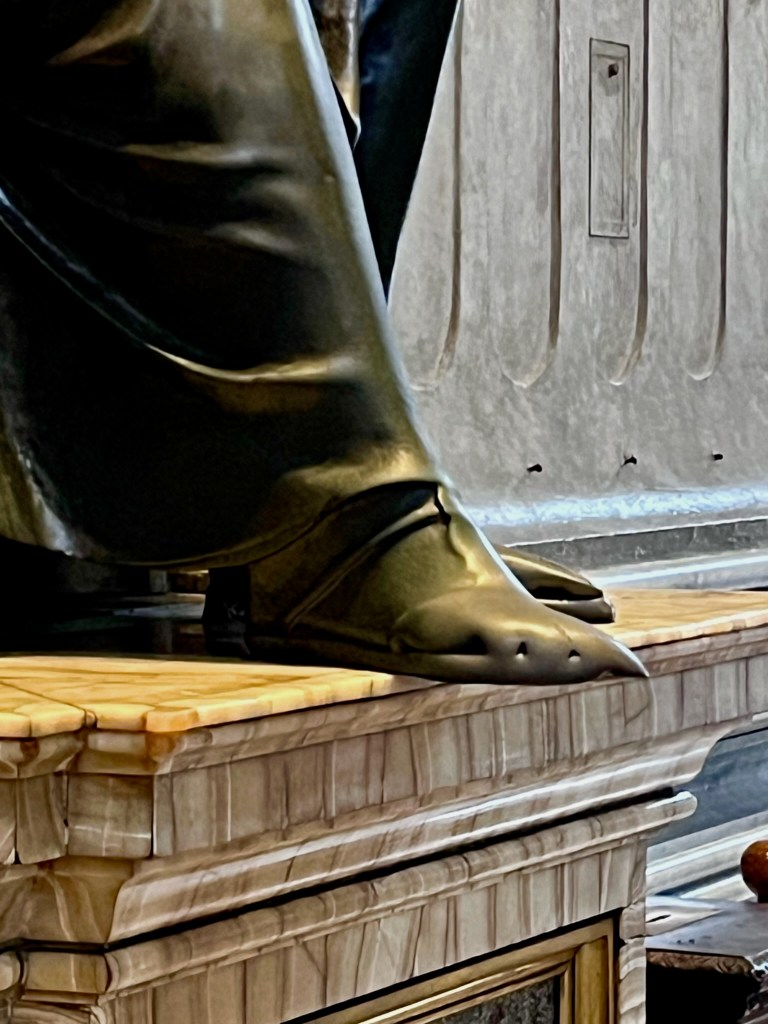
Below is the bronze statue of St. Peter. This is one of a handful of pieces of art that were in the earlier church. In one hand he holds the keys, the symbol of the authority given to him by Christ while in the other hand he blesses us. His big right toe has been worn smooth by the lips of pilgrims. Our guide Margherita said that when she was a little girl her mother took her here to kiss St. Peter’s toes. She said she did not like it at all!
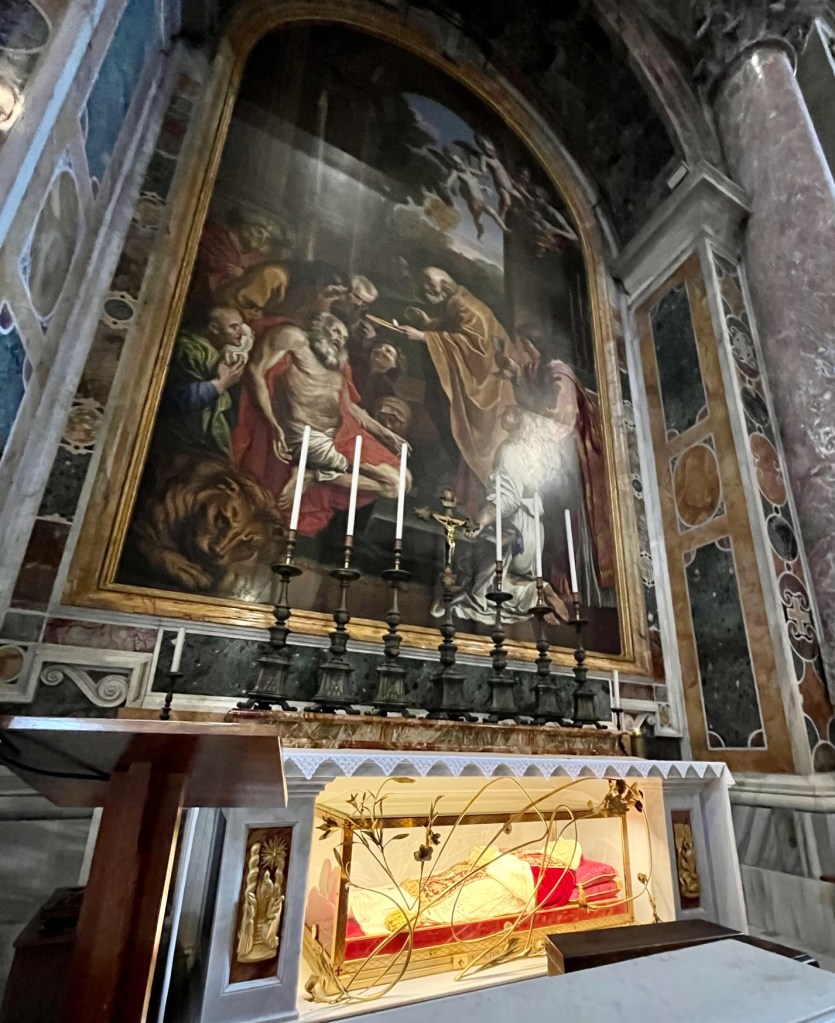
Below is the red-robed body of Pope John XXIII whose papacy lasted from 1958 to 1963. He was nicknamed “the good pope” and he is best known for initiating the landmark Vatican II Council (1962-1965) that instituted major reforms, brining the Church into the modern age. I was in high school and the reforms he initiated like facing the people during mass, having the mass said in the native language vs Latin and many other people focused reforms making the church more meaningful and accessible to the people.
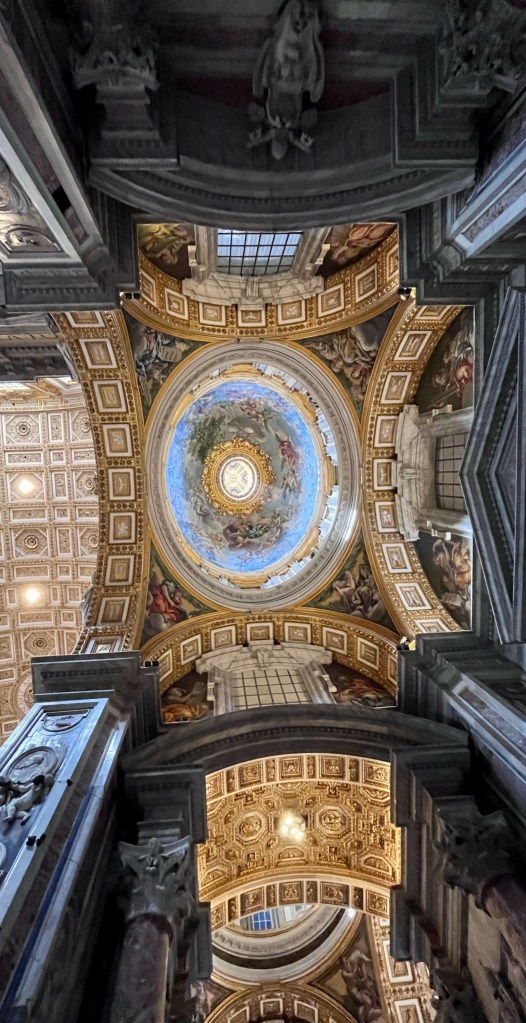
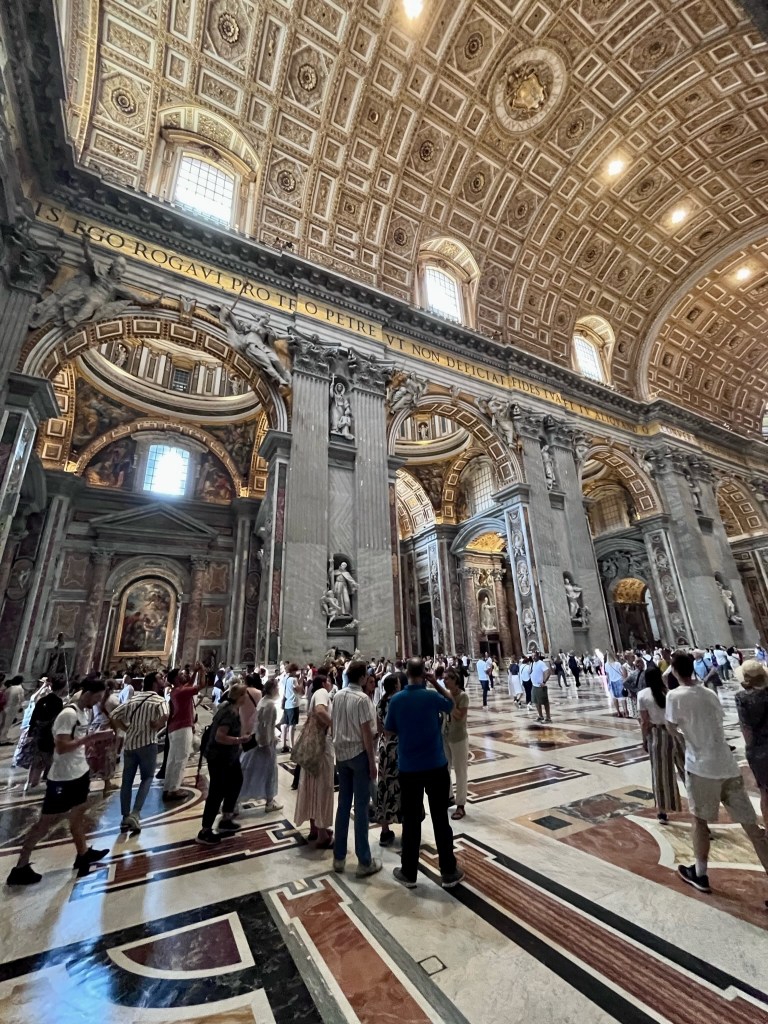
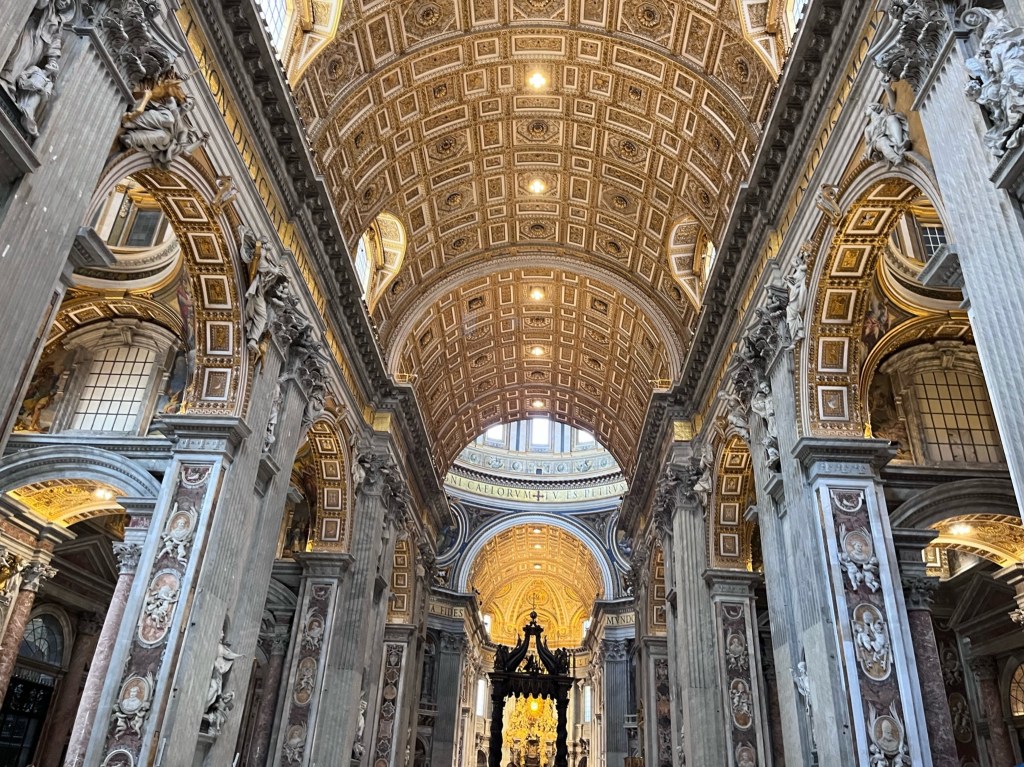
Various photos of the inside: beautiful ceilings, gorgeous tiled floors, pillars and statuary.
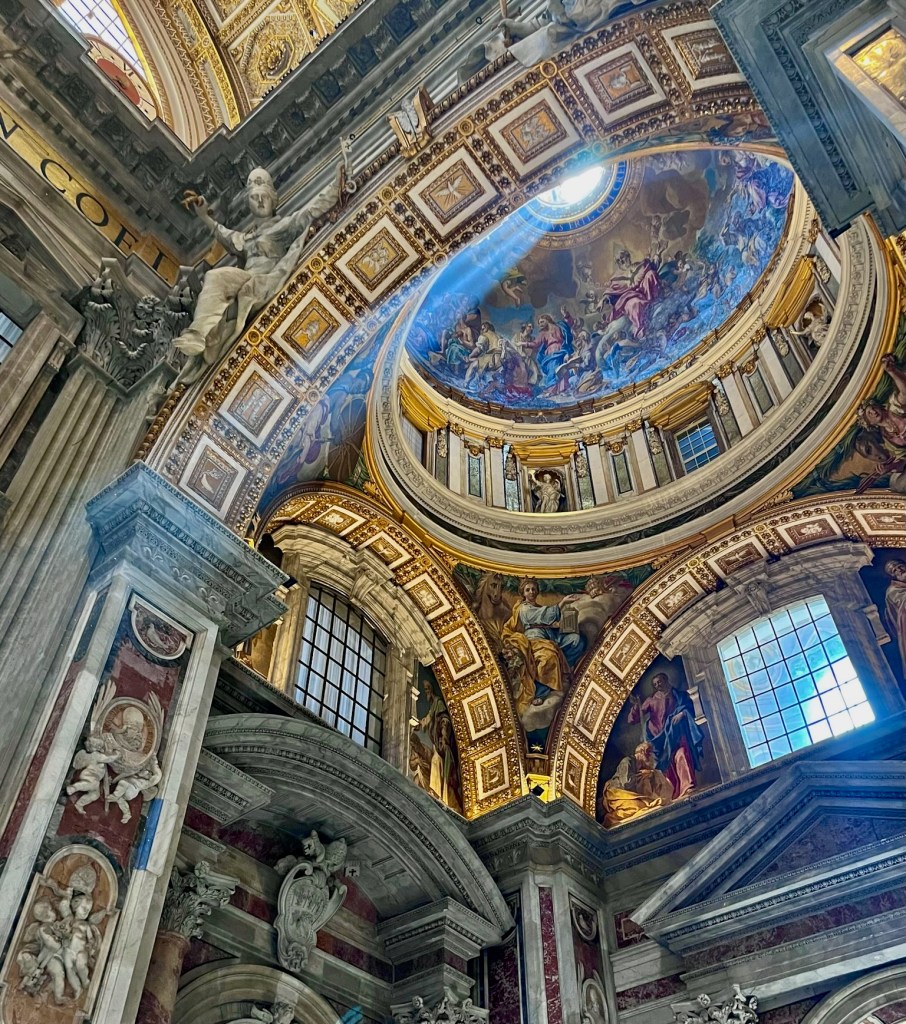
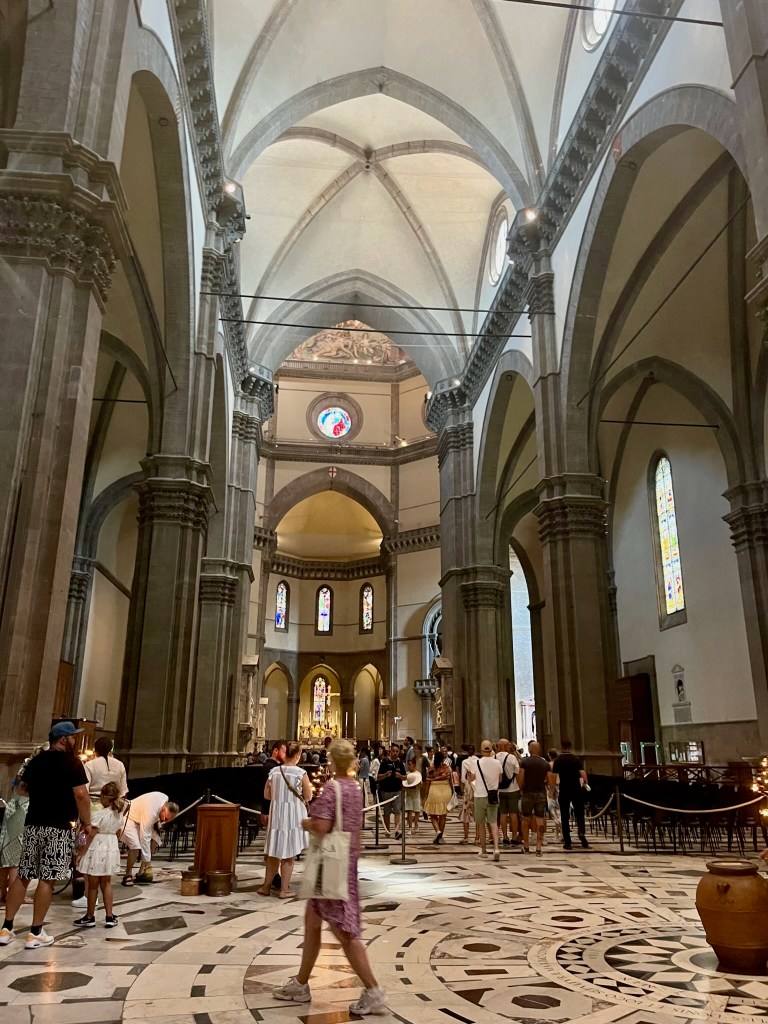
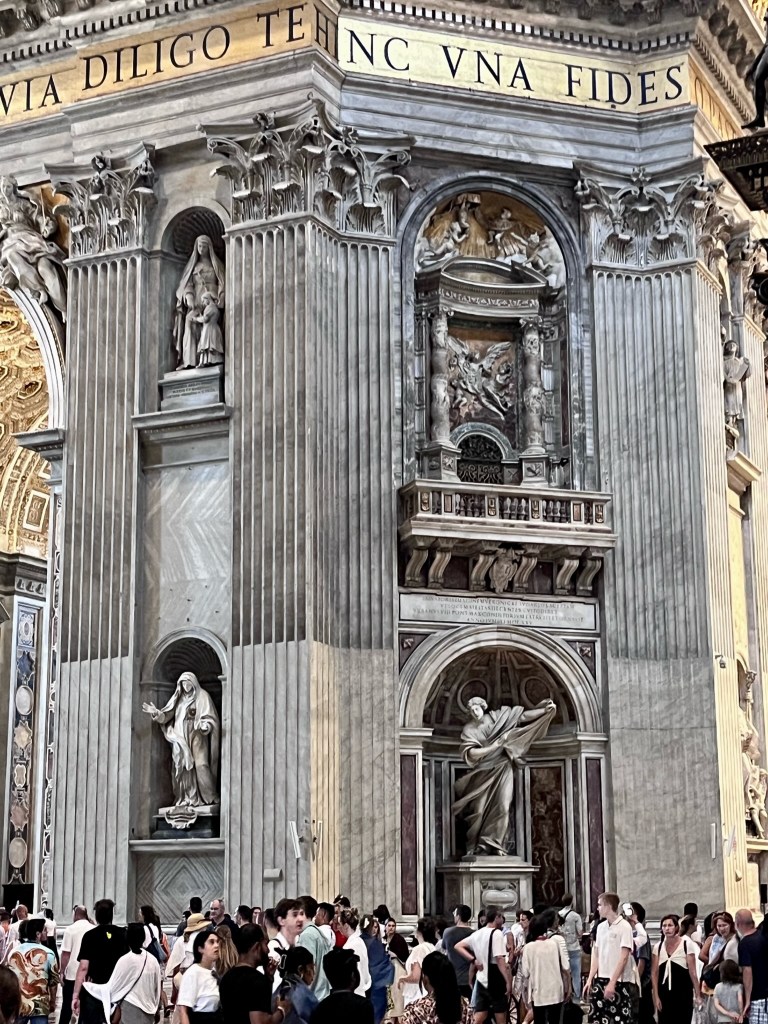
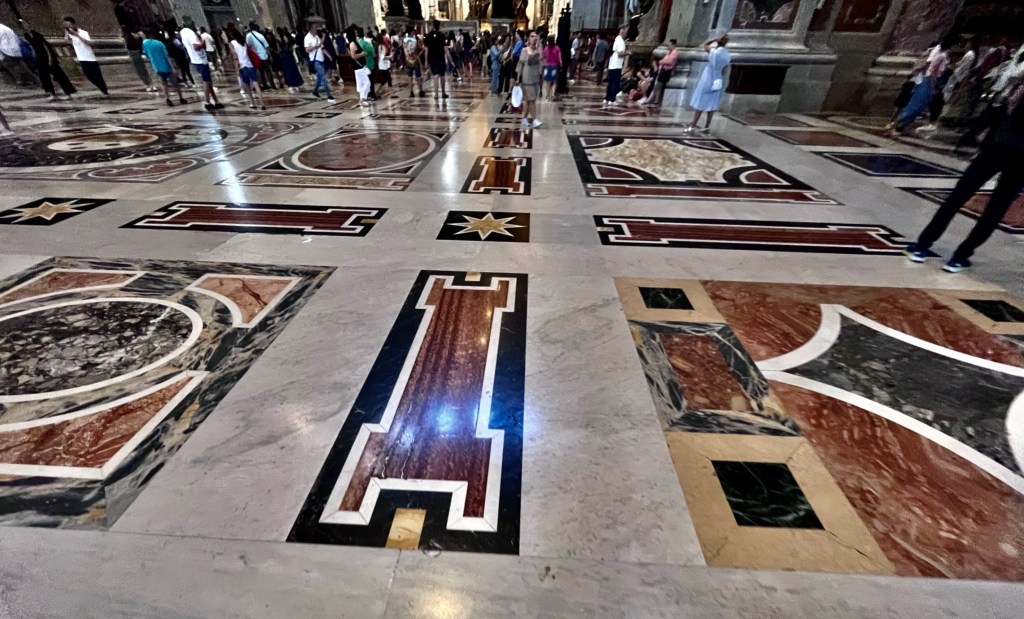
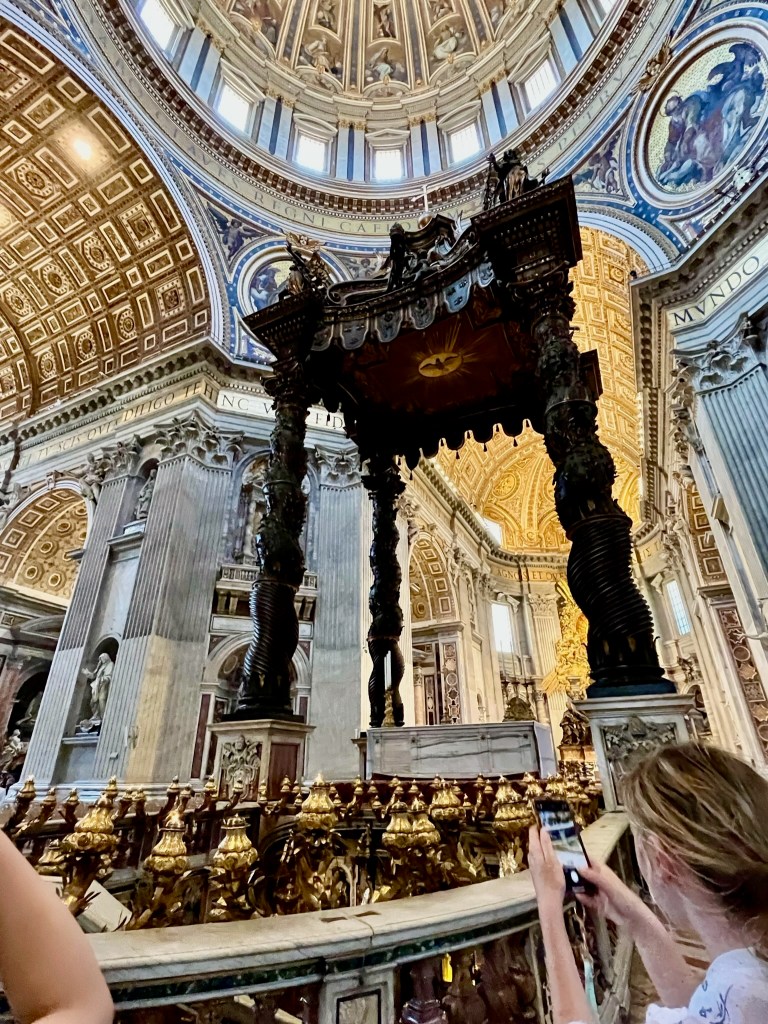
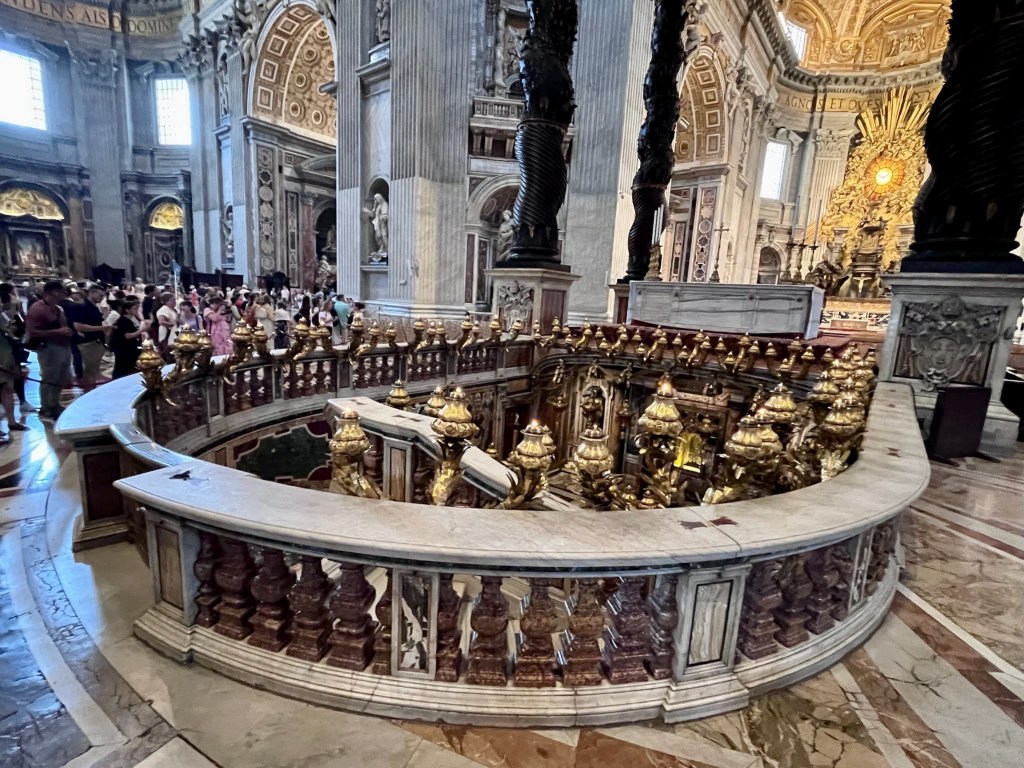
The baldachin by Bernini rises over the altar on four tremendous serpentine columns. The work began in 1623 and ended in 1634. These columns house other principle relics of the church. Under the canopy is the Papal Altar at which only the Pope may celebrate mass. St. Peter’s tomb is underneath.
There are candles attached to the railing and a stairway goes down to the area which houses the relics of St. Peter and other saints.
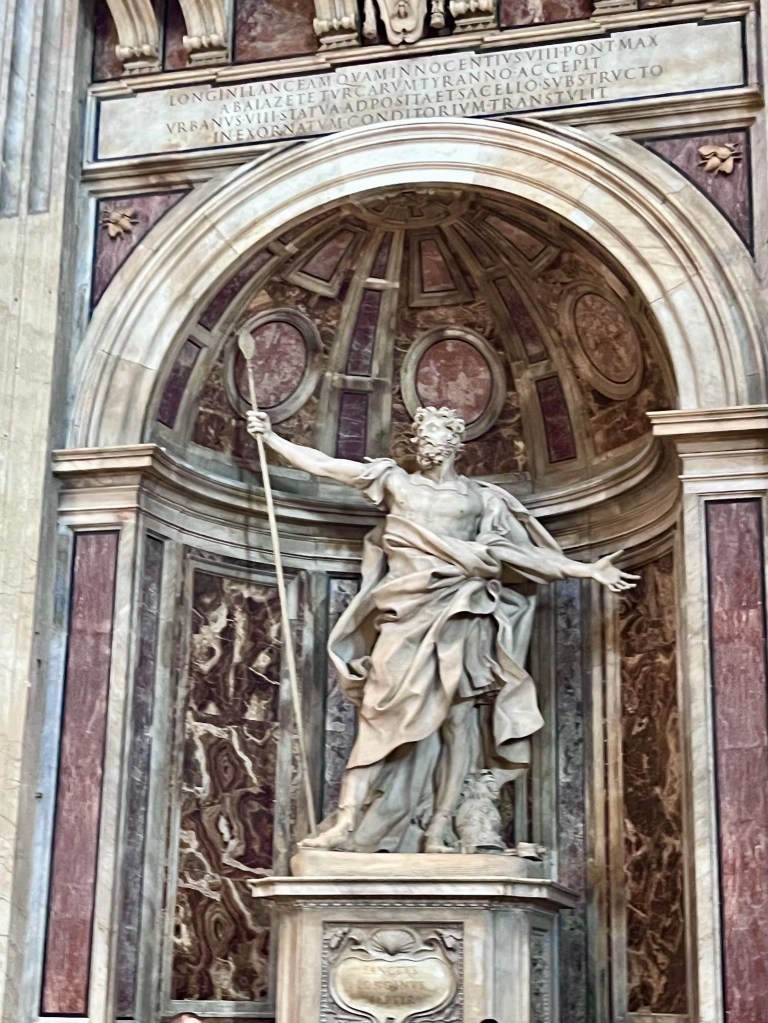
Bernini completed the statue of St. Longinus below in 1628. St. Longinus was the Roman centurion who pierced the side of Christ with a lance. He is said to have converted to Christianity after experiencing the darkness after Christ’s death.
The Piazza San Pietro
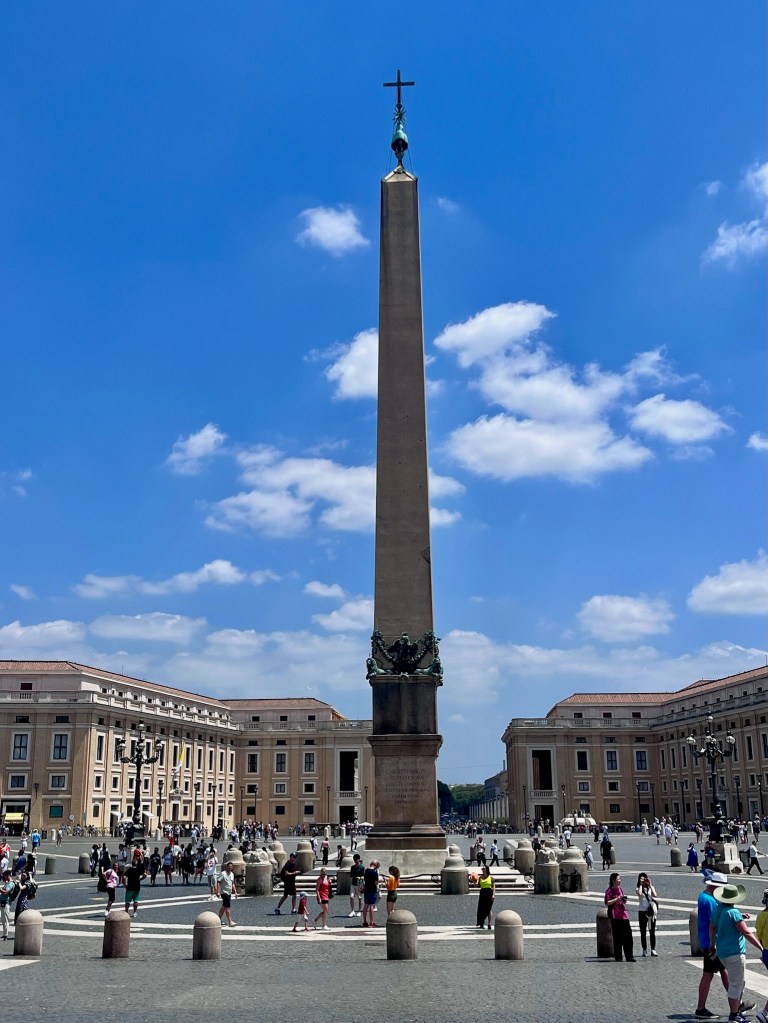
The beauty and grander of St. Peter’s Square with its ring of columns, symbolizes the arms of the church welcoming everyone, believers and nonbelievers, in its motherly embrace. It was designed by Bernini. There are 284 columns, 56 feet high in stern Doric style. Topping them are Bernini’s 140 favorite saints, each are 10 feet tall. The square itself is actually elliptical, 600 by 500 feet (roughly the same dimensions as the Colosseum). It is designed like a saucer, a little higher around the edges, so that even when full of crowds it allows those on the periphery to see above the throngs.
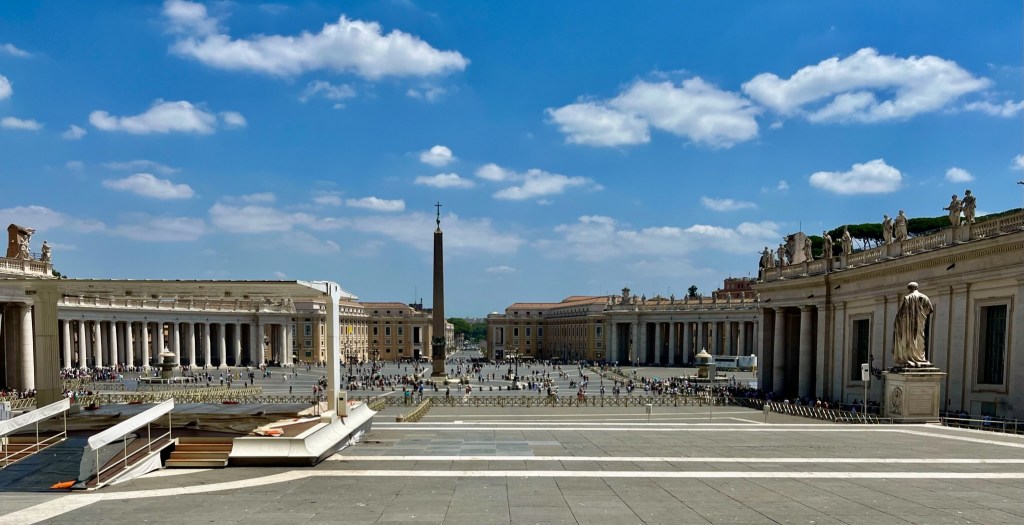
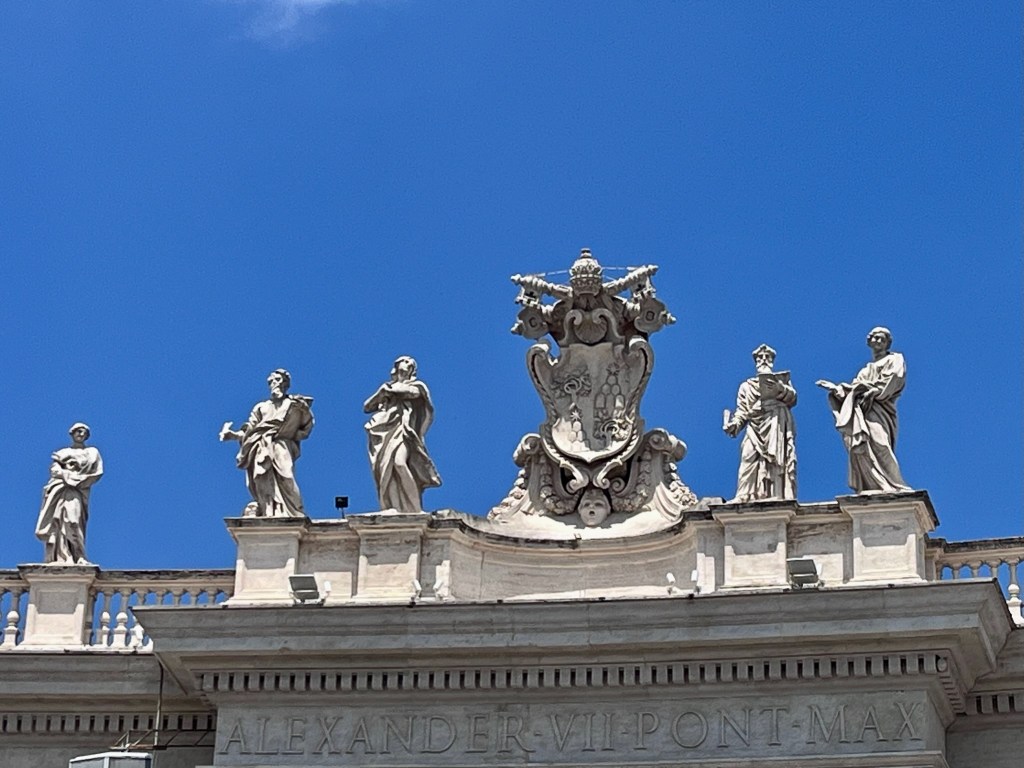
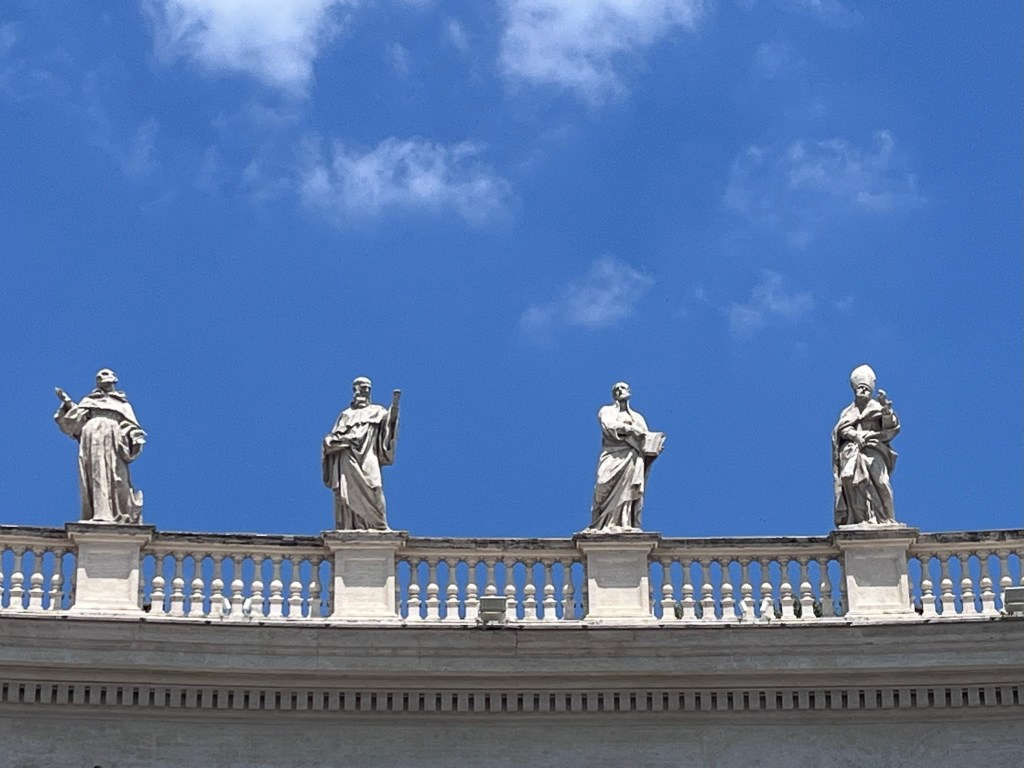
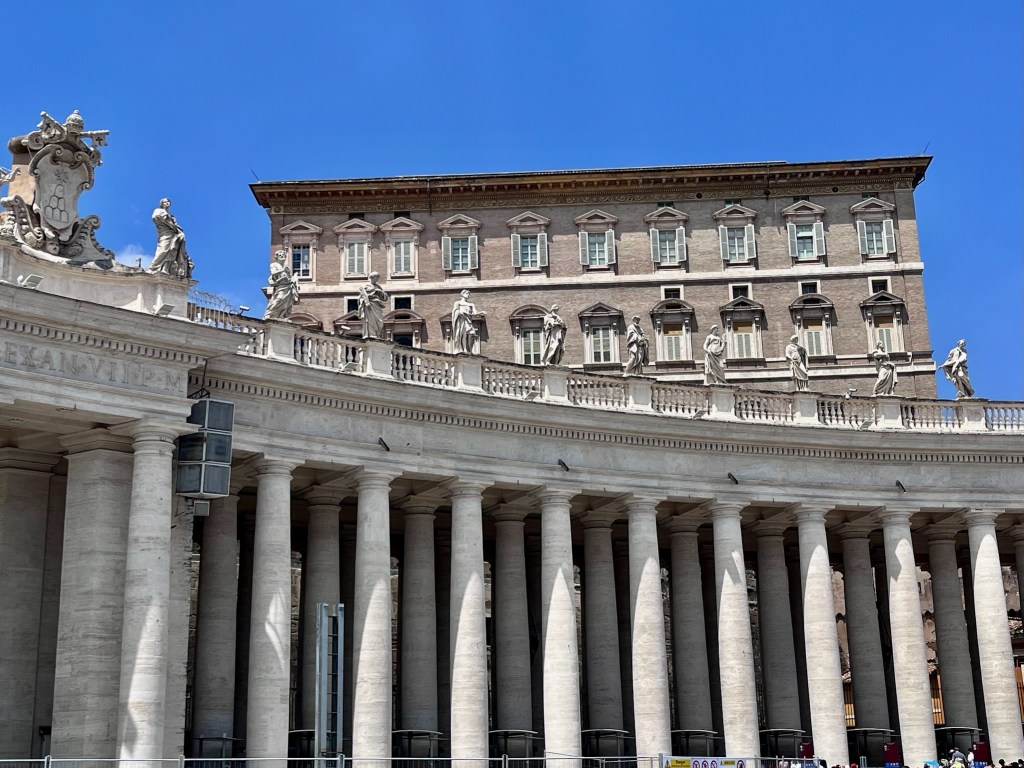
There is a fountain on the left side of the square in the photo below. The other is the front of St. Peter’s overlooking the square.
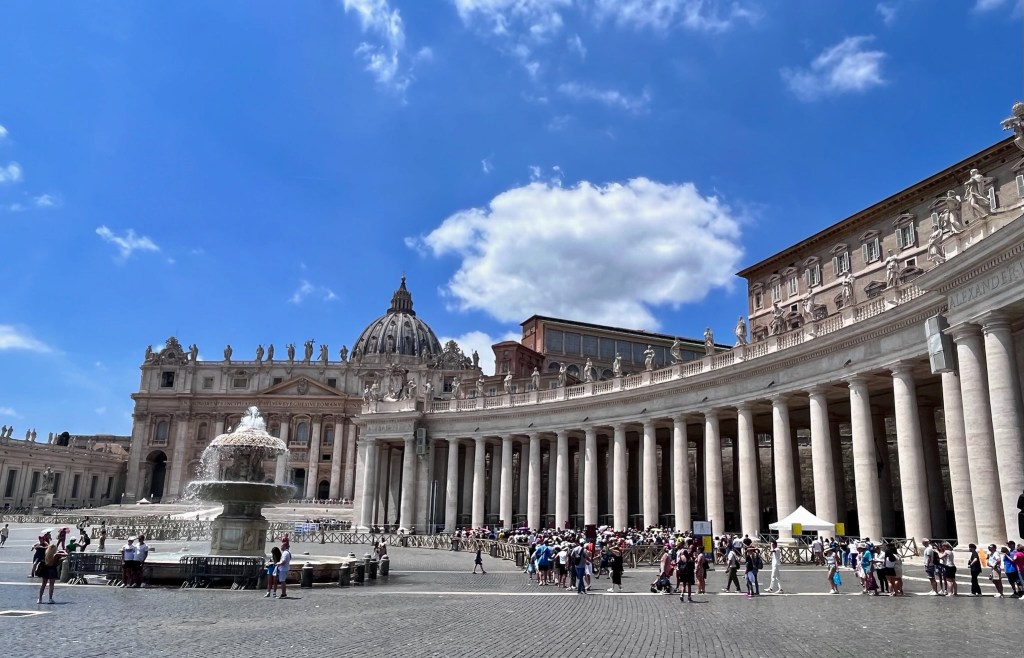
The Obelisk at the center is 90 feet of solid granite weighing more than 300 tons. Originally erected in Egypt more than 2,000 years ago it witnessed the fall of the pharaohs to the Greeks and then to the Romans. Then Caligula moved it to imperial Rome, where it stood watching the slaughter of Christians and the torture of Protestants by the Inquisition. It stands today watching over the church.
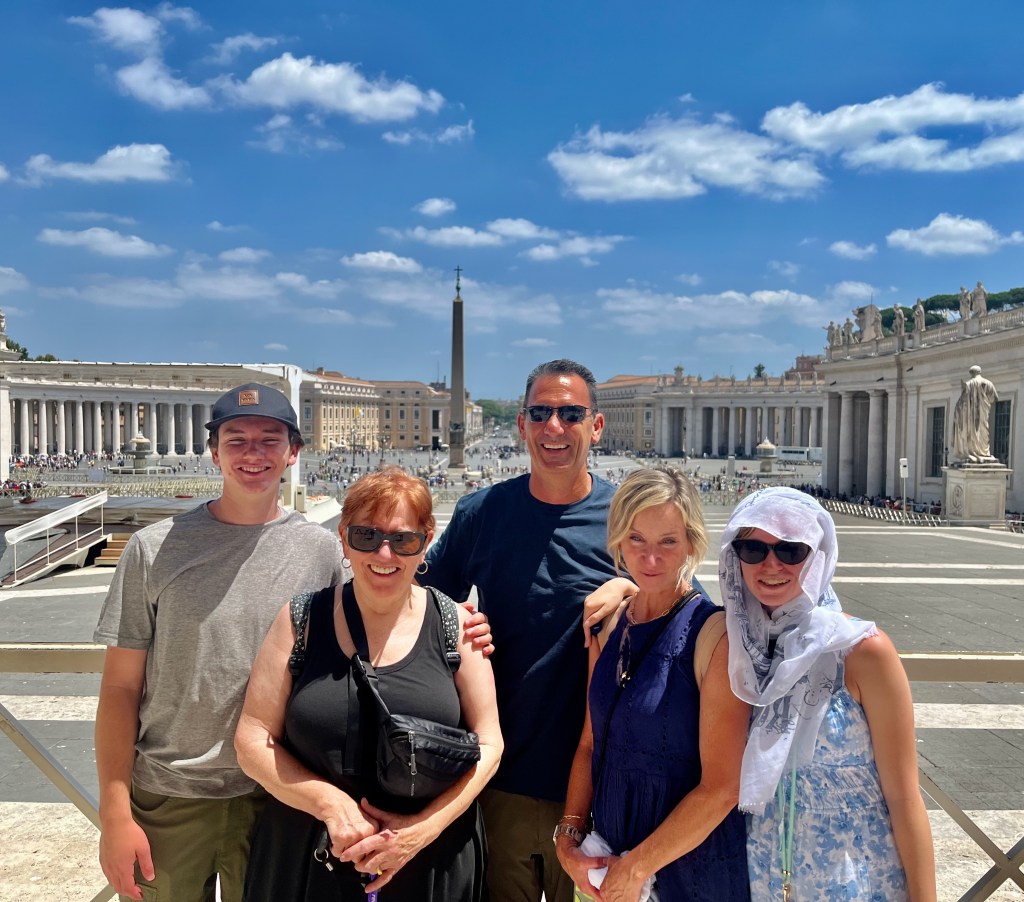
We couldn’t resist a photo op.
Lunch at Arlu
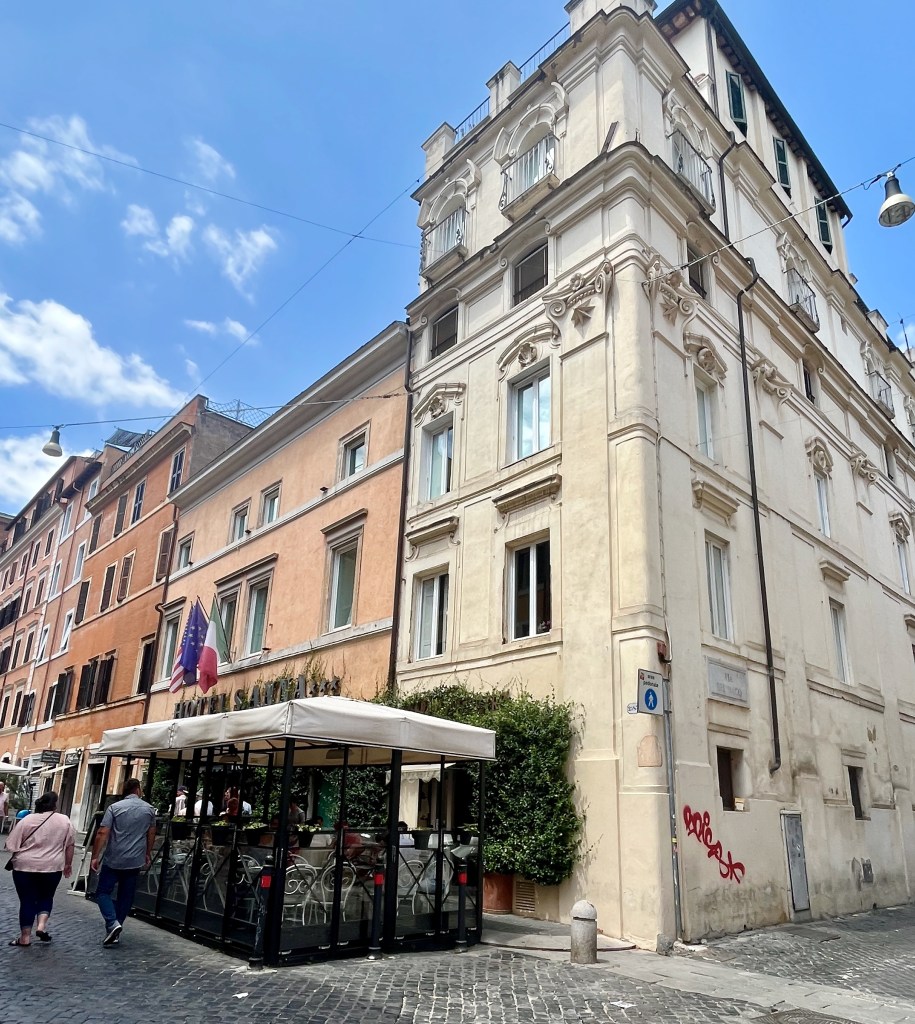
Margherita recommended a place to eat, Restaurante Arlu, which was just a few blocks from the square. It was hot, 92 degrees, so we decided to get lunch there. It was a nice place and the food was good. The entrance to the restaurant is opposite the outdoor seating area.
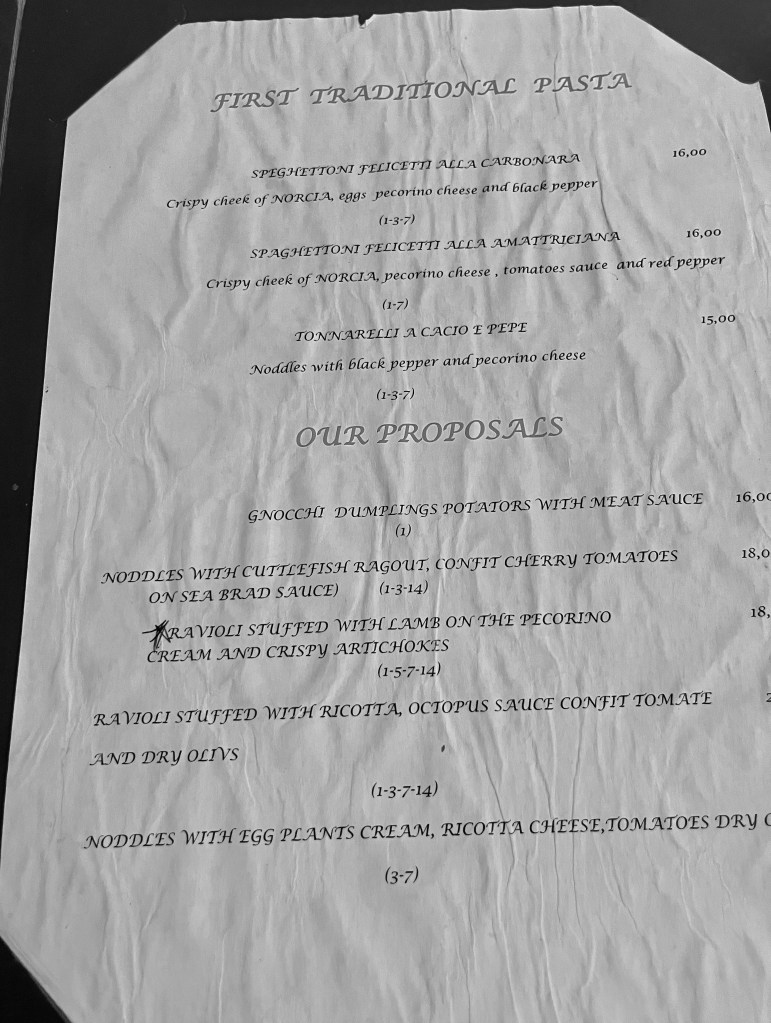
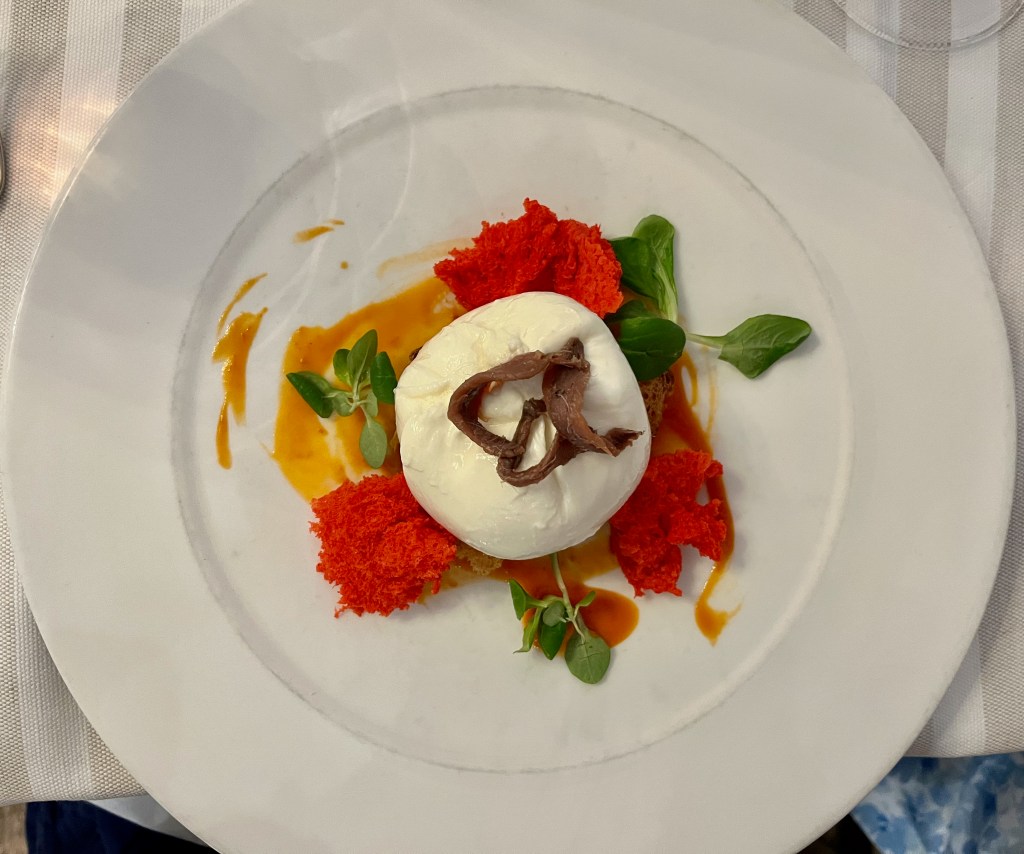
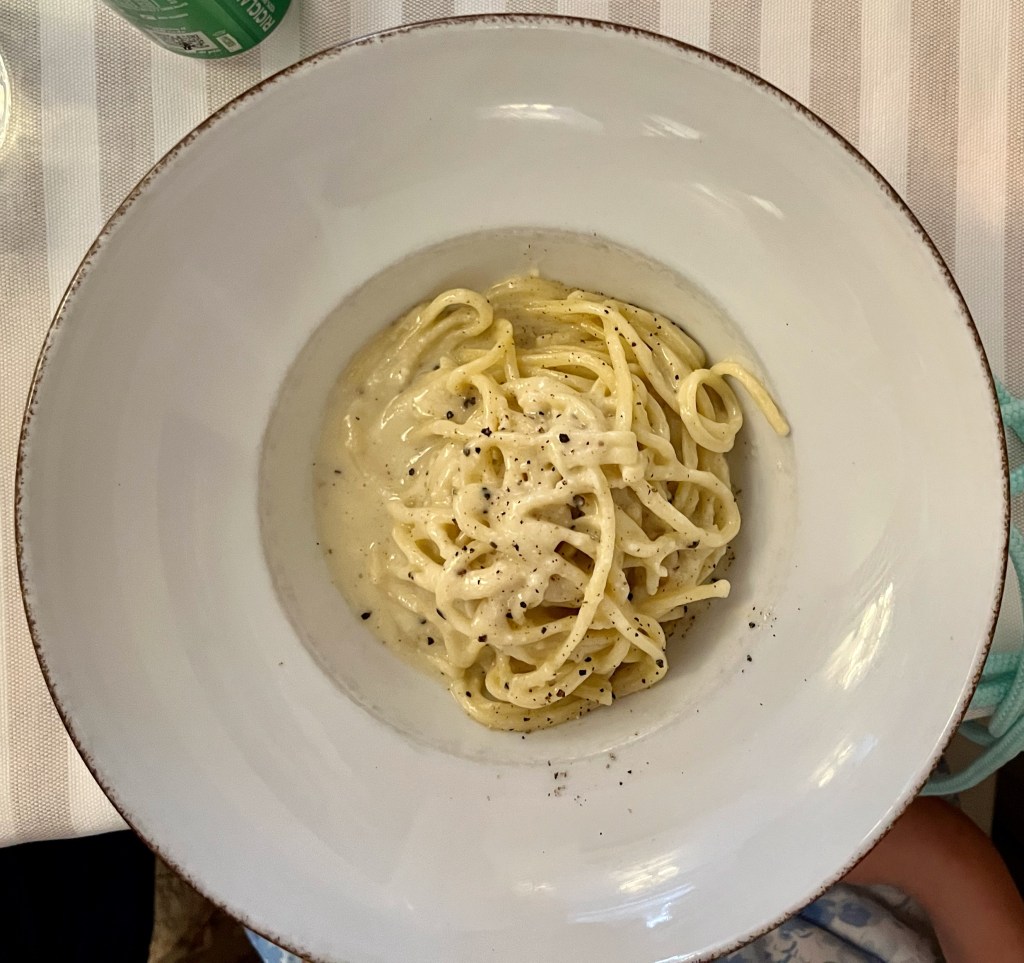
Beth had a beautifully plated burrata with tomatoes, anchovy and a balsamic glaze. Kate had Cacio e pepe good but not a match for Bistrot 64. Glenn had the ravioli stuffed with lamb, and Jacob had the spaghetti all’amatriciana. We did have one more thing but no picture 😦
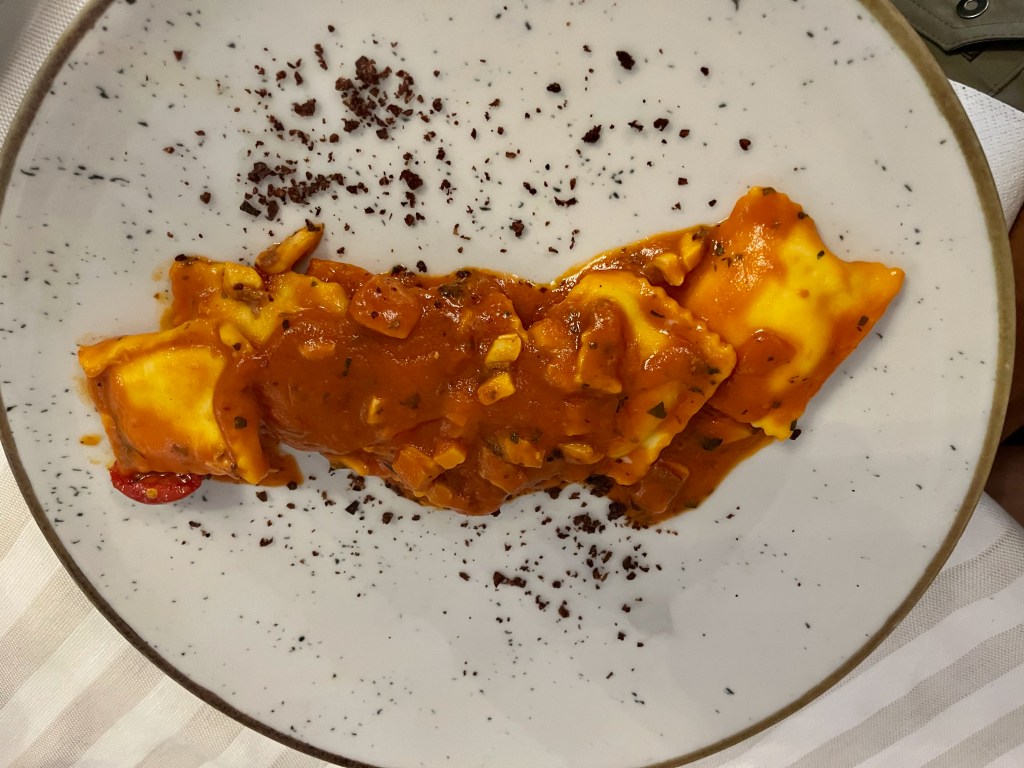
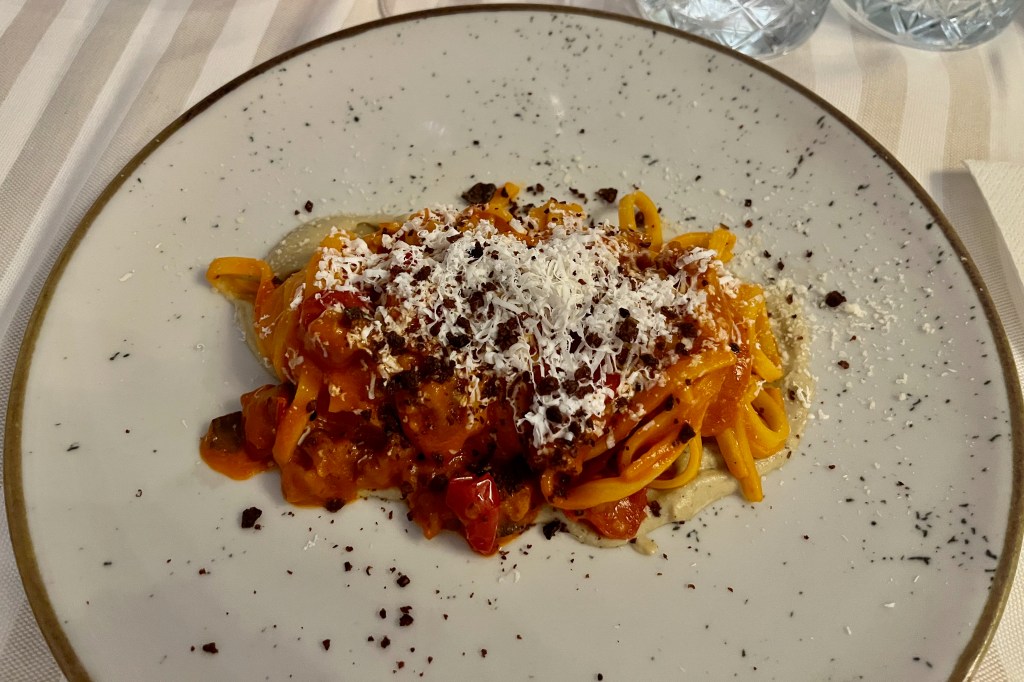
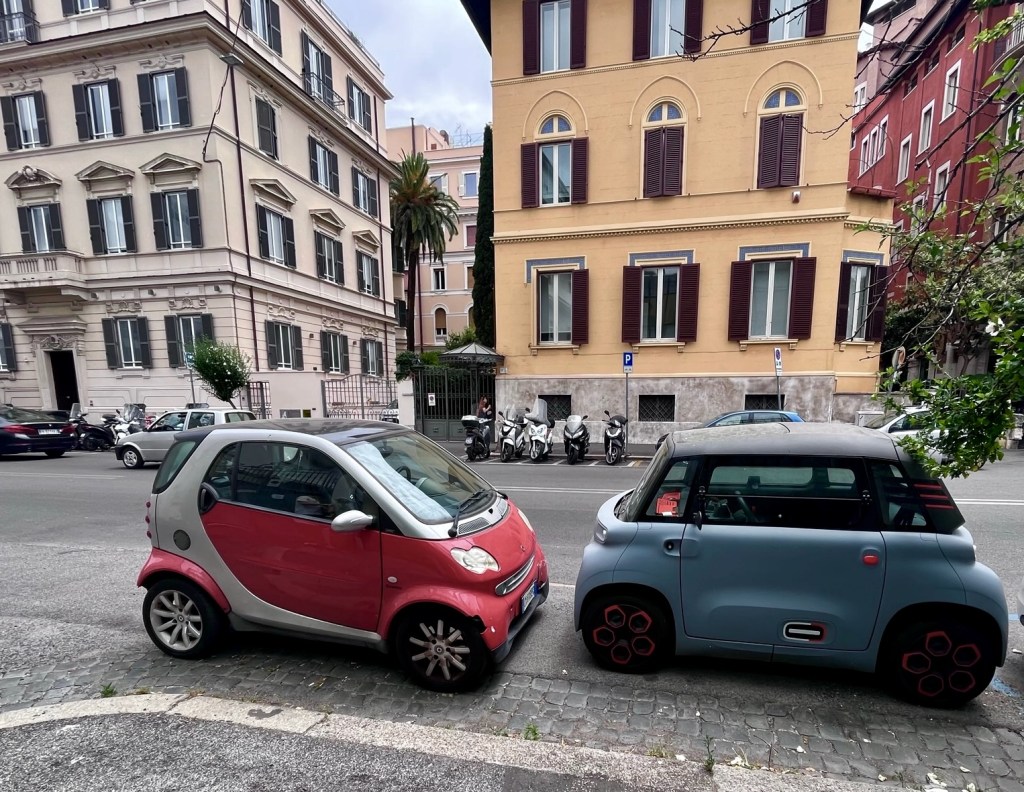
On our way back to our apartment we saw some dueling cars!
We went back, cooled off and took a rest and then on to dinner. We wanted to go to the Trevi Fountain one last time so Beth found this restaurant that was near by.
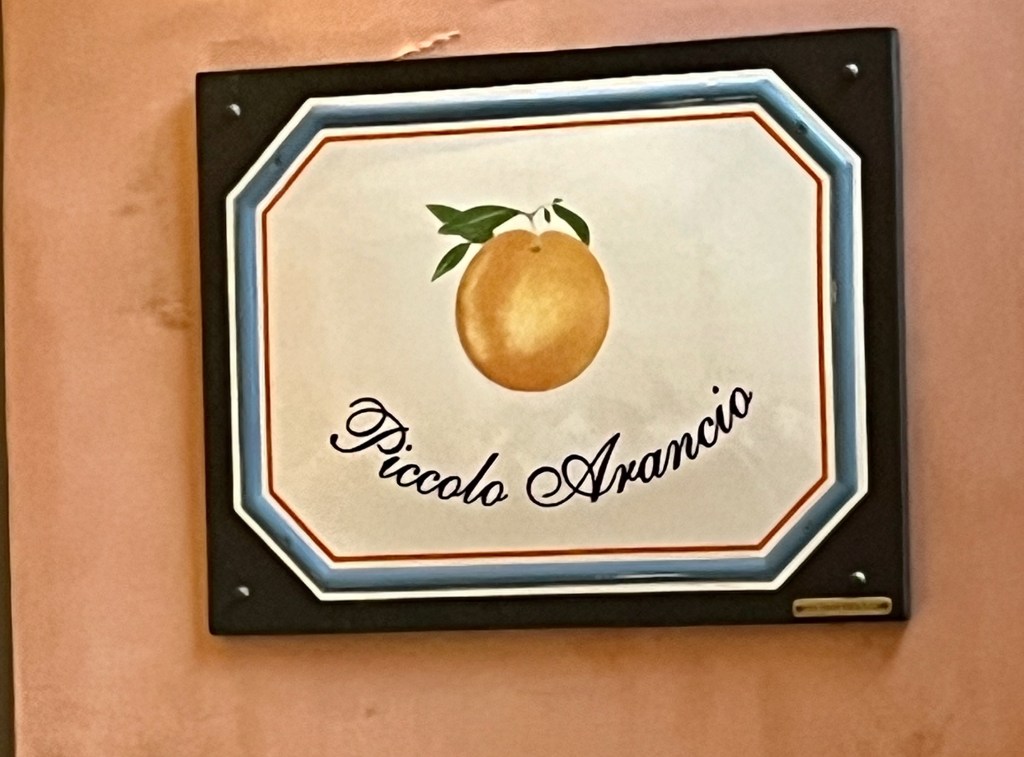
Dinner at Piccolo
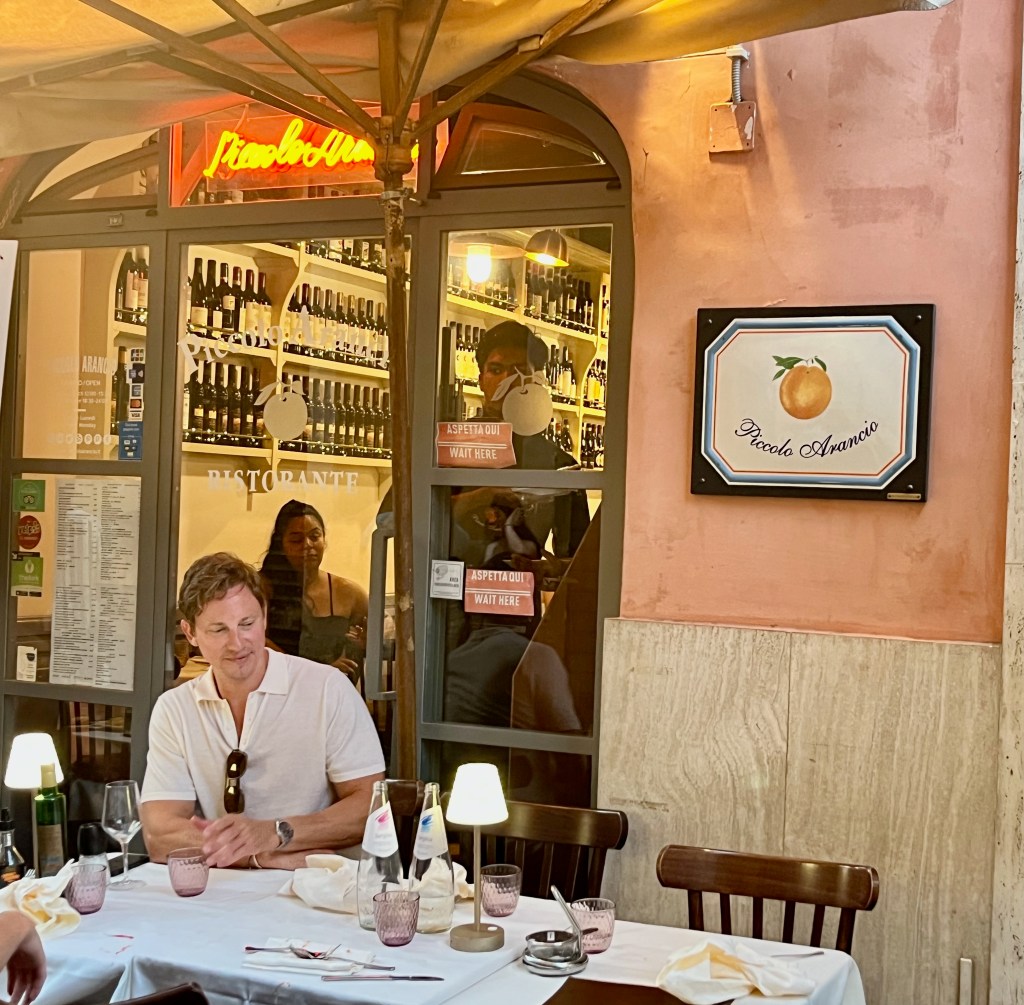
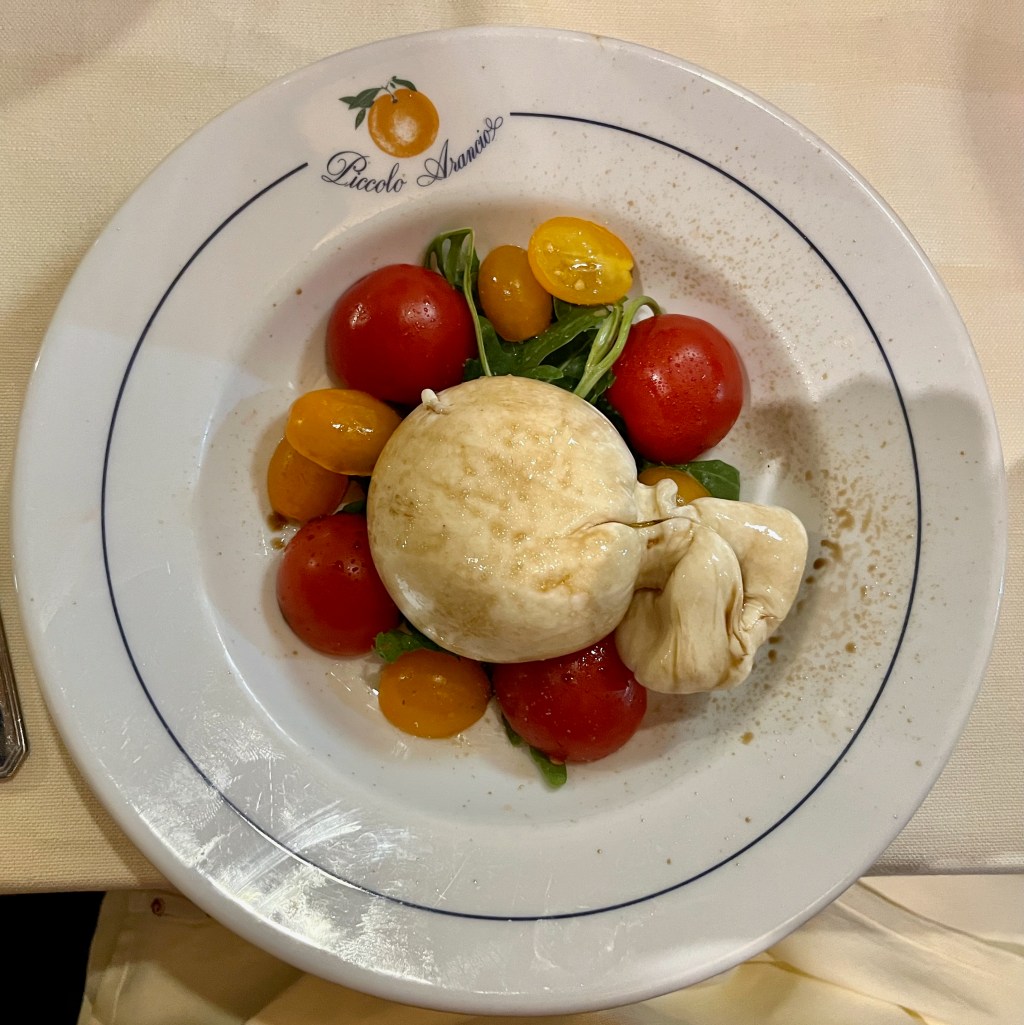
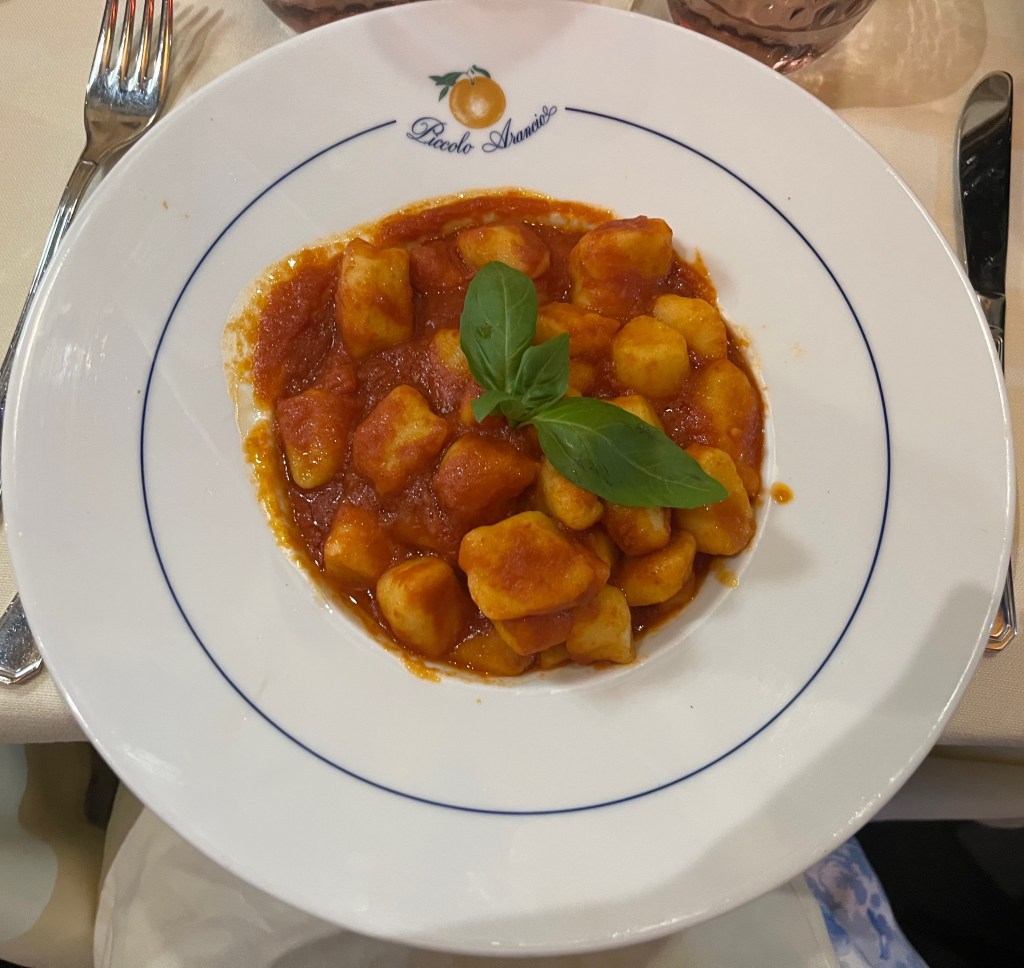
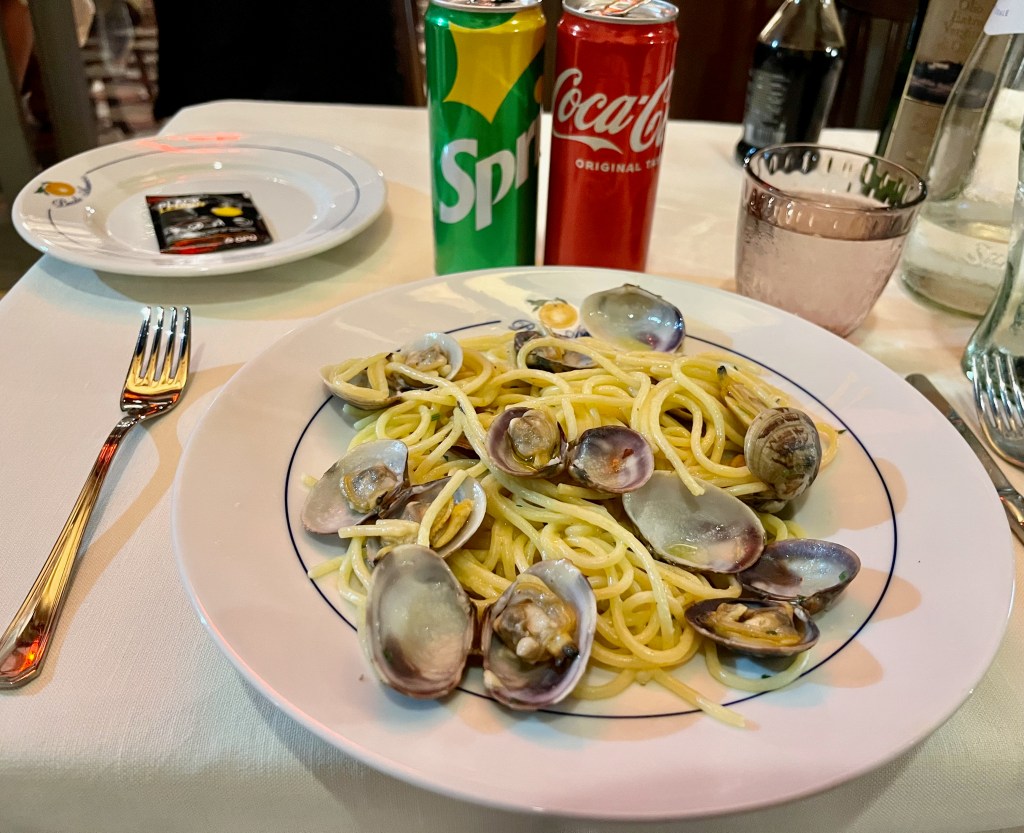
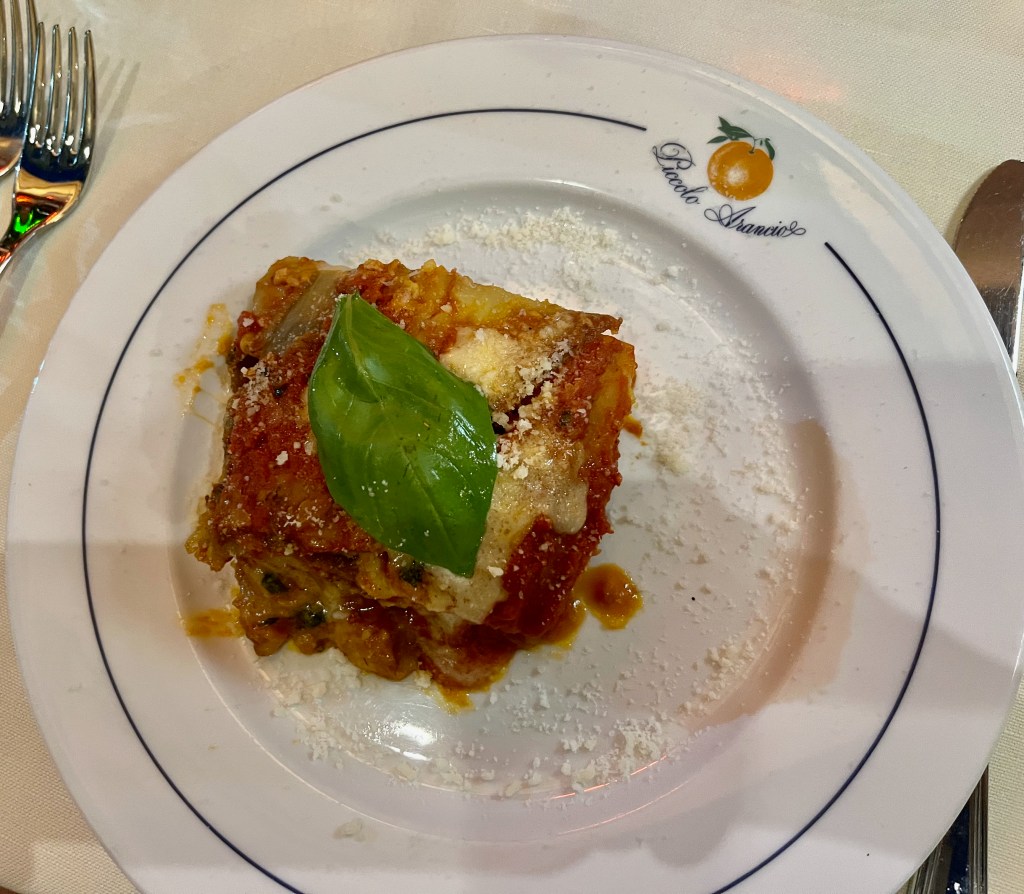
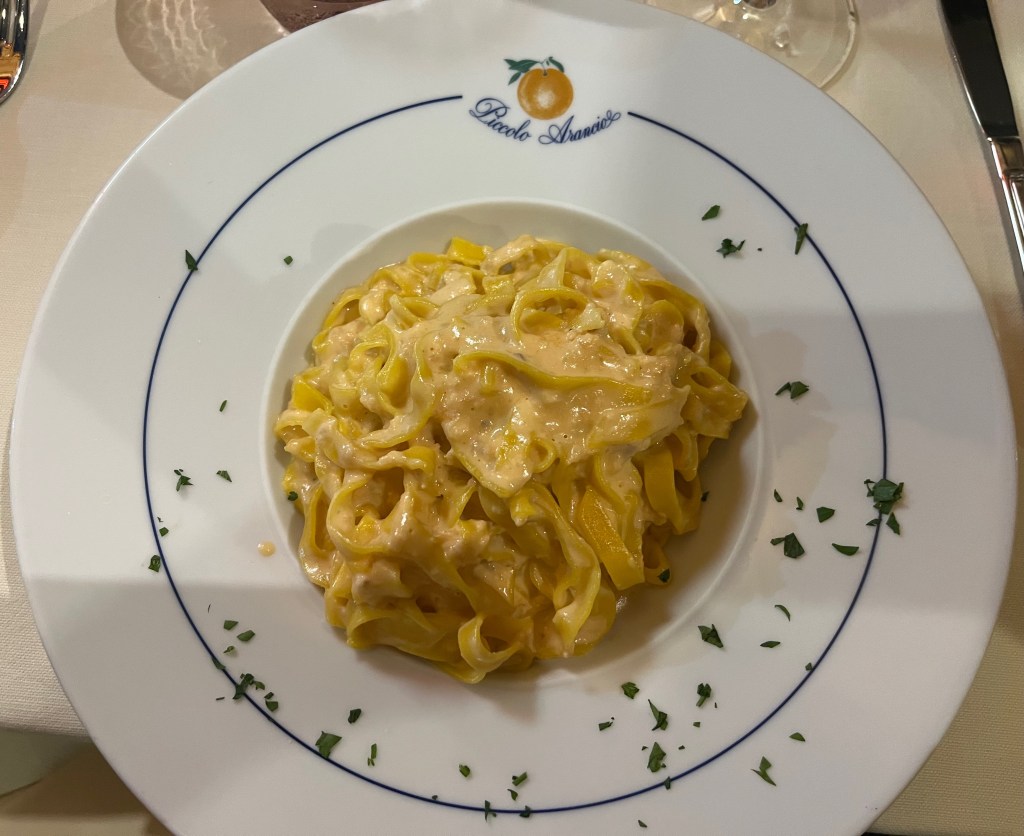
The Bufala Mozzarella had an interesting plating. The gnocchi had a plane red sauce. Jacob had the linguini with clams, Glenn had the lasagne and I had the linguine with salmon, great sauce.
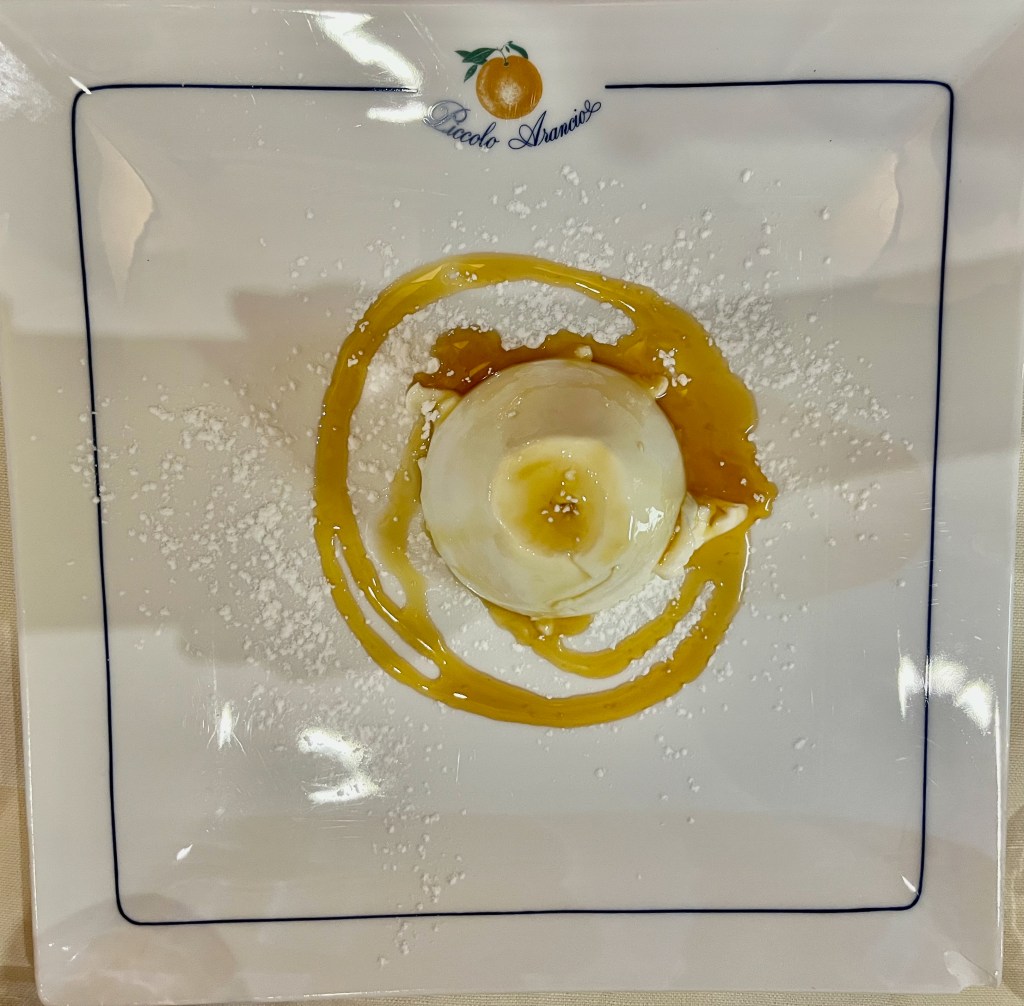
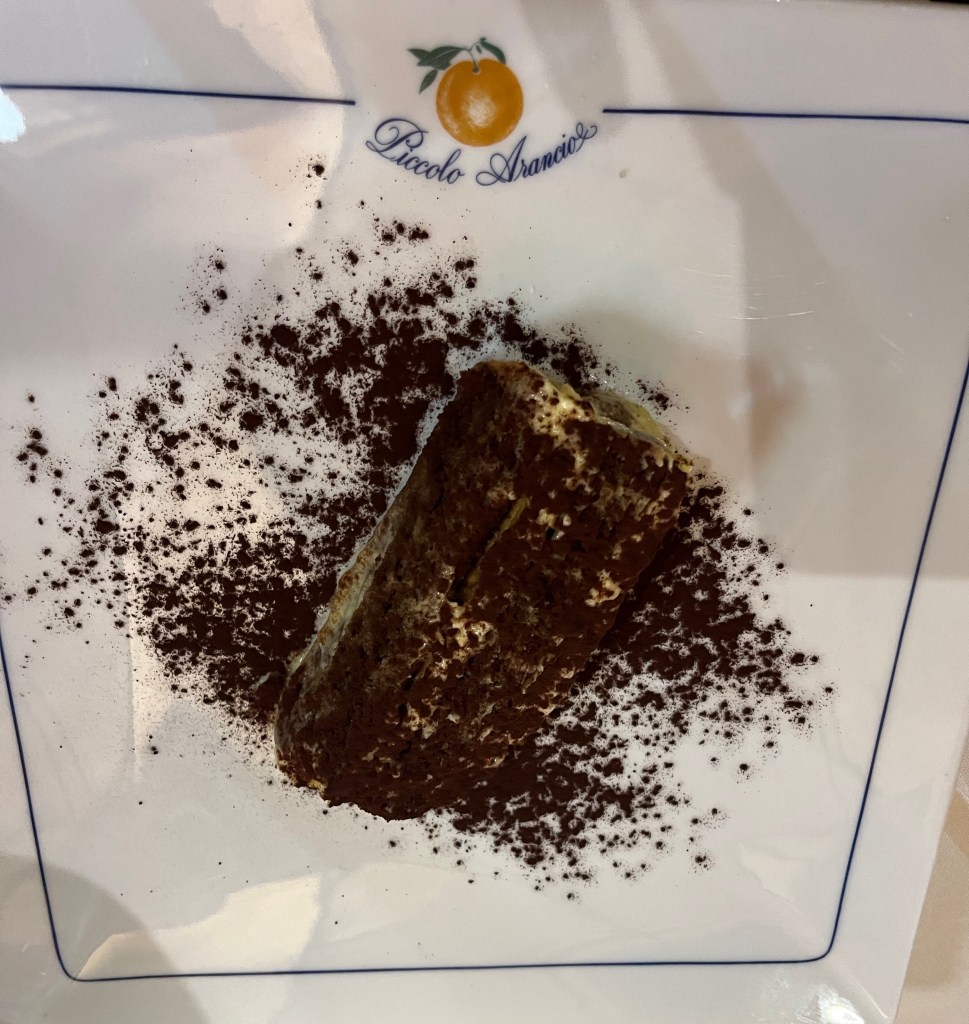
We decided to have dessert as a last night in Rome treat. The panna cotta with caramel sauce was delicious and we loved the Tiramisu. We had the Tiramisu in honor of Scott as it was his favorite dessert.
Trevi Fountain
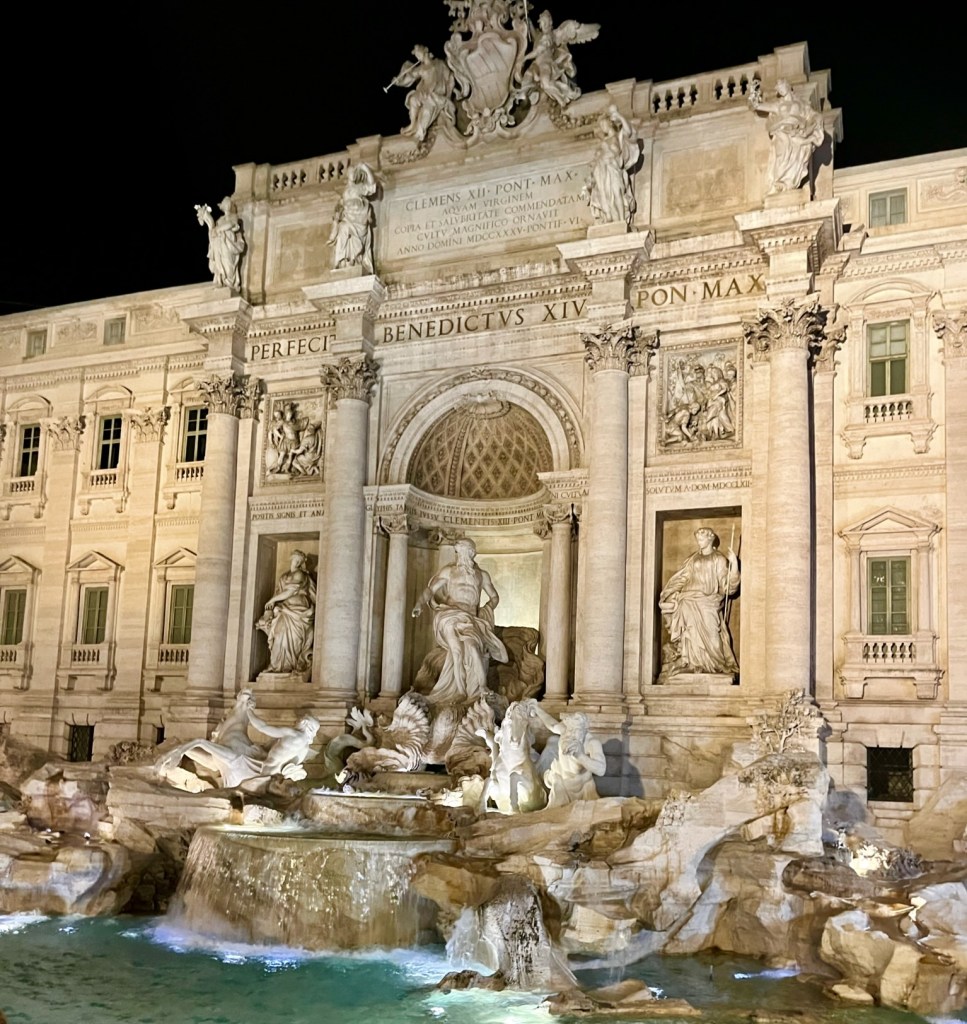
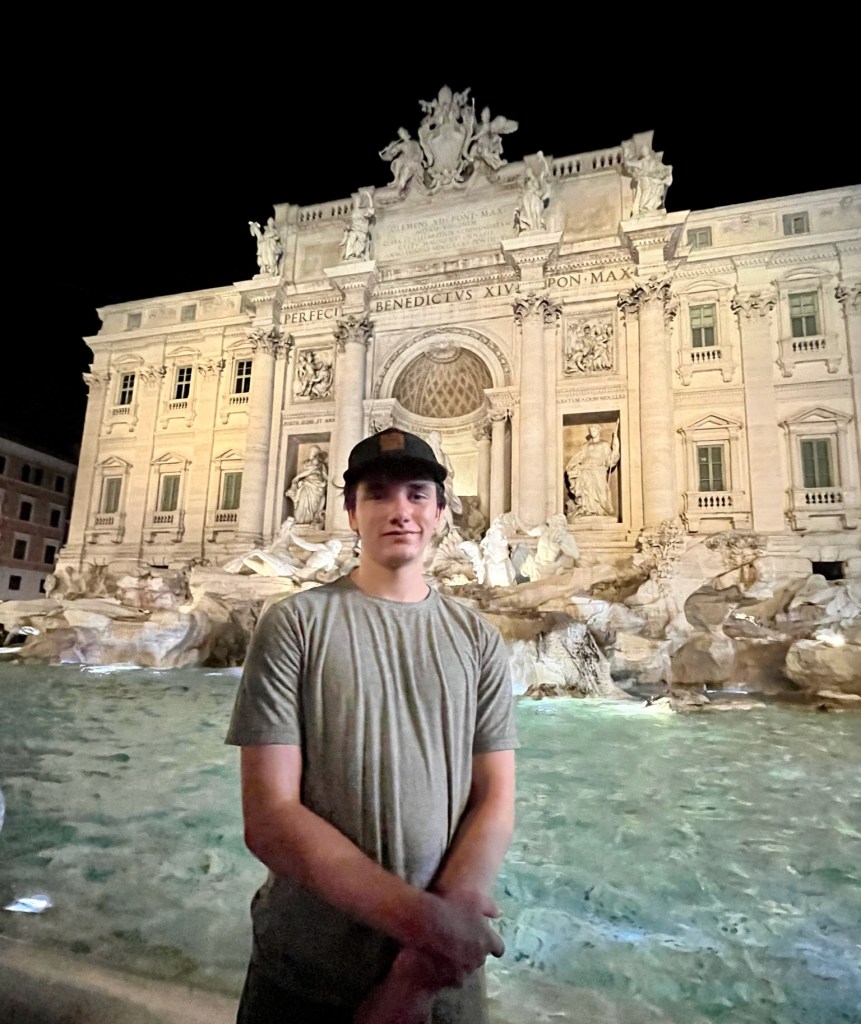
We decided to visit the Trevi Fountain one last time. The Trevi Fountain is a beautiful showcase for Rome’s love of water and sculptures. It was designed by architect Nicola Salvi in 1762 cleverly incorporating the palace behind the fountain as a theatrical back drop. The enormous figure is simply known as the “Ocean”. He symbolizes water in every form. The statute stands in his shell-shaped chariot, surfing through his dream. Water gushes from 24 spouts and tumbles over 30 different kinds of plants. Winged horses represent cresting waves. They’re led by Tritons who blow on their conch shells.
The square that faces the fountain is packed, especially at night. It is a lively place to be. The tradition is to toss a coin over your shoulder into the fountain to assure you will return to Rome .
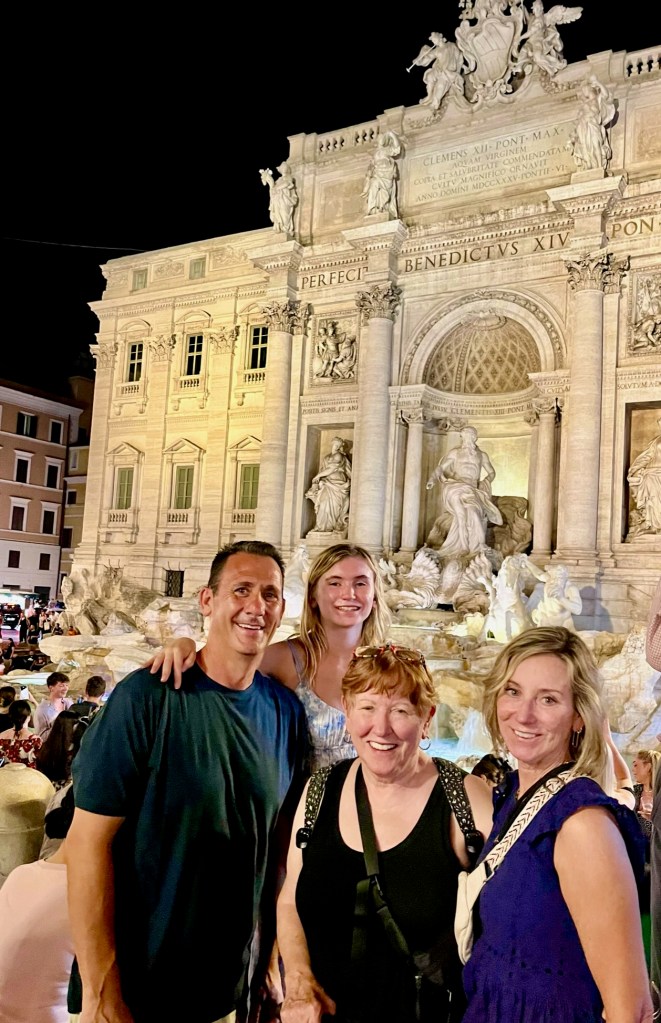
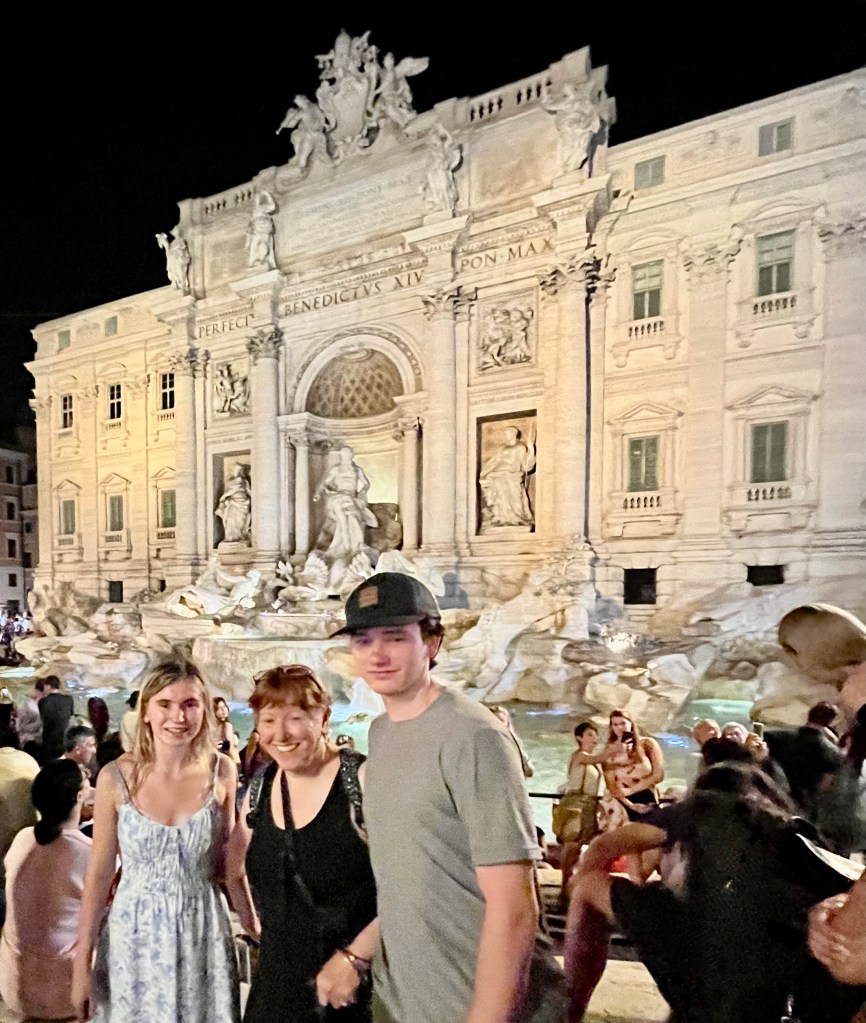
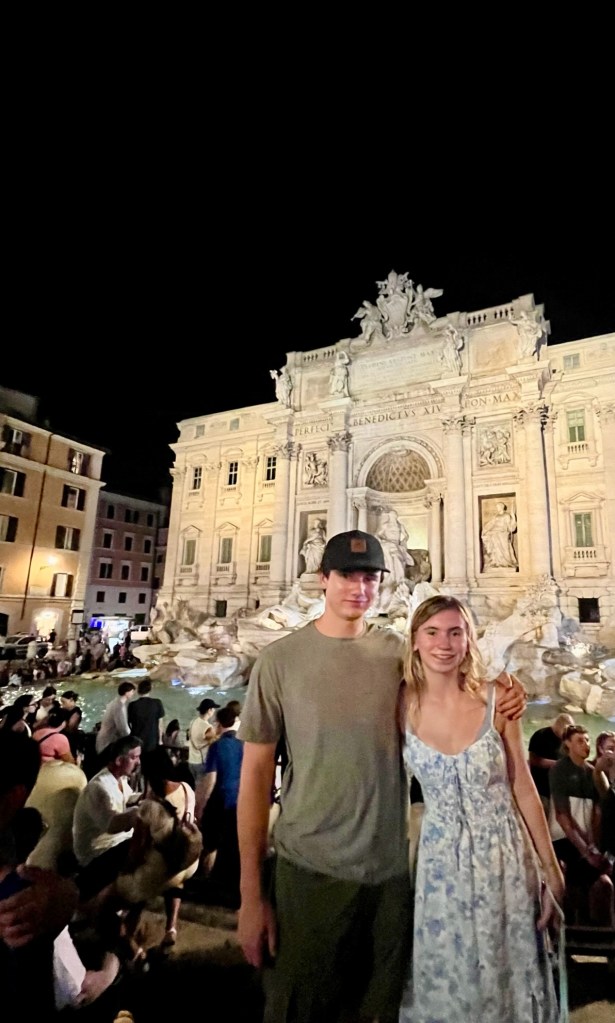
The family. It was a wonderful way to end our visit to Rome. Love all of you.
Final Thoughts
We had a great apartment. It had three bedrooms and air conditioning. It did have a washer and what was considered a dryer meaning it was all in one and hard to figure out. We did manage to get things dry but not without using chairs and hangers to help the process along.
I found our guide through the Rick Steves guide book. Here name is Cristina Giannicchi and she worked for Rick Steves for several years until the she started her own guide service: Cris Roman Guide at crisromanguide.com. We wanted to book tours for both Forum and Vatican. She was not able to take us but she said two people who work for her were available. They were wonderful guides. Laura Nicotra took us on our Forum and Colosseum tour and Margherita Ciampaglia took us on our Vatican tour. Cris was very responsive and answered all my questions and helped me get tickets when I ran into timing issues. We all would highly recommend them.
I was struggling with walking with my knee (I am having a total knee replacement August 28) and the heat sometimes got to be too much. My family was wonderful in waiting for me, lending an arm and making sure I was ok. I am truly blessed.

 Meandering With Murphy
Your emails have been so enjoyable and educational. These members of your family look truly wonderful. The pictures show how much the kids love you and each other. Other than the heat, what a fantastic trip. I think you are very brave to go even though you have a bad knee.
I apologize for being missing-in-action since Scott died. I have no excuse. I do think of you often, but that doesn’t help you as you mourn your loss of Scott. I care about you, Mary, and I’m happy to see that you have traveled with Tom, and your family.
Love, Sue I hope you have a smooth recovery from the surgery, and are pain-free afterward.
LikeLike